


2 months 2 weeks ago
To what extent can truth endure incorporation? That is the question; that is the experiment.

1 month 3 weeks ago
If women get tired and die of bearing, there is no harm in that; let them die as long as they bear; they are made for that.
▼
Source
source
-- Essays, quoted in Luther On "Woman"

1 month 2 weeks ago
Look for yourself, and you will find in the long run only hatred, loneliness, despair, rage, ruin, and decay. But look for Christ and you will find Him, and with Him everything else thrown in.
▼
Source
source
Book IV, Chapter 10, "The New Men"

2 weeks ago
The aphorism is cultivated only by those who have known fear in the midst of words, that fear of collapsing with all the words.

1 month 2 weeks ago
The next good quality belonging to a gentleman, is good breeding [manners]. There are two sorts of ill-breeding: the one a sheepish bashfulness, and the other a mis-becoming negligence and disrespect in our carriage; both of which are avoided by duly observing this one rule, not to think meanly of ourselves, and not to think meanly of others.
▼
Source
source
Sec. 141

2 weeks 5 days ago
Your health is held hostage by employment. Insurance ties you to jobs you'd otherwise leave, making you tolerate abuse, accept stagnation, endure indignity. This isn't accidental - it's strategic. When survival depends on employment, workers are compliant. Healthcare hostage-taking ensures docility.

2 months 2 weeks ago
We get into the habit of living before acquiring the habit of thinking.

1 month 1 week ago
Without the presence of black people in America, European-Americans would not be "white"-- they would be Irish, Italians, Poles, Welsh, and other engaged in class, ethnic, and gender struggles over resources and identity.
▼
Source
source
(p. 107-108)

1 week 3 days ago
He that is not with me is against me: and he that gathereth not with me scattereth.
▼
Source
source
Luke 11:23 (KJV)

4 weeks 1 day ago
Having departed from your house, turn not back; for the furies will be your attendants.
▼
Source
source
Symbol 15

1 month 1 week ago
Frazer is much more savage than most of his savages, for they are not as far removed from the understanding of spiritual matter as a twentieth-century Englishman. His explanations of primitive practices are much cruder than the meaning of these practices themselves.
▼
Source
source
Ch. 7 : Remarks on Frazer's Golden Bough, p. 131


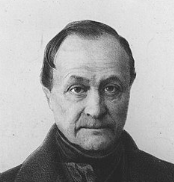
3 weeks 1 day ago
The principal means of realizing it will be the formation of an alliance between philosophers and the working classes, for which both are alike prepared by the negative and positive progress of the last five centuries. The direct object of their combined action will be to set in motion the force of Public Opinion.
▼
Source
source
p. 153
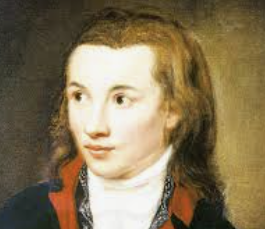
2 weeks 1 day ago
Every stage of education begins with childhood. That is why the most educated person on earth so much resembles a child.
▼
Source
source
"Miscellaneous Observations," Philosophical Writings, M. Stolijar, trans. (Albany: 1997) #48
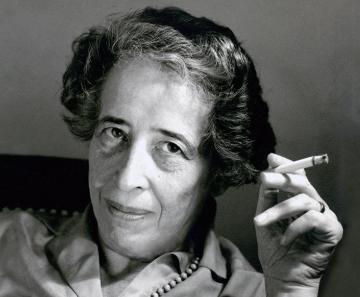
1 month 2 weeks ago
To expect truth to come from thinking signifies that we mistake the need to think with the urge to know.
▼
Source
source
p. 61
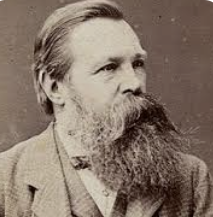
1 week 6 days ago
The proletariat is that class in society which lives entirely from the sale of its labor and does not draw profit from any kind of capital; whose weal and woe, whose life and death, whose sole existence depends on the demand for labor - hence, on the changing state of business, on the vagaries of unbridled competition.
1 month 2 weeks ago
The fundament upon which all our knowledge and learning rests is the inexplicable.
▼
Source
source
Vol. 2, Ch. 1, § 1

1 month 3 weeks ago
I do myself a greater injury in lying than I do him of whom I tell a lie.
▼
Source
source
Book II, Ch. 17
1 month 2 weeks ago
A life devoted to science is therefore a happy life, and its happiness is derived from the very best sources that are open to dwellers on this troubled and passionate planet.
▼
Source
source
Ch. 2: The Place of Science in a Liberal Education
1 month 5 days ago
Pyrrhus said, "If I should overcome the Romans in another fight, I were undone."
▼
Source
source
47 Pyrrhus
2 months 2 weeks ago
The advantage of a bad memory is that one can enjoy the same good things for the first time several times.

4 weeks 1 day ago
No evil is honorable; but death is honorable; therefore death is not evil.
▼
Source
source
As quoted in Epistles No. 82, by Seneca the Younger

2 months 3 days ago
The members of Christ, many though they be, are bound to one another by the ties of charity and peace under the one Head, who is our Saviour Himself, and form one man. Often their voice is heard in the Psalms as the voice of one man; the cry of one is as the cry of all, for all are one in One.
▼
Source
source
p.430

3 weeks 1 day ago
Nothing seems at first sight less important than the outward form of human actions, yet there is nothing upon which men set more store: they grow used to everything except to living in a society which has not their own manners.
▼
Source
source
Book Three, Chapter XIV.
1 month 2 weeks ago
Yes, if you happen to be interested in philosophy and good at it, but not otherwise - but so does bricklaying. Anything you're good at contributes to happiness. When asked "Does philosophy contribute to happiness?"
▼
Source
source
(SHM 76), as quoted in The quotable Bertrand Russell (1993), p. 149
2 days ago
The fact of the religious vision, and its history of persistent expansion, is our one ground for optimism. Apart from it, human life is a flash of occasional enjoyments lighting up a mass of pain and misery, a bagatelle of transient experience.
▼
Source
source
Ch. 12: "Religion and Science", p. 268
2 weeks 5 days ago
Emotional labor - managing others' feelings, providing care, maintaining morale - is work but unpaid or underpaid. Disproportionately done by women and people of color. Emotional labor sustains workplaces but receives no recognition. Exploitation hiding in plain sight.
1 month 2 weeks ago
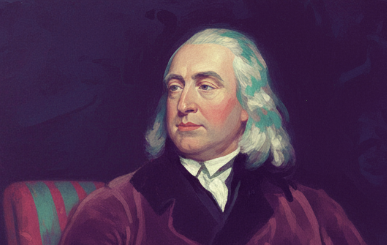
To what shall the character of utility be ascribed, if not to that which is a source of pleasure?
▼
Source
source
Théorie des peines et des récompenses (1811); translation by Richard Smith, The Rationale of Reward, J. & H. L. Hunt, London, 1825, Bk. 3, Ch. 1
1 month 2 weeks ago
The brain may be regarded as a kind of parasite of the organism, a pensioner, as it were, who dwells with the body.
5 days ago
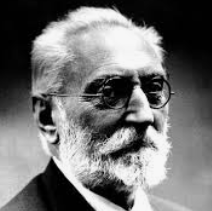
And what is its moral proof? We may formulate it thus: Act so that in your own judgment and in the judgment of others you may merit eternity, act so that you may become irreplaceable, act so that you may not merit death. Or perhaps thus: Act as if you were to die tomorrow, but to die in order to survive and be eternalized. The end of morality is to give personal, human finality to the Universe; to discover the finality that belongs to it - if indeed it has any finality - and to discover it by acting.
2 weeks 4 days ago
Life is writing. The sole purpose of mankind is to engrave the thoughts of divinity onto the tablets of nature.
▼
Source
source
"On Philosophy: To Dorothea," in Theory as Practice (1997), p. 420
1 month 2 weeks ago
If you read history you will find that the Christians who did most for the present world were just those who thought most of the next... It is since Christians have largely ceased to think of the other world that they have become so ineffective in this. Aim at Heaven and you will get earth "thrown in": aim at earth and you will get neither.
▼
Source
source
Book III, Chapter 10, "Hope"
3 weeks 1 day ago
The New Englander is attached to his township because it is strong and independent; he has an interest in it because he shares in its management; he loves it because he has no reason to complain of his lot; he invests his ambition and his future in it; in the restricted sphere within his scope, he learns to rule society; he gets to know those formalities without which freedom can advance only through revolutions, and becoming imbued with their spirit, develops a taste for order, understands the harmony of powers, and in the end accumulates clear, practical ideas about the nature of his duties and the extent of his rights.
▼
Source
source
Chapter V.
1 month 2 weeks ago
And then one babbles - 'if only I could bear it, or the worst of it, or any of it, instead of her.' But one can't tell how serious that bid is, for nothing is staked on it. If it suddenly became a real possibility, then, for the first time, we should discover how seriously we had meant it. But is it ever allowed? It was allowed to One, we are told, and I find I can now believe again, that He has done vicariously whatever can be done. He replies to our babble, 'you cannot and dare not. I could and dared.'
2 weeks ago
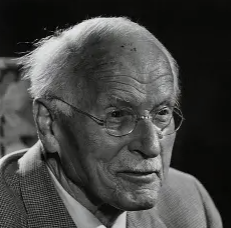
Among all my patients in the second half of life-that is to say, over thirty-five-there has not been one whose problem in the last resort was not that of finding a religious outlook on life. It is safe to say that every one of them fell ill because he had lost what the living religions of every age have given their followers, and none of them has been really healed who did not regain his religious outlook.
▼
Source
source
Chap. 11 (Psychotherapists or the Clergy), p. 229
5 days ago
And what has Don Quixote left, do you ask? I answer, he has left himself, and a man, a living and eternal man, is worth all the theories and all the philosophies. Other peoples have left chiefly institutions, books; we have left souls; St. Teresa is worth any institution, any Critique of Pure Reason.
2 weeks 4 days ago
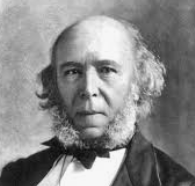
Ethical ideas and sentiments have to be considered as parts of the phenomena of life at large. We have to deal with man as a product of evolution, with society as a product of evolution, and with moral phenomena as products of evolution.
▼
Source
source
Ch. 1, Introductory
1 month 3 weeks ago
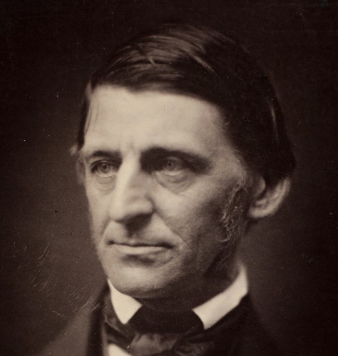
There is a sort of gratification in doing good which makes us rejoice in ourselves.
▼
Source
source
Book III, Ch. 2
1 month 2 weeks ago
Next to the originator of a good sentence is the first quoter of it.
▼
Source
source
Quotation and Originality

2 months 1 week ago
A happy and eternal being has no trouble himself and brings no trouble upon any other being; hence he is exempt from movements of anger and partiality, for every such movement implies weakness.
1 month 2 weeks ago
It is simply no good trying to keep any thrill: that is the very worst thing you can do. Let the thrill go-let it die away-go on through that period of death into the quieter interest and happiness that follow-and you will find you are living in a world of new thrills all the time. But if you decide to make thrills your regular diet and try to prolong them artificially, they will all get weaker and weaker, and fewer and fewer, and you will be a bored, disillusioned old man for the rest of your life. It is because so few people understand this that you find many middle-aged men and women maundering about their lost youth, at the very age when new horizons ought to be appearing and new doors opening all round them. It is much better fun to learn to swim than to go on endlessly (and hopelessly) trying to get back the feeling you had when you first went paddling as a small boy.
▼
Source
source
Book III, Chapter 6, "Christian Marriage"
2 weeks ago
What is not heartrending is superfluous, at least in music.
1 month 3 weeks ago
There is a plague on Man, the opinion that he knows something.
2 days ago
The oneness of the universe, and the oneness of each element of the universe, repeat themselves to the crack of doom in the creative advance from creature to creature, each creature including in itself the whole of history and exemplifying the self-identity of things and their mutual diversities.
▼
Source
source
Pt. III, ch. 1, sec. 7.
1 month 2 weeks ago
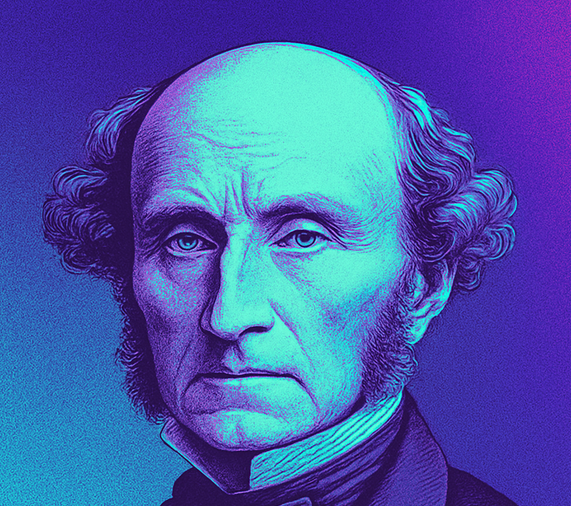
I had obtained some distinction, and felt myself of some importance, before the desire of distinction and of importance had grown into a passion: and little as it was which I had attained, yet having been attained too early, like all pleasures enjoyed too soon, it had made me blasé and indifferent to the pursuit. Thus neither selfish nor unselfish pleasures were pleasures to me. And there seemed no power in nature sufficient to begin the formation of my character anew, and create in a mind now irretrievably analytic, fresh associations of pleasure with any of the objects of human desire.
▼
Source
source
(p. 139)
1 month 2 weeks ago
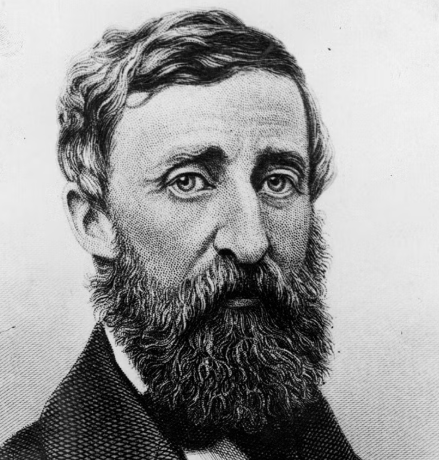
I wish to suggest that a man may be very industrious, and yet not spend his time well. There is no more fatal blunderer than he who consumes the greater part of his life getting his living. All great enterprises are self-supporting. The poet, for instance, must sustain his body by his poetry, as a steam planing-mill feeds its boilers with the shavings it makes. You must get your living by loving.
▼
Source
source
pp. 486-7
2 weeks 4 days ago
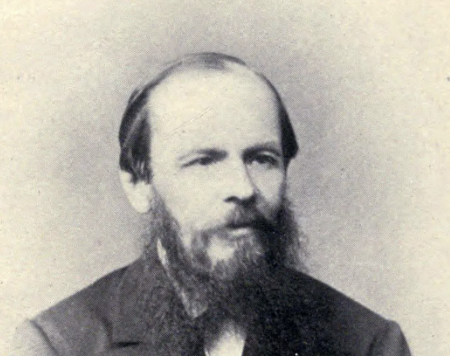
Is it really not possible to touch the gaming table without being instantly infected by superstition?
2 weeks 1 day ago
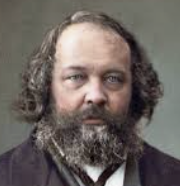
This means that no state, howsoever democratic its forms, not even the reddest political republic - a people's republic only in the sense of the lie known as popular representation - is capable of giving the people what they need: the free organization of their own interests from below upward, without any interference, tutelage, or coercion from above. That is because no state, not even the most republican and democratic, not even the pseudo-popular state contemplated by Marx, in essence represents anything but government of the masses from above downward, by an educated and thereby privileged minority which supposedly understands the real interests of the people better than the people themselves.
1 month 2 weeks ago
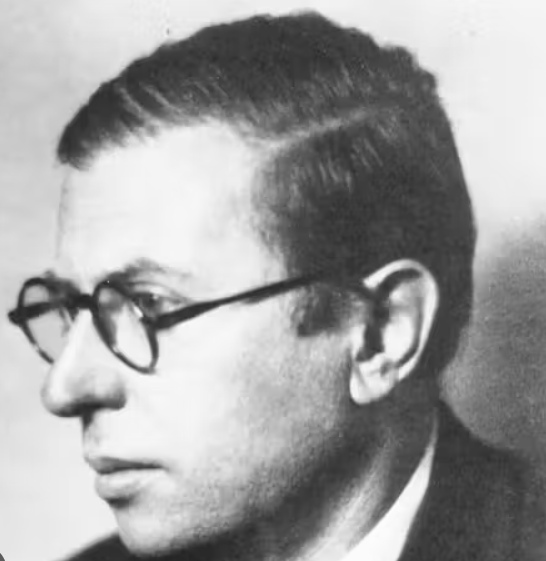
All human activities are equivalent ... and ... all are on principle doomed to failure.
▼
Source
source
Conclusion, II

3 weeks 3 days ago
That there is no such thing as what philosophers call material substance, I am seriously persuaded: but if I were made to see any thing absurd or skeptical in this, I should then have the same reason to renounce this, that I imagine I have now to reject the contrary opinion.
▼
Source
source
Philonous to Hylas
CivilSimian.com created by AxiomaticPanic, CivilSimian, Kalokagathia