

1 month 2 weeks ago
No one has the right to obey.
▼
Source
source
in a radio interview with Joachim Fest (9 November 1964)
1 month 2 weeks ago
Ideal legislators do not vote their interests.
▼
Source
source
Chapter V, Section 43, p. 284
2 weeks ago
Our studies of sexual life, originating in Vienna and in England, are matched or surpassed by Hindu teachings on this subject... Psychoanalysis itself and the lines of thought to which it gives rise-surely a distinctly Western development-are only a beginner's attempt compared to what is an immemorial art in the East.
▼
Source
source
quoted in Georg Feuerstein, Subhash Kak, and David Frawley. - In search of the cradle of civilization _ new light on ancient India-Quest Books
1 month 2 weeks ago
Mathematics takes us still further from what is human, into the region of absolute necessity, to which not only the world, but every possible world, must conform.

2 months 2 weeks ago
It is love that leniently and mercifully says: I forgive you everything-if you are forgiven only little, then it is because you love only little. Justice severely sets the boundary and says: No further! This is the limit. For you there is no forgiveness, and there is nothing more to be said.
1 month 2 weeks ago
I have assumed throughout that the persons in the original position are rational.
▼
Source
source
Chapter III, Section 25, pg. 142
1 week 3 days ago
When Socrates and his two great disciples composed a system of rational ethics they were hardly proposing practical legislation for mankind...They were merely writing an eloquent epitaph for their country.

1 month 3 weeks ago
There can be no doubt that the Virgin Mary is in heaven. How it happened we do not know.
▼
Source
source
Weimar edition of Martin Luther's Works (Translation by William J. Cole) Vol. 10, p. 268
1 month 2 weeks ago
Reason, if consulted with, would advise, that their children's time should be spent in acquiring what might be useful to them when they come to be men, rather than to have their heads stuff'd with a deal of trash, a great part whereof they usually never do ('tis certain they never need to) think on again as long as they live: and so much of it as does stick by them they are only the worse for.
▼
Source
source
Sec. 94

1 month 1 week ago
Nevertheless, the ultimate business of philosophy is to preserve the force of the most elemental words in which Dasein expresses itself, and to keep the common understanding from levelling them off to that unintelligibility which functions in turn as a source of pseudo-problems.
▼
Source
source
Macquarrie & Robinson translation
2 weeks 1 day ago
To romanticize the world is to make us aware of the magic, mystery and wonder of the world; it is to educate the senses to see the ordinary as extraordinary, the familiar as strange, the mundane as sacred, the finite as infinite.
▼
Source
source
As quoted in "Bildung in Early German Romanticism" by Frederick C. Beiser, in Philosophers on Education : Historical Perspectives (1998) by Amélie Rorty, p. 294
1 week 2 days ago
The 'public' is a phantom, the phantom of an opinion supposed to exist in a vast number of persons who have no effective interrelation and though the opinion is not effectively present in the units. Such an opinion is spoken of as 'public opinion,' a fiction which is appealed to by individuals and by groups as supporting their special views. It is impalpable, illusory, transient; "'tis here, 'tis there, 'tis gone"; a nullity which can nevertheless for a moment endow the multitude with power to uplift or destroy.
1 week 3 days ago
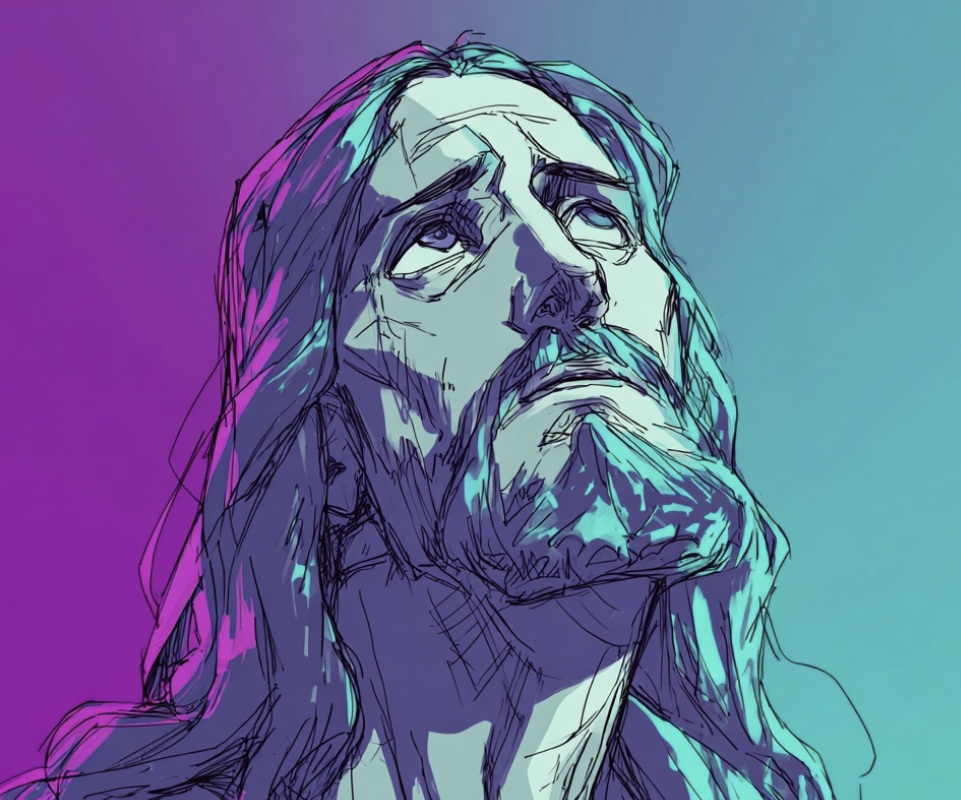
The man old in days will not hesitate to ask a small child seven days old about the place of life, and he will live. For many who are first will become last, and they will become one and the same.

1 month 2 weeks ago
This body which called itself and which still calls itself the Holy Roman Empire was in no way holy, nor Roman, nor an empire.
▼
Source
source
Essai sur l'histoire générale et sur les mœurs et l'esprit des nations, Chapter 70, 1756

1 month 1 week ago
What is to prevent one from telling truth as he laughs, even as teachers sometimes give cookies to children to coax them into learning their A B C?
▼
Source
source
Book I, satire i, line 24 (translation by H. Fairclough)
2 months 2 weeks ago
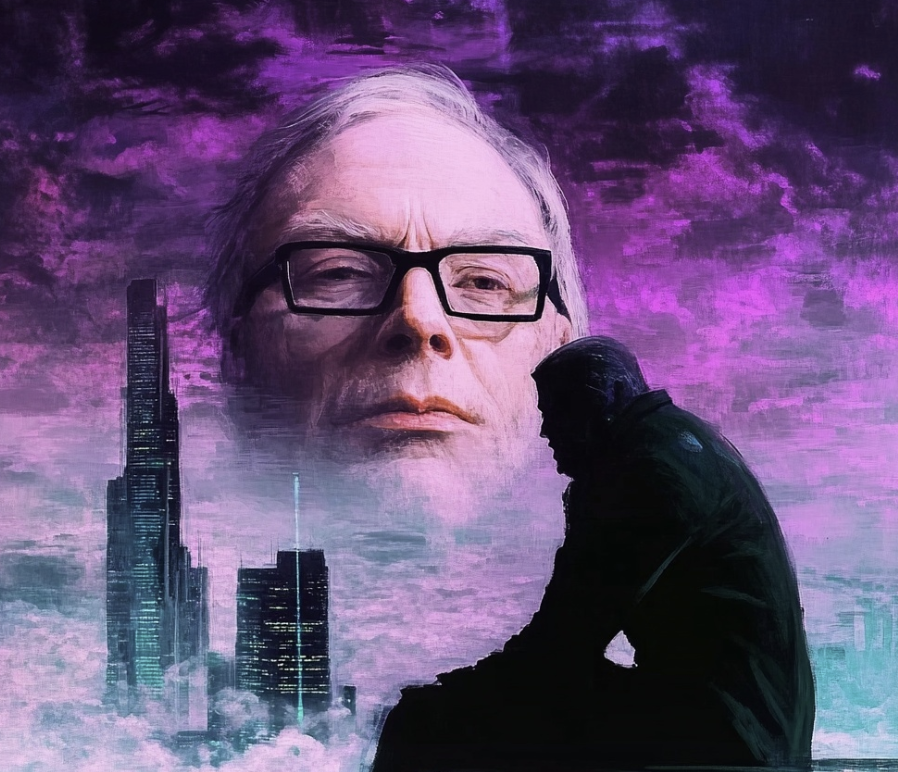
The machine is only a tool after all, which can help humanity progress faster by taking some of the burdens of calculations and interpretations off its back. The task of the human brain remains what it has always been; that of discovering new data to be analyzed, and of devising new concepts to be tested.
1 month 2 weeks ago
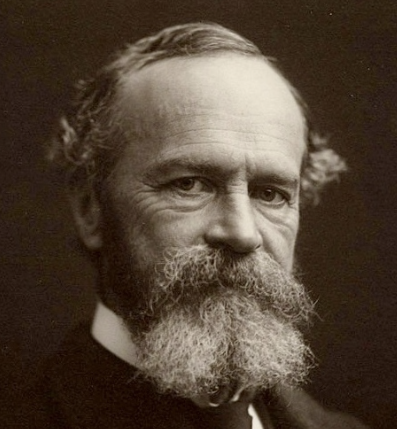
An act has no ethical quality whatever unless it be chosen out of several all equally possible.
▼
Source
source
Ch. 9
1 month 2 weeks ago
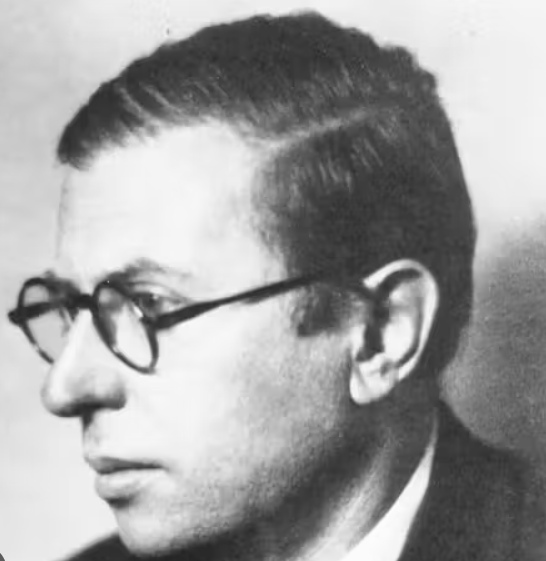
He wanted to assume his entire condition, to carry the world on his shoulders and to become, in defiance of all, what all have made of him.
▼
Source
source
p. 384
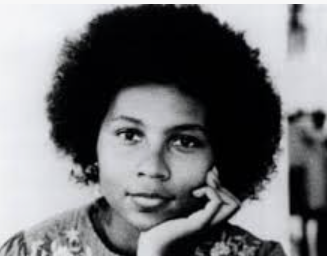
2 days ago
But many of us seek community solely to escape the fear of being alone. Knowing how to be solitary is central to the art of loving. When we can be alone, we can be with others without using them as a means of escape.
▼
Source
source
All About Love: New Visions, 1999
2 months 1 week ago
We must consider both the ultimate end and all clear sensory evidence, to which we refer our opinions; for otherwise everything will be full of uncertainty and confusion.
2 months 2 weeks ago
There's nothing like deduction. We've determined everything about our problem but the solution.
1 month 1 week ago
How can one be late to the end of history? A question for today. It is serious because it obliges one to reflect again, as we have been doing since Hegel, on what happens and deserves the name of event, after history; it obliges one to wonder if the end of history is but the end of a certain concept of history.
▼
Source
source
Injunctions of Marx
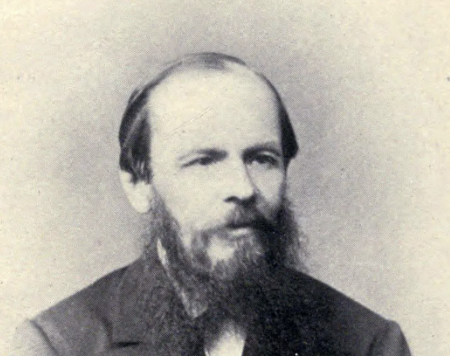
2 weeks 4 days ago
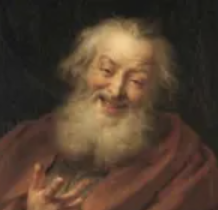
So long as man remains free he strives for nothing so incessantly and so painfully as to find someone to worship. But man seeks to worship what is established beyond dispute, so that all men would agree at once to worship it. For these pitiful creatures are concerned not only to find what one or the other can worship, but to find community of worship is the chief misery of every man individually and of all humanity from the beginning of time. For the sake of common worship they've slain each other with the sword. They have set up gods and challenged one another, 'Put away your gods and come and worship ours, or we will kill you and your gods!' And so it will be to the end of the world, even when gods disappear from the earth; they will fall down before idols just the same.
1 month 1 week ago
Throw moderation to the winds, and the greatest pleasures bring the greatest pains.
2 weeks ago
No one can flatter himself that he is immune to the spirit of his own epoch, or even that he possesses a full understanding of it. Irrespective of our conscious convictions, each one of us, without exception, being a particle of the general mass, is somewhere attached to, colored by, or even undermined by the spirit which goes through the mass. Freedom stretches only as far as the limits of our consciousness.
▼
Source
source
Paracelsus the Physician
1 week 3 days ago
When you make the two into one, you will become children of Adam, and when you say, 'Mountain, move from here!' it will move.
1 day ago
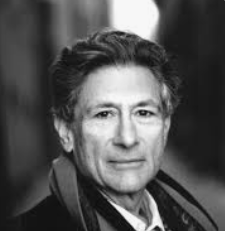
Where cruelty and injustice are concerned, hopelessness is submission, which I believe is immoral.
▼
Source
source
quoted in "Internal Exile" by Pankaj Mishra in The New Yorker, 2021
2 weeks ago
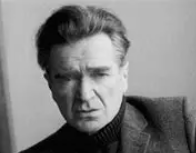
"Meeting, after several years, someone we used to know as a child, the first glance almost always suggests that some great disaster must have befallen him" Leopardi, quoted by cioran.
1 month 2 weeks ago
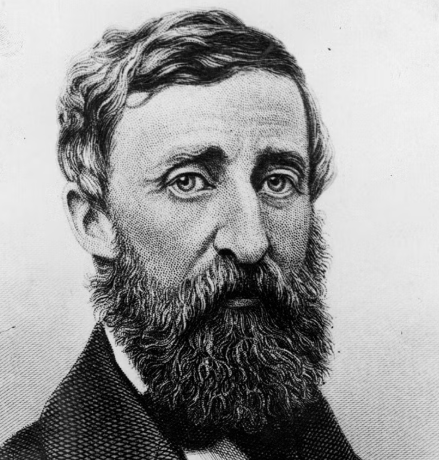
What is called politics is comparatively something so superficial and inhuman, that, practically, I have never fairly recognized that it concerns me at all. The newspapers, I perceive, devote some of their columns specially to politics or government without charge; and this, one would say, is all that saves it; but, as I love literature, and, to some extent, the truth also, I never read those columns at any rate. I do not wish to blunt my sense of right so much.
▼
Source
source
p. 494
5 months 3 weeks ago
If we merely wait for the appropriate moment we will never live to see it, because this [appropriate moment] cannot arrive without the subjective conditions of the maturity of the revolutionary force being fulfilled - it can only arrive after a series of failed attempts.
1 month 1 week ago
Let's put a limit to the scramble for money. ... Having got what you wanted, you ought to begin to bring that struggle to an end.
▼
Source
source
Book I, satire i, lines 92-94, as translated by N. Rudd
2 months 2 weeks ago
Oh, can I really believe the poet's tales, that when one first sees the object of one's love, one imagines one has seen her long ago, that all love like all knowledge is remembrance, that love too has its prophecies in the individual. ... it seems to me that I should have to possess the beauty of all girls in order to draw out a beauty equal to yours; that I should have to circumnavigate the world in order to find the place I lack and which the deepest mystery of my whole being points towards, and at the next moment you are so near to me, filling my spirit so powerfully that I am transfigured for myself, and feel that it's good to be here.
1 month 3 weeks ago
A man of understanding has lost nothing, if he has himself.
▼
Source
source
Ch. 39
1 month 3 weeks ago
Every tax, however, is to the person who pays it a badge, not of slavery but of liberty. It denotes that he is a subject to government, indeed, but that, as he has some property, he cannot himself be the property of a master.
▼
Source
source
Chapter II, Part II, p. 927.
2 days ago
A general definition of civilization: a civilized society is exhibiting the five qualities of truth, beauty, adventure, art, peace.
▼
Source
source
p. 353.

1 month 2 weeks ago
Religion has two principal enemies, fanaticism and infidelity, or that which is called atheism. The first requires to be combated by reason and morality, the other by natural philosophy.
▼
Source
source
A Discourse, &c. &c.

2 months 2 weeks ago
Artistic creation is a demand for unity and a rejection of the world.
2 weeks ago
Born in a prison, with burdens on our shoulders and our thoughts, we could not reach the end of a single day if the possibilities of ending it all did not incite us to begin the next day all over again.

2 months 2 days ago
We are all sprung from a heavenly seed.
▼
Source
source
Book II, line 991 (tr. Munro)
1 month 1 week ago
Beginning to reason is like stepping onto an escalator that leads upward and out of sight. Once we take the first step, the distance to be traveled is independent of our will and we cannot know in advance where we shall end.
▼
Source
source
Chapter 4, Reason, p. 88
4 days ago
There is no objective reality. But there is only an illusion of consciousness, there is only an objectivication of reality, which was created by the spirit. The origin of life is creativity, freedom; and the personality, subject, and spirit are the representatives of that origin, but not the nature, not the object.
▼
Source
source
As translated at Gallery of Russian Thinkers ... selected by Dmitry Olshansky
1 month 2 weeks ago
Hence money may be dirt, although dirt is not money.
▼
Source
source
Vol. I, Ch. 3, Section 2, pg. 123.
1 week 3 days ago
Not everyone who says to Me, 'Lord, Lord,' shall enter the kingdom of heaven, but he who does the will of My Father in heaven. Many will say to Me in that day, 'Lord, Lord, have we not prophesied in Your name, cast out demons in Your name, and done many wonders in Your name?' And then I will declare to them, 'I never knew you; depart from Me, you who practice lawlessness!'
▼
Source
source
Matthew 7:21-23 (NKJV) (Also Luke 6:24; 13:26, 27)
1 month 2 weeks ago
Of the evils most liable to attend on any sort of early proficiency, and which often fatally blights its promise, my father most anxiously guarded against. This was self-conceit. He kept me, with extreme vigilance, out of the way of hearing myself praised, or of being led to make self-flattering comparisons between myself and others. From his own intercourse with me I could derive none but a very humble opinion of myself; and the standard of comparison he always held up to me, was not what other people did, but what a man could and ought to do. He completely succeeded in preserving me from the sort of influences he so much dreaded. I was not at all aware that my attainments were anything unusual at my age.
▼
Source
source
(pp. 32-33)
5 days ago
In a free nation, it matters not whether individuals reason well or ill; it is sufficient that they do reason. Truth arises from the collision and from hence springs liberty, which is a security from the effects of reasoning.
▼
Source
source
Quoted by Thomas Erskine in the trial of Thomas Paine, 1792
1 month 1 week ago
Kripke tries to sober us up by denying that meaning determines reference. Rather, we name things by confronting them and baptising them, not by creating them out of a list of qualities. Names are not, pace Russell, shorthand for such lists. They are not abbreviations for descriptions, but (in Kripke's coinage) 'rigid designators' - that is, they would name the same things in any possible world, including worlds in which their bearers did not have the properties we, in this world, use to identify them.
▼
Source
source
Kripke versus Kant. Lrb.com, september 1980.

1 month 3 weeks ago
Wherever you encounter truth, look upon it as Christianity.
▼
Source
source
As quoted in Erasmus of Rotterdam (1934) by Stefan Zweig, Eden Paul, and Cedar Paul, p. 91; reprinted in Erasmus - The Right to Heresy (2008) by Stefan Zweig, p. 62
1 month 3 weeks ago
The prejudices of the second species, since they impose upon the intellect by the sensual conditions restricting the mind if it wishes in certain cases to attain to what is intellectual, lurk more deeply. One of them is that which affects knowledge of quantity, the other that affecting knowledge of qualities generally. The former is: every actual multiplicity can be given numerically, and hence, every infinite quantity; the latter, whatever is impossible contradicts itself. In either of them the concept of time, it is true, does not enter into the very notion of the predicate, nor is it attributed as a qualification to the subject. But yet it serves as a means for forming an idea of the predicate, and thus, being a condition, affects the intellectual concept of the subject to the extent that the latter is only attained by its aid.
1 month 2 weeks ago
In its flight from death, the craving for permanence clings to the very things sure to be lost in death.
▼
Source
source
p. 17
2 months 2 weeks ago
Man is a goal-seeking animal. His life only has meaning if he is reaching out and striving for goals.
CivilSimian.com created by AxiomaticPanic, CivilSimian, Kalokagathia