

2 months 1 week ago
The radical empiricist onslaught ... provides the methodological justification for the debunking of the mind by the intellectuals-a positivism which, in its denial of the transcending elements of Reason, forms the academic counterpart of the socially required behavior.
▼
Source
p. 13
2 months 1 week ago
Hegel's theological discussion repeatedly asks what the true relation is between the individual man and a state that no longer satisfies his capacities but exists rather as an 'estranged' institution from which the active political interest of the citizens has disappeared. Hegel defined this state with almost the same categories as those of eighteenth century liberalism: the state rests on the consent of the individuals, it circumscribes their rights and duties and protects its members from those internal and external dangers that might threaten the perpetuation of the whole.
▼
Source
P. 32
2 months 1 week ago
Gentile himself call his doctrine 'absolute formalism': there is no; 'matter' apart from the pure 'form' of acting. 'The only matter there is in the spiritual act is the form itself, as activity.'
▼
Source
P. 407
2 months 1 week ago
The neo-conservative critics of leftist critics of mass culture ridicule the protest against Bach as background music in the kitchen, against Plato and Hegel, Shelley and Baudelaire, Marx and Freud in the drugstore. Instead, they insist on recognition of the fact that the classics have left the mausoleum and come to life again, that people are just so much more educated. True, but coming to life as classics, they come to life as other than themselves; they are deprived of their antagonistic force, of the estrangement which was the very dimension of their truth.
▼
Source
p. 64
2 months 1 week ago
The free will, the actual motor of reason in society, necessarily creates wrong. The individual must clash with the social order that claims to represent his own will in its objective form. But the wrong and the 'avenging justice' that remedies it not only expresses a 'higher logical necessity,' but also prepare the transition to a higher social form of freedom, the transition from abstract right to morality. For, in committing a wrong, and in accepting punishment for his deed, the individual becomes conscious of the 'infinite subjectivity' of his freedom. He learns that he is free only as a private person.
▼
Source
P. 198
2 months 1 week ago
If the individual were no longer compelled to prove himself on the market, as a free economic subject, the disappearance of this kind of freedom would be one of the greatest achievements of civilization. The technological processes of mechanization and standardization might release individual energy into a yet uncharted realm of freedom beyond necessity. The very structure of human existence would be altered; the individual would be liberated from the work world's imposing upon him alien needs and alien possibilities. The individual would be free to exert autonomy over a life that would be his own.
▼
Source
p. 2
2 months 1 week ago
The revolution, Stahl declared, is the 'world-historic mark of our age.' It would found 'the entire State on the will of man instead of on the commandment and ordinance of God.'
▼
Source
p. 364
2 months 1 week ago
The music of the soul is also the music of salesmanship. Exchange value, not truth value counts. On it centers the rationality of the status quo, and all alien rationality is bent to It.
▼
Source
p. 57
2 months 1 week ago
We return to our analysis of qualities. Something preserves itself throughout this flux, something that passes into other things, but also stands against them as a being for itself. This something can exist only as the product of a process through which it integrates its otherness with its own proper being. Hegel says that its existence comes about through 'the negation of the negation.' The first negation is the otherness in which it turns, and the second is the incorporation of this other into its own self. Such a process presupposes that things possess a certain power over their movement, that they exist in a certain self-relation that enables them to 'mediate' their existential conditions.
▼
Source
P. 132-133
2 months 1 week ago
The capabilities (intellectual and material) of contemporary society are immeasurably greater than ever before-which means that the scope of society's domination over the individual is immeasurably greater than ever before. Our society distinguishes itself by conquering the centrifugal social forces with Technology rather than Terror, on the dual basis of an overwhelming efficiency and an increasing standard of living.
▼
Source
p. xliii
2 months 1 week ago
Hegel's philosophy revolved about the universality of reason; it was a rational system with its every part (the subjective as well as the objective spheres) integrated into a comprehensive whole. Marx shows that capitalist society first put such a universality into practice.
▼
Source
P. 286-287
2 months 1 week ago
Outside the academic establishment, the "far-reaching change in all our habits of thought" is more serious. It serves to coordinate ideas and goals with those exacted by the prevailing system, to enclose them in the system, and to repel those which are irreconcilable with the system. The reign of such a one-dimensional reality does not mean that materialism rules, and that the spiritual, metaphysical, and bohemian occupations are petering out. On the contrary, there is a great deal of "Worship together this week," "Why not try God," Zen, existentialism, and beat ways of life, etc. But such modes of protest and transcendence are no longer contradictory to the status quo and no longer negative. They are rather the ceremonial part of practical behaviorism, its harmless negation, and are quickly digested by the status quo as part of its healthy diet.
▼
Source
pp. 13-14
2 months 1 week ago
The operations of understanding thus divide the world into numberless polarities, and Hegel uses the expression 'isolated reflection' (isolierte Reflection) to characterize the manner in which understanding forms and connects its polar concepts. The rise and spread of this kind of thinking Hegel connects with the origin and prevalence of crucial relationships in human life. The antagonisms of 'isolated reflections' express real antagonisms. .... Isolation and opposition are not, however, the final state of affairs. The world must not remain a complex of fixed disparates. The unity that underlies the antagonisms must be grasped and realized by reason, which has the task of reconciling the opposites and 'sublimating' them in a true unity.
▼
Source
P. 45
2 months 1 week ago
Hegel's philosophy was an integral part of the culture which authoritarianism had to overcome. It is therefore no accident that the National Socialist assault on Hegel begins with the repudiation of his political theory.
▼
Source
P. 411
2 months 1 week ago
The fault with Hegel lies much deeper than in his glorification of the Prussian monarchy. He is guilty not so much of being servile as of betraying his highest philosophical ideas. His political doctrine surrenders society to nature, freedom to necessity, reason to caprice. And in so doing, it mirrors the destiny of the social order that falls, while in pursuit of its freedom, into a state of nature far below reason.
▼
Source
P. 218
2 months 1 week ago
All liberation depends on the consciousness of servitude, and the emergence of this consciousness is always hampered by the predominance of needs and satisfactions which, to a great extent, have become the individual's own.
▼
Source
p. 7
2 months 1 week ago
Bourgeois political economy ... never gets to see man who is its real subject. It disregards the essence of man and his history and is thus in the profoundest sense not a 'science of people' but of non-people and of an inhuman world of objects and commodities.
▼
Source
"The Foundations of Historical Materialism," Studies in Critical Philosophy (1972), p. 9
2 months 1 week ago
Sociology does not 'negate' philosophy, in the sense of taking over the hidden content of philosophy and carrying it into social theory and practice, but sets itself up as a realm apart from philosophy, with a province and truth of its own. Comte is rightly held to be the inaugurator of this separation between philosophy and sociology.
▼
Source
P. 375
2 months 1 week ago
As the great words of freedom and fulfillment are pronounced by campaigning leaders and politicians, on the screens and radios and stages, they turn into meaningless sounds which obtain meaning only in the context of propaganda, business, discipline, and relaxation. This assimilation of the ideal with reality testifies to the extent to which the ideal has been surpassed. It is brought down from the sublimated realm of the soul or the spirit or the inner man, and translated into operational terms and problems. Here are the progressive elements of mass culture. The perversion is indicative of the fact that advanced industrial society is confronted with the possibility of a materialization of ideals. The capabilities of this society are progressively reducing the sublimated realm in which the condition of man was represented, idealized, and indicted. Higher culture becomes part of the material culture. In this transformation, it loses the greater part of its truth.
▼
Source
pp. 57-58
2 months 1 week ago
Being is continuous becoming.
▼
Source
P. 136
2 months 1 week ago
The judgment that human life is worth living, or rather can and ought to be made worth living, ... underlies all intellectual effort; it is the a priori of social theory, and its rejection (which is perfectly logical) rejects theory itself.
▼
Source
p. xliii
2 months 1 week ago
The guiding question of Marx's analysis was, How does capitalist society supply its members with the necessary use-values? And the answer disclosed a process of blind necessity, chance, anarchy and frustration. The introduction of the category of use-value was the introduction of a forgotten factor, forgotten, that is, by the classical political economy which was occupied only with the phenomenon of exchange value. In the Marxian theory, this factor becomes an instrument that cuts through the mystifying reification of the commodity world.
▼
Source
P. 304
2 months 1 week ago
Non-operational ideas are non-behavioral and subversive. The movement of thought is stopped at barriers which appear as the limits of Reason itself.
▼
Source
p. 14
2 months 1 week ago
The notion contradicts reality when the latter has become self-contradictory. Hegel says that a prevailing social form can be successfully attacked by thought only if this form has come into open contradiction with its own 'truth,' in other words, if it can no longer fulfill the demands of its own contents.
2 months 1 week ago
The total victimization of the individual that takes place is encouraged for the specific benefit of the industrial and political bureaucracy. It therefore cannot be justified on the ground of the individual's true interest. National Socialist ideology simply states that true human existence consists in unconditional sacrifice, that it is of the essence of the individual's life to abbey and to serve-'service which never comes to an end because service and life coincide.'
▼
Source
P. 416
2 months 1 week ago
The concept of freedom, as the Philosophy of Right has shown, follows the pattern of free ownership. As a result, the history of the world that Hegel looks out upon exalts and enshrines the history of the middle-class, which based itself on this pattern. There is a stark truth in Hegel's strangely certain announcement that history has reached its end. But it announces the funeral of a class, not of history.
▼
Source
P. 227
2 months 1 week ago
Under the rule of a repressive whole, liberty can be made into a powerful instrument of domination. The range of choice open to the individual is not the decisive factor in determining the degree of human freedom, but what can be chosen and what is chosen by the individual.
▼
Source
p. 7
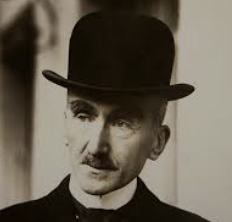
2 months 1 week ago
Religion is to mysticism what popularization is to science. What the mystic finds waiting for him, then, is a humanity which has been prepared to listen to his message by other mystics invisible and present in the religion which is actually taught. Indeed his mysticism itself is imbued with this religion, for such was its starting point. His theology will generally conform to that of the theologians. His intelligence and his imagination will use the teachings of the theologians to express in words what he experiences, and in material images what he sees spiritually. And this he can do easily, since theology has tapped that very current whose source is the mystical. Thus his mysticism is served by religion, against the day when religion becomes enriched by his mysticism. This explains the primary mission which he feels to be entrusted to him, that of an intensifier of religious faith.
▼
Source
Chapter III : Dynamic Religion
2 months 1 week ago
I would say act like a man of thought and think like a man of action.
▼
Source
Speech at the Descartes Conference in Paris (1937) Quoted in The Forbes Scrapbook of Thoughts on the Business of Life (1950), p. 442, as "Think like a man of action, act like a man of thought."
2 months 1 week ago
The open society is one that is deemed in principle to embrace all humanity.
▼
Source
Chapter IV
2 months 1 week ago
Intuition is a method of feeling one's way intellectually into the inner heart of a thing to locate what is unique and inexpressible in it.
▼
Source
Quoted in Georgia O'Keeffe, 1887-1986 : Flowers in the Desert (2000) by Britta Benke, p. 28
2 months 1 week ago
I cannot escape the objection that there is no state of mind, however simple, that does not change every moment.
▼
Source
An Introduction to Metaphysics (1903), translated by T. E. Hulme. New York: G. P. Putnam's Sons, 1912, p. 44
2 months 1 week ago
Sex-appeal is the keynote of our whole civilization.
▼
Source
Chapter IV
2 months 1 week ago
The remembrance of forbidden fruit is the earliest thing in the memory of each of us, as it is in that of mankind.
▼
Source
Chapter I: Moral Obligation
2 months 1 week ago
The present contains nothing more than the past, and what is found in the effect was already in the cause.
▼
Source
Creative Evolution (1907), Chapter I, as translated by Arthur Mitchell (1911), p. 14.; italicized in the original.
2 months 1 week ago
Men do not sufficiently realise that their future is in their own hands. Theirs is the task of determining first of all whether they want to go on living or not. Theirs is the responsibility, then, for deciding if they want merely to live, or intend to make just the extra effort required for fulfilling, even on their refractory planet, the essential function of the universe, which is a machine for the making of gods.
2 months 1 week ago
Why did we obey? The question hardly occurred to us. We had formed the habit of deferring to our parents and teachers. All the same we knew very well that it was because they were our parents, because they were our teachers. Therefore, in our eyes, their authority came less from themselves than from their status in relation to us.
▼
Source
Chapter I: Moral Obligation
2 months 1 week ago
All the living hold together, and all yield to the same tremendous push. The animal takes its stand on the plant, man bestrides animality, and the whole of humanity, in space and in time, is one immense army galloping beside and before and behind each of us in an overwhelming charge able to beat down every resistance and clear the most formidable obstacles, perhaps even death.
▼
Source
Creative Evolution (1907), Chapter III. New York: Henry Holt and Company, 1911, p. 271
2 months 1 week ago
The eyes see only what the mind is prepared to comprehend.
▼
Source
Robertson Davies as quoted in The White Bedouin (2007) by George Potter, p. 241
2 months 1 week ago
The spectacle of what religions have been in the past, of what certain religions still are to-day, is indeed humiliating for human intelligence. What a farrago of error and folly!'
▼
Source
Chapter II : Static Religion
2 months 1 week ago
A philosopher worthy of the name has never said more than a single thing: and even then it is something he has tried to say, rather than actually said. And he has said only one thing because he has seen only one point: and at that it was not so much a vision as a contact...
▼
Source
"L'intuition philosophique (Philosophical Intuition)" (10 April 1911); translated by Mabelle L. Andison in: Henri Bergson, The Creative Mind: An Introduction to Metaphysics, Courier Dover Publications, 2012, p. 91
2 months 1 week ago
People talk, indeed, of a "primitive mentality", as, for example, to-day that of the inferior races, and in days gone by that of humanity in general, at whose door the responsibility for superstition should be laid.
▼
Source
Chapter II : Static Religion
2 months 1 week ago
The prestige of the Nobel Prize is due to many causes, but in particular to its twofold idealistic and international character: idealistic in that it has been designed for works of lofty inspiration; international in that it is awarded after the production of different countries has been minutely studied and the intellectual balance sheet of the whole world has been drawn up. Free from all other considerations and ignoring any but intellectual values, the judges have deliberately taken their place in what the philosophers have called a community of the mind.
▼
Source
In a letter accepting the 1927 Nobel Prize in literature, read by the French minister, Armand Bernard.
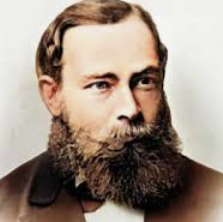
2 months 1 week ago
I hope I may claim in the present work to have made it probable that the laws of arithmetic are analytic judgments and consequently a priori. Arithmetic thus becomes simply a development of logic, and every proposition of arithmetic a law of logic, albeit a derivative one. To apply arithmetic in the physical sciences is to bring logic to bear on observed facts; calculation becomes deduction.
▼
Source
Gottlob Frege (1950 ). The Foundations of Arithmetic. p. 99.
2 months 1 week ago
Often it is only after immense intellectual effort, which may have continued over centuries, that humanity at last succeeds in achieving knowledge of a concept in its pure form, by stripping off the irrelevant accretions which veil it from the eye of the mind.
▼
Source
Translation J. L. Austin (Oxford, 1950) as quoted by Stephen Toulmin, Human Understanding: The Collective Use and Evolution of Concepts (1972) Vol. 1, p. 56.
2 months 1 week ago
Being true is different from being taken as true, whether by one or by many or everybody, and in no case is it to be reduced to it. There is no contradiction in something's being true which everybody takes to be false. I understand by 'laws of logic' not psychological laws of takings-to-be-true, but laws of truth. ...If being true is thus independent of being acknowledged by somebody or other, then the laws of truth are not psychological laws: they are boundary stones set in an eternal foundation, which our thought can overflow, but never displace. It is because of this that they have authority for our thought if it would attain truth. They do not bear the relation to thought that the laws of grammar bear to language; they do not make explicit the nature of our human thinking and change as it changes.
▼
Source
Introduction, Tr. Montgomery Furth
2 months 1 week ago
Facts, facts, facts,' cries the scientist if he wants to emphasize the necessity of a firm foundation for science. What is a fact? A fact is a thought that is true. But the scientist will surely not recognize something which depends on men's varying states of mind to be the firm foundation of science.
▼
Source
Gottlob Frege (1956). "The thought: A logical inquiry" in: Peter Ludlow (1997) Readings in the Philosophy of Language. p. 27
2 months 1 week ago
Gottlob Frege created modern logic including "for all," "there exists," and rules of proof. Leibniz and Boole had dealt only with what we now call "propositional logic" (that is, no "for all" or "there exists"). They also did not concern themselves with rules of proof, since their aim was to reach truth by pure calculation with symbols for the propositions. Frege took the opposite track: instead of trying to reduce logic to calculation, he tried to reduce mathematics to logic, including the concept of number.
▼
Source
Michael J. Beeson, "The Mechanization of Mathematics," in Alan Turing: Life and Legacy of a Great Thinker2004
2 months 1 week ago
The ideal of strictly scientific method in mathematics which I have tried to realise here, and which perhaps might be named after Euclid I should like to describe in the following way... The novelty of this book does not lie in the content of the theorems but in the development of the proofs and the foundations on which they are based... With this book I accomplish an object which I had in view in my Begriffsschrift of 1879 and which I announced in my Grundlagen der Arithmetik. I am here trying to prove the opinion on the concept of number that I expressed in the book last mentioned.
▼
Source
Vol. 1. pp. 137-140, as cited in: Ralph H. Johnson (2012), Manifest Rationality: A Pragmatic Theory of Argument, p. 87
2 months 1 week ago
It really is worth the trouble to invent a new symbol if we can thus remove not a few logical difficulties and ensure the rigour of the proofs. But many mathematicians seem to have so little feeling for logical purity and accuracy that they will use a word to mean three or four different things, sooner than make the frightful decision to invent a new word.
▼
Source
Gottlob Frege in: Dagobert David Runes (1962). Readings in epistemology, theory of knowledge and dialectics. p. 334
CivilSimian.com created by AxiomaticPanic, CivilSimian, Kalokagathia