
2 months 1 week ago
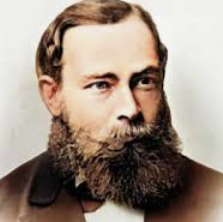
Gottlob Frege created modern logic including "for all," "there exists," and rules of proof. Leibniz and Boole had dealt only with what we now call "propositional logic" (that is, no "for all" or "there exists"). They also did not concern themselves with rules of proof, since their aim was to reach truth by pure calculation with symbols for the propositions. Frege took the opposite track: instead of trying to reduce logic to calculation, he tried to reduce mathematics to logic, including the concept of number.
▼
Source
Michael J. Beeson, "The Mechanization of Mathematics," in Alan Turing: Life and Legacy of a Great Thinker2004
2 months 1 week ago
The ideal of strictly scientific method in mathematics which I have tried to realise here, and which perhaps might be named after Euclid I should like to describe in the following way... The novelty of this book does not lie in the content of the theorems but in the development of the proofs and the foundations on which they are based... With this book I accomplish an object which I had in view in my Begriffsschrift of 1879 and which I announced in my Grundlagen der Arithmetik. I am here trying to prove the opinion on the concept of number that I expressed in the book last mentioned.
▼
Source
Vol. 1. pp. 137-140, as cited in: Ralph H. Johnson (2012), Manifest Rationality: A Pragmatic Theory of Argument, p. 87
2 months 1 week ago
It really is worth the trouble to invent a new symbol if we can thus remove not a few logical difficulties and ensure the rigour of the proofs. But many mathematicians seem to have so little feeling for logical purity and accuracy that they will use a word to mean three or four different things, sooner than make the frightful decision to invent a new word.
▼
Source
Gottlob Frege in: Dagobert David Runes (1962). Readings in epistemology, theory of knowledge and dialectics. p. 334
2 months 1 week ago
A scientist can hardly meet with anything more undesirable than to have the foundations give way just as the work is finished. I was put in this position by a letter from Mr. Bertrand Russell when the work was nearly through the press.
▼
Source
Note in the appendix of Grundlagen der Arithmetik (Vol. 2) after Frege had received a letter of Bertrand Russell in which Russell had explained his discovery of, what is now known as, Russell's paradox.
2 months 1 week ago
If I compare arithmetic with a tree that unfolds upward into a multitude of techniques and theorems while its root drives into the depths, then it seems to me that the impetus of the root.
▼
Source
Gottlob Frege, Montgomery Furth (1964). The Basic Laws of Arithmetic: Exposition of the System. p. 10
2 months 1 week ago
Is it always permissible to speak of the extension of a concept, of a class? And if not, how do we recognize the exceptional cases? Can we always infer from the extension of one concept's coinciding with that of a second, that every object which falls under the first concept also falls under the second?
▼
Source
Vol. 2, p. 127. Replying to Bertrand Russell's letter about Russell's Paradox; quoted in The Stanford Encyclopedia of Philosophy
2 months 1 week ago
Every good mathematician is at least half a philosopher, and every good philosopher is at least half a mathematician.
▼
Source
Attributed to Frege in: A. A. B. Aspeitia (2000), Mathematics as grammar: 'Grammar' in Wittgenstein's philosophy of mathematics during the Middle Period, Indiana University, p. 25
2 months 1 week ago
The historical approach, with its aim of detecting how things began and arriving from these origins at a knowledge of their nature, is certainly perfectly legitimate; but it also has its limitations. If everything were in continual flux, and nothing maintained itself fixed for all time, there would no longer be any possibility of getting to know about the world, and everything would be plunged into confusion.
▼
Source
Translation J. L. Austin (Oxford, 1950) as quoted by Stephen Toulmin, Human Understanding: The Collective Use and Evolution of Concepts (1972) Vol. 1, p. 55.
2 months 1 week ago
A judgment, for me is not the mere grasping of a thought, but the admission of its truth.
▼
Source
Gottlob Frege (1892). On Sense and Reference, note 7.
2 months 1 week ago
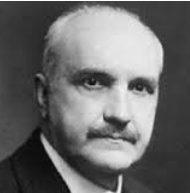
They [the wise spirits of antiquity in the first circle of Dante's Inferno] are condemned, Dante tells us, to no other penalty than to live in desire without hope, a fate appropriate to noble souls with a clear vision of life.
▼
Source
Obiter Scripta
2 months 1 week ago
Skepticism, like chastity, should not be relinquished too readily.
▼
Source
George Santayana, as quoted in Quotations for Our Time (1977) edited by Laurence J. Peter
2 months 1 week ago
I leave you but the sound of many a word In mocking echoes haply overheard, I sang to heaven. My exile made me free,from world to world, from all worlds carried me.
▼
Source
The Poet's Testament
2 months 1 week ago
O world, thou choosest not the better part! It is not wisdom to be only wise, And on the inward vision close the eyes, But it is wisdom to believe the heart. Columbus found a world, and had no chart, Save one that faith deciphered in the skies; To trust the soul's invincible surmise Was all his science and his only art.
▼
Source
O World, Thou Choosest Not
2 months 1 week ago
The idea of Christ is much older than Christianity.
▼
Source
The Idea of Christ in the Gospels
2 months 1 week ago
In the Gospels, for instance, we sometimes find the kingdom of heaven illustrated by principles drawn from observation of this world rather than from an ideal conception of justice; ... They remind us that the God we are seeking is present and active, that he is the living God; they are doubtless necessary if we are to keep religion from passing into a mere idealism and God into the vanishing point of our thought and endeavour.
▼
Source
Interpretations of Poetry and Religion (1900), p. 54
2 months 1 week ago
A child educated only at school is an uneducated child.
▼
Source
"Why I Am Not a Marxist" "Modern Monthly: Volume: 9″ (April 1935); Page: 77-79.
2 months 1 week ago
Although a poem be not made by counting of syllables upon the fingers, yet "numbers" is the most poetical synonym we have for verse, and "measure" the most significant equivalent for beauty, for goodness, and perhaps even for truth. Those early and profound philosophers, the followers of Pythagoras, saw the essence of all things in number, and it was by weight, measure, and number, as we read in the Bible, that the Creator first brought Nature out of the void.
▼
Source
Interpretations of Poetry and Religion (1900), p. 251
2 months 1 week ago
Religions are not true or false, but better or worse.
▼
Source
This statement is presented in quotes in The Philosophy of Religion and Advaita Vedanta (2008) by Arvind Sharma, p. 216
2 months 1 week ago
There is nothing impossible in the existence of the supernatural: its existence seems to me decidedly probable.
▼
Source
The Genteel Tradition at Bay
2 months 1 week ago
The highest form of vanity is love of fame.
2 months 1 week ago
Because the peculiarity of man is that his machinery for reaction on external things has involved an imaginative transcript of these things, which is preserved and suspended in his fancy; and the interest and beauty of this inward landscape, rather than any fortunes that may await his body in the outer world, constitute his proper happiness. By their mind, its scope, quality, and temper, we estimate men, for by the mind only do we exist as men, and are more than so many storage-batteries for material energy. Let us therefore be frankly human. Let us be content to live in the mind.
▼
Source
p. 64
2 months 1 week ago
Animals are born and bred in litters. Solitude grows blessed and peaceful only in old age.
▼
Source
p. 61
2 months 1 week ago
Every moment celebrates obsequies over the virtues of its predecessor.
▼
Source
Ch. XIV
2 months 1 week ago
It is not politics that can bring true liberty to the soul; that must be achieved, if at all, by philosophy;
▼
Source
"The Irony of Liberalism"
2 months 1 week ago
Everything ideal has a natural basis and everything natural an ideal development.
2 months 1 week ago
No system would have ever been framed if people had been simply interested in knowing what is true, whatever it may be. What produces systems is the interest in maintaining against all comers that some favourite or inherited idea of ours is sufficient and right.
2 months 1 week ago
All living souls welcome whatsoever they are ready to cope with; all else they ignore, or pronounce to be monstrous and wrong, or deny to be possible.
▼
Source
Ch. 3, P. 62
2 months 1 week ago
When men and women agree, it is only in their conclusions; their reasons are always different.
▼
Source
Ch. VI: Free Society
2 months 1 week ago
Never since the heroic days of Greece has the world had such a sweet, just, boyish master.
▼
Source
"The British Character"
2 months 1 week ago
Let a man once overcome his selfish terror at his own finitude, and his finitude is, in one sense, overcome.
2 months 1 week ago
Friendship is almost always the union of a part of one mind with the part of another; people are friends in spots.
▼
Source
"Friendships"
2 months 1 week ago
The human race, in its intellectual life, is organized like the bees: the masculine soul is a worker, sexually atrophied, and essentially dedicated to impersonal and universal arts; the feminine is a queen, infinitely fertile, omnipresent in its brooding industry, but passive and abounding in intuitions without method and passions without justice.
2 months 1 week ago
Whenever a nation is converted to Christianity, its Christianity, in practice, must be largely converted to paganism.
▼
Source
p. 35
2 months 1 week ago
In solitude it is possible to love mankind; in the world, for one who knows the world, there can be nothing but secret or open war.
2 months 1 week ago
To know how just a cause we have for grieving is already a consolation.
▼
Source
Ch. IV.: Music
2 months 1 week ago
Liberalism has merely cleared a field in which every soul and every corporate interest may fight with every other for domination. Whoever is victorious in this struggle will make an end of liberalism; and the new order, which will deem itself saved, will have to defend itself in the following age against a new crop of rebels.
▼
Source
"The Irony of Liberalism"
2 months 1 week ago
Even the most inspired verse, which boasts not without a relative justification to be immortal, becomes in the course of ages a scarcely legible hieroglyphic; the language it was written in dies, a learned education and an imaginative effort are requisite to catch even a vestige of its original force. Nothing is so irrevocable as mind.
2 months 1 week ago
Our dignity is not in what we do, but in what we understand.
▼
Source
p. 50
2 months 1 week ago
Religion in its humility restores man to his only dignity, the courage to live by grace.
▼
Source
Ch. 4
2 months 1 week ago
In proportion as a man's interests become humane and his efforts rational, he appropriates and expands a common life, which reappears in all individuals who reach the same impersonal level of ideas.
▼
Source
Ch. VIII: Ideal Society
2 months 1 week ago
The world is a perpetual caricature of itself; at every moment it is the mockery and the contradiction of what it is pretending to be.
▼
Source
"Dickens"
2 months 1 week ago
Perhaps the only true dignity of man is his capacity to despise himself.
2 months 1 week ago
Skepticism is the chastity of the intellect, and it is shameful to surrender it too soon or to the first comer: there is nobility in preserving it coolly and proudly through long youth, until at last, in the ripeness of instinct and discretion, it can be safely exchanged for fidelity and happiness.
▼
Source
The Works of George Santayana p. 65
2 months 1 week ago
To call war the soil of courage and virtue is like calling debauchery the soil of love.
▼
Source
Ch. III: Industry, Government, the peasants
2 months 1 week ago
Persons who feel themselves to be exiles in this world-and what noble mind, from Empedocles down, has not had that feeling?-are mightily inclined to believe themselves citizens of another.
▼
Source
pp. 39-40
2 months 1 week ago
I was still "at the church door". Yet in belief, in the clarification of my philosophy, I had taken an important step. I no longer wavered between alternative views of the world, to be put on or taken off like alternative plays at the theatre. I now saw that there was only one possible play, the actual history of nature and of mankind, although there might well be ghosts among the characters and soliloquies among the speeches. Religions, all religions, and idealistic philosophies, all idealistic philosophies, were the soliloquies and the ghosts. They might be eloquent and profound. Like Hamlet's soliloquy they might be excellent reflective criticisms of the play as a whole. Nevertheless they were only parts of it, and their value as criticisms lay entirely in their fidelity to the facts, and to the sentiments which those facts aroused in the critic.
▼
Source
p. 169
2 months 1 week ago
The mind celebrates a little triumph whenever it can formulate a truth, however unwelcome to the flesh, or discover an actual force, however unfavourable to given interests.
▼
Source
Ch. IV.: Music
2 months 1 week ago
I like to walk about amidst the beautiful things that adorn the world; but private wealth I should decline, or any sort of personal possessions, because they would take away my liberty.
▼
Source
"The Irony of Liberalism"
2 months 1 week ago
Happiness is the only sanction of life; where happiness fails, existence remains a mad and lamentable experiment.
2 months 1 week ago
To understand oneself is the classic form of consolation; to elude oneself is the romantic.
▼
Source
p. 51
CivilSimian.com created by AxiomaticPanic, CivilSimian, Kalokagathia