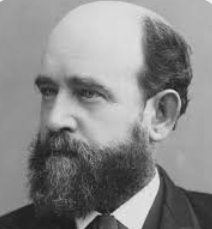
Poverty is a crime. I do not mean that it is a crime to be poor. Murder is a crime; but it is not a crime to be murdered; and a man who is in poverty, I look upon, not as a criminal in himself, so much as the victim of a crime for which others, as well perhaps as himself, are responsible.
Why should charity be offered the unemployed? It is not alms they ask. They are insulted and embittered and degraded by being forced to accept as paupers what they would gladly earn as workers. What they ask is not charity, but the opportunity to use their own labor in satisfying their own wants. Why can they not have that? It is their natural right. He who made food and clothing and shelter necessary to man's life has also given to man, in the power of labor, the means of maintaining that life; and when, without fault of their own, men cannot exert that power, there is somewhere a wrong of the same kind as denial of the right of property and denial of the right of life - a wrong equivalent to robbery and murder on the grandest scale. Charity can only palliate present suffering a little at the risk of fatal disease. For charity cannot right a wrong; only justice can do that. Charity is false, futile, and poisonous when offered as a substitute for justice.
I care nothing for creeds. I am not concerned with any one's religious belief. But I would have men think for themselves. If we do not, we can only abandon one superstition to take up another, and it may be a worse one. It is as bad for a man to think that he can know nothing as to think he knows all. There are things which it is given to all possessing reason to know, if they will but use that reason. And some things it may be there are, that - as was said by one whom the learning of the time sneered at, and the high priests persecuted, and polite society, speaking through the voice of those who knew not what they did, crucified - are hidden from the wise and prudent and revealed unto babes.
As there are many to whom the beauty and harmony of economic laws are hidden, and to whom the inspiring thought of a social order in which there should be work for all, leisure for all, and abundance for all - in which all might be at least as true, as generous and as manful as they wish to be - is shut out by the deference paid to economic authorities who have as it were given bonds not to find that for which they profess to seek, so there are many to-day to whom any belief in the spiritual element, in the existence of God and in a future life, is darkened or destroyed, not so much by difficulties they themselves find, but by what they take to be the teachings of science.
The primary error of the advocates of land nationalization is in their confusion of equal rights with joint rights, and in their consequent failure to realize the nature and meaning of economic rent... In truth the right to the use of land is not a joint or common right, but an equal right; the joint or common right is to rent, in the economic sense of the term. Therefore it is not necessary for the state to take land, it is only necessary for it to take rent. This taking by the commonalty of what is of common right, would of itself secure equality in what is of equal right - for since the holding of land could be profitable only to the user, there would be no inducement for any one to hold land that he could not adequately use, and monopolization being ended no one who wanted to use land would have any difficulty in finding it.
Men must have rights before they can have equal rights. Each man has a right to use the world because he is here and wants to use the world. The equality of this right is merely a limitation arising from the presence of others with like rights. Society, in other words, does not grant, and cannot equitably withhold from any individual, the right to the use of land. That right exists before society and independently of society, belonging at birth to each individual, and ceasing only with his death. Society itself has no original right to the use of land. What right it has with regard to the use of land is simply that which is derived from and is necessary to the determination of the rights of the individuals who compose it. That is to say, the function of society with regard to the use of land only begins where individual rights clash, and is to secure equality between these clashing rights of individuals.
0
⚖0
▼Source
source
Part I : Declaration, Ch. IV : Mr. Spencer's Confusion as to Rights
The rights of men to the use of land are not joint rights: they are equal rights. Were there only one man on earth, he would have a right to the use of the whole earth or any part of the earth. When there is more than one man on earth, the right to the use of land that any one of them would have, were he alone, is not abrogated: it is only limited. The right of each to the use of land is still a direct, original right, which he holds of himself, and not by the gift or consent of the others; but it has become limited by the similar rights of the others, and is therefore an equal right.
0
⚖0
▼Source
source
Part I : Declaration, Ch. III : "Social Statics" - The Right of Property
My primary object is to defend and advance a principle in which I see the only possible relief from much that enthralls and degrades and distorts, turning light to darkness and good to evil, rather than to gage a philosopher or weigh a philosophy. Yet the examination I propose must lead to a decisive judgment upon both.