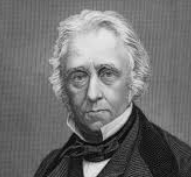
I hold agitation to be essential, not only to the obtaining of good and just measures, but to the existence of a free Government itself. If you choose to adopt the principle of Bishop Horsley, that the people have nothing to do with the laws but to obey them, then, indeed, you may deprecate agitation; but, while we live in a free country, and under a free Government, your deprecation is vain and untenable... I say that the slave-trade would never have been abolished without agitation. I say that slavery would never have been abolished without agitation... What is agitation when it is examined, but the mode in which the people in the great outer assembly debate?
All parties seem to be agreed on one point, that the dialects commonly spoken among the natives of this part of India contain neither literary nor scientific information, and are moreover so poor and rude that, until they are enriched from some other quarter, it will not be easy to translate any valuable work into them.
It will hardly be disputed, I suppose, that the department of literature in which the Eastern writers stand highest is poetry. And I certainly never met with any orientalist who ventured to maintain that the Arabic and Sanscrit poetry could be compared to that of the great European nations. But when we pass from works of imagination to works in which facts are recorded and general principles investigated, the superiority of the Europeans becomes absolutely immeasurable. It is, I believe, no exaggeration to say that all the historical information which has been collected from all the books written in the Sanscrit language is less valuable than what may be found in the most paltry abridgments used at preparatory schools in England. In every branch of physical or moral philosophy, the relative position of the two nations is nearly the same.
I have no knowledge of either Sanscrit or Arabic. But I have done what I could to form a correct estimate of their value. I have read translations of the most celebrated Arabic and Sanscrit works. I have conversed, both here and at home, with men distinguished by their proficiency in the Eastern tongues. I am quite ready to take the oriental learning at the valuation of the orientalists themselves. I have never found one among them who could deny that a single shelf of a good European library was worth the whole native literature of India and Arabia. The intrinsic superiority of the Western literature is indeed fully admitted by those members of the committee who support the oriental plan of education.
In one point I fully agree with the gentlemen to whose general views I am opposed. I feel with them, that it is impossible for us, with our limited means, to attempt to educate the body of the people. We must at present do our best to form a class who may be interpreters between us and the millions whom we govern; a class of persons, Indian in blood and colour, but English in taste, in opinions, in morals, and in intellect. To that class we may leave it to refine the vernacular dialects of the country, to enrich those dialects with terms of science borrowed from the Western nomenclature, and to render them by degrees fit vehicles for conveying knowledge to the great mass of the population.
From the poetry of Lord Byron they drew a system of ethics, compounded of misanthropy and voluptuousness, a system in which the two great commandments were, to hate your neighbour, and to love your neighbour's wife.