

comfortdragon
Member for
1 year 4 monthsUniversal Humanism
- Survive!
- Don’t prevent another from surviving.
- Take care of the less fortunate other.
Survive!
When I first came up with this the experiment was to strip the situation down to the absolute bare structure in which balance or ethical considerations start to matter. So, the first thing you want to do is strip away all life and just have a subject in an environment. Also, you want to strip away any need the subject might have so there’s no compulsion to do anything.
First, you introduce needs for the subject. The subject needs food, air, water and shelter. Without these needs met, the subject dies. There’s need and awareness of death creating urgency. As long as the environment produces the conditions the subject needs, and as long as the subject can attain them, there is balance and death is prevented.
There’s a balance with the environment. Saving up food for winter. Looking for multiple water sources. Building your space to be more convenient.
Add in animals. Now there’s competition. There’s danger to think about. A certain amount of respect for your environment evolves because now other animals can kill and eat you for food. There’s a balance.
At this point justice and fairness haven’t emerged. It more about a balance. For instance, when a human kills a grouse for food, we don’t think about punishing the human for doing that. Why? Is the life of the grouse really worth less then that of the human? Certainly, it has less potential to advance, but its life is inherently valuable regardless of what it does. But, still we can’t even grasp the notion where a human being gets the death penalty for killing a bird. The point being that a single subject with needs in a natural environment lives more in a state of balance then a system of justice. Conflict is built into this system, but we can be better than the balance the system creates alone. We evolve the system from within the system.
Don’t Prevent Another from Surviving
Adding another human into the environment creates a crystalline ethical emergence beyond basic risk assessment. Now the subject has to deal with the notion of fairness and ownership. When the subject is alone, it’s just them in a state of war with the environment and a slight hint of ethics outside of risk to the self due to life’s inherent value.
Now the subject has to consider a mirror essence. Another subject that can perform all the tasks the of the initial subject, including striking a deal. A basic risk assessment tells you that a social contract with a competitor is better than a mutually assured destruction situation where you are potentially a target at all times.
Other complexities arise as you add another subject. The notion of ownership, fairness, sharing. Even generosity beyond transactional accounting.
So, an understood contract or balance between to subjects utilizing the resources of the land in the same area is the best case scenario. But, nature itself sets up the situation where needed resources can become scarce and conflict can emerge from conditions beyond either subject’s complete control.
If we want to live in a basic low risk situation of cooperation eliminating all risks that are possible to eliminate, a rule to not over take our contract partner is a good conservative tool to make. Do more for your partner than you take to avoid resentment. This is not to say when you are talking about millions of people that this dynamic holds true. In that case we have much more ability to take care of those who are old or sick without expectation. This would be an elevation over basic fairness. An advanced level beyond basic transaction.
Take Care of the Less Fortunate Other
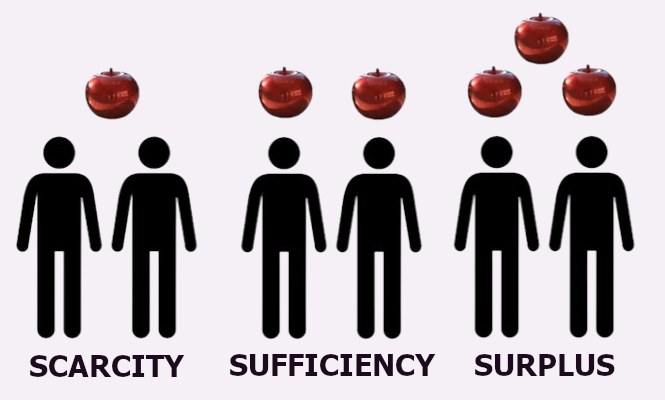
When we move on to systems that involve millions of people, in some ways the state takes on the duty of caretaker. The state has no business calling itself a state if it doesn’t take care of the less fortunate. This has been the groundwork for all of human history. If the poor are not pacified then you have revolution, necessarily. If you can’t create a safety net out of basic empathetic feeling, then do it out of balance and personal risk aversion.
In a world where robots do all the labor, scarcity value and ownership become less pronounced. Also, ethics itself becomes hazy as it has its hard emergence when people en masse are oppressed. When there is balance, ethics still exists in form, but it is less necessary. Less crystalline. Less visible. More bendable.
Understanding the Space
Understanding Universality
Understanding Particularity
Understanding the Dynamic
School Certificates: 19
-
Humanities
-
History
- EXPL 101: Foundations: The Age of Exploration Nov 6, 2026 Certificate →
- ANDL 101: Foundations: Al-Andalus Nov 24, 2026 Certificate →
- PERS 101: Foundations: Ancient Persia Nov 9, 2026 Certificate →
- BRAZ 101: Foundations: History of Brazil Nov 14, 2026 Certificate →
- CARO 101: Foundations: The Carolingian Empire Nov 22, 2026 Certificate →
- SEA 101: Foundations: History of Southeast Asia Nov 12, 2026 Certificate →
- MESO 101: Foundations: Ancient Mesopotamia Nov 4, 2026 Certificate →
- BYZ 101: Foundations: The Byzantine Empire Oct 25, 2026 Certificate →
- ALEX 101: Foundations: The Library of Alexandria Oct 17, 2026 Certificate →
- REN 101: Foundations: The Renaissance Oct 28, 2026 Certificate →
- WWII 101: Foundations: The Second World War Nov 16, 2026 Certificate →
- SOCR 101: Foundations: The Trial of Socrates Oct 19, 2026 Certificate →
-
-
Natural Science
- BIO 101: Foundations: Biology Oct 14, 2026 Certificate →
-
Quantum Mechanics
- QUAN 101: Foundations: Quantum Mechanics Oct 28, 2026 Certificate →
-
Philosophy
- GRK 101: Foundations: Ancient Greek Philosophy Oct 20, 2026 Certificate →
-
Ethics
- ETH 101: Foundations: Ethics Oct 12, 2026 Certificate →
- HON 101: Foundations: Honesty and Integrity Nov 22, 2026 Certificate →
-
Political Philosophy
- MARX 101: Foundations: Marxism Oct 9, 2026 Certificate →
-
Universal Humanism
- UH 101: Foundations: Universal Humanism Oct 12, 2026 Certificate →
CivilSimian.com created by AxiomaticPanic, CivilSimian, Kalokagathia