
4 months 3 weeks ago
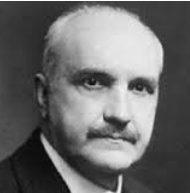
To understand oneself is the classic form of consolation; to elude oneself is the romantic.
▼
Source
p. 51
4 months 3 weeks ago
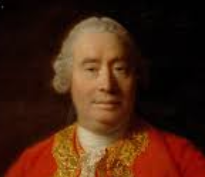
Morality is a subject that interests us above all others: We fancy the peace of society to be at stake in every decision concerning it; and 'tis evident, that this concern must make our speculations appear more real and solid, than where the subject is, in a great measure, indifferent to us. What affects us, we conclude can never be a chimera; and as our passion is engag'd on the one side or the other, we naturally think that the question lies within human comprehension; which, in other cases of this nature, we are apt to entertain some doubt of. Without this advantage I never should have ventur'd upon a third volume of such abstruse philosophy, in an age, wherein the greatest part of men seem agreed to convert reading into an amusement, and to reject every thing that requires any considerable degree of attention to be comprehended.
▼
Source
Part 1, Section 1
4 months 3 weeks ago
Other people’s views and troubles can be contagious. Don’t sabotage yourself by unwittingly adopting negative, unproductive attitudes through your associations with others.
▼
Source
This quote is frequently attributed to Epictetus, e.g. by Brigid Delaney, [https://www.theguardian.com/lifeandstyle/2023/nov/22/stoicism-book-news-brigid-delaney Six ways to make your life easier and more peaceful – by using stoic principles], The Guardia

4 months 3 weeks ago
To inculcate a pure and a simple mode of subsistence was also an express object of pursuit to Pythagoras. He taught a total abstinence from every thing having had the property of animal life. … He taught temperance in all its branches, and a resolute subjection of the appetites of the body to contemplation and the exercises of the mind; and, by the unremitted discipline and authority he exerted over his followers, he caused his lessons to be constantly observed. There was therefore an edifying and an exemplary simplicity that prevailed as far as the influence of Pythagoras extended, that won golden opinions to his adherents at all times that they appeared, and in all places.
4 months 3 weeks ago
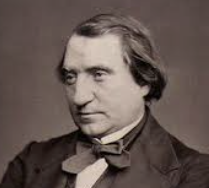
The true Semitic society is that of the tent and of the tribe.
▼
Source
quoted in Arvidsson, Stefan (2006), Aryan Idols: Indo-European Mythology as Ideology and Science, translated by Sonia Wichmann, Chicago and London: The University of Chicago Press."(96) **Renan
4 months 3 weeks ago
206. If someone asked us 'but is that true?' we might say "yes" to him; and if he demanded grounds we might say "I can't give you any grounds, but if you learn more you too will think the same."

4 months 3 weeks ago
Would we have played with our lives for nothing but worldly gain? If our people had run after earth's goods and gold,Need they have smashed idols, and not idols sold?
▼
Source
Shikwa. [https://archive.org/details/ShikwaJawabIShikwaIqbalsDialogueWithAllahTrKhushwantSinghIqbal]
4 months 3 weeks ago
He is the most original mind America has hitherto produced.
▼
Source
George Gilfillan, A Gallery of Literary Portraits (1845), p. 301
4 months 3 weeks ago
But a much graver charge attaches itself, if not to our clergy, certainly to those who have the distribution of ecclesiastical patronage. The richest Church in the world maintains that its funds are quite insufficient for the purposes of religion and that our working clergy are ill-paid, and church accommodation insufficient. It calls therefore upon the nation to endow it with larger funds, and yet, while reluctant to sacrifice its own superfluities, it approves of its rich sinecures being given to reward, — not the professional service of its indefatigable parochial clergy, but those of its members who, having devoted the greater part of their time to scientific researches, have political or private interest enough to obtain such advancement. But this mode of rewarding merit is neither creditable to the Church nor advantageous to science. It tempts into the Church talents which some of its distinguished members maintain to be naturally of a disqualifying, if not of an antagonistic nature to the pursuits of religion; whilst, on the other hand, it makes a most unjust and arbitrary distinction amongst men of science themselves. It precludes those who cannot conscientiously subscribe to Articles, at once conflicting and incomprehensible, from the acquisition of that preferment and that position in society, which thus in many cases, must be conferred on less scrupulous, and certainly less distinguished inquirers into the works of nature. As the honorary distinctions of orders of knight hood are not usually bestowed on the clerical profession, its members generally profess to entertain a great contempt for them, and pronounce them unfit for the recognition of scientific merit.
▼
Source
p. 225-226
4 months 3 weeks ago
American life is a powerful solvent. As it stamps the immigrant, almost before he can speak English, with an unmistakable muscular tension, cheery self-confidence and habitual challenge in the voice and eyes, so it seems to neutralize every intellectual element, however tough and alien it may be, and to fuse it in the native good-will, complacency, thoughtlessness, and optimism.
▼
Source
"The Academic Environment" p. 47 ([http://hdl.handle.net/2027/uc1.b3923968?urlappend=%3Bseq=63 Hathi Trust])
4 months 3 weeks ago
If Providence erases, it is no doubt in order to write.
▼
Source
Chapter II, p. 20
4 months 3 weeks ago
To oppose the torrent of scholastic religion by such feeble maxims as these, that it is impossible for the same thing to be and not to be, that the whole is greater than a part, that two and three make five; is pretending to stop the ocean with a bullrush. Will you set up profane reason against sacred mystery? No punishment is great enough for your impiety. And the same fires, which were kindled for heretics, will serve also for the destruction of philosophers.
▼
Source
Part XI - With regard to reason or absurdity
4 months 3 weeks ago
Why was the Tetraktys so revered? Because to the eyes of the sixth century BC Pythagoreans, it seemed to outline the entire nature of the universe. In geometry — the springboard to the Greeks' epochal revolution in thought — the number 1 represented a point... 2 represented a line... 3 represented a surface... and 4 represented a three-dimensional tetrahedral solid... The Tetraktys, therefore appeared to encompass all the perceived dimensions of space.
▼
Source
Mario Livio, Is God a Mathematician? (2009)
4 months 3 weeks ago
Courage, not cleverness; not even inspiration, is the grain of mustard that grows up to be a great tree.
▼
Source
p. 44e

4 months 3 weeks ago
America is just the country that shows how all the written guarantees in the world for freedom are no protection against tyranny and oppression of the worst kind. There the politician has come to be looked upon as the very scum of society. The peoples of the world are becoming profoundly dissatisfied and are not appeased by the promise of the social-democrats to patch up the State into a new engine of oppression.
▼
Source
Speech (26 September 1891); as quoted in Peter Kropotkin : From Prince to Rebel (1990) by George Woodcock and Ivan Avakumovic, p. 269
4 months 3 weeks ago
If it has been revealed to man that the Almighty made him out of the dust of the earth, and breathed into his nostrils the breath of life, it is in vain to tell a Christian that man was originally a speck of albumen, and passed through the stages of monads and monkeys, before he attained his present intellectual preeminence. If it be a received truth that the Creator has repeatedly interposed in the government of the universe and displayed his immediate agency in miraculous interpositions, it is an insult to any reader to tell him that the being slumbers on his throne and rules under a "primal arrangement in his counsels," and "by a code of laws of unbending operation."
4 months 3 weeks ago
All pain is a punishment, and every punishment is inflicted for love as much as for justice.
▼
Source
"Fifth Dialogue," p. 149
4 months 3 weeks ago
No government, at that time, appeared in the world, nor is perhaps to be found in the records of any history, which subsisted without the mixture of some arbitrary authority, committed to some magistrate; and it might reasonably, beforehand, appear doubtful, whether human society could ever arrive at that state of perfection, as to support itself with no other control, than the general and rigid maxims of law and equity. But the parliament justly thought, that the King was too eminent a magistrate to be trusted with discretionary power, which he might so easily turn to the destruction of liberty. And in the event it has been found, that, though some inconveniencies arise from the maxim of adhering strictly to law, yet the advantages so much overbalance them, as should render the English forever grateful to the memory of their ancestors, who, after repeated contests, at last established that noble principle.
▼
Source
Volume V, Chapter LIV (Indianapolis: Liberty Fund, 1983), pp. 329-30; referring to the abolition of the Star Chamber
4 months 3 weeks ago
One age misunderstands another; and a petty age misunderstands all the others in its own ugly way.
▼
Source
p. 98e
4 months 3 weeks ago
The hospitality of primitive peoples, respect for human life, the sense of reciprocal obligation, compassion for the weak, courage, extending even to the sacrifice of self for others which is first learnt for the sake of children and friends, and later for that of members of the same community — all these qualities are developed in man anterior to all law, independently of all religion, as in the case of the social animals. Such feelings and practices are the inevitable results of social life. Without being, as say priests and metaphysicans, inherent in man, such qualities are the consequence of life in common. But side by side with these customs, necessary to the life of societies and the preservation of the race, other desires, other passions, and therefore other habits and customs, are evolved in human association. The desire to dominate others and impose one's own will upon them; the desire to seize upon the products of the labor of a neighboring tribe; the desire to surround oneself with comforts without producing anything, while slaves provide their master with the means of procuring every sort of pleasure and luxury — these selfish, personal desires give rise to another current of habits and customs.
▼
Source
II

4 months 3 weeks ago
When Thales was asked what was difficult, he said, "To know one’s self." And what was easy, "To advise another."
▼
Source
Thales, 9.
4 months 3 weeks ago
Joseph de Maistre is another of those men whose word, like that of Burke, has vitality. In imaginative power he is altogether inferior to Burke. On the other hand his thought moves in closer order than Burke's, more rapidly, more directly; he has fewer superfluities. Burke is a great writer, but Joseph de Maistre's use of the French language is more powerful, more thoroughly satisfactory, than Burke's use of the English. It is masterly; it shows us to perfection of what that admirable instrument, the French language, is capable.
▼
Source
Matthew Arnold, "Joseph de Maistre on Russia" in English Literature and Irish Politics (1873), p. 87
4 months 3 weeks ago
The great sceptic, with his profound conviction of the imperfection of all human reason and knowledge, did not expect much positive good from political organisation. He knew that the greatest political goods, peace, liberty, and justice, were in their essence negative, a protection against injury rather than positive gifts. No man strove more ardently for peace, liberty and justice. But Hume clearly saw that the further ambitions which wanted to establish some other positive justice on earth were a threat to those values... It was not from the goodness of men but from institutions which "made it the interest even of bad men, to act for the public good" that he expected peace, liberty, and justice. He knew that "every man must be supposed a knave"; though, as he adds, "it appears somewhat strange, that a maxim should be true in politics which is false in fact."
▼
Source
Friedrich Hayek, 'The Legal and Political Philosophy of David Hume' (18 July 1963), in Studies in Philosophy, Politics and Economics (1967), pp. 120-121
4 months 3 weeks ago
Practised for centuries, repression has so badly succeeded that it has but led us into a blind alley from which we can only issue by carrying torch and hatchet into the institutions of our authoritarian past.
4 months 3 weeks ago
Aristippus said that a wise man’s country was the world.
▼
Source
Aristippus, 13.
4 months 3 weeks ago
God is surrounded with people full of love who demand of him the benefits of love which are in his power: thus he is properly the king of love.
4 months 3 weeks ago
It seems to me that it was well said by Madama Serenissima, and insisted on by your reverence, that the Holy Scripture cannot err, and that the decrees therein contained are absolutely true and inviolable. But I should have in your place added that, though Scripture cannot err, its expounders and interpreters are liable to err in many ways; and one error in particular would be most grave and most frequent, if we always stopped short at the literal signification of the words.
4 months 3 weeks ago
It is not sufficient to distribute the profits realized by a trade in equal parts, if at the same time thousands of other workers are exploited. It is a case of PRODUCING THE GREATEST AMOUNT OF GOODS NECESSARY TO THE WELL-BEING OF ALL, WITH THE LEAST POSSIBLE WASTE OF HUMAN ENERGY.
▼
Source
Ch. 8 : Ways and Means
4 months 3 weeks ago
One of the sayings of Diogenes was that most men were within a finger’s breadth of being mad; for if a man walked with his middle finger pointing out, folks would think him mad, but not so if it were his forefinger.
▼
Source
Diogenes, 6.
4 months 3 weeks ago
I reduce to two the systems of philosophy which deal with man's soul. The first and older system is materialism; the second is spiritualism.
4 months 3 weeks ago
Rules necessary for definitions. Not to leave any terms at all obscure or ambiguous without definition; Not to employ in definitions any but terms perfectly known or already explained.
4 months 3 weeks ago
Proposition I. Theorem I: When a projectile is carried in motion compounded from equable horizontal and from naturally accelerated downward [motions], it describes a semiparabolic line in its movement.
▼
Source
Author, Day Four, Stillman Drake translation (1974) p. 269

4 months 3 weeks ago
Everyone is the other, and no one is himself. The they, which supplies the answer to the who of everyday Da-sein, is the nobody to whom every Da-sein has always already surrendered itself, in its being-among-one-another.
▼
Source
Stambaugh translation
4 months 3 weeks ago
One single war — we all know — may be productive of more evil, immediate and subsequent, than hundreds of years of the unchecked action of the mutual-aid principle may be productive of good.
4 months 3 weeks ago
The chief good is the suspension of the judgment, which tranquillity of mind follows like its shadow.
▼
Source
Pyrrho, 11.
4 months 3 weeks ago
In the year 1742 he... received there a position as surgeon to the Guard. In this capacity he made a campaign in Germany, and... was seized by a violent fever, and used this opportunity in order to institute observations upon himself as to the influence of quickened circulation upon thought. He came to the conclusion that thought is nothing but a consequence of the organisation of our mechanism. ...[H]e tried during his convalescence to explain the mental functions by the help of anatomy, and he had his conjectures printed under the title of a 'Natural History of the Soul.' The regimental chaplain sounded the alarm, and soon a universal cry of indignation was raised... His books were recognised as heretical, and he could no longer continue to be surgeon of the Guard. ...about the same time ...writing a satire on his rivals, the foremost Paris practitioners. ...He fled in the year 1746 to Leyden. Here he wrote ...a new satire upon the charlatanism and ignorance of doctors, and soon afterwards (1748) appeared also his 'Homme Machine.'
4 months 3 weeks ago
When I have asked thinking men what reason they had to believe that every fact in the universe is precisely determined by law, the first answer has usually been that the proposition is a "presupposition " or postulate of scientific reasoning. Well, if that is the best that can be said for it, the belief is doomed. Suppose it be " postulated " : that does not make it true, nor so much as afford the slightest rational motive for yielding it any credence. It is as if a man should come to borrow money, and when asked for his security, should reply he "postulated " the loan. To "postulate" a proposition is no more than to hope it is true. There are, indeed, practical emergencies in which we act upon assumptions of certain propositions as true, because if they are not so, it can make no difference how we act. But all such propositions I take to be hypotheses of individual facts. For it is manifest that no universal principle can in its universality be compromised in a special case or can be requisite for the validity of any ordinary inference.
4 months 3 weeks ago
The word “art” does not designate the concept of a mere eventuality; it is a concept of rank.
▼
Source
p. 125
4 months 3 weeks ago
The most beautiful discoveries since the Renaissance, indeed since the beginnings of all science, are the laws governing light, whether moving through a uniform medium, or being reflected from an opaque surface, or changing direction upon entering another transparent medium.
4 months 3 weeks ago
The point I wish to make is this: McKinley gave Rowan a letter to be delivered to Garcia; Rowan took the letter & did not ask, "Where is he at?" By the Eternal! there is a man whose form should be cast in deathless bronze and the statue placed in every college of the land. It is not book-learning young men need, nor instruction about this and that, but a stiffening of the vertebrae which will cause them to be loyal to a trust, to act promptly, concentrate their energies: do the thing — "Carry a message to Garcia!"

4 months 3 weeks ago
Understanding finds nothing but itself when it seeks the essence behind the appearance of things. ‘It is manifest that behind the so-called curtain, which is to hide the inner world, there is nothing to be seen unless we ourselves go behind there, as much in order that we may thereby see, as that there may be something behind there which can be seen.’ P. 111
4 months 3 weeks ago
As long as one does not call his own position into question but regards it as absolute, while interpreting his opponents' ideas as a mere function of the social positions they occupy, the decisive step forward has not yet been taken.
4 months 3 weeks ago
First then, we find that when we regard ideas from a nominalistic, individualistic, sensualistic way, the simplest facts of mind become utterly meaningless. That one idea should resemble another or influence another, or that one state of mind should so much as be thought of in another is, from that standpoint, sheer nonsense.
4 months 3 weeks ago
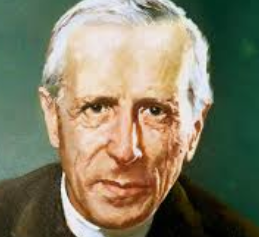
Above all I feel that you must resign yourself to taking me as I am, that is, with the congenital quality (or weakness) which ever since my childhood has caused my spiritual life to be completely dominated by a sort of profound 'feeling' for the organic realness of the World. At first it was an ill-defined feeling in my mind and heart, but as the years have gone by it has gradually become a precise, compelling sense of the Universe's general convergence upon itself; a convergence which coincides with, and culminates at its zenith in, him in quo omina constant, and whom the Society has taught me to love.
▼
Source
Letter from Cape Town to Father General, Jean-Baptiste Janssens (12 October 1951)
4 months 3 weeks ago
If your religion does not change you, then you had better change your religion.
4 months 3 weeks ago
Our mass media have little difficulty in selling particular interests as those of all sensible men. The political needs of society become individual needs and aspirations, their satisfaction promotes business and the commonweal, and the whole appeals to be the very embodiment of Reason.
▼
Source
p. xli
4 months 3 weeks ago
Do not block the way of inquiry.
▼
Source
Vol. I, par. 135
4 months 3 weeks ago
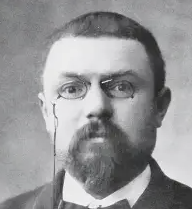
If we study the history of science we see happen two inverse phenomena... Sometimes simplicity hides under complex appearances; sometimes it is the simplicity which is apparent, and which disguises extremely complicated realities....No doubt, if our means of investigation should become more and more penetrating, we should discover the simple under the complex, then the complex under the simple, then again the simple under the complex, and so on, without our being able to foresee what will be the last term. We must stop somewhere, and that science may be possible, we must stop when we have found simplicity. This is the only ground on which we can rear the edifice of our generalizations.
4 months 3 weeks ago
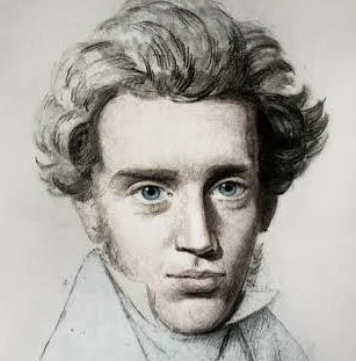
It belongs to the imperfection of everything human that man can only attain his desire by passing through its opposite.
▼
Source
1841
4 months 3 weeks ago
God is inexhaustibly attainable in the totality of our action.
▼
Source
The Divinisation of Our Activities, p. 63
CivilSimian.com created by AxiomaticPanic, CivilSimian, Kalokagathia