

4 months 3 weeks ago
How we come to have the world-views we do is an interesting question. No doubt reason plays a part, but human needs for meaning and purpose are usually more important. At times personal taste may be what decides the issue. There is nothing to say that, when all the work of reason is done, only one view of the world will remain. There may be many that fit everything that can be known. In that case you might as well choose the view of the world you find most interesting or beautiful. Adopting a world-view is more like selecting a painting to furnish a room than testing a scientific theory. The test is how it fits with your life.
▼
Source
Freedom for Über-Marionettes: What Science Won't Tell You (p. 150)
4 months 3 weeks ago
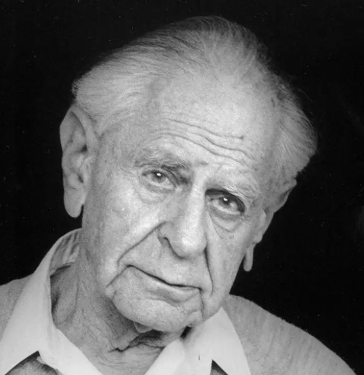
I... believe in the rationalist tradition of a commonwealth of learning, and in the urgent need to preserve this tradition.
4 months 3 weeks ago
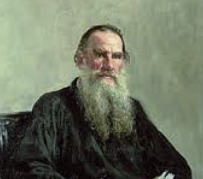
Several times I asked myself, "Can it be that I have overlooked something, that there is something which I have failed to understand? Is it not possible that this state of despair is common to everyone?" And I searched for an answer to my questions in every area of knowledge acquired by man. For a long time I carried on my painstaking search; I did not search casually, out of mere curiosity, but painfully, persistently, day and night, like a dying man seeking salvation. I found nothing.
▼
Source
Pt. I, ch. 5
4 months 3 weeks ago
To become 'ideologists of the working class' (Lenin), 'organic intellectuals' of the proletariat (Gramsci), intellectuals have to carry out a radical revolution in their ideas: a long, painful and difficult re-education. An endless external and internal struggle.
▼
Source
p. 2
4 months 3 weeks ago
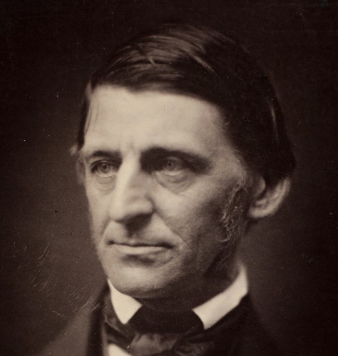
Beauty is the mark God sets upon virtue.
▼
Source
Beauty
4 months 3 weeks ago
Truth is the most powerful thing in the world, since even fiction itself must be governed by it, and can only please by its resemblance.
▼
Source
Vol. 1, p. 8; "A Letter Concerning Enthusiasm".

4 months 3 weeks ago
As Cioran correctly points out, a principal danger of being overcivilized is that one all too easily relapses, out of sheer exhaustion and the unsatisfied need to be "stimulated," into a vulgar and passive barbarism. Thus, "the man who unmasks his fictions" through an indiscriminate pursuit of the lucidity that is promoted by modern liberal culture "renounces his own resources and, in a sense, himself. Consequently, he will accept other fictions which will deny him, since they will not have cropped up from his own depth." There, he concludes, "no man concerned with his own equilibrium may exceed a certain degree of lucidity and analysis."
▼
Source
Susan Sontag, "'Thinking against oneself’: reflections on Cioran," Styles of Radical Will (New York: 1966), p. 85
4 months 3 weeks ago
The essence of liberalism is negotiation, a cautious half measure, in the hope that the definitive dispute, the decisive bloody battle, can be transformed into a parliamentary debate and permit the decision to be suspended forever in an everlasting discussion.
4 months 3 weeks ago
That a joint stock company should be able to carry on successfully any branch of foreign trade, when private adventurers can come into any sort of open and fair competition with them, seems contrary to all experience.
▼
Source
Chapter I, Part III, Article I, p. 810.
4 months 3 weeks ago
Nothing, in fact, is as universal or as ancient as the iniquitous and absurd; truth and justice, on the contrary, are the least universal, the youngest features in the development of human society.
4 months 3 weeks ago
Wisdom, if it were young, would cherish love, nursing it with devotion, deepening it with sacrifice, vitalizing with parentage, making all things subordinate to it till the end. Even though it consumes us in its service and overwhelms us with tragedy, even though it breaks us down with separations, let it be first. How can it matter what price we pay for love?
▼
Source
Ch. 2 : On Youth

4 months 3 weeks ago
To become like God is the ultimate end of all.
4 months 3 weeks ago
Our main conclusions about the state are that a minimal state, limited, to the narrow functions of protection against force, theft, fraud, enforcement of contracts, and so on, is justified, but any more extensive state will violate persons' rights not to be forced to do certain things, and is unjustified; and that the minimal state is inspiring as well as right.
▼
Source
Preface, p. ix
4 months 3 weeks ago
I know—as we all do—very little of the practice and the spoken and written doctrine of former times on the subject of non-resistance to evil. I knew what had been said on the subject by the fathers of the Church—Origen, Tertullian, and others—I knew too of the existence of some so-called sects of Mennonites, Herrnhuters, and Quakers, who do not allow a Christian the use of weapons, and do not enter military service; but I knew little of what had been done by these so-called sects toward expounding the question.
▼
Source
Preface
4 months 3 weeks ago
That those who will take his money, without his consent, in the first place, will use it for his further robbery and enslavement, if he presumes to resist their demands in the future.
4 months 3 weeks ago
It will never make any difference to a hero what the laws are. His greatness will shine and accomplish itself unto the end, whether they second him or not. If he have earned his bread by drudgery, and in the narrow and crooked ways which were all an evil law had left him, he will make it at least honorable by his expenditure. Of the past he will take no heed; for its wrongs he will not hold himself responsible: he will say, All the meanness of my progenitors shall not bereave me of the power to make this hour and company fair and fortunate. Whatsoever streams of power and commodity flow to me, shall of me acquire healing virtue, and become fountains of safety. Cannot I too descend a Redeemer into nature? Whosoever hereafter shall name my name, shall not record a malefactor, but a benefactor in the earth. If there be power in good intention, in fidelity, and in toil, the north wind shall be purer, the stars in heaven shall glow with a kindlier beam, that I have lived. I am primarily engaged to myself to be a public servant of all the gods, to demonstrate to all men that there is intelligence and good will at the heart of things, and ever higher and yet higher leadings. These are my engagements; how can your law further or hinder me in what I shall do to men? On the other hand, these dispositions establish their relations to me. Wherever there is worth, I shall be greeted. Wherever there are men, are the objects of my study and love. Sooner of later all men will be my friends, and will testify in all methods the energy of their regard. I cannot thank your law for my protection. I protect it. It is not in its power to protect me. It is my business to make myself revered. I depend on my honor, my labor, and my dispositions for my place in the affections of mankind, and not on any conventions or parchments of yours.
4 months 3 weeks ago
Both are torn halves of an integral freedom, to which however they do not add up.
▼
Source
[http://www.scribd.com/doc/11510904/Adorno-Letters-to-Walter-Benjamin On high culture and popular culture, in a letter] to Walter Benjamin (18 March 1936)
4 months 3 weeks ago
To speak falsely is the mark of a slave, but the truth is noble.
▼
Source
to Euphrates, Epp. Apoll. 83
4 months 3 weeks ago
An excellent digest of all that is valuable in former Oeconomical writers with many valuable corrective Observations.
▼
Source
Edmund Burke, remark on The Wealth of Nations as recorded by Dugald Stewart (8 April 1784), quoted in Ian Simpson Ross, The Life of Adam Smith (1995; 2nd ed. 2010), p. 376
4 months 3 weeks ago
One free man will say with truth what he thinks and feels amongst thousands of men who by their acts and words attest exactly the opposite. It would seem that he who sincerely expressed his thought must remain alone, whereas it generally happens that every one else, or the majority at least, have been thinking and feeling the same things but without expressing them. And that which yesterday was the novel opinion of one man, to-day becomes the general opinion of the majority. And as soon as this opinion is established, immediately by imperceptible degrees, but beyond power of frustration, the conduct of mankind begins to alter. Whereas at present, every man, even, if free, asks himself, "What can I do alone against all this ocean of evil and deceit which overwhelms us? Why should I express my opinion? Why indeed possess one? It is better not to reflect on these misty and involved questions. Perhaps these contradictions are an inevitable condition of our existence. And why should I struggle alone with all the evil in the world? Is it not better to go with the stream which carries me along ? If anything can be done, it must be done not alone but in company with others." And leaving the most powerful of weapons — thought and its expression — which move the world, each man employs the weapon of social activity, not noticing that every social activity is based on the very foundations against which he is bound to fight, and that upon entering the social activity which exists in our world every man is obliged, if only in part, to deviate from the truth and to make concessions which destroy the force of the powerful weapon which should assist him in the struggle. It is as if a man, who was given a blade so marvelously keen that it would sever anything, should use its edge for driving in nails. We all complain of the senseless order of life, which is at variance with our being, and yet we refuse to use the unique and powerful weapon within our hands — the consciousness of truth and its expression; but on the contrary, under the pretext of struggling with evil, we destroy the weapon, and sacrifice it to the exigencies of an imaginary conflict'.
▼
Source
Ch. 17
4 months 3 weeks ago
No matter how small his portion, let him rejoice in it.
▼
Source
Chapter 2, Section 7, p. 33
4 months 3 weeks ago
Though thou loved her as thyself, As a self of purer clay, Tho' her parting dims the day, Stealing grace from all alive, Heartily know, When half-gods go, The gods arrive.
▼
Source
Give All to Love, st. 4
4 months 3 weeks ago
The more reified the world becomes, the thicker the veil cast upon nature, the more the thinking weaving that veil in its turn claims ideologically to be nature, primordial experience.
▼
Source
p. 7
4 months 3 weeks ago
I have very strongly this feeling... that our everyday life is at one and the same time banal, overfamiliar, platitudinous and yet mysterious and extraordinary.
▼
Source
Heidegger and Modern Existentialism (1977), BBC Productions
4 months 3 weeks ago
It appears... that a work similar in its object and general conception to that of Adam Smith, but adapted to the more extended knowledge and improved ideas of the present age, is the kind of contribution which Political Economy at present requires. The Wealth of Nations is in many parts obsolete, and in all, imperfect. Political Economy... has grown up almost from infancy since the time of Adam Smith; and the philosophy of society... has advanced many steps beyond the point at which he left it.
▼
Source
John Stuart Mill, ' (1848) Preface
4 months 3 weeks ago
In Nekhludoff, as in all people, there were two beings; one spiritual, who sought only such happiness for himself as also benefited others; and the animal being, seeking his own happiness for the sake of which he is willing to sacrifice that of the world.
▼
Source
Ch. 14
4 months 3 weeks ago
Time is composed of time-atoms, i.e., of many parts, which on account of their short duration, cannot be divided. The Mutakallemim undoubtedly saw how Aristotle proved that time, space, and locomotion are of the same nature. ...They, therefore, knew that if time were continuous and divisible ad infinitum, their assumed atom of space would of necessity likewise be divisible. Similarly, if it were supposed that space were continuous... the time-element... could also be divided. This has been shown by Aristotle in... Acroasis [Aristotelis stagyritae acroases physicae]. ...An hour is, e.g., divided into sixty minutes, the second into sixty parts and so on; at last after ten or more successive divisions by sixty, time-elements are obtained which are not subjected to division, and in fact are indivisible.
4 months 3 weeks ago
Solvency is maintained by means of the national debt, on the principle, "If you will not lend me the money, how can I pay you?"
▼
Source
Ability
4 months 3 weeks ago
Synergy is to energy as integration is to differentiation. The word “synergy” means “Behavior of whole systems unpredicted by behavior of any of the systems parts.” Nature is comprehensively synergetic. Since synergy is the only word having that meaning and we have proven experimentally that it is not used by the public, we may conclude that society does not understand nature
4 months 3 weeks ago
This strange and unnatural spectacle of large numbers of willing men who cannot find employment is enough to suggest the true cause to whosoever can think consecutively. For, though custom has dulled us to it, it is a strange and unnatural thing that men who wish to labor, in order to satisfy their wants, cannot find the opportunity — as, since labor is that which produces wealth, the man who seeks to exchange labor for food, clothing, or any other form of wealth, is like one who proposes to give bullion for coin, or wheat for flour. We talk about the supply of labor and the demand for labor, but, evidently, these are only relative terms. The supply of labor is everywhere the same — two hands always come into the world with one mouth, twenty-one boys to every twenty girls; and the demand for labor must always exist as long as men want things which labor alone can procure. We talk about the "want of work," but, evidently, it is not work that is short while want continues; evidently, the supply of labor cannot be too great, nor the demand for labor too small, when people suffer for the lack of things that labor produces. The real trouble must be that supply is somehow prevented from satisfying demand, that somewhere there is an obstacle which prevents labor from producing the things that laborers want. Take the case of any one of these vast masses of unemployed men, to whom, though he never heard of Malthus, it today seems that there are too many people in the world. In his own wants, in the needs of his anxious wife, in the demands of his half-cared-for, perhaps even hungry and shivering children, there is demand enough for labor, Heaven knows! In his own willing hands is the supply. Put him on a solitary island, and though cut off from all the enormous advantages which the co-operation, combination, and machinery of a civilized community give to the productive powers of man yet his two hands can fill the mouths and keep warm the backs that depend upon them. Yet where productive power is at its highest development they cannot. Why? Is it not because in the one case he has access to the material and forces of nature, and in the other this access is denied? Is it not the fact that labor is thus shut off from nature which can alone explain the state of things that compels men to stand idle who would willingly supply their wants by their labor? The proximate cause of enforced idleness with one set of men may be the cessation of demand on the part of other men for the particular things they produce, but trace this cause from point to point, from occupation to occupation, and you will find that enforced idleness in one trade is caused by enforced idleness in another, and that the paralysis which produces dullness in all trades cannot be said to spring from too great a supply of labor or too small a demand for labor, but must proceed from the fact that supply cannot meet demand by producing the things which satisfy want and are the object of labor.
4 months 3 weeks ago
Every stage of education begins with childhood. That is why the most educated person on earth so much resembles a child.
▼
Source
“Miscellaneous Observations,” Philosophical Writings, M. Stolijar, trans. (Albany: 1997) #48
4 months 3 weeks ago
Style ought to prove that one believes in an idea; not only that one thinks it but also feels it.
▼
Source
Letter to Lou Andreas-Salomé (August 1881), in Salomé's biography of Nietzsche, tr. Siegfried Mandel (1988)
4 months 3 weeks ago
When an individual passes from one period of life to another a time comes when he cannot go on in senseless activity and excitement as before, but has to understand that although he has out-grown what before used to direct him, this does not mean that he must live without any reasonable guidance, but rather that he must formulate for himself an understanding of life corresponding to his age, and having elucidated it must be guided by it. And in the same way a similar time must come in the growth and development of humanity.
▼
Source
VI
4 months 3 weeks ago
It is of great advantage that man should know his station, and not imagine that the whole universe exists only for him. We hold that the universe exists because the Creator wills it so; that mankind is low in rank as compared with the uppermost portion of the universe, viz., with the spheres and the stars; but, as regards the angels, there cannot be any real comparison between man and angels, although man is the highest of all beings on earth; i.e., of all the beings formed of the four elements.
▼
Source
Ch.12
4 months 3 weeks ago
Bad times have a scientific value. [...] We learn geology the morning after the earthquake, on ghastly diagrams of cloven mountains, upheaved plains, and the dry bed of the sea.
▼
Source
Considerations by the Way
4 months 3 weeks ago
Synergy means behavior of whole systems unpredicted by the behavior of their parts taken separately.
▼
Source
[http://www.rwgrayprojects.com/synergetics/s01/p0100.html 101.00]
4 months 3 weeks ago
I care nothing for creeds. I am not concerned with any one's religious belief. But I would have men think for themselves. If we do not, we can only abandon one superstition to take up another, and it may be a worse one. It is as bad for a man to think that he can know nothing as to think he knows all. There are things which it is given to all possessing reason to know, if they will but use that reason. And some things it may be there are, that — as was said by one whom the learning of the time sneered at, and the high priests persecuted, and polite society, speaking through the voice of those who knew not what they did, crucified — are hidden from the wise and prudent and revealed unto babes.
▼
Source
Conclusion : The Moral of this Examination
4 months 3 weeks ago
I make this chief distinction between religion and superstition, that the latter is founded on ignorance, the former on knowledge; this, I take it, is the reason why Christians are distinguished from the rest of the world, not by faith, nor by charity, nor by the other fruits of the Holy Spirit, but solely by their opinions, inasmuch as they defend their cause, like everyone else, by miracles, that is by ignorance, which is the source of all malice; thus they turn a faith, which may be true, into superstition.
▼
Source
Letter 21 (73) to Henry Oldenburg , November (1675)
4 months 3 weeks ago
Now to Some it appears not at all worth while to follow out the endless divisions of Nature; and moreover a dangerous undertaking, without fruit and issue. As we can never reach, say they, the absolutely smallest grain of material bodies, never find their simplest compartments, since all magnitude loses itself, forwards and backwards, in infinitude; so likewise is it with the species of bodies and powers; here too one comes on new species, new combinations, new appearances, even to infinitude. These seem only to stop, continue they, when our diligence tires; and so it is spending precious time with idle contemplations and tedious enumerations; and this becomes at last a true delirium, a real vertigo over the horrid Deep

4 months 3 weeks ago
Friends are as companions on a journey, who ought to aid each other to persevere in the road to a happier life.
▼
Source
As quoted in Gems of Thought: Being a Collection of More Than a Thousand Choice Selections, Or Aphorisms, from Nearly Four Hundred and Fifty Different Authors, and on One Hundred and Forty Different Subjects (1888). p. 97 by Charles Northend
4 months 3 weeks ago
The states in which we infuse a transfiguration and a fullness into things and poetize about them until they reflect back our fullness and joy in life...three elements principally: sexuality, intoxication and cruelty — all belonging to the oldest festal joys.
▼
Source
Sec. 801 (Notebook W II 1. Fall 1887, KGW VIII, 2.57-8, KSA 12.393-4)
4 months 3 weeks ago
If the world could write by itself, it would write like Tolstoy.
▼
Source
Isaak Babel, as quoted in The Literary 100 : A Ranking of the Most Influential Novelists, Playwrights, and Poets of All Time (2009) edited by Daniel S. Burt, Infobase Publishing, p. 15
4 months 3 weeks ago
In short, the opinion of Aristotle is this: Everything is the result of management which is constant, which does not come to an end and does not change any of its properties, as e.g., the heavenly beings, and everything which continues according to a certain rule... But that which is not constant, and does not follow a certain rule... is due to chance and not to management; it is in no relation to Divine Providence. Aristotle holds that it is even impossible to ascribe to Providence that management of these things. ...It is the belief of those who turned away from our Law and said: "God hath forsaken the earth." (Ezek. ix. 9)
▼
Source
Ch.17
4 months 3 weeks ago
Fear not, then, thou child infirm, There's no god dare wrong a worm.
▼
Source
Compensation, st. 2
4 months 3 weeks ago
It is a matter of converting the high technology from weaponry to livingry. The essence of livingry is human-life advantaging and environment controlling. With the highest aeronautical and engineering facilities of the world redirected from weaponry to livingry production, all humanity would have the option of becoming enduringly successful.
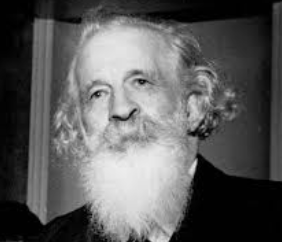
4 months 3 weeks ago
A special kind of beauty exists which is born in language, of language, and for language.
▼
Source
A Retrospective Glance at the Lifework of a Master of Books
4 months 3 weeks ago
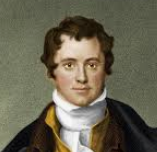
The general properties and chemical activities of potassium and sodium are so very similar that as a matter of commercial production that metal which can be most economically obtained is necessarily the one most largely manufactured, and of the two that metal is sodium. To-day, sodium is made by thousands of tons, and by a process which in principle is identical with that by which it was first made by Davy, i.e., by the of fused caustic soda.
4 months 3 weeks ago
When we speak of the aim and Art observable in Shakespeare's works, we must not forget that Art belongs to Nature; that it is, so to speak, self-viewing, self-imitating, self-fashioning Nature. The Art of a well-developed genius is far different from the Artfulness of the Understanding, of the merely reasoning mind. Shakspeare was no calculator, no learned thinker; he was a mighty, many-gifted soul, whose feelings and works, like products of Nature, bear the stamp of the same spirit; and in which the last and deepest of observers will still find new harmonies with the infinite structure of the Universe; concurrences with later ideas, affinities with the higher powers and senses of man. They are emblematic, have many meanings, are simple and inexhaustible, like products of Nature; and nothing more unsuitable could be said of them than that they are works of Art, in that narrow mechanical acceptation of the word.
4 months 3 weeks ago
Know that death comes to everyone, and that wealth will sometimes be acquired, sometimes lost. Whatever griefs mortals suffer by divine chance, whatever destiny you have, endure it and do not complain. But it is right to improve it as much as you can, and remember this: Fate does not give very many of these griefs to good people.
▼
Source
As quoted in Divine Harmony: The Life and Teachings of Pythagoras by John Strohmeier and Peter Westbrook. (1999)
4 months 3 weeks ago
Most people are not seeking truth; they are searching for comfort in illusions.
CivilSimian.com created by AxiomaticPanic, CivilSimian, Kalokagathia