
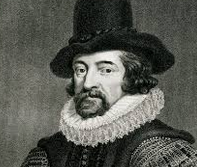
4 months 3 weeks ago
For all knowledge and wonder (which is the seed of knowledge) is an impression of pleasure in itself.
▼
Source
Book I, i, 3
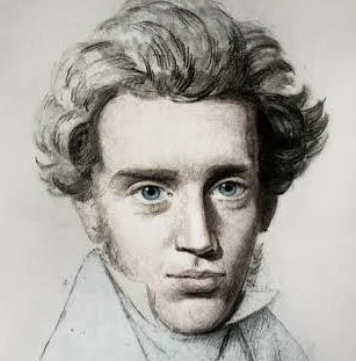
4 months 3 weeks ago
Out of love, God becomes man. He says: Here you see what it is to be a human being; but he adds: Take care, for I am also God — blessed is he who takes no offense at me.
▼
Source
As translated by Howard V. Hong and EdnaH. Hong (1980) | Variant translation; Out of love, God becomes man. He says: "See, here is what it is to be a human being." | p. 161
4 months 3 weeks ago
The worst that can happen under monarchy is rule by a single imbecile, but democracy often means the rule by an assembly of three or four hundred imbeciles.
▼
Source
The Historical Illuminatus as spoken by M. Gabriel Sartines
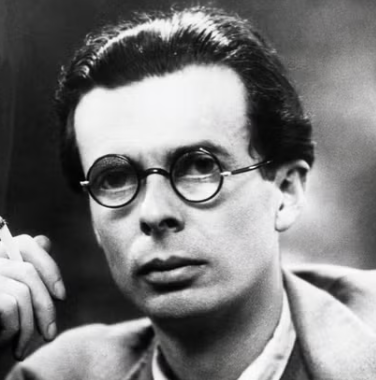
4 months 3 weeks ago
The more powerful and original a mind, the more it will incline towards the religion of solitude.
4 months 3 weeks ago
Lord! what a strange world in which a man cannot remain unique even by taking the trouble to go mad!
▼
Source
Book V, Chapter I: "The Empire of Notting Hill"
4 months 3 weeks ago
Being good is just a matter of temperament in the end.
▼
Source
The Nice and the Good (1968), ch. 14, p. 127. | Murdoch attributed this opinion to her character Kate Gray. It was not her own.
4 months 3 weeks ago
The universal and lasting establishment of peace constitutes not merely a part, but the whole final purpose and end of the science of right as viewed within the limits of reason.
4 months 3 weeks ago
The cause and root of nearly all evils in the sciences is this — that while we falsely admire and extol the powers of the human mind we neglect to seek for its true helps.
▼
Source
Aphorism 9
4 months 3 weeks ago
My dear reader, read aloud, if possible! If you do so, allow me to thank you for it: if you not only do it yourself, if you also influence others to do it, allow me to thank each one of them, and you again and again! (Preface)
4 months 3 weeks ago
If we are to be morally and ethically responsible, there can be no turning back once we find, as we have found, that some of the most basic presuppositions of these values are mistaken. Playing God is indeed playing with fire. But that is what we mortals have done since Prometheus, the patron saint of dangerous discoveries. We play with fire and take the consequences, because the alternative is cowardice in the face of the unknown.
▼
Source
Sovereign Virtue (2000), p. 446
4 months 3 weeks ago
The Ideal Man of the eighteenth century was the Rationalist; of the seventeenth, the Christian Stoic; of the Renaissance, the Free Individual; of the Middle Ages, the Contemplative Saint. And what is our Ideal Man? On what grand and luminous mythological figure does contemporary humanity attempt to model itself? The question is embarrassing. Nobody knows. And, in spite of all the laudable efforts of the Institute for Intellectual Co-operation to fabricate an acceptable Ideal Man for the use of Ministers of Education, nobody, I suspect, will know until such time as a major poet appears upon the scene with the unmistakable revelation. Meanwhile, one must be content to go on piping up for reason and realism and a certain decency.
▼
Source
p. 5
4 months 3 weeks ago
It is not only possible to say a great deal in praise of play; it is really possible to say the highest things in praise of it. It might reasonably be maintained that the true object of all human life is play. Earth is a task garden; heaven is a playground. To be at last in such secure innocence that one can juggle with the universe and the stars, to be so good that one can treat everything as a joke — that may be, perhaps, the real end and final holiday of human souls.
▼
Source
"Oxford from Without"
4 months 3 weeks ago
I am an investigator by inclination. I feel a great thirst for knowledge and an impatient eagerness to advance, also satisfaction at each progressive step. There was a time when I thought that all this could constitute the honor of humanity, and I despised the mob, which knows nothing about it. Rousseau set me straight. This dazzling excellence vanishes; I learn to honor men, and would consider myself much less useful than common laborers if I did not believe that this consideration could give all the others a value, to establish the rights of humanity.
▼
Source
Part III : Selection on Education from Kant's other Writings, Ch. I Pedagogical Fragments, # 55
4 months 3 weeks ago
My Lord St. Albans said that Nature did never put her precious jewels into a garret four stories high, and therefore that exceeding tall men had ever very empty heads.
▼
Source
No. 17
4 months 3 weeks ago
Probably the strongest influence on Buber's concept of realization, however, was the existentialist philosophy of Soren Kierkegaard. In Kierkegaard's earlier works are found the germ of some of Buber's most important early and later ideas: the direct relation between the individual and God in which the individual addresses God as 'Thou,' the insecure and exposed state of every individual as an individual, the concept of the 'knight of faith' who cannot take shelter in the universal but must constantly risk all in the concrete uniqueness of each new situation, the necessity of becoming a true person before going out to relation, and the importance of realizing one's belief in one's life. These similarities plus Buber's own treatment of Kierkegaard in his mature works make it clear that Kierkegaard is one of the most important single influences on Buber's thought.
▼
Source
Maurice S Friedman, [https://catalog.hathitrust.org/Record/010613987 Buber: a life in dialogue] 1956 p. 35
4 months 3 weeks ago
True conservatism rises at the antipodes from individualism. Individualism is social atomism; conservatism is community of spirit.
4 months 3 weeks ago
Facts are ventriloquists' dummies. Sitting on a wise man's knee they may be made to utter words of wisdom; elsewhere, they say nothing, or talk nonsense, or indulge in sheer diabolism.
▼
Source
"Bruno Rontini"
4 months 3 weeks ago
Dogma does not mean the absence of thought, but the end of thought.
▼
Source
Ch I: The Victorian Compromise and Its Enemies ([http://books.google.com/books?id=mKs-AAAAYAAJ&q=%22Dogma+does+not+mean+the+absence+of+thought+but+the+end+of+thought%22&pg=PA43#v=onepage p. 43])
4 months 3 weeks ago
Today, at any leading American university, a Kant, with all his dithering about God, freedom, and immortality, or even a Hume, wouldn't survive a year in graduate school, much less get hired as an instructor.
▼
Source
Tom Wolfe, In the Land of the Rococo Marxists, Harpers, June 2000
4 months 3 weeks ago
There is no moral precept that does not have something inconvenient about it.
▼
Source
As quoted in Dictionary of Foreign Quotations (1980) by Mary Collison, Robert L. Collison, p. 235

4 months 3 weeks ago
Do not ask who I am and do not ask me to remain the same: leave it to our bureaucrats and our police to see that our papers are in order. At least spare us their morality when we write.
▼
Source
The Archaeology of Knowledge (1972), tr. A. M. Sheridan Smith (New York: Pantheon)

4 months 3 weeks ago
It was said that I refused to grant any value to the maternal instinct and to love. This was not so. I simply asked that women should experience them truthfully and freely, whereas they often use them as excuses and take refuge in them, only to find themselves imprisoned in that refuge when those emotions have dried up in their hearts. I was accused of preaching sexual promiscuity; but at no point did I ever advise anyone to sleep with just anyone at just any time; my opinion on this subject is that all choices, agreements and refusals should be made independently of institutions, conventions and motives of self-aggrandizement; if the reasons for it are not of the same order as the act itself, then the only result can be lies, distortions and mutilations.
▼
Source
Force of Circumstances Vol. III (1963) as translated by Richard Howard (1968) - [http://www.marxists.org/reference/subject/ethics/de-beauvoir/1963/interview.htm Excerpt online]
4 months 3 weeks ago
You can do everything with bayonets except sit on them. If you want to preserve your power indefinitely you have to get the consent of the ruled. And this they will do partly by drugs as I foresaw in "Brave new World", and partly by these new techniques of propaganda. They will do it by bypassing the sort of rational side of man and appealing to his subconscious, and his deeper emotions, and his physiology, even, and so making him actually love his slavery. I mean I think this is the danger that actually people may be, in some ways, happy under the new regime. But they will be happy in situations when they oughtn't be happy.
4 months 3 weeks ago
The walls are hung with velvet that is black and soft as sin,And little dwarfs creep out of it and little dwarfs creep in.He holds a crystal phial that has colours like the moon,He touches, and it tingles, and he trembles very soon,And his face is as a fungus of a leprous white and greyLike plants in the high houses that are shuttered from the day.
▼
Source
Lepanto
4 months 3 weeks ago
Every man has his dignity. I'm willing to forget mine, but at my own discretion and not when someone else tells me to.
4 months 3 weeks ago
In the tragedies of the early seventeenth century, madness too provided the dénouement, but it did so in liberating the truth. It still opened onto language, to a renewed form of speech, that of explanation and of the real regained. The most it could ever be was the penultimate moment of tragedy. Not the closing moment, as in Andromaque, where no truth appears, other than, in Delirium, the truth of a passion that finds its fullest, most perfect expression in madness.
▼
Source
Part Two: 2. The Transcendence of Delirium
4 months 3 weeks ago
After wars peace, after peace, another war. Every day men are born and others die.
4 months 3 weeks ago
Somebody ought to make a historical study of the relations between theology and corporal punishment in childhood. I have a theory that, wherever little boys and girls are systematically flagellated, the victims grow up to think of God as - 'Wholly Other'... A people's theology reflects the state of its children's bottoms. Look at the Hebrews - enthusiastic child-beaters. And so were all good Christians in the Age of Faith. Hence Jehovah, hence Original Sin and the infinitely offended Father of Roman and Protestant orthodoxy. Whereas among Buddhists and Hindus education has always been nonviolent. No laceration of little buttocks - therefore Tat tvam asi, thou art That, mind from Mind is not divided.... Major premise: God is Wholly Other. Minor premise: man is totally depraved. Conclusion: Do to your children's bottoms what was done to yours, what your Heavenly Father has been doing to the collective bottom of humanity ever since the Fall: whip, whip, whip!
4 months 3 weeks ago
'You have no business to be an unbeliever. You ought to stand for all the things these stupid people call superstitions. Come now, don't you think there's a lot in those old wives' tales about luck and charms and so on, silver bullets included? What do you say about them as a Catholic?' 'I say I'm an agnostic,' replied Father Brown, smiling. 'Nonsense,' said Aylmer impatiently. 'It's your business to believe things.' 'Well, I do believe some things, of course,' conceded Father Brown; 'and therefore, of course, I don't believe other things.' .
4 months 3 weeks ago
There are but few points in which the English, as a people, are entitled to the moral pre-eminence with which they are accustomed to compliment themselves at the expense of other nations: but, of these points, perhaps the one of greatest importance is, that the higher classes do not lie, and the lower, though mostly habitual liars, are ashamed of lying. To run any risk of weakening this feeling, a difficult one to create, or, when once gone, to restore, would be a permanent evil too great to be incurred for so very temporary a benefit as the ballot would confer, even on the most exaggerated estimate necessity.
▼
Source
[https://en.wikisource.org/wiki/Thoughts_on_Parliamentary_Reform Thoughts on Parliamentary Reform] (1859), pp. 48–49
4 months 3 weeks ago
Create all the happiness you are able to create: remove all the misery you are able to remove. Every day will allow you to add something to the pleasure of others, or to diminish something of their pains. And for every grain of enjoyment you sow in the bosom of another, you shall find a harvest in your own bosom; while every sorrow which you pluck out from the thoughts and feelings of a fellow creature shall be replaced by beautiful peace and joy in the sanctuary of your soul.
▼
Source
Advice to a young girl (22 June 1830)
4 months 3 weeks ago
If ever anybody dedicated his whole life to the "enthusiasm for truth and justice" — using this phrase in the good sense — it was Diderot.
▼
Source
Friedrich Engels in Diderot: Interpreter of Nature (London: 1937)
4 months 3 weeks ago
Above the punitive city hangs this iron spider; and the criminal who is to be thus crucified by the new law is parricide.
▼
Source
Chapter Three, The Gentle Way in Punishment

4 months 3 weeks ago
I only wish that wisdom were the kind of thing that flowed ... from the vessel that was full to the one that was empty.
▼
Source
Plato, Symposium, 175d
4 months 3 weeks ago
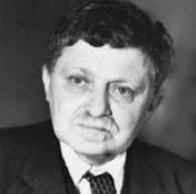
When the pessimist Besme says in La Ville that nothing is, he means precisely this, that there is no experience that withstands the analytical test.
4 months 3 weeks ago
For my own part, not believing in universal selfishness, I have no difficulty in admitting that Communism would even now be practicable among the elite of mankind, and may become so among the rest.
4 months 3 weeks ago
My intention was not to deal with the problem of truth, but with the problem of the truth-teller, or of truth telling... Who is able to tell the truth, about what, with what consequences, and with what relations to power. ...With the question of the importance of telling the truth, knowing who is able to tell the truth, and knowing why we should tell the truth, we have the roots of what we could call the 'critical' tradition in the West.
4 months 3 weeks ago
We admitted that everything living is born of the dead. For if the soul existed before birth, and in coming to life and being born can be born only from death and dying, must she not after death continue to exist, since she has to be born again?

4 months 3 weeks ago
Puerto Ricans...castrate their children. As a reality check. Because they know the colonial systems will not allow their children to achieve all the things that they want in life. I saw that in my childhood. I saw this impotence that was imposed on me since my childhood. But I said, “I’m going to build an empire of uselessness. I’m going to take from the Americans the ingenuity, and I’m going to take from the Spaniards the wisdom.” And that’s what I do. I mix wisdom and ingenuity.
▼
Source
On decolonization of the self. [https://www.academia.edu/36916781/A_Graphic_Revolution_Talking_Poetry_and_Politics_with_Giannina_Braschi] (Chiricú Journal, 2018)
4 months 3 weeks ago
There is room in the world, no doubt, and even in old countries, for a great increase of population, supposing the arts of life to go on improving, and capital to increase. But even if innocuous, I confess I see very little reason for desiring it. The density of population necessary to enable mankind to obtain, in the greatest degree, all the advantages both of co-operation and of social intercourse, has, in all the most populous countries, been attained. If the earth must lose that great portion of its pleasantness which it owes to things that the unlimited increase of wealth and population would extirpate from it, for the mere purpose of enabling it to support a larger but not a better or a happier population, I sincerely hope, for the sake of posterity, that they will be content to be stationary, long before necessity compels them to it..
▼
Source
Book IV, Chapter VI, §3, p. 516
4 months 3 weeks ago
Foucault has a very good discussion of what the theory of crime—modern economic theory of crime and punishment—has to say. I didn't have much to disagree with him. I think he was accurate on what it has to say. He goes also into a theory of formation of laws, which I had a lot of sympathy with as well.
▼
Source
Gary Becker, in “Becker on Ewald on Foucault on Becker” (May 9, 2012)
4 months 3 weeks ago
If death had only been the end of all, the wicked would have had a good bargain in dying, for they would have been happily quit not only of their body, but of their own evil together with their souls. But now, as the soul plainly appears to be immortal, there is no release or salvation from evil except the attainment of the highest virtue and wisdom. For the soul when on her progress to the world below takes nothing with her but nurture and education...

4 months 3 weeks ago
Kuhn acknowledges having used the term "paradigm" in two different meanings. In the first one, "paradigm" designates what the members of a certain scientific community have in common, that is to say, the whole of techniques, patents and values shared by the members of the community. In the second sense, the paradigm is a single element of a whole, say for instance Newton’s Principia, which, acting as a common model or an example... stands for the explicit rules and thus defines a coherent tradition of investigation. Thus the question is for Kuhn to investigate by means of the paradigm what makes possible the constitution of what he calls "normal science". That is to say, the science which can decide if a certain problem will be considered scientific or not. Normal science does not mean at all a science guided by a coherent system of rules, on the contrary, the rules can be derived from the paradigms, but the paradigms can guide the investigation also in the absence of rules. This is precisely the second meaning of the term "paradigm", which Kuhn considered the most new and profound, though it is in truth the oldest.
4 months 3 weeks ago
My father's moral inculcations were at all times mainly those of the "Socratici viri;" justice, temperance (to which he gave a very extended application), veracity, perseverance, readiness to encounter pain and especially labour; regard for the public good; estimation of persons according to their merits, and of things according to their intrinsic usefulness; a life of exertion in contradiction to one of self-indulgent sloth. These and other moralities he conveyed in brief sentences, uttered as occasion arose, of grave exhortation, or stern reprobation and contempt.But though direct moral teaching does much, indirect does more; and the effect my father produced on my character, did not depend solely on what he said or did with that direct object, but also, and still more, on what manner of man he was.
▼
Source
([https://archive.org/details/autobiography01mill/page/47/mode/1up p. 47])
4 months 3 weeks ago
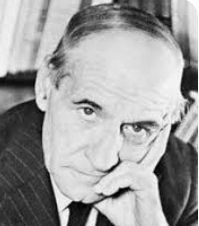
Is it not altogether absurd that, under actual circumstances, the average man does not feel spontaneously, and without being preached at, an ardent enthusiasm for those sciences and the related ones of biology?… Every day furnishes a new invention which this average man utilises. Every day produces a new anesthetic or vaccine from which this average man benefits. … How is it, nevertheless, that there is no sign of the masses imposing on themselves any sacrifice of money or attention in order to endow science more worthily? Far from this being the case, the post-war period has converted the man of science into a new social pariah.
▼
Source
Chap.IX: The Primitive and the Technical
4 months 3 weeks ago
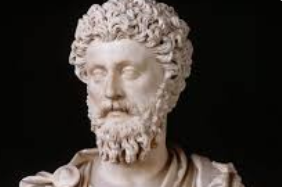
For we carry our fate with us — and it carries us. (Hays translation)
▼
Source
III, 4
4 months 3 weeks ago
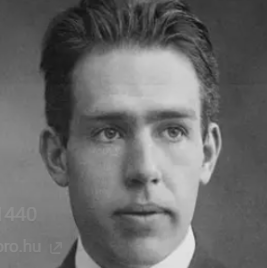
Anyone who is not shocked by quantum theory has not understood it.
▼
Source
Werner Heisenberg recounts a personal conversation he had with Pauli and Bohr in 1952 in which Bohr says, "Those who are not shocked when they first come across quantum theory cannot possibly have understood it." Heisenberg, Werner, Physics and Beyond. (N
4 months 3 weeks ago
The state will only ever be a half of itself.
▼
Source
Socrates in Plato's Republic talking about women lacking rights. As quoted by Bettany Hughes: [http://www.telegraph.co.uk/women/womens-life/11785181/Feminism-started-with-the-Buddha-and-Confucius-25-centuries-ago.html "Feminism started with the Buddha and
4 months 3 weeks ago
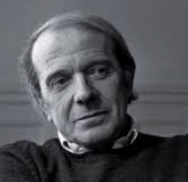
In order for music to free itself, it will have to pass over to the other side — there where territories tremble, where the structures collapse, where the ethoses get mixed up, where a powerful song of the earth is unleashed, the great ritornelles that transmutes all the airs it carries away and makes return.
▼
Source
from Essays Critical and Clinical, p. 104.
4 months 3 weeks ago
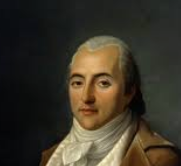
It was in America, while I was fighting for the cause of industrial liberty, that I first felt the desire to see this plant from another world flower in my own country. This desire has since dominated all my thinking. Without respite I studied the course of advancement and further assured myself that the progress of civilisation could have no other end. And I invoked this aim of true liberty, true public happiness, with my most fervent hopes. For me every event that seemed to point in that direction was a new joy, a new hope. The French Revolution broke out, and at first it seemed to be thoroughly industrial. But it soon lost that character, and the many noble efforts which ought to have produced liberty resulted only in the tyranny of the Jacobins and military despotism. A happier age has now started to dawn for us: at last a government has been established which declares its own power to be based on the power of opinion. Ever since then France has yielded to common sense, that is, to the free discussion of its common interests.
CivilSimian.com created by AxiomaticPanic, CivilSimian, Kalokagathia