
4 months 3 weeks ago
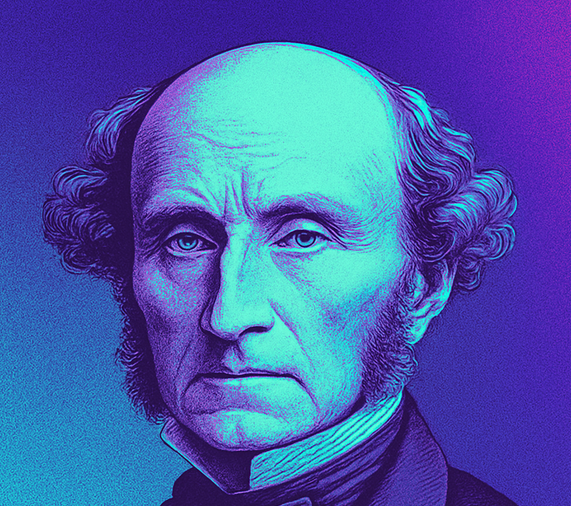
Society should treat all equally well who have deserved equally well of it, that is, who have deserved equally well absolutely. This is the highest abstract standard of social and distributive justice; towards which all institutions, and the efforts of all virtuous citizens, should be made in the utmost degree to converge.
▼
Source
Ch. 5

4 months 3 weeks ago
Ion explains that in a democracy there are three categories of citizens: ...(1) citizens who have neither power nor wealth, and who hate all who are superior ...; (2) ...good Athenians ...capable of exercising power, but because they are wise ...keep silent ... and do not worry about ...political affairs ...(3) ...reputable men who are powerful, and use their discourse and reason to participate ...[T]he first group ...will hate him; the second ...will laugh at the young man who wishes to be regarded as one of the First Citizens of Athens; and the ...politicians, will be jealous ...and will try to get rid of him.

4 months 3 weeks ago
How grievously I was disappointed! ...I found my philosopher altogether forsaking mind and any other principle of order, but having recourse to air, and ether, and water, and other eccentricities. I might compare him to a person that began by maintaining generally that mind is the cause of the actions of Socrates, but who, when endeavored to explain the causes of my several actions in detail, went on to show that I sit here because my body is made up of bones and muscles; and the bones he would say, are hard and have ligaments which divide them, and the muscles are elastic, and they cover the bones, which also have a covering or environment of flesh and skin which contains them; and as the bones are lifted at their joints by the contraction or relaxation of the muscles, I am able to bend my limbs, and this is why I am sitting here in a curved posture... and he would have a similar explanation of my talking to you, which he would attribute to sound, and air, and hearing, and he would assign ten thousand other causes of the same sort, forgetting to mention the true cause, which is that Athenians have thought fit to condemn me, and accordingly I have thought it better and more right to remain here and undergo my sentence; for I am inclined to think that these muscles and bones of mine would have gone off to Megara or Boeotia... if they had been guided only by their idea of what was best, and if I had not chosen as the better and nobler part... to undergo any punishment that the State inflicts.

4 months 3 weeks ago
I fear freedom. I, above all, fear the freedom that is above all feardom.
4 months 3 weeks ago
It is evident that this, among many other of the purposes of my father's scheme of education, could not have been accomplished if he had not carefully kept me from having any great amount of intercourse with other boys. He was earnestly bent upon my escaping not only the ordinary corrupting influence which boys exercise over boys, but the contagion of vulgar modes of thought and feeling; and for this he was willing that I should pay the price of inferiority in the accomplishments which schoolboys in all countries chiefly cultivate. The deficiencies in my education were principally in the things which boys learn from being turned out to shift for themselves, and from being brought together in large numbers.
▼
Source
([https://archive.org/details/autobiography01mill/page/35/mode/1up p. 35])
4 months 3 weeks ago
Even to-day, in spite of some signs which are making a tiny breach in that sturdy faith, even to-day, there are few men who doubt that motorcars will in five years' time be more comfortable and cheaper than to-day. They believe in this as they believe that the sun will rise in the morning. The metaphor is an exact one. For, in fact, the common man, finding himself in a world so excellent, technically and socially, believes that it has been produced by nature, and never thinks of the personal efforts of highly-endowed individuals which the creation of this new world presupposed. Still less will he admit the notion that all these facilities still require the support of certain difficult human virtues, the least failure of which would cause the rapid disappearance of the whole magnificent edifice.… These traits together make up the well-known psychology of the spoilt child.
▼
Source
Chap. VI: The Dissection Of The Mass-Man Begins
4 months 3 weeks ago
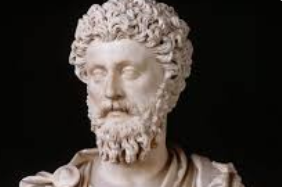
Yet living and dying, honour and dishonour, pain and pleasure, riches and poverty, and so forth are equally the lot of good men and bad. Things like these neither elevate nor degrade; and therefore they are no more good than they are evil.
▼
Source
II, 11
4 months 3 weeks ago
Anyone who is not shocked by quantum theory has not understood it.
▼
Source
As quoted in Meeting the Universe Halfway (2007) by Karen Michelle Barad, p. 254, with a footnote citing The Philosophical Writings of Niels Bohr (1998). | Variants: Those who are not shocked when they first come across quantum mechanics cannot possibly h
4 months 3 weeks ago
If I am to live longer, perhaps I must live out my old age, seeing and hearing less, understanding worse, coming to learn with more difficulty and to be more forgetful, and growing worse than those to whom I was once superior. Indeed, life would be unliveable, even if I did not notice the change. And if I see the change, how could life not be even more wretched and unpleasant?
▼
Source
Memorabilia IV.8.8
4 months 3 weeks ago
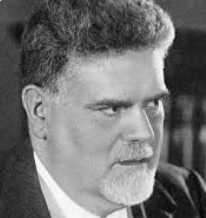
After criticising Georg Wilhelm Friedrich Hegel so much for establishing a system of categories that predetermined the path that spiritual development had to follow, the neo-Hegelians of Italy were unable to do anything other than replace it with a more restricted set of categories from which we cannot escape. What a beautiful story, deluding itself that it is walking when in reality it is always standing still in the small circle of those few forms, marking its steps in a monotonous rhythm! But life has little respect for these a priori assumptions; it teaches us that spiritual categories, no less than the physical-mathematical categories of space, time, cause and quantity, are schemes that we construct to coordinate our experiences, and that they have nothing fixed, nothing necessary or eternal that can be deduced a priori.
4 months 3 weeks ago
In this frame of mind it occurred to me to put the question directly to myself: "Suppose that all your objects in life were realized; that all the changes in institutions and opinions which you are looking forward to, could be completely effected at this very instant: would this be a great joy and happiness to you?" And an irrepressible self-consciousness distinctly answered, "No!" At this my heart sank within me: the whole foundation on which my life was constructed fell down. All my happiness was to have been found in the continual pursuit of this end. The end had ceased to charm, and how could there ever again be any interest in the means? I seemed to have nothing left to live for.
▼
Source
([https://archive.org/details/autobiography01mill/page/133/mode/1up pp. 133-134])
4 months 3 weeks ago
This fighting-shy of every obligation partly explains the phenomenon, half ridiculous, half disgraceful, Of the setting-up in our days of the platform of "youth" as youth. … In comic fashion people call themselves "young," because they have heard that youth has more rights than obligations, since it can put off the fulfilment of these latter to the Greek Kalends of maturity. …[T]he astounding thing at present is that these take it as an effective right precisely in order to claim for themselves all those other rights which only belong to the man who has already done something.
▼
Source
Chapter XV: We Arrive At The Real Question
4 months 3 weeks ago
People try to get away from it all—to the country, to the beach, to the mountains. You always wish that you could too. Which is idiotic: you can get away from it anytime you like. By going within. Nowhere you can go is more peaceful—more free of interruptions—than your own soul.
▼
Source
IV, 4(Hays translation)
4 months 3 weeks ago
Socrates gave a lot of advice, and he was given Hemlock to drink.
▼
Source
Rose Kennedy, in an interview with Barbara Walters (November 1968)

4 months 3 weeks ago
Put personal ambition away from you, and then you will find consolation in living or in dying, whatever may happen to you.
▼
Source
3 May 1849
4 months 3 weeks ago
In those days I had seen little further than the old school of political economists into the possibilities of fundamental improvement in social arrangements. Private property, as now understood, and inheritance, appeared to me, as to them, the dernier mot of legislation: and I looked no further than to mitigating the inequalities consequent on these institutions, by getting rid of primogeniture and entails. The notion that it was possible to go further than this in removing the injustice—for injustice it is, whether admitting of a complete remedy or not—involved in the fact that some are born to riches and the vast majority to poverty, I then reckoned chimerical, and only hoped that by universal education, leading to voluntary restraint on population, the portion of the poor might be made more tolerable. In short, I was a democrat, but not the least of a Socialist. We were now much less democrats than I had been, because so long as education continues to be so wretchedly imperfect, we dreaded the ignorance and especially the selfishness and brutality of the mass: but our ideal of ultimate improvement went far beyond Democracy, and would class us decidedly under the general designation of Socialists. While we repudiated with the greatest energy that tyranny of society over the individual which most Socialistic systems are supposed to involve, we yet looked forward to a time when society will no longer be divided into the idle and the industrious; when the rule that they who do not work shall not eat, will be applied not to paupers only, but impartially to all; when the division of the produce of labour, instead of depending, as in so great a degree it now does, on the accident of birth, will be made by concert on an acknowledged principle of justice; and when it will no longer either be, or be thought to be, impossible for human beings to exert themselves strenuously in procuring benefits which are not to be exclusively their own, but to be shared with the society they belong to. The social problem of the future we considered to be, how to unite the greatest individual liberty of action, with a common ownership in the raw material of the globe, and an equal participation of all in the benefits of combined labour. We had not the presumption to suppose that we could already foresee, by what precise form of institutions these objects could most effectually be attained, or at how near or how distant a period they would become practicable. We saw clearly that to render any such social transformation either possible or desirable, an equivalent change of character must take place both in the uncultivated herd who now compose the labouring masses, and in the immense majority of their employers. Both these classes must learn by practice to labour and combine for generous, or at all events for public and social purposes, and not, as hitherto, solely for narrowly interested ones. But the capacity to do this has always existed in mankind, and is not, nor is ever likely to be, extinct. Education, habit, and the cultivation of the sentiments, will make a common man dig or weave for his country, as readily as fight for his country. True enough, it is only by slow degrees, and a system of culture prolonged through successive generations, that men in general can be brought up to this point. But the hindrance is not in the essential constitution of human nature. Interest in the common good is at present so weak a motive in the generality not because it can never be otherwise, but because the mind is not accustomed to dwell on it as it dwells from morning till night on things which tend only to personal advantage. When called into activity, as only self-interest now is, by the daily course of life, and spurred from behind by the love of distinction and the fear of shame, it is capable of producing, even in common men, the most strenuous exertions as well as the most heroic sacrifices. The deep-rooted selfishness which forms the general character of the existing state of society, is so deeply rooted, only because the whole course of existing institutions tends to foster it; modern institutions in some respects more than ancient, since the occasions on which the individual is called on to do anything for the public without receiving its pay, are far less frequent in modern life, than the smaller commonwealths of antiquity.
▼
Source
([https://archive.org/details/autobiography01mill/page/230/mode/1up pp. 230-233])
4 months 3 weeks ago
Time is a sort of river of passing events, and strong is its current; no sooner is a thing brought to sight than it is swept by and another takes its place, and this too will be swept away.
▼
Source
IV, 43

4 months 3 weeks ago
Human beings are social animals. We were social before we were human.
▼
Source
Chapter 1, The Origins Of Altruism, p. 3

4 months 3 weeks ago
We shall never learn to know ourselves except by endeavoring to know God; for, beholding His greatness we realize our own littleness; His purity shows us our foulness; and by meditating upon His humility we find how very far we are from being humble.
▼
Source
First Mansions, Ch. 2 : The Human Soul, as translated by the Benedictines of Stanbrook (1911), revised and edited by Fr. Benedict Zimmerman

4 months 3 weeks ago
A peace must be had; and all mankind sees plainly now, in how vile a manner former opportunities were neglected of making a better than at this hour we have reason to expect.
▼
Source
Letter to Lord Orrery (30 March 1711), quoted in 'The Letters of Henry St. John to the Earl of Orrery, 1709–1711', ed. H. T. Dickinson, Camden Miscellany, Vol. XXVI (1975), p. 163
4 months 3 weeks ago
In bodily presence, though not commanding, at sixty he was attractive, spare in build, his voice low but harmonious, his eye sympathetic and responsive. His perfect simplicity and candour, friendly gravity with no accent of the don, his readiness of interest and curiosity, the evident love of truth and justice and improvement as the standing habit of mind—all this diffused a high, enlightening ethos that, aided by the magic halo of accepted fame, made him extraordinarily impressive.
▼
Source
p. 53
4 months 3 weeks ago
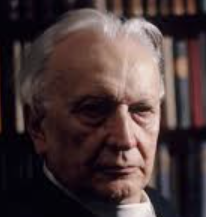
The would-be climber must be able to make himself liked ... please his superiors — avoid showing independence except in those matters wherein independence is expected of him by his chiefs... the winners in the race have qualities which disincline them to allow others to be their true selves. Hence the winners snub all those who aim at adequate self-expression, speaking of them as pretentious, eccentric, biased, unpractical, and measuring their achievements by insincere standards.
4 months 3 weeks ago
The controlling Intelligence understands its own nature, and what it does, and whereon it works.
▼
Source
VI, 5
4 months 3 weeks ago
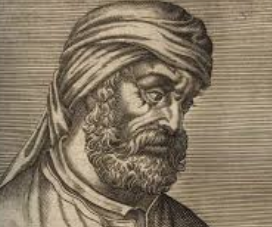
For the very Church itself is, properly and principally, the Spirit Himself, in whom is the Trinity of the One Divinity—Father, Son, and Holy Spirit. (The Spirit) combines that Church which the Lord has made to consist in “three.” And thus, from that time forward, every number (of persons) who may have combined together into this faith is accounted “a Church,” from the Author and Consecrator (of the Church). And accordingly “the Church,” it is true, will forgive sins: but (it will be) the Church of the Spirit, by means of a spiritual man; not the Church which consists of a number of bishops. For the right and arbitrament is the Lord’s, not the servant’s; God’s Himself, not the priest’s.
▼
Source
Chapter XXI.—Of the Difference Between Discipline and Power, and of the Power of the Keys.
4 months 3 weeks ago
My aim is to fix this principle, that limitations on a crown ought to be carried as far as it is necessary to secure the liberties of a people; and that all such limitations may subsist, without weakening or endangering monarchy.
▼
Source
p. 97
4 months 3 weeks ago
Adorn thyself with simplicity and with indifference towards the things which lie between virtue and vice. Love mankind. Follow God. The poet says that Law rules all. And it is enough to remember that law rules all.
▼
Source
VII, 31

4 months 3 weeks ago
It is now almost my sole rule of life to clear myself of cants and formulas, as of poisonous Nessus shirts.
▼
Source
Letter to His Wife (1835).
4 months 3 weeks ago
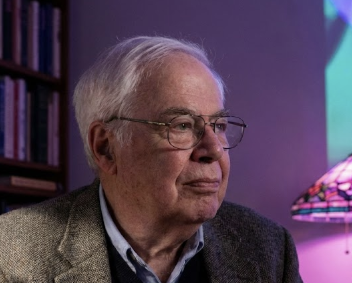
To abjure the notion of the “truly human” is to abjure the attempt to divinize the self as a replacement for a divinized world.
▼
Source
Contingency, Irony, and Solidarity (1989), p. 35
4 months 3 weeks ago
This is said with more spirit than truth.
▼
Source
St. Augustine on some of Tertullian's bolder statements.
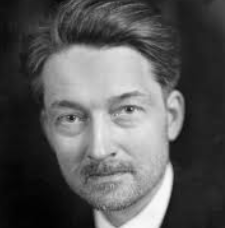
4 months 3 weeks ago
In each of us there dwells a mystery, and that mystery is the human personality.
▼
Source
The Rights of Man and Natural Law (1943), p. 2.
4 months 3 weeks ago
Look to the essence of a thing, whether it be a point of doctrine, of practice, or of interpretation.
▼
Source
Πρόσεχε τῷ ὑποκειμένῳ ἢ τῇ ἐνεργείᾳ ἢ τῷ δόγματι ἢ τῷ σημαινομένῳ. | VIII, 22
4 months 3 weeks ago
A mystic bond of brotherhood makes all men one.
▼
Source
Essays, Goethe's Works.

4 months 3 weeks ago
She hath several ways to break up house, but her best is without a disease. This is her mystical walk, an exit only to return.

4 months 3 weeks ago
In the beginning of the year 1665 I found the method of approximating Series and the Rule for reducing any dignity of any Binomial into such a series. The same year in May I found the method of tangents of Gregory and Slusius, and in November had the direct method of Fluxions, and the next year in January had the Theory of Colours, and in May following I had entrance into the inverse method of Fluxions. And the same year I began to think of gravity extending to the orb of the Moon, and having found out how to estimate the force with which [a] globe revolving within a sphere presses the surface of the sphere, from Kepler's Rule of the periodical times of the Planets being in a sesquialterate proportion of their distances from the centers of their orbs I deduced that the forces which keep the Planets in their Orbs must [be] reciprocally as the squares of their distances from the centers about which they revolve: and thereby compared the force requisite to keep the Moon in her orb with the force of gravity at the surface of the earth, and found them answer pretty nearly. All this was in the two plague years of 1665 and 1666, for in those days I was in the prime of my age for invention, and minded Mathematicks and Philosophy more than at any time since. What Mr Hugens has published since about centrifugal forces I suppose he had before me. At length in the winter between the years 1676 and 1677 I found the Proposition that by a centrifugal force reciprocally as the square of the distance a Planet must revolve in an Ellipsis about the center of the force placed in the lower umbilicus of the Ellipsis and with a radius drawn to that center describe areas proportional to the times. And in the winter between the years 1683 and 1684 this Proposition with the Demonstration was entered in the Register book of the R. Society. And this is the first instance upon record of any Proposition in the higher Geometry found out by the method in dispute. In the year 1689 Mr Leibnitz, endeavouring to rival me, published a Demonstration of the same Proposition upon another supposition, but his Demonstration proved erroneous for want of skill in the method.
▼
Source
(ca. 1716) [https://books.google.com/books?id=3wcjAAAAMAAJ&pg=PR18 A Catalogue of the Portsmouth Collection of Books and Papers Written by Or Belonging to Sir Isaac Newton] (1888) Preface | Also partially quoted in Sir Sidney Lee (ed.), The Dictionary of
4 months 3 weeks ago
The day when efficacy would prevail over truth will never come for the Church, for then the gates of hell would have prevailed against her.
▼
Source
p. 94.
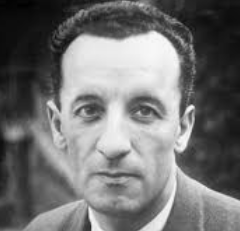
4 months 3 weeks ago
Machiavelli is the complete contrary of a machiavellian, since he describes the tricks of power and “gives the whole show away.” The seducer and the politician, who live in the dialectic and have a feeling and instinct for it, try their best to keep it hidden.
▼
Source
p. 59
4 months 3 weeks ago
Objective judgment, now, at this very moment. Unselfish action, now, at this very moment. Willing acceptance—now, at this very moment—of all external events. That's all you need. (Hays translation)
▼
Source
IX, 6
4 months 3 weeks ago
Speak to any small man of a high, majestic Reformation, of a high majestic Luther; and forthwith he sets about “accounting” for it; how the “circumstances of the time” called for such a character, and found him, we suppose, standing girt and road-ready, to do its errand; how the “circumstances of the time” created, fashioned, floated him quietly along into the result; how, in short, this small man, had he been there, could have per formed the like himself! For it is the “force of circumstances” that does everything; the force of one man can do nothing. Now all this is grounded on little more than a metaphor. We figure Society as a “Machine,” and that mind is opposed to mind, as body is to body; whereby two, or at most ten, little minds must be stronger than one great mind. Notable absurdity! For the plain truth, very plain, we think is, that minds are opposed to minds in quite a different way; and one man that has a higher Wisdom, a hitherto unknown spiritual Truth in him, is stronger, not than ten men that have it not, or than ten thousand, but than all men that have it not; and stands among them with a quite ethereal, angelic power, as with a sword out of Heaven's own armory, sky-tempered, which no buckler, and no tower of brass, will finally withstand.

4 months 3 weeks ago
It takes time to live. Like any work of art, life needs to be thought about.
4 months 3 weeks ago
Bless'd souls, whose care it was this first to knowAnd thus the mansions of the light attain:How credible to hold that minds like these Transcend both human littleness and vice.If Thou, O Jehovah, my God, wilt enlighten me, darkness shall be made light.
▼
Source
p.56
4 months 3 weeks ago
The landscape has been so totally changed, the ways of thinking have been so deeply affected, that it is very hard to get hold of what it was like before... It is very hard to realize how total a change in outlook he has produced.
▼
Source
Hermann Bondi, "Newton and the Twentieth Century—A Personal View" in Let Newton Bel A New Perspective on his Life and Works (1988) R. Flood, J. Fauvel, M. Shortland, R. Wilson p. 241.
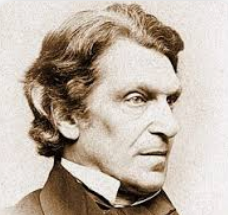
4 months 3 weeks ago
All spiritual strength for ourselves, all noble ties to one another, have their real source in that inner sanctuary where God denies his lonely audience to none. Its secrets are holy; its asylum, inviolate; its consolations, sure; and all are open to the simple heart-word, "Thou art my hiding-place."
▼
Source
Vol. II, p. 253.
4 months 3 weeks ago
What need is there of suspicious fear, since it is in thy power to inquire what ought to be done? And if thy seest clear, go by this way content, without turning back: but if thy dost not see clear, stop and take the best advisers. But if any other things oppose thee, go on according to thy powers with due consideration, keeping to that which appears to be just. For it is best to reach this object, and if thou dost fail, let thy failure be in attempting this. He who follows reason in all things is both tranquil and active at the same time, and also cheerful and collected.
▼
Source
X, 12

4 months 3 weeks ago
To tell the truth, I couldn't care less about the relativity of knowledge, simply because the world does not deserve to be known.
4 months 3 weeks ago
Philosophy complains that Custom has hoodwinked us, from the first; that we do everything by Custom, even Believe by it; that our very Axioms, let us boast of Free-thinking as we may, are oftenest simply such Beliefs as we have never heard questioned. Nay, what is Philosophy throughout but a continual battle against Custom; an ever-renewed effort to transcend the sphere of blind Custom, and so become Transcendental?
▼
Source
Bk. III, ch. 8.
4 months 3 weeks ago
It happens that the stage sets collapse. Rising, streetcar, four hours in the office or the factory, meal, streetcar, four hours of work, meal, sleep and Monday Tuesday Wednesday Thursday Friday and Saturday according to the same rhythm — this path is easily followed most of the time. But one day the "why" arises and everything begins in that weariness tinged with amazement.
4 months 3 weeks ago
In practice we always base our preparations against an enemy on the assumption that his plans are good; indeed, it is right to rest our hopes not on a belief in his blunders, but on the soundness of our provisions. Nor ought we to believe that there is much difference between man and man, but to think that the superiority lies with him who is reared in the severest school.
▼
Source
Variant translation: "Instead, we think the plans of our neighbors are as good as our own, and we can't work out whose chances at war are better in a speech. So we always make our preparations in action, on the assumption that our enemies know what they a
4 months 3 weeks ago
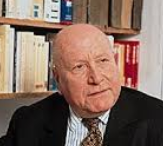
The idea that a culture can preserve its originality by barricading itself against foreign influences is an old illusion that has always produced the opposite of the desired result. Isolation breeds sterility. It is the free circulation of cultural products and talents that allows each society to perpetuate and renew itself.
▼
Source
p. 105
4 months 3 weeks ago
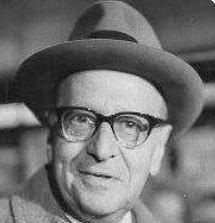
The characteristic activity of science is not construction, but induction. The more often something has occurred in the past, the more certain that it will in all the future. Knowledge relates solely to what is and to its recurrence. New forms of being, especially those arising from the historical activity of man, lie beyond empiricist theory. Thoughts which are not simply carried over from the prevailing pattern of consciousness, but arise from the aims and resolves of the individual, in short, all historical tendencies that reach beyond what is present and recurrent, do not belong to the domain of science.
▼
Source
p. 144.
4 months 3 weeks ago
That to expect bad people not to injure others is crazy. It's to ask the impossible. And to let them behave like that to other people but expect them to exempt you is arrogant—the act of a tyrant. (Hays translation)
▼
Source
XI, 18
CivilSimian.com created by AxiomaticPanic, CivilSimian, Kalokagathia