
4 months 3 weeks ago
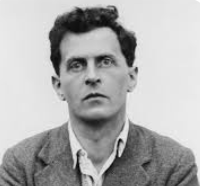
467. I am sitting with a philosopher in the garden; he says again and again "I know that that's a tree", pointing to a tree that is near us. Someone else arrives and hears this, and I tell them: "This fellow isn't insane. We are only doing philosophy."
4 months 3 weeks ago
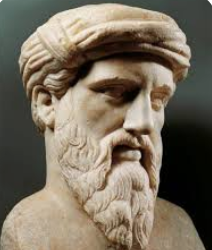
The nature is pleased to nature. The nature overcomes the nature. The Nature dominated nature.
▼
Source
Synesios in a comment about Demokritos, in K. C. Schmieder, The History of Alchemy (2005) p. 64; a translation of Geschichte der Alchemie (1832).
4 months 3 weeks ago
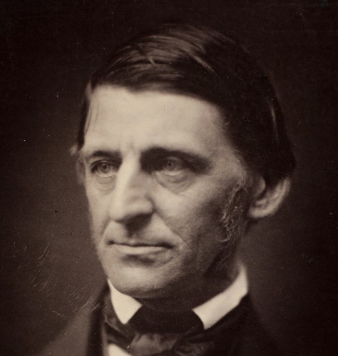
There was a majesty about him beyond all other men I have known, and he habitually dwelt in that ampler and diviner air to which most of us, if ever, only rise in spurts.
▼
Source
James Russell Lowell, as quoted in Oliver Wendell Holmes's Ralph Waldo Emerson (1884)
4 months 3 weeks ago
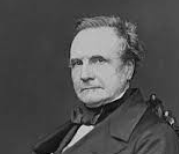
In the course of my inquiries, I met with the work upon the Trinity, by Dr. Samuel Clarke. This I carefully examined, and although very far from being satisfied, I ceased from further inquiry. This change arose probably from my having acquired the much more valuable work of the same author, on the Being and Attributes of God. This I studied, and felt that its doctrine was much more intelligible and satisfactory than that of the former work. I may now state, as the result of a long life spent in studying the works of the Creator, that I am satisfied they afford far more satisfactory and more convincing proofs of the existence of a supreme Being than any evidence transmitted through human testimony can possibly supply.
▼
Source
"Passages from the life of a philosopher", The Athanasian Creed , p. 403
4 months 3 weeks ago
O world, thou choosest not the better part!It is not wisdom to be only wise,And on the inward vision close the eyes,But it is wisdom to believe the heart.Columbus found a world, and had no chart,Save one that faith deciphered in the skies;To trust the soul's invincible surmiseWas all his science and his only art.
▼
Source
[http://www.bartleby.com/236/270.html O World, Thou Choosest Not] (1894)
4 months 3 weeks ago
There is nothing but violence in the universe; but we are spoiled by a modern philosophy that tells us all is good, whereas evil has tainted everything, and in a very real sense, all is evil, since nothing is in its place.
▼
Source
Chapter III, p. 31
4 months 3 weeks ago
What a noble privilege is it of human reason to attain the knowledge of the supreme Being; and, from the visible works of nature, be enabled to infer so sublime a principle as its supreme Creator? But turn the reverse of the medal. Survey most nations and most ages. Examine the religious principles, which have, in fact, prevailed in the world. You will scarcely be persuaded, that they are any thing but sick men's dreams: Or perhaps will regard them more as the playsome whimsies of monkies in human shape, than the serious, positive, dogmatical asseverations of a being, who dignifies himself with the name of rational.
▼
Source
Part XV - General corollary

4 months 3 weeks ago
Not one of the philosophical ideas in Part I of the commentary is peculiarly Neoplatonic. The doctrine of the Threeness of things... is found in Aristotle and goes back to the early Pythagoreans or to Homer even; paragraph 8 is mathematical in content rather than philosophical... although there is an allusion in it to the Monad as the principle of finitudes, again a very early Pythagorean doctrine; and these two paragraphs are the source of [Heinrich] Sitter's suggestion of the authorship of Proclus. As a matter of fact, the philosophical notions in Part I have been borrowed for the most part directly from Plato, with two or three exceptions that are Aristotelian... Plato's Theaetetus, Parmenides, and the Laws, are specifically mentioned. The Timaeus forms the background of much of the thought. And the Platonism of a mathematician of the turn of the third century A. D. need not surprise us, if we but recall Aristotle's accusation that the Academy tended to turn philosophy into mathematics.
▼
Source
pp. 40-41.
4 months 3 weeks ago
A hero looks death in the face, real death, not just the image of death. Behaving honourably in a crisis doesn't mean being able to act the part of a hero well, as in the theatre, it means being able to look death itself in the eye. For an actor may play lots of different roles, but at the end of it all he himself, the human being, is the one who has to die.
▼
Source
p. 50e

4 months 3 weeks ago
I of course take a negative attitude about a great deal that is happening, and I have said so directly and frankly to many of those who stand at the head of government. They behave well towards me, and many things I asked were carried out. They even proposed that I should take part in their work, but I refused. As an anarchist, I cannot reconcile myself to any government.
▼
Source
About the Bolshevik revolution, as quoted in Peter Kropotkin : From Prince to Rebel (1990) by George Woodcock and Ivan Avakumovic, p. 428
4 months 3 weeks ago
Had Mr. Darwin written a work on the change of species, as determined by observation and experiment, without any other object but that of advancing natural science, he would have obtained a high place among philosophical naturalists. But after reading his work in which the name of the Creator is never distinctly mentioned, we can hardly believe that scientific truth was the only object the author had in view. Researches, conducted under the influence of other motives, are not likely to stand the test of a rigorous scrutiny; and some of Mr. Darwin's not unfriendly critics have produced ample evidence that the idol of speculation has been occasionally worshipped at the expense of truth.
4 months 3 weeks ago
Genius does not seem to derive any great support from syllogisms. Its carriage is free; its manner has a touch of inspiration. We see it come, but we never see it walk.
▼
Source
"Tenth Dialogue"
4 months 3 weeks ago
Afyer the union of philosophy with the popular religion, upon the first establishment of Christianity, nothing was more usual, among all religious teachers, than declarations against reason, against the senses, against every principle derived merely from human research and inquiry.
▼
Source
Cleanthes to Demea, Part I
4 months 3 weeks ago
You must always be puzzled by mental illness. The thing I would dread most, if I became mentally ill, would be your adopting a common sense attitude; that you could take it for granted that I was deluded.
▼
Source
Conversation of 1947 or 1948
4 months 3 weeks ago
When a physiologist speaks now of the life of a plant or of an animal, he sees rather an agglomeration, a colony of millions of separate individuals than a personality one and indivisible. He speaks of a federation of digestive, sensual, nervous organs, all very intimately connected with one another, each feeling the consequence of the well-being or indisposition of each, but each living its own life. Each organ, each part of an organ in its turn is composed of independent cellules which associate to struggle against conditions unfavorable to their existence. The individual is quite a world of federations, a whole universe in himself.

4 months 3 weeks ago
Chilo advised, "not to speak evil of the dead."
▼
Source
Chilo, 2.
4 months 3 weeks ago
[A] fierce absolutist, a furious theocrat, an intransigent legitimist, apostle of a monstrous trinity composed of pope, king and hangman, always and everywhere the champion of the hardest, narrowest and most inflexible dogmatism, a dark figure out of the Middle Ages, part learned doctor, part inquisitor, part executioner.
▼
Source
Émile Faguet, Politiques et Moralistes du Dix-neuvieme Siècle (1899)
4 months 3 weeks ago
Hume's philosophy, whether true or false, represents the bankruptcy of eighteenth-century reasonableness. He starts out, like Locke, with the intention of being sensible and empirical, taking nothing on trust, but seeking whatever instruction is to be obtained from experience and observation. But having a better intellect than Locke's, a greater acuteness in analysis, and a smaller capacity for accepting comfortable inconsistencies, he arrives at the disastrous conclusion that from experience and observation nothing is to be learnt. There is no such thing as a rational belief... We cannot help believing, but no belief can be grounded in reason. Nor can one line of action be more rational than another, since all alike are based upon irrational convictions. This last conclusion, however, Hume seems not to have drawn... It was inevitable that such a self-refutation of rationality should be followed by a great outburst of irrational faith. The quarrel between Hume and Rousseau is symbolic: Rousseau was mad but influential; Hume was sane but had no followers.
▼
Source
Bertrand Russell; A History of Western Philosophy, Book Three, Part I, Chapter 17. Hume
4 months 3 weeks ago
The Roman Empire was a State in the real sense of the word. To this day it remains the legist's ideal. Its organs covered a vast domain with a tight network. Everything gravitated towards Rome: economic and military life, wealth, education, nay, even religion. From Rome came the laws, the magistrates, the legions to defend the territory, the prefects and the gods, The whole life of the Empire went back to the Senate — later to the Caesar, the all powerful, omniscient, god of the Empire. Every province, every district had its Capitol in miniature, its small portion of Roman sovereignty to govern every aspect of daily life. A single law, that imposed by Rome, dominated that Empire which did not represent a confederation of fellow citizens but was simply a herd of subjects. Even now, the legist and the authoritarian still admire the unity of that Empire, the unitarian spirit of its laws and, as they put it, the beauty and harmony of that organization. But the disintegration from within, hastened by the barbarian invasion; the extinction of local life, which could no longer resist the attacks from outside on the one hand nor the canker spreading from the centre on the other; the domination by the rich who had appropriated the land to themselves and the misery of those who cultivated it — all these causes reduced the Empire to a shambles, and on these ruins a new civilization developed which is now ours.
▼
Source
I
4 months 3 weeks ago
Bion used to say that the way to the shades below was easy; he could go there with his eyes shut.
▼
Source
Bion, 3.
4 months 3 weeks ago
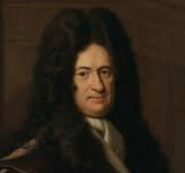
The consequences of beliefs that go against the providence of a perfectly good, wise, and just God, or against that immortality of souls which lays them open to the operations of justice.... I even find that somewhat similar opinions, by stealing gradually into the minds of men of high station who rule the rest and on whom affairs depend, and by slithering into fashionable books, are inclining everything toward the universal revolution with which Europe is threatened, and are completing the destruction of what still remains in the world of the generous Greeks and Romans who placed love of country and of the public good, and the welfare of before fortune and even before life.
▼
Source
Nouveaux essais sur l'entendement humain (1704)

4 months 3 weeks ago
These two states which it is necessary to know together in order to see the whole truth, being known separately, lead necessarily to one of these two vices, pride or indolence, in which all men are invariably led before grace, since if they do not remain in their disorders through laxity, they forsake them through vanity, so true is that which you have just repeated to me from St. Augustine, and which I find to a great extent; for in fact homage is rendered to them in many ways.
4 months 3 weeks ago
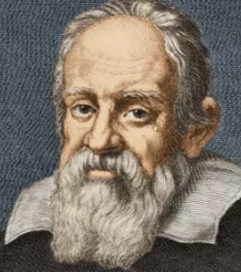
I do not feel obliged to believe that the same God who has endowed us with senses, reason, and intellect has intended us to forgo their use and by some other means to give us knowledge which we can attain by them.
4 months 3 weeks ago
What chiefly attracts the gardener to the great cities is stable ; and this is not wanted so much for increasing the richness of the soil—one tenth part of the manure used by the French gardeners would do for that purpose—but for keeping the soils at a certain temperature. Early vegetables pay best, and in order to obtain early produce not only the air but the soil as well must be warmed... by putting great quantities of properly mixed manure into the soil; its heats it...
4 months 3 weeks ago
When asked what wine he liked to drink, he replied, "That which belongs to another."
▼
Source
Diogenes, 6.

4 months 3 weeks ago
The soul follows the progress of the body, as it does the progress of education.
4 months 3 weeks ago
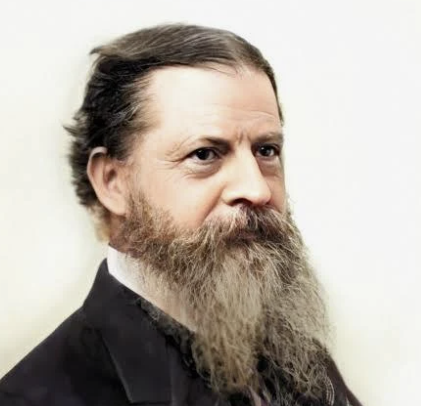
It is the man of science, eager to have his every opinion regenerated, his every idea rationalized, by drinking at the fountain of fact, and devoting all the energies of his life to the cult of truth, not as he understands it, but as he does not yet understand it, that ought properly to be called a philosopher. To an earlier age knowledge was power — merely that and nothing more; to us it is life and the summum bonum. Emancipation from the bonds of self, of one's own prepossessions, importunately sought at the hands of that rational power before which all must ultimately bow, — this is the characteristic that distinguishes all the great figures of nineteenth-century science from those of former periods.
▼
Source
"The Century's Great Men in Science" in The 19th Century : A Review of Progress During the Past One Hundred Years in the Chief Departments of Human Activity (1901), published by G. P. Putnam's Sons.
4 months 3 weeks ago
All who say the same things do not possess them in the same manner; and hence the incomparable author of the pauses with so much care to make it understood that we must not judge of the capacity of a man by the excellence of a happy remark that we heard him make. ...let us penetrate, says he, the mind from which it proceeds... it will oftenest be seen that he will be made to disavow it on the spot, and will be drawn very far from this better thought in which he does not believe, to plunge himself into another, quite base and ridiculous.
▼
Source
Montaigne, Essais, liv. III, chap. viii.—Faugère
4 months 3 weeks ago
My dear Kepler, what would you say of the learned here, who, replete with the pertinacity of the asp, have steadfastly refused to cast a glance through the telescope? What shall we make of this? Shall we laugh, or shall we cry?
▼
Source
Letter to Johannes Kepler (1610), as quoted in The Crime of Galileo (1955) by Giorgio De Santillana

4 months 3 weeks ago
The human body is essentially something other than an animal organism.
▼
Source
Letter on Humanism (1947)
4 months 3 weeks ago
Ordinarily, and in most philosophical works, too, we take it that each individual experience is perfectly private to, or is enjoyed only by, just that very individual. But, for both so many philosophers and so many philosophically innocent thinkers, that may be no more than an enormously widespread and deeply ingrained error. In point of fact, the real situation may be that each of these experientially similar individuals is similarly related to the very same single experience with me and all my overlappers, it really may be that each of us is having—in the way of having quite peculiar to experiences—on and the same individual experience.
▼
Source
pp. 392–393
4 months 3 weeks ago
In quotation not only does language turn on itself, but it does so word by word and expression by expression, and this reflexive twist is inseparable from the convenience and universal applicability of the device. Here we already have enough to draw the interest of the philosopher of language.
▼
Source
Donald Davidson. "Quotation" in: Theory and Decision, March 1979, Vol. 11, Iss. 1, pp 27-40; Cited by Willis Goth Regier, Quotology, (2010), p. 4
4 months 3 weeks ago
Some minds will jump here jump to the conclusion that a past idea cannot in any sense be present. But that is hasty and illogical. How extravagant too, to pronounce our whole knowledge of the past to be mere delusion! Yet it would seem that the past is completely beyond the bounds of possible experience as a Kantian thing-in-itself.
4 months 3 weeks ago
Later, after it was all over, the historian Friedrich Meinecke tried to explain 'the German catastrophe' by arguing that technical specialization had caused some educated Germans (not him, needless to say) to lose sight of the humanistic values of Goethe and Schiller; thus they were unable to resist Hitler's 'mass Machiavellianism'. Thomas Mann was unusual in being able to recognize even at the time that, in 'Brother Hitler', the entire German Bildungsburgertum possessed a monstrous younger sibling who embodied some of their deepest-rooted aspirations. An academic education, far from inoculating people against Nazism, made them more likely to embrace it. So much for the greatness of the German universities. Their fall from grace was personified by the readiness of Martin Heidegger, the greatest German philosopher of his generation, to jump on the Nazi bandwagon, a swastika pin in his lapel.
▼
Source
Niall Ferguson, The War of the World: Twentieth-Century Conflict and the Descent of the West (2006), p. xliii
4 months 3 weeks ago
Let us calculate the motion of bodies, but also consult the plans of the Intelligence that makes them move.It seems that the ancient philosophers made the first attempts at this sort of science, in looking for metaphysical relationships between numbers and material bodies. When they said that God occupies himself with geometry, they surely meant that He unites in that science the works of His power with the perspectives of His wisdom.From the all too few ancient geometers who undertook such studies, we have little that is intelligible or well-founded. The perfection which geometry has acquired since their time puts us in a better position to succeed, and may more than compensate for the advantages that those great minds had over us.
4 months 3 weeks ago
No man who believes in force and violence is an Anarchist. The true Anarchist decries all influences save those of love and reason. Ideas are his only arms. Being an Anarchist I am also a Socialist. Socialism is the antithesis of Anarchy. One is the North Pole of Truth, the other the South. The Socialist believes in working for the good of all, while Anarchy is pure Individualism. I believe in every man working for the good of self; and in working for the good of self, he works for the good of all. To think, to see, to feel, to know; to deal justly; to bear all patiently; to act quietly; to speak cheerfully; to moderate one's voice — these things will bring you the highest good. They will bring you the love of the best, and the esteem of that Sacred Few, whose good opinion alone is worth cultivating. And further than this, it is the best way you can serve Society — live your life. The wise way to benefit humanity is to attend to your own affairs, and thus give other people an opportunity to look after theirs. If there is any better way to teach virtue than by practicing it, I do not know it. Would you make men better — set them an example. The millenium will never come until governments cease from governing, and the meddler is at rest. Politicians are men who volunteer the task of governing us, for a consideration. The political boss is intent on living off your labor. A man may seek an office in order to do away with the rascal who now occupies it, but for the most part office-seekers are rank rogues. Shakespeare used the word politician five times, and each time it is synonymous with knave. That is to say, a politician is one who sacrifices truth and honor for policy. The highest motive of his life is expediency — policy. In King Lear it is the "scurvy politician," who through tattered clothes beholds small vices, while robes and furred gowns, for him, covers all.

4 months 3 weeks ago
The fault with Hegel lies much deeper than in his glorification of the Prussian monarchy. He is guilty not so much of being servile as of betraying his highest philosophical ideas. His political doctrine surrenders society to nature, freedom to necessity, reason to caprice. And in so doing, it mirrors the destiny of the social order that falls, while in pursuit of its freedom, into a state of nature far below reason. P. 218
4 months 3 weeks ago
The non-evaluative general total conception of ideology is to be found primarily in those historical investigations, where, provisionally and for the sake of the simplification of the problem, no judgments are pronounced as to the correctness of the ideas to be treated. This approach confines itself to discovering the relations between certain mental structures and the life-situations in which they exist. We must constantly ask ourselves how it comes about that a given type of social situation gives rise to a given interpretation. Thus the ideological element in human thought, viewed at this level, is always bound up with the existing life-situation of the thinker. According to this view human thought arises, and operates, not in a social vacuum but in a definite social milieu.
4 months 3 weeks ago
But the extraordinary insight which some persons are able to gain of others from indications so slight that it is difficult to ascertain what they are, is certainly rendered more comprehensible by the view here taken.
4 months 3 weeks ago
The degree of concentration of a consciousness varies in inverse ratio to the simplicity of the material compound...Spiritual perfection (or conscious 'centreity') and material synthesis (or complexity) are but two aspects or connected parts of one and the same phenomenon.
4 months 3 weeks ago
To supply a thought is mental massage; but to evolve a thought of your own is an achievement. Thinking is a brain exercise — and no faculty grows save as it is exercised.
▼
Source
p. 64
4 months 3 weeks ago
The way in which a society organizes the life of its members … is one “project” of realization among others. But once the project has become operative in the basic institutions and relations, it tends to become exclusive and to determine the development of the society as a whole.
▼
Source
p. xlviii
4 months 3 weeks ago
Let us not pretend to doubt in philosophy what we do not doubt in our hearts.
▼
Source
Vol. V, par. 265
4 months 3 weeks ago
Two difficulties: (1) Can we transform psychologic time, which is qualitative, into a quantitative time? (2) Can we reduce to one and the same measure facts which transpire in different worlds of conscious beings!
4 months 3 weeks ago
What is asked of a man that he may be able to pray for his enemies? To pray for one's enemies is the hardest thing of all. That is why it exasperates us so much in our present day situation.
▼
Source
Journals and Papers X4A 435
4 months 3 weeks ago
The world can no more have two summits than a circumference can have two centres.
▼
Source
Epilogue, In Expectation of the Parousia, p. 154
4 months 3 weeks ago
From giant Oaks, that wave their branches dark,To the dwarf Moss, that clings upon their bark,What Beaux and Beauties crowd the gaudy groves,And woo and win their vegetable Loves.How Snowdrops cold, and blue-eyed Harebels blendTheir tender tears, as o’er the stream they bend;The lovesick Violet, and the Primrose paleBow their sweet heads, and whisper to the gale;With secret sighs the Virgin Lily droops,And jealous Cowslips hang their tawny cups.How the young Rose in beauty’s damask prideDrinks the warm blushes of his bashful bride;With honey’d lips enamour’d Woodbines meet,Clasp with fond arms, and mix their kisses sweet.— Stay thy soft-murmuring waters, gentle Rill;Hush, whispering Winds, ye ruflling Leaves, be still;Rest, silver Butterflies, your quivering wings;Alight, ye Beetles, from your airy rings;Ye painted Moths, your gold-eyed plumage furl,Bow your wide horns, your spiral trunks uncurl;Glitter, ye Glow-worms, on your mossy beds;Descend, ye Spiders, on your lengthen’d threads;Slide here, ye horned Snails, with varnish’d shells;Ye Bee-nymphs, listen in your waxen cells!— Bᴏᴛᴀɴɪᴄ Mᴜsᴇ! who in this latter ageLed by your airy hand the Swedish sage,Bad his keen eye your secret haunts exploreOn dewy dell, high wood, and winding shore;Say on each leaf how tiny Graces dwell;How laugh the Pleasures in a blossom’s bell;How insect Loves arise on cobweb wings,Aim their light shafts, and point their little stings.
▼
Source
[Vegetable Loves], The Botanic Garden (1791), Part ii, Canto i, ll. 7–38.
4 months 3 weeks ago
Paul Valéry insists on the inescapable commitment of the poetic language to the negation. The verses of this language “ne parlent jamais que de choses absentes.” They speak of that which, though absent, haunts the established universe of discourse and behavior as its most tabooed possibility—neither heaven nor hell, neither good nor evil but simply “le bonheur.”
▼
Source
p. 67
4 months 3 weeks ago
Have patience awhile; slanders are not long-lived. Truth is the child of time; erelong she shall appear to vindicate thee.
▼
Source
As quoted in Gems of Thought (1888) edited by Charles Northend
4 months 3 weeks ago
Every human being is tried this way in the active service of expectancy. Now comes the fulfillment and relieves him, but soon he is again placed on reconnaissance for expectancy; then he is again relieved, but as long as there is any future for him, he has not yet finished his service. And while human life goes on this way in very diverse expectancy, expecting very different things according to different times and occasions and in different frames of mind, all life is again one nightwatch of expectancy.
▼
Source
Eighteen Upbuilding Discourses: "Patience in Expectancy" (1844)
CivilSimian.com created by AxiomaticPanic, CivilSimian, Kalokagathia