


6 months 1 week ago
Take not thine enemy for thy friend; nor thy friend for thine enemy!
5 months 1 week ago
The term many presupposes the term one, and the term one presupposes the term many.
▼
Source
source
Pt. I, ch. 2, sec. 2.
5 months 3 weeks ago
The introduction of free competition is thus public declaration that from now on the members of society are unequal only to the extent that their capitals are unequal, that capital is the decisive power, and that therefore the capitalists, the bourgeoisie, have become the first class in society. Free competition is necessary for the establishment of big industry, because it is the only condition of society in which big industry can make its way.

6 months 2 weeks ago
"These Macedonians," said he, "are a rude and clownish people, that call a spade a spade."
▼
Source
source
39 Philip
7 months 1 week ago
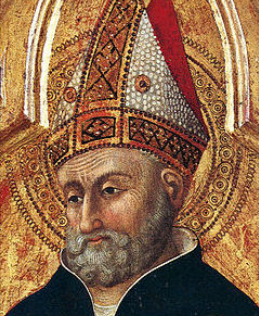
Incomprehensible and immutable is the love wherewith God loves. He did not begin to love us only on the day we were reconciled to Him by the blood of His Son; He loved us before the world was made, that we too might become His sons together with His Only-begotten Son, long before we had any existence.
▼
Source
source
p.435
2 months 3 weeks ago
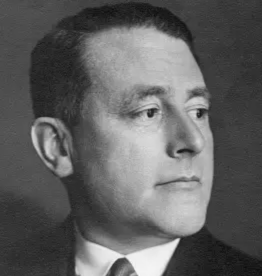
Value has its own logic. In the constitutional state that is most clearly recognizable in the enactment of its constitution.

7 months 3 weeks ago
Those who need myths are indeed poor. Here the gods serve as beds or resting places as the day races across the sky.
5 months 4 weeks ago
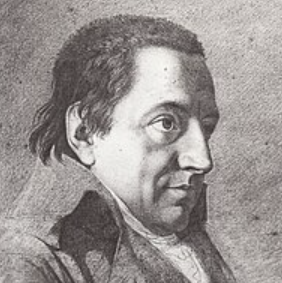
I veil my face before thee, and lay my finger on my lips. What thou art in thyself, or how thou appearest to thyself, I can never know. After living through a thousand lives, I shall comprehend Thee as little as I do now in this mansion of clay. What I can comprehend, becomes finite by my mere comprehension, and this can never, by perpetual ascent, be transformed into the infinite, for it does not differ from it in degree merely, but in kind. By that ascent we may find a greater and greater man, but never a God, who is capable of no measurement.
▼
Source
source
Jane Sinnett, trans 1846 p.115
7 months 6 days ago
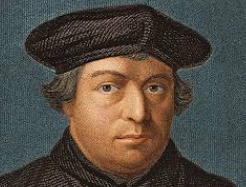
There is no more lovely, friendly and charming relationship, communion or company than a good marriage.
▼
Source
source
292
5 months 3 weeks ago
Nature too remains, so far as we have yet come, ever a frightful Machine of Death: everywhere monstrous revolution, inexplicable vortices of movement; a kingdom of Devouring, of the maddest tyranny; a baleful Immense: the few light-points disclose but a so much the more appalling Night, and terrors of all sorts must palsy every observer.
6 months 4 weeks ago
Both in thought and in feeling, even though time be real, to realise the unimportance of time is the gate of wisdom.
▼
Source
source
p. 167
2 months 2 weeks ago
We are inclined to overemphasize the material influences in history. The Russians especially make this mistake. Intellectual values and ethnic influences, tradition and emotional factors are equally important. If this were not the case, Europe would today be a federated state, not a madhouse of nationalism.
5 months 4 weeks ago
Poetry can be criticized only through poetry. A critique which itself is not a work of art, either in content as representation of the necessary impression in the process of creation, or through its beautiful form and in its liberal tone in the spirit of the old Roman satire, has no right of citizenship in the realm of art.
▼
Source
source
"Selected Aphorisms from the Lyceum (1797)", Dialogue on Poetry and Literary Aphorisms, Ernst Behler and Roman Struc, trans. (Pennsylvania University Press:1968) #117


3 months 2 weeks ago
Europe has made much; great cities, great empires, encyclopaedias, creeds, bodies of opinion and practice: but it has made little of the class of Dante's Thought.
6 months 3 weeks ago
First, what do we mean by anguish? The existentialist frankly states that man is in anguish. His meaning is as follows-When a man commits himself to anything, fully realizing that he is not only choosing what he will be, but is thereby at the same time a legislator deciding for the whole of mankind-in such a moment a man cannot escape from the sense of complete and profound responsibility.
▼
Source
source
p. 30
5 months 2 weeks ago
Progress, far from consisting in change, depends on retentiveness. When change is absolute there remains no being to improve and no direction is set for possible improvement: and when experience is not retained, as among savages, infancy is perpetual. Those who cannot remember the past are condemned to repeat it. This famous statement has produced many paraphrases and variants: Those who cannot learn from history are doomed to repeat it. Those who do not remember their past are condemned to repeat their mistakes. Those who do not read history are doomed to repeat it. Those who fail to learn from the mistakes of their predecessors are destined to repeat them. Those who do not know history's mistakes are doomed to repeat them.
▼
Source
source
There is a similar quote by Edmund Burke (in Revolution in France) that often leads to misattribution: "People will not look forward to posterity, who never look backward to their ancestors."
5 months 4 weeks ago
All life, Omnipotent Father, is thy life! and the eye of religion alone penetrates to the realms of truth and beauty. I am related to thee, and what I behold around me is related to me; all is full of animation, and looks towards me with bright spiritual eyes, and speaks with spirit voices to my heart.
▼
Source
source
Jane Sinnett, trans 1846 p.125
3 months 6 days ago
When nobody in the world loves any other, naturally the strong will overpower the weak, the many will oppress the few, the wealthy will mock the poor, the honoured will disdain the humble, the cunning will deceive the simple. Therefore all the calamities, strifes, complaints, and hatred in the world have arisen out of want of mutual love. Therefore the benevolent disapproved of this want.
▼
Source
source
Book 4; Universal Love II
6 months 4 weeks ago
Bad times have a scientific value. [...] We learn geology the morning after the earthquake, on ghastly diagrams of cloven mountains, upheaved plains, and the dry bed of the sea.
▼
Source
source
Considerations by the Way


7 months 3 weeks ago
There can never be a man so lost as one who is lost in the vast and intricate corrdiors of his own lonely mind, where none may reach and none may save. There never was a man so helpless as one who cannot remember.

5 months 3 weeks ago
The most interesting aspect of suffering is the sufferer's belief in its absoluteness. He believes he has a monopoly on suffering. I think that I alone suffer, that I alone have the right to suffer, although I also realize that there are modalities of suffering more terrible than mine, pieces of flesh falling from the bones, the body crumbling under one's very eyes, monstrous, criminal , shameful sufferings. One asks oneself, How can this be, and if it be, how can one still speak of finality and other such old wives' tales? Suffering moves me so much that I lose all my courage. I lose heart because I do not understand why there is suffering in the world.
▼
Source
source
in essay: the monopoly of suffering
6 months 4 weeks ago
Christianity taught only what the whole of Asia knew already long before and even better.
▼
Source
source
quoted in Londhe, S. (2008). A tribute to Hinduism: Thoughts and wisdom spanning continents and time about India and her culture. New Delhi: Pragun Publication.

7 months ago
The evil that has resulted from the error of the schools in teaching natural philosophy as an accomplishment only has been that of generating in the pupils a species of atheism. Instead of looking through the works of creation to the Creator Himself, they stop short and employ the knowledge they acquire to create doubts of His existence. They labor with studied ingenuity to ascribe everything they behold to innate properties of matter and jump over all the rest by saying that matter is eternal.
▼
Source
source
A Discourse, &c. &c.

5 months 1 week ago
The terrible struggle of the thinking man and woman against political, social and moral conventions owes its origin to the family, where the child is ever compelled to battle against the internal and external use of force. The categorical imperatives: You shall! you must! this is right! that is wrong! this is true! that is false! shower like a violent rain upon the unsophisticated head of the young being and impress upon its sensibilities that it has to bow before the long established and hard notions of thoughts and emotions.
2 months 3 weeks ago
It needs to realize that what happens to everyone-bad and good alike-is neither good nor bad.
▼
Source
source
(Hays translation) IV, 39
6 months 4 weeks ago
A world without delight and without affection is a world destitute of value.
▼
Source
source
The Scientific Outlook, 1931
3 months 1 week ago
Clothe yourself with a hero's courage, and withdraw for a little space from the opinions of the common man. Form a proper conception of the image of virtue, a thing of exceeding beauty and grandeur; this image is not to be worshipped by us with incense or garlands, but with sweat and blood.
7 months ago
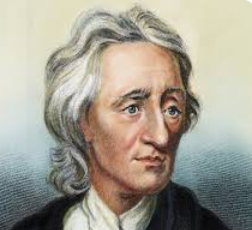
If man in the state of nature be so free, as has been said; if he be absolute lord of his own person and possessions, equal to the greatest, and subject to no body, why will he part with his freedom, this empire, and subject himself to the dominion and control of any other power?
▼
Source
source
Second Treatise of Government, Ch. IX, sec. 123
5 months 2 weeks ago
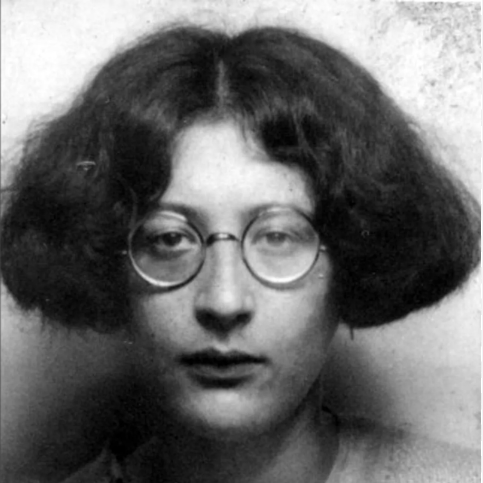
We must wish either for that which actually exists or for that which cannot in any way exist - or, still better, for both. That which is and that which cannot be are both outside the realm of becoming.
▼
Source
source
p. 154
3 months 1 week ago
If one awakens in men the idea of freedom then the free men will incessantly go on to free themselves; if on the contrary, one only educates them, then they will at all times accommodate themselves to circumstance in the most highly educated and elegant manner and degenerate into subservient cringing souls.
▼
Source
source
p. 23

5 months 2 weeks ago
Sociology does not 'negate' philosophy, in the sense of taking over the hidden content of philosophy and carrying it into social theory and practice, but sets itself up as a realm apart from philosophy, with a province and truth of its own. Comte is rightly held to be the inaugurator of this separation between philosophy and sociology.
▼
Source
source
P. 375
3 months 1 week ago
Prove your words by your deeds.

5 months 1 week ago
Not all women, in fact, very few, have had the good fortune to live and work among women and men actively involved in the feminist movement. Many of us live in circumstances and environments where we must engage in feminist struggle alone, with only occasional support and affirmation.
▼
Source
source
Acknowledgments.
5 months 2 weeks ago
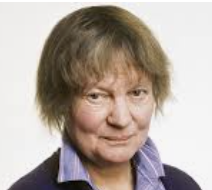
If we ignore the prior work of attention and notice only the emptiness of the moment of choice we are likely to identify freedom with the outward movement since there is nothing else to identify it with. But if we consider what the work of attention is like, how continuously it goes on, and how imperceptibly it builds up structures of value round about us, we shall not be surprised that at crucial moments of choice most of the business of choosing is already over.
▼
Source
source
The Sovereignty of Good (1970) p. 36.
4 months 3 weeks ago
Eternity is best spent under a general anesthetic - which is what is going to happen.
▼
Source
source
Interview with Joe Rogan on The Joe Rogan Experience (2019);

2 months 3 weeks ago
The question is frequently asked: why there is a school of theology attached to every University? The answer is easy: It is, that the Universities may subsist, and that the instruction may not become corrupt. Originally, the Universities were only schools of theology, to which other faculties were joined, as subjects around their Queen. The edifice of public instruction, placed on such a foundation, has continued even to our day. Those who have subverted it among themselves, will repent it, in vain, for a long time to come. To burn a city, there is needed only a child or a madman; but to rebuild it, architects, materials, workmen, money, and especially time, will be required.
▼
Source
source
XXXVIII, p. 111
3 months 1 week ago
Friendship is always helpful, but love sometimes even does harm
6 months 4 weeks ago
What interest, zest, or excitement can there be in achieving the right way, unless we are enabled to feel that the wrong way is also a possible and a natural way, - nay, more, a menacing and an imminent way? And what sense can there be in condemning ourselves for taking the wrong way, unless we need have done nothing of the sort, unless the right way was open to us as well? I cannot understand the willingness to act, no matter how we feel, without the belief that acts are really good and bad.
▼
Source
source
The Dilemma of Determinism, 1884
7 months 2 days ago
III. Every tax ought to be levied at the time, or in the manner, in which it is most likely to be convenient for the contributor to pay it.
▼
Source
source
Chapter II Part II, p. 893.
5 months 3 weeks ago
Even the most wretched individual of our present society could not exist and develop without the cumulative social efforts of countless generations. Thus the individual, his freedom and reason, are the products of society, and not vice versa: society is not the product of individuals comprising it; and the higher, the more fully the individual is developed, the greater his freedom - and the more he is the product of society, the more does he receive from society and the greater his debt to it.
▼
Source
source
As quoted in The Philosophy of Bakunin (1953) edited by G. P. Maximoff, p. 158
3 months 1 week ago
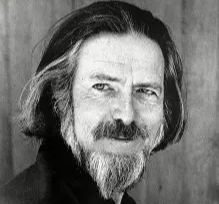
Wouldn't it be as farfetched to call birth the cause of death as to call the cat's head the cause of the tail? Lifting the neck of a bottle implies lifting the bottom as well, for the "two parts" come up at the same time. If I pick up an accordion by one end, the other will follow a little later, but the principle is the same. Total situations are, therefore, patterns in time as much as patterns in space.
▼
Source
source
p. 72
7 months ago
Let them have what instructions you will, and ever so learned lectures of breeding daily inculcated into them, that which will most influence their carriage will be the company they converse with, and the fashion of those about them.
▼
Source
source
Sec. 67
5 months 2 weeks ago
History is nothing but assisted and recorded memory. It might almost be said to be no science at all, if memory and faith in memory were not what science necessarily rest on. In order to sift evidence we must rely on some witness, and we must trust experience before we proceed to expand it. The line between what is known scientifically and what has to be assumed in order to support knowledge is impossible to draw. Memory itself is an internal rumour; and when to this hearsay within the mind we add the falsified echoes that reach us from others, we have but a shifting and unseizable basis to build upon. The picture we frame of the past changes continually and grows every day less similar to the original experience which it purports to describe.
▼
Source
source
Ch. 2 "History"
5 months 2 weeks ago
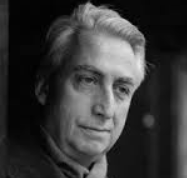
The bastard form of mass culture is humiliated repetition: content, ideological schema, the blurring of contradictions-these are repeated, but the superficial forms are varied: always new books, new programs, new films, news items, but always the same meaning.
▼
Source
source
Modern, in The Pleasure of the Text
3 months 1 week ago
Alexander, king of Macedon, began to study geometry; unhappy man, because he would thereby learn how puny was that earth of which he had seized but a fraction! Unhappy man, I repeat, because he was bound to understand that he was bearing a false title. For who can be "great" in that which is puny?
CivilSimian.com created by AxiomaticPanic, CivilSimian, Kalokagathia