

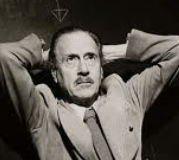
4 months 3 weeks ago
At electric speed, all forms are pushed to the limits of their potential.
▼
Source
source
p. 109
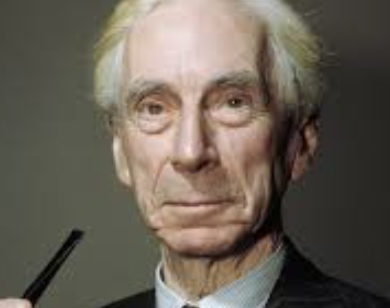
6 months 3 weeks ago
The law of causality, I believe, like much that passes muster among philosophers, is a relic of a bygone age, surviving, like the monarchy, only because it is erroneously supposed to do no harm.
▼
Source
source
Ch. 9: On the Notion of Cause
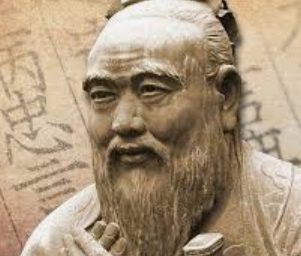
7 months 2 weeks ago
In archery we have something like the way of the superior man. When the archer misses the center of the target, he turns round and seeks for the cause of his failure in himself.
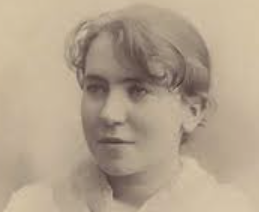
5 months 1 week ago
Motherhood in the true sense should embrace all children. Because so few realize this truth, child life is so empty of warmth, of love, of color, and beauty. A home-what is it to-day but a cage from which most of its inhabitants wish to escape? No, I should never have found happiness in such a place. My ideals, the struggle for them, and whatever hardships and suffering they have brought, far from wasting my life, have enriched it a thousandfold. To me it has been a grand adventure which I should not have missed for all the wealth in the world.

7 months 3 weeks ago
This heart within me I can feel, and I judge that it exists. This world I can touch, and I likewise judge that it exists. There ends all my knowledge, and the rest is construction. For if I try to seize this self of which I feel sure, if I try to define and to summarize it, it is nothing but water slipping through my fingers. I can sketch one by one all the aspects it is able to assume, all those likewise that have been attributed to it, this upbringing, this origin, this ardor or these silences, this nobility or this vileness. But aspects cannot be added up. This very heart which is mine will forever remain indefinable to me. Between the certainty I have of my existence and the content I try to give to that assurance, the gap will never be filled. Forever I shall be a stranger to myself.
5 months 1 week ago
Neurosis can be understood best as the battle between tendencies within an individual; deep character analysis leads, if successful, to the progressive solution.
▼
Source
source
p. 264
5 months 3 weeks ago
A great revolution is on the point of being accomplished. It is a revolution not in human affairs, but in man himself.
▼
Source
source
p. 2
5 months 1 week ago
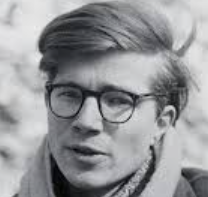
What is so remarkable about Crowley the 'magician' is that he remains Crowley the scientist, and always applies the same probing intellectual curiosity to every field he surveys. This is ultimately the most impressive quality about his mind, and the one that might -- if he had concentrated on developing it to the full -- have brought him the fame that he craved. Crowley's tragedy was that he never concentrated long enough to develop anything to the full.
▼
Source
source
p. 150
2 months 3 weeks ago
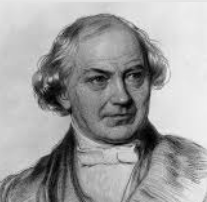
Our assent to the hypothesis implies that it is held to be true of all particular instances. That these cases belong to past or to future times, that they have or have not already occurred, makes no difference in the applicability of the rule to them. Because the rule prevails, it includes all cases.
▼
Source
source
Part II Of Knowledge, Book XI Of the Construction of Science, Chap. 5 Of Certain Characteristics of Scientific Induction

7 months 4 days ago
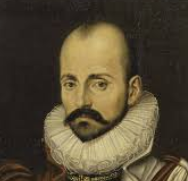
We must not attach knowledge to the mind, we have to incorporate it there.
▼
Source
source
Ch. 25
5 months 2 weeks ago
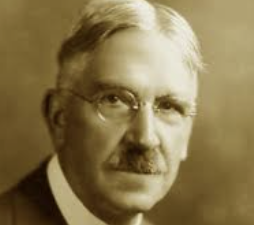
The three qualities of space and time reciprocally affect and qualify one another in experience. Space is inane save as occupied with active volumes. Pauses are holes when they do not accentuate masses and define figures as individuals. Extension sprawls and finally benumbs if it does not interact with place so as to assume intelligible distribution. Mass is nothing fixed. It contracts and expands, asserts and yields, according to its relations to other spatial and enduring things.... these are then the common properties of the matter of arts because there are general conditions without which an experience is not possible. As we saw earlier, the basic condition is felt relationship between doing and undergoing as the organism and environment interact.
▼
Source
source
pp. 220-21
6 months 3 weeks ago
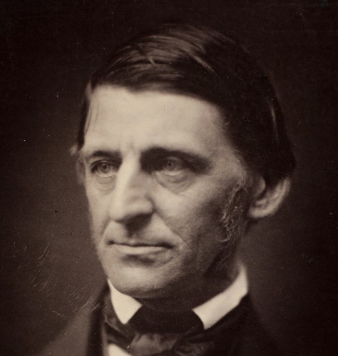
The imitator dooms himself to hopeless mediocrity. The inventor did it because it was natural to him, and so in him it has a charm. In the imitator something else is natural, and he bereaves himself of his own beauty, to come short of another man's.
▼
Source
source
p. 26
7 months ago
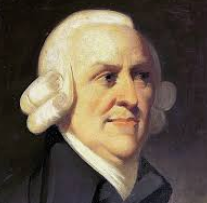
Consumption is the sole end and purpose of all production; and the interest of the producer ought to be attended to, only so far as it may be necessary for promoting that of the consumer.
▼
Source
source
Chapter VIII, p. 719.
4 months 3 weeks ago
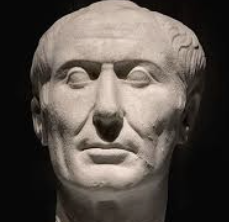
Learn to see in another's calamity the ills which you should avoid.
▼
Source
source
Maxim 120

4 months 4 weeks ago
Nonviolence is not an absolute principle, but an open-ended struggle with violence and its countervailing forces.
▼
Source
source
p. 56
6 months 3 weeks ago
Undeterred by this examination, the French Revolution gave rise to ideas which led beyond the ideas of the entire old world order. The revolutionary movement which began in 1789 in the Cercle Social, which in the middle of its course had as its chief representatives Leclerc and Roux, and which finally with Babeuf's conspiracy was temporarily defeated, gave rise to the communist idea which Babeuf's friend Buonarroti re-introduced in France after the Revolution of 1830. This idea, consistently developed, is the idea of the new world order.
▼
Source
source
Chapter 6, 3
6 months 3 weeks ago
Literature is the effort of man to indemnify himself for the wrongs of his condition.
▼
Source
source
"Walter Savage Landor", from The Dial, xii, 1841

3 months 2 weeks ago
The Book had in a high degree excited us to self-activity, which is the best effect of any book.
▼
Source
source
Bk. I, ch. 4.
5 months 3 weeks ago
The second half of a man's life is made up of nothing but the habits he has acquired during the first half.
▼
Source
source
As quoted in Peter's Quotations: Ideas for Our Time (1979) by Laurence J. Peter, p. 299
3 months 1 week ago
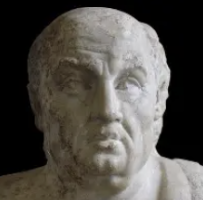
It is the quality of a great soul to scorn great things and to prefer that which is ordinary rather than that which is too great.
6 months 3 weeks ago
When I found myself regarded as respectable, I began to wonder what sins I had committed. I must be very wicked, I thought. I began to engage in the most uncomfortable introspection. Interview with Irwin Ross, September 1957;If there were a God, I think it very unlikely that he would have such an uneasy vanity as to be offended by those who doubt his existence.
▼
Source
source
Collected Papers of Bertrand Russell (2005), p. 385
3 months 1 week ago
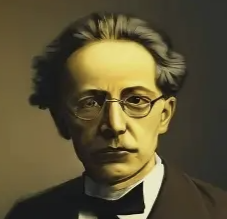
If it is the drive of our time, after freedom of thought is won, to pursue it to that perfection through which it changes to freedom of the will in order to realize the latter as the principle of a new era, then the final goal of education can no longer be knowledge, but the will born out of knowledge, and the spoken expression of that for which it has to strive is: the personal or free man. Truth consists in nothing other than man's revelation of himself, and thereto belongs the discovery of himself, the liberation from all that is alien, the uttermost abstraction or release from all authority, the re-won naturalness. Such thoroughly true men are not supplied by school; if they are there, they are there in spite of school.
▼
Source
source
p. 21
5 months 1 week ago
Self-expression is impossible in relation with other men; their self-expression interferes with it. The greatest heights of self-expression in poetry, music, painting - are achieved by men who are supremely alone.
▼
Source
source
Chapter Eight, The Outsider as a Visionary
2 months 3 weeks ago
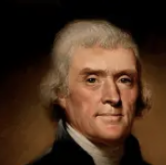
I believe... that every human mind feels pleasure in doing good to another.
▼
Source
source
Letter to John Adams
5 months 3 weeks ago
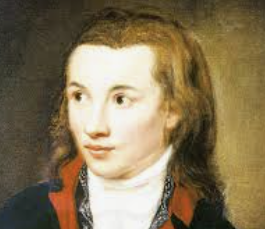
Nothing is more indispensable to true religiosity than a mediator that links us with divinity.
▼
Source
source
Fragment No. 74

5 months 2 weeks ago
Woe unto thee, Chorazin! woe unto thee, Bethsaida! for if the mighty works, which were done in you, had been done in Tyre and Sidon, they would have repented long ago in sackcloth and ashes. But I say unto you, It shall be more tolerable for Tyre and Sidon at the day of judgment, than for you. And thou, Capernaum, which art exalted unto heaven, shalt be brought down to hell: for if the mighty works, which have been done in thee, had been done in Sodom, it would have remained until this day. But I say unto you, That it shall be more tolerable for the land of Sodom in the day of judgment, than for thee.
▼
Source
source
11:21-24 (KJV)
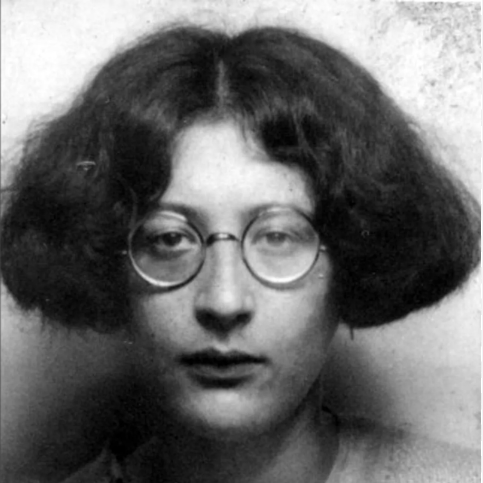
5 months 1 week ago
The Great Beast is the only object of idolatry, the only ersatz of God, the only imitation of something which is infinitely far from me and which is I myself.
▼
Source
source
p. 121; footnote in Gravity and Grace
3 months 2 weeks ago
There is no witness so dreadful, no accuser so terrible as the conscience that dwells in the heart of every man.
▼
Source
source
Histories, XVIII, 43 (Bartlett's Familiar Quotations)
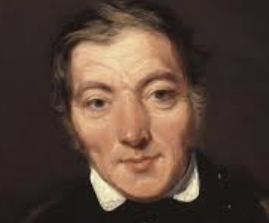
4 months 2 weeks ago
Eight hours daily labour is enough for any human being, and under proper arrangements sufficient to afford an ample supply of food, raiment and shelter, or the necessaries and comforts of life, and for the remainder of his time, every person is entitled to education, recreation and sleep.
▼
Source
source
"Foundation Axioms" of Society for Promoting National Regeneration
5 months 3 weeks ago
It is an understatement to say that in this society injustices abound: in truth, it is itself the quintessence of injustice.
5 months 3 weeks ago
If we would regain our freedom, we must shake off the burden of sensation, no longer react to the world by our senses, break our bonds. For all sensation is a bond, pleasure as much as pain, joy as much as misery. The only free mind is the one that, pure of all intimacy with beings or objects, plies its own vacuity.
2 months 3 weeks ago
How can a man be said to have a country where he has no right to a square inch of soil...
▼
Source
source
Ch. 2 : Political Dangers

7 months 2 weeks ago
The perfection of the effect demonstrates the perfection of the cause, for a greater power brings about a more perfect effect. But God is the most perfect agent. Therefore, things created by Him obtain perfection from Him. So, to detract from the perfection of creatures is to detract from the perfection of divine power.
▼
Source
source
III, 69, 15
4 months 3 days ago
Human beings act, certainly. But none of them knows why they act as they do. There is a scattering of facts, which can be known and reported. Beyond these facts are the stories that are told. Human beings may behave like puppets, but no one is pulling the strings.
▼
Source
source
In The Puppet Theatre: Puppetry, Conspiracy and Ouija Boards (p. 136)
6 months 3 weeks ago
He thought human life a poor thing at best, after the freshness of youth and of unsatisfied curiosity had gone by. This was a topic on which he did not often speak, especially, it may be supposed, in the presence of young persons: but when he did, it was with an air of settled and profound conviction. He would sometimes say, that if life were made what it might be, by good government and good education, it would be worth having: but he never spoke with anything like enthusiasm even of that possibility.
▼
Source
source
(p. 48)
4 months 3 weeks ago
The alphabet, when pushed to a high degree of abstract visual intensity, became typography. The printed word with its specialist intensity burst the bonds of medieval corporate guilds and monasteries, created extreme individualist patterns of enterprise and monopoly.
▼
Source
source
(p. 23)
3 months 2 weeks ago
Philosophy accepts the hard and hazardous task of dealing with problems not yet open to the methods of science - problems like good and evil, beauty and ugliness, order and freedom, life and death; so soon as a field of inquiry yields knowledge susceptible of exact formulation it is called science. Every science begins as philosophy and ends as art; it arises in hypothesis and flows into achievement.
6 months 4 weeks ago
Thoughts without content are empty, intuitions without concepts are blind. The understanding can intuit nothing, the senses can think nothing. Only through their unison can knowledge arise.
▼
Source
source
A 51, B 75
5 months 1 week ago
Uncertainty, doubt, perpetual wrestling with the mystery of our final destiny, mental despair, and the lack of any solid and stable foundation, may be the basis of an ethic.
6 months 3 weeks ago
I once received a letter from an eminent logician, Mrs. Christine Ladd Franklin, saying that she was a solipsist, and was surprised that there were no others. Coming from a logician, this surprise surprised me.
▼
Source
source
Human Knowledge: Its Scope and Limits (1948), Part III, chapter II, "Solipsism", p. 196
2 months 3 weeks ago
The Utopianism of the standpoint which expects an era of peace and retrenchment of militarism in the present social order is plainly revealed in the fact that it is having recourse to project making. For it is typical of Utopian strivings that, in order to demonstrate their practicability, they hatch "practical" recipes with the greatest possible details. To this also belongs the project of the "United States of Europe" as a basis for the limitation of international militarism.
2 months 3 weeks ago
Furthermore, the monad produces itself and is produced from itself, since it is self-sufficient and has no power set over it and is everlasting; and it is evidently the cause of permanence, just as God is thought to be in the case of actual physical things, and to be the preserver and maintainer of natures.
▼
Source
source
On the Monad
6 months 3 weeks ago
Not to be absolutely certain is, I think, one of the essential things in rationality.
▼
Source
source
"Don't Be Too Certain!"
3 months 2 weeks ago
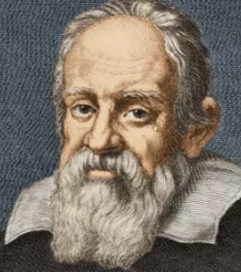
Among all the great men who have philosophized about this remarkable effect, I am more astonished at Kepler than at any other. Despite his open and acute mind, and though he has at his fingertips the motions attributed to the earth, he nevertheless lent his ear and his assent to the moon's dominion over the waters, to occult properties, and to such puerilities.
▼
Source
source
In regard to Kepler's belief of the moon affecting the tides of the Earth, p. 328
CivilSimian.com created by AxiomaticPanic, CivilSimian, Kalokagathia