
3 months 3 weeks ago
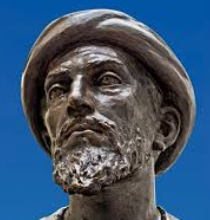
I do not ascribe to God ignorance of anything or any kind of weakness; I hold that Divine Providence is related and closely connected with the intellect, because Providence can only proceed from an intelligent being, from a being that is itself the most perfect Intellect. Those creatures, therefore, which receive part of that intellectual influence, will become subject to the action of Providence in the same proportion as they are acted upon by the intellect. This theory is in accordance with reason and with the teaching of the Scripture, whilst the other theories previously mentioned either exaggerate Divine Providence of detract from it.
▼
Source
Ch.17
3 months 3 weeks ago
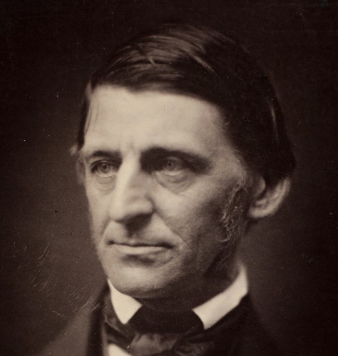
This world belongs to the energetic.
▼
Source
Resources
3 months 3 weeks ago
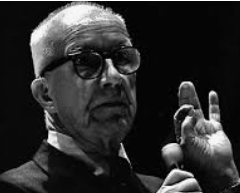
The synergetic integral of the totality of principles is God, whose sum-total behavior in pure principle is beyond our comprehension and is utterly mysterious to us, because as humans — in pure principle — we do not and never will know all the principles.
3 months 3 weeks ago
Any one thing in the creation is sufficient to demonstrate a Providence to an humble and grateful mind.
▼
Source
Book I, ch. 16, § 7.

3 months 3 weeks ago
Virtue is harmony.
▼
Source
This is often published as a direct quote of Pythagoras, but seems to be derived from the account of Diogenes Laertius of Pythagorean doctrines, where he simply describes the statement as a precept of his followers. In the translation of C. D. Yonge (1853
3 months 3 weeks ago
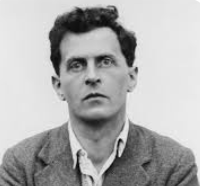
Scepticism is not irrefutable, but obviously nonsensical, when it tries to raise doubts where no questions can be asked. For doubt can exist only where a question exists, a question only where an answer exists, and an answer only where something can be said. (6.51)
3 months 3 weeks ago
How great is the usefulness of every precept that delivers us from this great error, and leads us back to the true faith: that God, the Creator of all things, rules the Universe; that He must be served, loved, and feared, and not those imaginary deities. According to this faith we approach the true God, and obtain His favour without having recourse to burdensome means; for nothing else is required but to love and fear Him; this is the aim in serving God, as will be shown. Comp. "And now, Israel, what doth the Lord thy God require of thee but to fear the Lord?" &c. (Deut. x. 12)
▼
Source
Ch.29
3 months 3 weeks ago
The bitterest tragic element in life to be derived from an intellectual source is the belief in a brute Fate or Destiny.
▼
Source
"The Tragic", p. 217. From The Dial (April 1844) p. 515
3 months 3 weeks ago
The courage to cooperate or initiate are based entirely on the truth, the whole truth, and nothing but the truth as the divine mind within you tells you the truth is. It really does require a courage and a self-disciplining to go along with that truth.
3 months 3 weeks ago
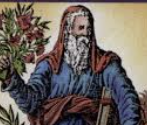
Scholastic skeptics, as well as ignorant materialists, have greatly amused themselves for the last two centuries over the absurdities attributed to Pythagoras by his biographer, Iamblichus. The Samian philosopher is said to have persuaded a she-bear to give up eating human flesh; to have forced a white eagle to descend to him from the clouds, and to have subdued him by stroking him gently with the hand, and by talking to him. On another occasion, Pythagoras actually persuaded an ox to renounce eating beans, by merely whispering in the animal's ear! (Iamblichus: "De Vita Pythag.") Oh, ignorance and superstition of our forefathers, how ridiculous they appear in the eyes of our enlightened generations! Let us, however, analyze this absurdity. Every day we see unlettered men, proprietors of strolling menageries, taming and completely subduing the most ferocious animals, merely by the power of their irresistible will... Every one has either witnessed or heard of the seemingly magical power of some mesmerizers and psychologists. They are able to subjugate their patients for any length of time. Regazzoni, the mesmerist who excited such wonder in France and London, has achieved far more extraordinary feats than what is above attributed to Pythagoras. Why, then, accuse the ancient biographers of such men as Pythagoras and Apollonius of Tyana of either willful misrepresentation or absurd superstition?
▼
Source
H. P. Blavatsky, Isis Unveiled: A Master-Key to the Mysteries of Ancient and Modern Science and Theology, p.284 (1877)
3 months 3 weeks ago
Show me someone who is ill and yet happy, in danger and yet happy, dying and yet happy, exiled and yet happy. Show me such a person; by the gods, how greatly I long to see a Stoic!
▼
Source
Book II, ch. 19, § 24.
3 months 3 weeks ago
Nor need you question but that Pythagoras a long time before he found the demonstration for which he offered the Hecatomb, had been certain, that the square of the side subtending the right angle in a rectangle triangle, was equal to the square of the other two sides: and the certainty of the conclusion conduced not a little to the investigating of the demonstration, understanding me alwayes to mean in demonstrative Sciences.
▼
Source
Galileo Galilei, Dialogue Concerning the Two Chief World Systems (1632) as quoted in the Salusbury translation, The Systeme of the World: in Four Dialogues (1661) p. 38
3 months 3 weeks ago
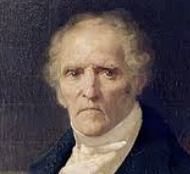
There was very little that prevented the vandalism of 1793 from suddenly producing a second revolution as marvelous as the first was horrible. The whole human race was approaching its release; the civilized, barbarian, and savage order would have disappeared forever if the Convention, which trampled down all prejudices, had not bowed down before the only one that had to be destroyed, the institution of marriage.
▼
Source
Charles Fourier: The Visionary and His World, J. Beecher (1986), p. 304-5
3 months 3 weeks ago
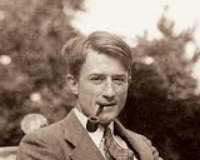
What is troubling us is the tendency to believe that the mind is like a little man within.
▼
Source
Remarks to John Wisdom, quoted in Zen and the Work of WIttgenstein by Paul Weinpaul in The Chicago Review Vol. 12, (1958), p. 70
3 months 3 weeks ago
By one road or another, by conviction, by its supposed inevitability, by its alleged success, or even quite unreflectively, almost all politics today have become Rationalist or near-Rationalist.
3 months 3 weeks ago
Nature is too thin a screen; the glory of the One breaks in everywhere.
▼
Source
p. 182
3 months 3 weeks ago
Scientists whose work has no clear, practical implications would want to make their decisions considering such things as: the relative worth of (1) more observations, (2) greater scope of his conceptual model, (3) simplicity, (4) precision of language, (5) accuracy of the probability assignment.
▼
Source
p. 248 as cited in: Douglas, H.E. (2009) Science, Policy, and the Value-Free Ideal
3 months 3 weeks ago
Perhaps the only true dignity of man is his capacity to despise himself.
3 months 3 weeks ago
No quality of human nature is more remarkable, both in itself and in its consequences, than that propensity we have to sympathize with others, and to receive by communication their inclinations and sentiments, however different from, or even contrary to our own. This is not only conspicuous in children, who implicitly embrace every opinion propos'd to them; but also in men of the greatest judgment and understanding, who find it very difficult to follow their own reason or inclination, in opposition to that of their friends and daily companions. To this principle we ought to ascribe the great uniformity we may observe in the humours and turn of thinking of those of the same nation; and ’tis much more probable, that this resemblance arises from sympathy, than from any influence of the soil and climate, which, tho’ they continue invariably the same, are not able to preserve the character of a nation the same for a century together. A good-natur'd man finds himself in an instant of the same humour with his company; and even the proudest and most surly take a tincture from their countrymen and acquaintance. A chearful countenance infuses a sensible complacency and serenity into my mind; as an angry or sorrowful one throws a sudden dump upon me. Hatred, resentment, esteem, love, courage, mirth and melancholy; all these passions I feel more from communication than from my own natural temper and disposition. So remarkable a phaenomenon merits our attention, and must be trac'd up to its first principles.
▼
Source
Part 1, Section 11
3 months 3 weeks ago
The first and most necessary topic in philosophy is that of the use of moral theorems, such as, "We ought not to lie;" the second is that of demonstrations, such as, "What is the origin of our obligation not to lie;" the third gives strength and articulation to the other two, such as, "What is the origin of this is a demonstration." For what is demonstration? What is consequence? What contradiction? What truth? What falsehood? The third topic, then, is necessary on the account of the second, and the second on the account of the first. But the most necessary, and that whereon we ought to rest, is the first. But we act just on the contrary. For we spend all our time on the third topic, and employ all our diligence about that, and entirely neglect the first. (51).
3 months 3 weeks ago
It is very important to note that some 2,500 years ago at the least Pythagoras went from Samos to the Ganges to learn geometry…But he would certainly not have undertaken such a strange journey had the reputation of the Brahmins' science not been long established in Europe…
▼
Source
Voltaire, Riding the Indian Tiger, William Nobrega and Ashish Sinha. Quoted from Gewali, Salil (2013). Great Minds on India. New Delhi: Penguin Random House. Also in Sushama Londhe, [https://www.google.com/books/edition/A_Tribute_to_Hinduism/G3AMAQAAMAAJ?
3 months 3 weeks ago
We aspire not to equality but to domination. Countries inhabited by foreign races must become again countries of serfs, farm laborers, and factory workers. The goal is not to suppress inequities, but, rather, to amplify them and to make of them a matter of course.
▼
Source
as translated by Asselin Charles, in "Colonial Discourse Since Christopher Columbus," Journal of Black Studies, Vol. 26, No. 2 (November 1995), p. 147
3 months 3 weeks ago
What has to be accepted, the given, is — so one could say — forms of life.
▼
Source
Pt II, p. 226 of the 1968 English edition

3 months 3 weeks ago
One does not need buildings, money, power, or status to practice the Art of Peace. Heaven is right where you are standing, and that is the place to train.
3 months 3 weeks ago
No member of a crew is praised for the rugged individuality of his rowing.
▼
Source
Widely misattributed to Emerson on the Internet, this quote is actually taken from Alfred North Whitehead's essay "Harvard: The Future" (The Atlantic Monthly, September 1936.)
3 months 3 weeks ago
There are no experts in the systems approach.
▼
Source
p. 232
3 months 3 weeks ago
Skepticism is the chastity of the intellect, and it is shameful to surrender it too soon or to the first comer: there is nobility in preserving it coolly and proudly through long youth, until at last, in the ripeness of instinct and discretion, it can be safely exchanged for fidelity and happiness.
▼
Source
The Works of George Santayana p. 65
3 months 3 weeks ago
In all determinations of morality, this circumstance of public utility is ever principally in view; and wherever disputes arise, either in philosophy or common life, concerning the bounds of duty, the question cannot, by any means, be decided with greater certainty, than by ascertaining, on any side, the true interests of mankind. If any false opinion, embraced from appearances, has been found to prevail; as soon as farther experience and sounder reasoning have given us juster notions of human affairs, we retract our first sentiment, and adjust anew the boundaries of moral good and evil.
▼
Source
§ 2.17 : Of Benevolence, Pt. 2
3 months 3 weeks ago
We may... go to our... statement from Aristotle's treatise on the Pythagoreans, that according to them the universe draws in from the Unlimited time and breath and the void. The cosmic nucleus starts from the unit-seed, which generates mathematically the number-series and physically the distinct forms of matter. ...it feeds on the Unlimited outside and imposes form or limit on it. Physically speaking this Unlimited is [potential or] unformed matter... mathematically it is extension not yet delimited by number or figure. ...As apeiron in the full sense, it was... duration without beginning, end, or internal division—not time, in Plutarch's words, but only the shapeless and unformed raw material of time... As soon... as it had been drawn or breathed in by the unit, or limiting principle, number is imposed on it and at once it is time in the proper sense. ...the Limit, that is the growing cosmos, breathed in... imposed form on sheer extension, and by developing the heavenly bodies to swing in regular, repetitive circular motion... it took in the raw material of time and turned it into time itself.
▼
Source
W. K. C. Guthrie, A History of Greek Philosophy Vol. 1, "The Earlier Presocratics and the Pythagoreans" (1962)
3 months 3 weeks ago
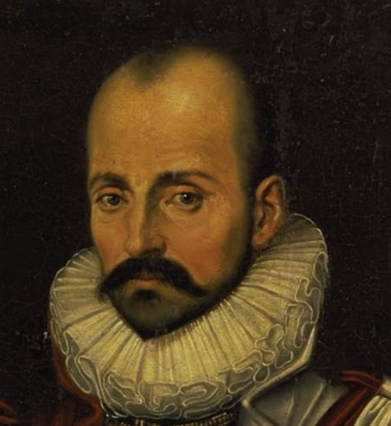
Friendship ... flourishes not so much by kindnesses as by sincerity.
▼
Source
Part 3
3 months 3 weeks ago
Our greatest stupidities may be very wise.
▼
Source
p. 39e

3 months 3 weeks ago
Ends and purposes, whether they exist as conscious or subconscious tendencies, form the warp and woof of our conscious experience.
▼
Source
[https://www.google.com/books/edition/The_Reconstruction_of_Religious_Thought/uCh14nl09jkC?hl=en The Reconstruction of Religious Thought in Islam] (1930), p. 42
3 months 3 weeks ago
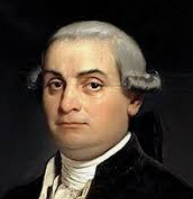
Seems so absurd to me that the laws, that are the expression of the public will, that hate and punish the murder, make one themselves, and, to dissuade citizens from the murder, order a public murder.
▼
Source
(Chapter XXVIII)
3 months 3 weeks ago
"There is no God, and Mary is his mother." Often, almost certainly incorrectly, attributed to Santayana himself. More plausibly attributed to Robert Lowell, as a sardonic description of Santayana's philosophy.
▼
Source
Paul Mariani, "Lost Puritan: A Life of Robert Lowell" (1994), p. 159
3 months 3 weeks ago
Man is an enigma whose knot has not ceased to occupy observers. The contradictions that he contains astonish reason and impose silence on it. So what is this inconceivable being who carries within him powers that clash and who is obliged to hate himself in order to esteem himself?
3 months 3 weeks ago
The admirers and followers of the Alcoran insist on the excellent moral precepts interspersed throughout that wild and absurd performance. But it is to be supposed, that the Arabic words, which correspond to the English, equity, justice, temperance, meekness, charity, were such as, from the constant use of that tongue, must always be taken in a good sense; and it would have argued the greatest ignorance, not of morals, but of language, to have mentioned them with any epithets, besides those of applause and approbation. But would we know, whether the pretended prophet had really attained a just sentiment of morals? Let us attend to his narration; and we shall soon find, that he bestows praise on such instances of treachery, inhumanity, cruelty, revenge, bigotry, as are utterly incompatible with civilized society. No steady rule of right seems there to be attended to; and every action is blamed or praised, so far only as it is beneficial or hurtful to the true believers.
▼
Source
Part I, Essay 23: Of The Standard of Taste
3 months 3 weeks ago
Never stay up on the barren heights of cleverness, but come down into the green valleys of silliness.
▼
Source
p. 76e

3 months 3 weeks ago
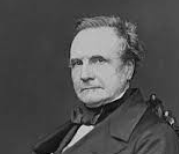
Science as a system of statements is always an object of discussion. Statements are to be compared with statements, and not with 'experience', or with 'the world', or with something else. All that meaningless doubling belongs to more or less subtle metaphysics and as such must be rejected. Every new statement is to be confronted with existing ones, already brought to a state of harmony between themselves. A statement will be considered correct if it can be joined to them.
▼
Source
Otto Neurath (1931), "Soziologie im Physikalismus", in Erkenntnis, Vol. 2. p. 403; as cited in: Schaff (1962;84)
3 months 3 weeks ago
Mill, in speaking of Hume's celebrated principle, "that nothing is credible which is contradictory to experience, or at variance with the laws of nature," calls it a very plain and harmless proposition, being, in effect, nothing more than that whatever is contradictory to a complete induction is incredible. Admit the existence of a Deity, and the possibility of a miracle is the natural consequence. No doubt our examination of the evidence which sustains an unusual phenomenon should be most carefully conducted; but we must not measure the credibility or incredibility of an event by the narrow sphere of our own experience, nor forget that there is a Divine energy which overrides what we familiarly call the laws of nature.
▼
Source
"Passages from the life of a philosopher", Appendix, p. 488
3 months 3 weeks ago
There is the same difference between political theory and constitutional laws as there is between poetics and poetry. The illustrious Montesquieu is to Lycurgus, in the intellectual hierarchy, what Batteux is to Homer or Racine. Moreover, these two talents positively exclude each other, as can be seen by the example of Locke, who fumbled badly when he presumed to give laws to the Americans.
▼
Source
Chapter VI, p. 52
3 months 3 weeks ago
I think there is at least one moral theory of respectable lineage and good independent credentials that can accommodate such fairly minimal intuitions about us and animals. This is the theory Hume offers us. I do not consider Hume a forerunner of utilitarianism, and therefore what I shall go on to say in defense of Hume is not intended as a defense of any version of utilitarianism. I see Hume to be much closer to Aristotle than to Mill, to be offering us a theory about human virtues, not a theory about utility maximization and the duties that might involve.
▼
Source
Annette Baier, Knowing Our Place in the Animal World, in [https://books.google.it/books?id=JBPlBwAAQBAJ&pg=PA0 Ethics and Animals], edited by Harlan B. Miller and William H. Williams (Clifton, New Jersey: Humana Press, 1983. , p. 68
3 months 3 weeks ago
Wittgenstein was basically unscientific. He knew that science was partly driven by a desire to generalize, and he rejected generalization. Scientific questions were of no great interest to him; they merely addressed the working of the natural world. Wittgenstein spent much of his later life examining the way in which language may shape our reality. This is not a subject that is irrelevant to science.
▼
Source
Brian L. Silver, The Ascent of Science (1998)

3 months 3 weeks ago
Or, to go a step further, let us glance at what science has done to establish rational foundations for physical and moral health. Science tells us how we ought to live in order to preserve the health of our own bodies, how to maintain in good conditions of existence the crowded masses of our population. But does not all the vast amount of work done in these two directions remain a dead letter in our books? We know it does. And why? Because science today exists only for a handful of privileged persons, because social inequality which divides society into two classes — the wage-slaves and the grabbers of capital — renders all its teachings as to the conditions of a rational existence only the bitterest irony to nine-tenths of mankind.
3 months 3 weeks ago
A philosopher may try to prove the truth of something he believed before he was a philosopher, but even if he succeeds, his belief never regains the untroubled character, and the settled place in his mind, which it had at first.
▼
Source
The Rationality of Induction, Oxford: Clarendon, 1986. Page 99, first paragraph.
3 months 3 weeks ago
There is a great analogy between grace and genius, for genius is a grace. The real man of genius is the one who acts by grace or by impulsion, without ever contemplating himself and without ever saying to himself: Yes! It is by grace that I act.
▼
Source
p. 37
3 months 3 weeks ago
If you act externally with men in conformity with your rank, you should recognize, by a more secret but truer thought, that you have nothing naturally superior to them.
3 months 3 weeks ago
A society to which preestablished forms, crystallized by law, are repugnant; which looks for harmony in an ever-changing and fugitive equilibrium between a multitude of varied forces and influences of every kind, following their own course, — these forces promoting themselves the energies which are favorable to their march toward progress, toward the liberty of developing in broad daylight and counter-balancing one another.This conception and ideal of society is certainly not new. On the contrary, when we analyze the history of popular institutions — the clan, the village community, the guild and even the urban commune of the Middle Ages in their first stages, — we find the same popular tendency to constitute a society according to this idea...

3 months 3 weeks ago
Another was, "Watch your opportunity."
▼
Source
Pittacus, 7.
3 months 3 weeks ago
If we do not secure the foundation, we cannot secure the edifice.
3 months 3 weeks ago
Well, since paradoxes are at hand, let us see how it might be demonstrated that in a finite continuous extension it is not impossible for infinitely many voids to be found.
▼
Source
Salviati, First Day, Stillman Drake translation (1974)
CivilSimian.com created by AxiomaticPanic, CivilSimian, Kalokagathia