

3 months 3 weeks ago
Get hold of yourself, be confident once more, don't forget that it is not given to just anyone to have idolized discouragement without succumbing to it.
3 months 3 weeks ago
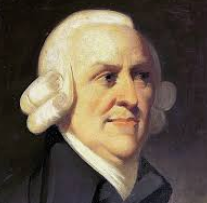
But man has almost constant occasion for the help of his brethren, and it is in vain for him to expect it from their benevolence only. He will be more likely to prevail if he can interest their self-love in his favour, and shew them that it is for their own advantage to do for him what he requires of them. Whoever offers to another a bargain of any kind, proposes to do this. Give me that which I want, and you shall have this which you want, is the meaning of every such offer; and it is in this manner that we obtain from one another the far greater part of those good offices which we stand in need of. It is not from the benevolence of the butcher, the brewer, or the baker that we expect our dinner, but from their regard to their own interest. We address ourselves, not to their humanity, but to their self-love, and never talk to them of our own necessities, but of their advantages. Nobody but a beggar chooses to depend chiefly upon the benevolence of his fellow-citizens. Even a beggar does not depend upon it entirely.
▼
Source
Chapter II, p. 19.

3 months 3 weeks ago
Executions, far from being useful examples to the survivors, have, I am persuaded, a quite contrary effect, by hardening the heart they ought to terrify. Besides, the fear of an ignominious death, I believe, never deterred anyone from the commission of a crime, because in committing it the mind is roused to activity about present circumstances.
▼
Source
Letter 19
3 months 3 weeks ago
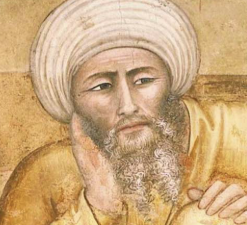
The Asharites have expressed a very peculiar opinion, both with regard to reason and religion; about this problem they have explained it in a way in which religion has not, but have adopted quite an opposite method.
▼
Source
Part 4: Divine Justice and Injustice; Opening sentence
3 months 3 weeks ago
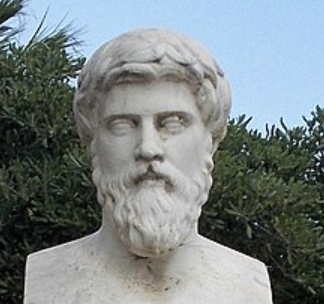
Scilurus on his death-bed, being about to leave four-score sons surviving, offered a bundle of darts to each of them, and bade them break them. When all refused, drawing out one by one, he easily broke them,—thus teaching them that if they held together, they would continue strong; but if they fell out and were divided, they would become weak.
▼
Source
31 Scilurus

3 months 3 weeks ago
Ridden with conflicts and lacking the industrial base of communism and nazism, Islamism is nowhere near a danger of the magnitude of those that were faced down in the 20th century.
3 months 3 weeks ago
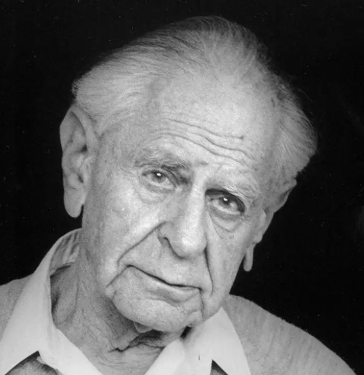
If the many, the specialists, gain the day, it will be the end of science as we know it - of great science. It will be a spiritual catastrophe comparable in its consequences to nuclear armament.
▼
Source
K. Popper, The Myth of the Framework, London: Routledge. As quoted in [https://books.google.it/Brooks?id=ha6yDAAQBAJ&of=PA173 The Cambridge Companion to Karl Popper] (2016) by J. Shearmur, G. Stokes
3 months 3 weeks ago
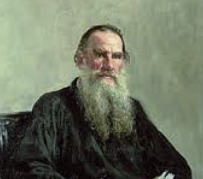
God is the infinite ALL. Man is only a finite manifestation of Him. Or better yet: God is that infinite All of which man knows himself to be a finite part. God alone exists truly. Man manifests Him in time, space and matter. The more God's manifestation in man (life) unites with the manifestations (lives) of other beings, the more man exists. This union with the lives of other beings is accomplished through love. God is not love, but the more there is of love, the more man manifests God, and the more he truly exists... We acknowledge God only when we are conscious of His manifestation in us. All conclusions and guidelines based on this consciousness should fully satisfy both our desire to know God as such as well as our desire to live a life based on this recognition.
▼
Source
[http://www.linguadex.com/tolstoy/chapter1.htm Entry in Tolstoy's Diary] (1 November 1910)
3 months 3 weeks ago
The self is divided within itself, willing what it does not will and not willing what it wills.
▼
Source
Quoted by in Weltschmerz: Pessimism in German Philosophy, 1860-1900 (2016), p. 229.
3 months 3 weeks ago
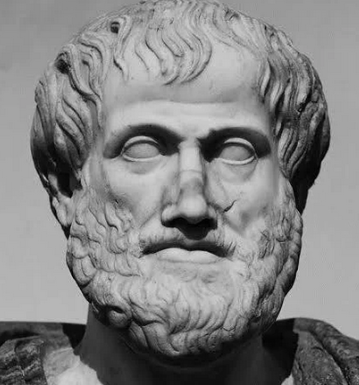
For some identify happiness with virtue, some with practical wisdom, others with a kind of philosophic wisdom, others with these, or one of these, accompanied by pleasure or not without pleasure; while others include also external prosperity. Now ... it is not probable that these should be entirely mistaken, but rather that they should be right in at least some one respect or even in most respects.
▼
Source
Book I, 1098b.23

3 months 3 weeks ago
When you talk about a revolution, most people think violence; without realizing that the real content of any kind of revolutionary thrust lies in the principles and the goals that you're striving for - not in the way that you reach them. On the other hand, because of the way this society is organized; because of the violence that exists on the surface everywhere - you'd have to expect that there are going to be such explosions. You have to expect things like that as reactions.
▼
Source
From [https://www.imdb.com/title/tt1592527/characters/nm0204171 The Black Power Mixtape 1967-1975].
3 months 3 weeks ago
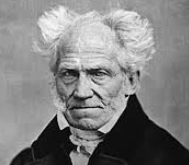
There are, first of all, two kinds of authors: those who write for the subject’s sake, and those who write for writing’s sake. The first kind have had thoughts or experiences which seem to them worth communicating, while the second kind need money and consequently write for money.
3 months 3 weeks ago
Impossible to spend sleepless nights and accomplish anything: if, in my youth, my parents had not financed my insomnias, I should surely have killed myself.
3 months 3 weeks ago
China is a much richer country than any part of Europe.
▼
Source
Chapter XI, Part III, (First Period) p. 221.
3 months 3 weeks ago
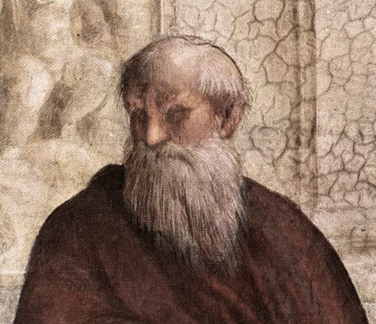
It is by participation of species that we call every sensible object beautiful. Thus, since everything void of form is by nature fitted for its reception, as far as it is destitute of reason and form it is base and separate from the divine reason, the great fountain of forms; and whatever is entirely remote from this immortal source is perfectly base and deformed. And such is matter, which by its nature is ever averse from the supervening irradiations of form. Whenever, therefore, form accedes, it conciliates in amicable unity the parts which are about to compose a whole; for being itself one it is not wonderful that the subject of its power should tend to unity, as far as the nature of a compound will admit. Hence beauty is established in multitude when the many is reduced into one, and in this case it communicates itself both to the parts and to the whole. But when a particular one, composed from similar parts, is received it gives itself to the whole, without departing from the sameness and integrity of its nature. Thus at one and the same time it communicates itself to the whole building and its several parts; and at another time confines itself to a single stone, and then the first participation arises from the operations of art, but the second from the formation of nature. And hence body becomes beautiful through the communion supernally proceeding from divinity.
3 months 3 weeks ago
He said they that were serious in ridiculous matters would be ridiculous in serious affairs.
▼
Source
Cato the Elder
3 months 3 weeks ago
Instead of enabling humans to improve their lot, science degrades the natural environment in which humans must live. Instead of enabling death to be overcome, it produces ever more powerful technologies of mass destruction. None of this is the fault of science; what it shows is that science is not sorcery. The growth of knowledge enlarges what humans can do. It cannot reprieve them from being what they are.
▼
Source
Sweet Morality (p. 235)
3 months 3 weeks ago
The ancient Egyptians had a superstitious antipathy to the sea; a superstition nearly of the same kind prevails among the Indians; and the Chinese have never excelled in foreign commerce.
▼
Source
Chapter V, p. 402.
3 months 3 weeks ago
"I will show," said Agesilaus, "that it is not the places that grace men, but men the places."
▼
Source
Of Agesilaus the Great
3 months 3 weeks ago
Human knowledge increases, while human irrationality stays the same. Scientific inquiry may be an embodiment of reason, but what such inquiry demonstrates is that humans are not rational animals. The fact that humanists refuse to accept the demonstration only confirms its truth.
▼
Source
An Old Chaos: Humanism and Flying Saucers (p. 81)
3 months 3 weeks ago
We live in deeds, not years; in thoughts not breaths; // In feelings, not in figures on a dial. // We should count time by heart throbs. He most lives // Who thinks most, feels the noblest, acts the best.
▼
Source
This is actually from the poem "We live in deeds..." by Philip James Bailey. This explains the strange pattern of capitalization.
3 months 3 weeks ago
Do not allow your dreams of a beautiful world to lure you away from the claims of men who suffer here and now.
▼
Source
p. 485
3 months 3 weeks ago
He knew she was there by the joy and fear that overwhelmed his heart.
▼
Source
Pt. I, ch. 9
3 months 3 weeks ago
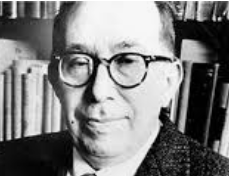
To avert the danger [posed by theory] to life, Nietzsche could choose one of two ways: he could insist on the strictly esoteric character of the theoretical analysis of life—that is, restore the Platonic notion of the noble delusion—or else he could deny the possibility of theory proper and so conceive of thought as essentially subservient to, or dependent on, life or fate... If not Nietzsche himself, at any rate his successors [Heidegger] adopted the second alternative.
▼
Source
p. 26
3 months 3 weeks ago
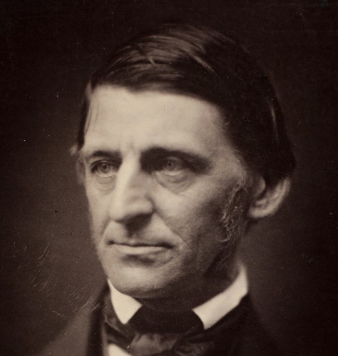
Poetry must be new as foam, and as old as the rock.
▼
Source
March 1845
3 months 3 weeks ago
Although men constitute the vast majority of prisoners in the world, important aspects of the operation of state punishment are missed if it is assumed that women are marginal and thus undeserving of attention.
▼
Source
Chapter Four
3 months 3 weeks ago
When we have no further desire to show ourselves, we take refuge in music, the Providence of the abulic.
3 months 3 weeks ago
In every country it always is and must be the interest of the great body of the people to buy whatever they want of those who sell it cheapest. The proposition is so very manifest that it seems ridiculous to take any pains to prove it; nor could it ever have been called in question had not the interested sophistry of merchants and manufacturers confounded the common sense of mankind. Their interest is, in this respect, directly opposite to that of the great body of the people.
▼
Source
Chapter III, Part II, p. 531.
3 months 3 weeks ago
Liberty is so great a magician, endowed with so marvelous a power of productivity, that under the inspiration of this spirit alone, North America was able within less than a century to equal, and even surpass, the civilization of Europe.
3 months 3 weeks ago
Never had a colony or a possession made so a great sacrifice for the master country. Every Hindu conscious of India looked forward hopefully now, as a reward for this bloody loyalty, to the admission of his country into the fellowship of free dominions under the English flag. After the war, Lloyd George, then Premier, declared with unstatesmanlike, clarity that Britain intended always to rule India, that there must always, remain in India "a steel frame" of British power and British dominance. This was the best traditions of imperialistic hypocrisy. The Montagu-Chelmsform reform fell short of promises. Dr. Rutherford, a Member of Parliament, wrote: "Never in the history of the world was such a hoax perpetrated upon a great people as England perpetrated upon India, when in return for India's invaluable service during the War, we gave to the Indian nation such a discreditable, disgraceful, undemocratic, tyrannical constitution. (source: The Case for India - By Will Durant Simon and Schuster, New York. 1930 p. 123-128).

3 months 3 weeks ago
Anything done against faith or conscience is sinful.
▼
Source
Commentary on Romans, cap 14, I 3

3 months 3 weeks ago
Incorporeal hypostases, in descending, are distributed into parts, and multiplied about individuals with a diminution of power; but when they ascend by their energies beyond bodies, they become united, and proceed into a simultaneous subsistence, through exuberance of power.
▼
Source
11
3 months 3 weeks ago
There are uncertain truths — even true statements that we may take to be false — but there are no uncertain certainties. Since we can never know anything for sure, it is simply not worth searching for certainty; but it is well worth searching for truth; and we do this chiefly by searching for mistakes, so that we have to correct them.
3 months 3 weeks ago
This new fraud is just like the old ones: its essence lies in substituting something external for the use of our own reason and conscience and that of our predecessors: in the Church teaching this external thing was revelation, in the scientific teaching it is observation. The trick played by this science is to destroy man's faith in reason and conscience by directing attention to the grossest deviations from the use of human reason and conscience, and having clothed the deception in a scientific theory, to assure them that by acquiring knowledge of external phenomena they will get to know indubitable facts which will reveal to them the law of man's life. And the mental demoralization consists in this, that coming to believe that things which should be decided by conscience and reason are decided by observation, these people lose their consciousness of good and evil and become incapable of understanding the expression and definitions of good and evil that have been formed by the whole preceding life of humanity. All this, in their jargon, is conditional and subjective. It must all be abandoned - they say - the truth cannot be understood by one's reason, for one may err, but there is another path which is infallible and almost mechanical: one must study facts. And facts must be studied on the basis of the scientists' science, that is, on the basis of two unfounded propositions: positivism and evolution which are put forward as indubitable truths. And the reigning science, with not less misleading solemnity than the Church, announces that the solution of all questions of life is only possible by the study of the facts of nature, and especially of organisms. A frivolous crowd of youths mastered by the novelty of this authority, which is as yet not merely not destroyed but not even touched by criticism, throws itself into the study of these facts of natural science as the sole path which, according to the assertions of the prevailing doctrine, can lead to the elucidation of the questions of life. But the further these disciples advance in this study the further and further are they removed not only from the possibility but even from the very thought of solving life's problems, and the more they become accustomed not so much to observe as to take on trust what they are told of the observations of others (to believe in cells, in protoplasm, in the fourth state of matter,1 &c.), the more and more does the form hide the contents from them; the more and more do they lose consciousness of good and evil and capacity to understand the expressions and definitions of good and evil worked out by the whole preceding life of humanity; the more and more do they adopt the specialized scientific jargon of conventional expressions which have no general human significance; the farther and farther do they wander among the debris of quite unilluminated observations; the more and more do they lose capacity not only to think independently but even to under-stand another man's fresh human thought lying outside their Talmud; and, what is most important, they pass their best years in growing unaccustomed to life, that is, to labour, and grow accustomed to consider their condition justified, while they become physically good-for-nothing parasites. And just like the theologians and the Talmudists they completely castrate their brains and become eunuchs of thought. And just like them, to the degree to which they become stupefied, they acquire a self-confidence which deprives them for ever of the possibility of returning to a simple clear and human way of thinking.
3 months 3 weeks ago
Liberal education reminds those members of a mass democracy who have ears to hear, of human greatness.
▼
Source
“What is liberal education,” p. 5
3 months 3 weeks ago
Man Thinking must not be subdued by his instruments.
▼
Source
par. 20
3 months 3 weeks ago
Acknowledging continuities between nineteenth century anti-slavery struggles, twentieth century civil rights struggles, twenty-first century abolitionist struggles—and when I say abolitionist struggles I’m referring to the abolition of imprisonment as the dominant mode of punishment, the abolition of the prison industrial complex—acknowledging these continuities requires a challenge to the closures that isolate the freedom movement of the twentieth century from the century preceding and the century following.
3 months 3 weeks ago
II. The tax which each individual is bound to pay ought to be certain, and not arbitrary.
▼
Source
Chapter II, Part II, p. 892.
3 months 3 weeks ago
As one of our Swiss friends put it: "Now every German tailor living in Japan, China, or Moscow feels that he has the German navy and all of Germany's power behind him. This proud consciousness sends him into an insane rapture: the German has finally lived to see the day when he can say with pride, relying on his own state, like an Englishman or an American, 'I am a German.' True, when the Englishman or American says 'I am an Englishman,' or 'I am an American,' he is saying 'I am a free man.' The German, however, is saying 'I am a slave, but my emperor is stronger than all other princes, and the German soldier who is strangling me will strangle all of you.'"
3 months 3 weeks ago
A sensation is the feeling of an external stimulus or an internal condition.
▼
Source
Ch. 6 : Our Souls

3 months 3 weeks ago
Lacking much historical information and assuming (1) that victims of injustice generally do worse than they otherwise would and (2) that those from the least well-off group in the society have the highest probabilities of being the (descendants of) victims of the most serious injustice who are owed compensation by those who benefited from the injustices, ... then a rough rule of thumb for rectifying injustices might seem to be the following: organize society so as to maximize the position of whatever group ends up least well-off in the society.
▼
Source
pp. [http://books.google.com/books?id=fVITAAAAQBAJ&pg=PT138 231-232]
3 months 3 weeks ago
The whole historic existence of mankind is nothing else than the gradual transition from the personal, animal conception of life to the social conception of life, and from the social conception of life to the divine conception of life.
▼
Source
Chapter IV, Christianity Misunderstood by Men of Science
3 months 3 weeks ago
Like every 'intellectual', a philosophy teacher is a petty bourgeois. When he opens his mouth, it is petty-bourgeois ideology that speaks: its resources and ruses are infinite.
▼
Source
p. 2
3 months 3 weeks ago
I saw men go up and down, In the country and the town, With this tablet on their neck,— 'Judgement and a judge we seek.' Not to monarchs they repair, Nor to learned jurist's chair; But they hurry to their peers, To their kinsfolk and their dears; Louder than with speech they pray,— 'What am I? companion, say.'
▼
Source
Astræa
3 months 3 weeks ago
Impulse, subjectivity and profanation, the old adversaries of materialistic alienation, now succumb to it. ... The representatives of the opposition to the authoritarian schema become witnesses to the authority of commercial success. ... In the service of success they renounce that insubordinate character which was theirs.
▼
Source
p. 273

3 months 3 weeks ago
Through certain humors or passions, and from temper merely, a man may be completely miserable, let his outward circumstances be ever so fortunate.
▼
Source
As quoted in Day's Collacon : An Encyclopaedia of Prose Quotations: (1884), p. 930; Actual quote: "That thro certain Humours or Passions, and from Temper merely, a Man may be completely miserable; let his outward Circumstances be ever so fortunate." An in
3 months 3 weeks ago
The specific political distinction to which political actions and motives can be reduced is that between friend and enemy.
3 months 3 weeks ago
It has been called “the outpouring not only of a great mind, but of a whole epoch.” Yet it is not, in the strict sense of the word, an “original” book. There is a long line of observers before Smith who have approached his understanding of the world: Locke, Steuart, Mandeville, Petty, Cantillon, Turgot, not to mention Quesnay and Hume again. Smith took from all of them: there are over a hundred authors mentioned by name in his treatise. But where others had fished here and there, Smith spread his net wide; where others had clarified this and that issue, Smith illuminated the entire landscape. The Wealth of Nations is not a wholly original book, but it is unquestionably a masterpiece.
▼
Source
Robert Heilbroner, The Worldly Philosophers 7th ed. (1999), Chapter III. The Wonderful World of Adam Smith
3 months 3 weeks ago
Heresy is a set of opinions "at variance with established or generally received principles." In this sense, heresy is the price of all originality and innovation.
3 months 3 weeks ago
Art is not, as the metaphysicians say, the manifestation of some mysterious Idea of beauty or God; it is not, as the aesthetical physiologists say, [play or] a game in which one releases surplus energy, ...not the production of pleasing objects, and is above all, not pleasure itself, but it is the means of union among mankind, joining them in the same feelings, and necessary for the life and progress toward the good of the individual and of humanity.
CivilSimian.com created by AxiomaticPanic, CivilSimian, Kalokagathia