
3 months 3 weeks ago
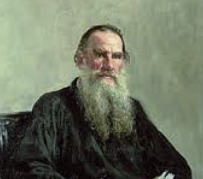
I longed for activity, instead of an even flow of existence. I wanted excitement and danger and the chance to renounce self for the sake of my love. I was conscious of a superabundance of energy which found no outlet in our quiet life. I had bouts of depression, which I tried to hide, as something to be ashamed of...My mind, even my senses were occupied, but there was another feeling – the feeling of youth and a craving for activity – which found no scope in our quiet life...So time went by, the snow piled higher and higher round the house, and there we remained together, always and for ever alone and just the same in each other's eyes; while somewhere far away amidst glitter and noise multitudes of people thrilled, suffered and rejoiced, without one thought of us and our existence which was ebbing away. Worst of all, I felt that every day that passed riveted another link to the chain of habit which was binding our life into a fixed shape, that our emotions, ceasing to be spontaneous, were being subordinated to the even, passionless flow of time... 'It's all very well ... ' I thought, 'it's all very well to do good and lead upright lives, as he says, but we'll have plenty of time for that later, and there are other things for which the time is now or never.' I wanted, not what I had got, but a life of challenge; I wanted feeling to guide us in life, and not life to guide us in feeling.
3 months 3 weeks ago
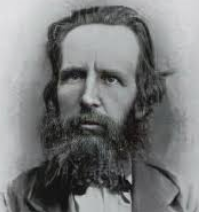
[On Hegel's panlogism offers] no asylum for lawless vagabonds (sinners against the logical order), no free playground granted by the master of the world in his good humor to each of these kobolds, where they might have the privilege of moving about and of enjoying themselves in a manner unrelated to the rational worldpurpose-until their day also came and the broomstick of the courtmaster would sweep them out into the sanctum.
▼
Source
Quoted by Harry Slochower in "Julius Bahnsen, Philosopher of Heroic Despair, 1830-1881" (1932), The Philosophical Review, 41(4), p. 379
3 months 3 weeks ago
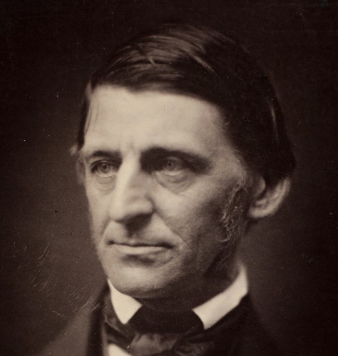
Literature is the effort of man to indemnify himself for the wrongs of his condition.
▼
Source
"Walter Savage Landor", from The Dial, xii (1841)

3 months 3 weeks ago
Political repression in the United States has reached monstrous proportions. Black and Brown peoples especially, victims of the most vicious and calculated forms of class, national and racial oppression, bear the brunt of this repression. Literally tens of thousands of innocent men and women, the overwhelming majority of them poor, fill the jails and prisons; hundreds of thousands more, including the most presumably respectable groups and individuals, are subject to police, FBI and military intelligence surveillance. The Nixon administration most recently responded to the massive protests against the war in Indochina by arresting more than 13,000 people and placing them in stadiums converted into detention centers.
3 months 3 weeks ago
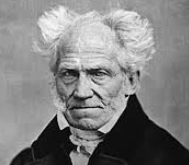
The law of simplicity and naïveté applies to all fine art, for it is compatible with what is most sublime. True brevity of expression consists in a man only saying what is worth saying, while avoiding all diffuse explanations of things which every one can think out for himself; that is, it consists in his correctly distinguishing between what is necessary and what is superfluous. On the other hand, one should never sacrifice clearness, to say nothing of grammar, for the sake of being brief. To impoverish the expression of a thought, or to obscure or spoil the meaning of a period for the sake of using fewer words shows a lamentable want of judgment.

3 months 3 weeks ago
What is not heartrending is superfluous, at least in music.
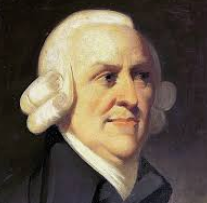
3 months 3 weeks ago
His capital is continually going from him in one shape, and returning to him in another, and it is only by means of such circulation, or successive exchanges, that it can yield him any profit. Such capitals, therefore, may very properly be called circulating capitals.
▼
Source
Chapter I, p. 305.
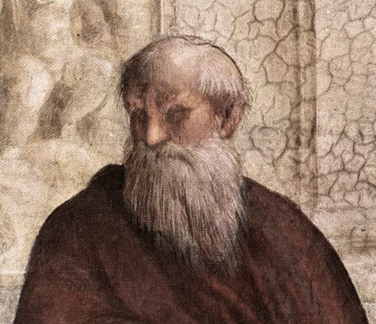
3 months 3 weeks ago
We may treat of the Soul as in the body — whether it be set above it or actually within it — since the association of the two constitutes the one thing called the living organism, the Animate. Now from this relation, from the Soul using the body as an instrument, it does not follow that the Soul must share the body's experiences: a man does not himself feel all the experiences of the tools with which he is working.
▼
Source
First Tractate : The Animate and the Man, §3
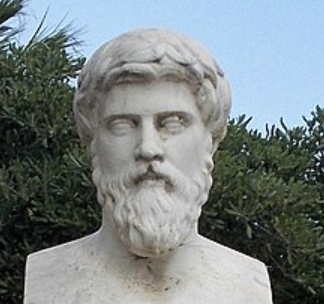
3 months 3 weeks ago
Socrates thought that if all our misfortunes were laid in one common heap, whence every one must take an equal portion, most persons would be contented to take their own and depart.

3 months 3 weeks ago
Tyranny offers relief from the burden of sanity and a licence to enact forbidden impulses of hatred and violence. By acting on these impulses and releasing them in their subjects tyrants give people a kind of happiness, which as individuals they may be incapable of achieving.
▼
Source
An Old Chaos: What a Tyrant Can Do For You (p. 57)
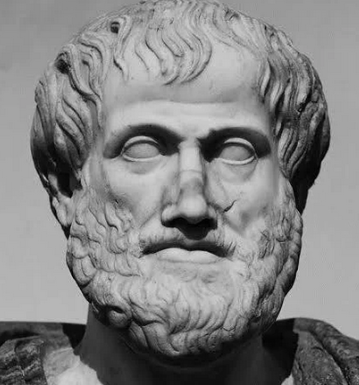
3 months 3 weeks ago
Remember that time slurs over everything, let all deeds fade, blurs all writings and kills all memories. Except are only those which dig into the hearts of men by love.
▼
Source
"The Letter of Aristotle to Alexander on the Policy toward the Cities", translated from Lettre d'Aristote à Alexandre sur la politique envers les cités, an Arabic text translated and edited by Józef Bielawski and Marian Plezia (1970), p. 72; translated fr
3 months 3 weeks ago
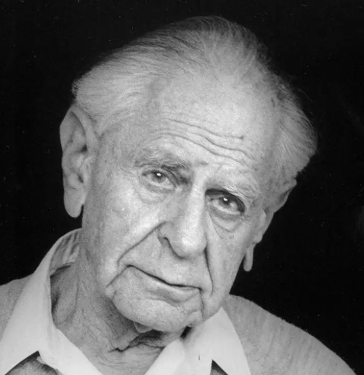
What we should do, I suggest, is to give up the idea of ultimate sources of knowledge, and admit that all knowledge is human; that it is mixed with our errors, our prejudices, our dreams, and our hopes; that all we can do is to grope for truth even though it be beyond our reach. We may admit that our groping is often inspired, but we must be on our guard against the belief, however deeply felt, that our inspiration carries any authority, divine or otherwise. If we thus admit that there is no authority beyond the reach of criticism to be found within the whole province of our knowledge, however far it may have penetrated into the unknown, then we can retain, without danger, the idea that truth is beyond human authority. And we must retain it. For without this idea there can be no objective standards of inquiry; no criticism of our conjectures; no groping for the unknown; no quest for knowledge.
▼
Source
Introduction "On The Sources of Knowledge and of Ignorance" Section XVII, p. 30 Variant translation: I believe it is worthwhile trying to discover more about the world, even if this only teaches us how little we know. It might do us good to remember from
3 months 3 weeks ago
Pure and complete sorrow is as impossible as pure and complete joy.
▼
Source
Bk. XV, ch. 1
3 months 3 weeks ago
It is a general observation that people write as they read. As a rule, careful writers are careful readers and vice versa. A careful writer wants to be read carefully. He cannot know what it means to be read carefully but by having done careful reading himself. Reading precedes writing. We read before we write. We learn to write by reading. A man learns to write well by reading well good books, by reading most carefully books which are most carefully written.
▼
Source
p. 144
3 months 3 weeks ago
A good indignation brings out all one's powers.
▼
Source
1841
3 months 3 weeks ago
The most immediate question today is how to prevent as many imprisoned women and men as possible back into what prisoners call "the free world." How can we move to decriminalize drug use and the trade in sexual services? How can we take seriously strategies of restorative rather than elusively punitive justice? Effective alternatives involve both transformation of the techniques for addressing "crime" and of the social and economic conditions that track so many children from poor communities, and especially communities of color, into the juvenile system and then on to prison. The most difficult and urgent challenge today is that of creatively exploring the new terrain of justice, where the prison no longer serves as our major anchor.
▼
Source
Chapter One
3 months 3 weeks ago
What is marvelous is that each day brings us a new reason to disappear.
3 months 3 weeks ago
There seem, however, to be two cases in which it will generally be advantageous to lay some burden upon foreign, for the encouragement of domestic industry. The first is, when some particular sort of industry is necessary for the defence of the country. The defence of Great Britain, for example, depends very much upon the number of its sailors and shipping. The act of navigation, therefore, very properly endeavours to give the sailors and shipping of Great Britain the monopoly of the trade of their own country, in some cases, by absolute prohibitions, and in others by heavy burdens upon the shipping of foreign countries.
▼
Source
Chapter II
3 months 3 weeks ago
All exercise of authority perverts, and submission to authority humiliates.
▼
Source
As quoted in Michael Bakunin (1937), E.H. Carr, p. 453
3 months 3 weeks ago
Both Stoicism and Epicureanism — the apathetic acceptance of defeat, and the effort to forget defeat in the arms of pleasure — were theories as to how one might yet be happy though subjugated or enslaved; precisely as the stoicism of Schopenhauer and the despondent epicureanism of Renan were in the nineteenth century the symbols of a shattered revolution and a broken France.
3 months 3 weeks ago
Hayek watched the interwar collapse with horror, as Keynes did, and shared many of Keynes’s liberal values. What he failed to understand is that these values cannot be renewed by applying any formula or doctrine, or by trying to construct an ideal liberal regime in which freedom is insulated from the contingencies of politics.
3 months 3 weeks ago
What can be said can and should always be said more and more simply and clearly.
3 months 3 weeks ago
Ivan Ilych saw that he was dying, and he was in continual despair. In the depth of his heart he knew he was dying, but not only was he not accustomed to the thought, he simply did not and could not grasp it. The syllogism he had learnt from Kiesewetter's Logic: "Caius is a man, men are mortal, therefore Caius is mortal," had always seemed to him correct as applied to Caius, but certainly not as applied to himself. That Caius — man in the abstract — was mortal, was perfectly correct, but he was not Caius, not an abstract man, but a creature quite, quite separate from all others.
▼
Source
Ch. VI
3 months 3 weeks ago
There were two reasons why contemporary Jews were inclined to celebrate Spinoza. The first is Spinoza's assumed merit about mankind and only secondarily about the Jews; the second is his assumed merit about the Jewish people and only secondarily about mankind. Both reasons had induced contemporary Jews not only informally to rescind the excommunication which the Jewish community in Amsterdam had pronounced against Spinoza, but even, as Cohen put it, to canonize him.
▼
Source
Preface
3 months 3 weeks ago
The state of society is one in which the members have suffered amputation from the trunk, and strut about so many walking monsters,—a good finger, a neck, a stomach, an elbow, but never a man.
▼
Source
par. 5
3 months 3 weeks ago
Regimes of racial segregation were not disestablished because of the work of leaders and presidents and legislators but rather because of the fact that ordinary people adopted a critical stance in the way in which they perceived their relationship to reality. Social realities that may have appeared inalterable, impenetrable, came to be viewed as malleable and transformable; and people learned how to imagine what it might mean to live in a world that was not so exclusively governed by the principle of white supremacy. This collective consciousness emerged within the context of social struggles.
3 months 3 weeks ago
Suicide
3 months 3 weeks ago
The education of the common people requires, perhaps, in a civilized and commercial society, the attention of the public more than that of people of some rank and fortune.
▼
Source
Chapter I, Part III, p. 845.
3 months 3 weeks ago
If there is a state, then necessarily there is domination and consequently slavery. A state without slavery, open or camouflaged, is inconceivable — that is why we are enemies of the state.
3 months 3 weeks ago
She is a woman now, and not an idle girl, not a domestic ornament or a sexual convenience anymore.
▼
Source
On the maturation of women, Ch. 4 : On Old Age

3 months 3 weeks ago
Man reaches the highest point of his knowledge about God when he knows that he knows him not, inasmuch as he knows that that which is God transcends whatsoever he conceives of him.
▼
Source
q. 7, art. 5, ad 14
3 months 3 weeks ago
A distribution is just if it arises from another just distribution by legitimate means.
▼
Source
Ch. 7 : Distributive Justice, Section I, The Entitlement Theory, p. 151
3 months 3 weeks ago
"Historically, Helchitsky attributes the degeneration of Christianity to the times of Constantine the Great, whom the Pope Sylvester admitted into the Christian Church with all his heathen morals and life. Constantine, in his turn, endowed the Pope with worldly riches and power. From that time forward these two ruling powers were constantly aiding one another to strive for nothing but outward glory. Divines and ecclesiastical dignitaries began to concern themselves only about subduing the whole world to their authority, incited men against one another to murder and plunder, and in creed and life reduced Christianity to a nullity. Helchitsky denies completely the right to make war and to inflict the punishment of death; every soldier, even the 'knight,' is only a violent evil doer—a murderer."
▼
Source
Chapter I, The Doctrine of Non-resistance to Evil by Force has been Professed by a Minority of Men from the Very Foundation of Christianity
3 months 3 weeks ago
For Strauss, every philosopher at all times is in the situation of political persecution, and hence has to construct a specific way of writing, which on its surface is “exoteric,” that is, meant for the general, unsophisticated reader, yet is “esoteric” in its hidden message, accessible only to few “thoughtful” and “careful” readers capable of understanding the true message of and behind a text by “reading between the lines”. True philosophers, then, including Plato, “must conceal their opinions from all but philosophers, either by limiting themselves to oral instruction of a carefully selected group of pupils, or by writing about the most important subject by means of ‘brief indication’”.
▼
Source
Dmitri Nikulin, "Plato: Testimonia et Fragmenta" in The other Plato : the Tübingen interpretation of Plato’s inner-academic teachings edited by Dmitri Nikulin
3 months 3 weeks ago
Our condition is like that of the poor wolves: if one of the flock wound himself, or so much as limp, the rest eat him up incontinently. That serene Power interposes the check upon the caprices and officiousness of our wills.
3 months 3 weeks ago
The aim of jazz is the mechanical reproduction of a regressive moment, a castration symbolism. 'Give up your masculinity, let yourself be castrated,' the eunuchlike sound of the jazz band both mocks and proclaims, 'and you will be rewarded, accepted into a fraternity which shares the mystery of impotence with you, a mystery revealed at the moment of the initiation rite.
▼
Source
"Perennial Fashion — Jazz" (1978), Prisms, p. 129, as translated by Samuel Weber and Shierry Weber (1981)
3 months 3 weeks ago
Angela Davis has profoundly influenced the discourses on social justice in relationship to race, gender, and class nationally and internationally through her writings and her role in organizations such as the Communist Party and the Student Nonviolent Coordinating Committee (SNCC) in the past, and her more recent activism through the prison abolitionist organization Critical Resistance, along with being an honorary co-chair for the Women's March during 2017.
▼
Source
Sharon Lynette Jones Introduction to Conversations with Angela Davis Edited by Sharon Lynette Jones (2021)
3 months 3 weeks ago
All significant concepts of the modern theory of the state are secularized theological concepts not only because of their historical development—in which they were transferred from theology to the theory of the state, whereby, for example, the omnipotent God became the omnipotent lawgiver—but also because of their systematic structure, the recognition of which is necessary for a sociological consideration of these concepts. The exception in jurisprudence is analogous to the miracle in theology.
3 months 3 weeks ago
The key insight of Adam Smith's Wealth of Nations is misleadingly simple: if an exchange between two parties is voluntary, it will not take place unless both believe they will benefit from it. Most economic fallacies derive from the neglect of this simple insight, from the tendency to assume that there is a fixed pie, that one party can gain only at the expense of another.
▼
Source
Milton Friedman, Free to Choose: A Personal Statement (1981), p. 5.
3 months 3 weeks ago
The assertion that art may be good art and at the same time incomprehensible to a great number of people is extremely unjust, and its consequences are ruinous to art itself...it is the same as saying some kind of food is good but most people can't eat it.
3 months 3 weeks ago
Those who are capable of tyranny are capable of perjury to sustain it.
▼
Source
An Essay on the Trial by Jury, Boston, MA: John P. Jewett and Company, Cleveland, Ohio: Jewett, Proctor & Worthington (1852) p. 14 [http://www.gutenberg.org/files/32984/32984-h/32984-h.htm]
3 months 3 weeks ago
Earth laughs in flowers to see her boastful boys Earth-proud, proud of the earth which is not theirs; Who steer the plough, but can not steer their feet Clear of the grave.
▼
Source
Hamatreya
3 months 3 weeks ago
The important thing is not the planning of an Index Verborum Prohibitorum of current noble nouns, but rather the examination of their linguistic function.
▼
Source
p. 6
3 months 3 weeks ago
The natural philosopher Heraclitus said that man is naturally irrational. If this is true, as it is true, then everyone who enjoys futile glory should hide his face.
▼
Source
to Euphrates, Epp. Apoll. 18
3 months 3 weeks ago
To have never done any thing but make the eighteenth part of a pin, is a sorry account for a human being to give of his existence.
▼
Source
Jean-Baptiste Say (1803) A Treatise On Political Economy. (Fourth Edition, 1855), Book I, Chapter VIII, p. 98.
3 months 3 weeks ago
He crossed his hands on his breast, as he used to do when a child, raised his eyes and said:"Lord, help me, teach me; come and enter within me and purify me of all this abomination."He prayed, asked God to help him and purify him, while that which he was praying for had already happened. Not only did he feel the freedom, vigor and gladness of life, but he also felt the power of good. He felt himself capable of doing the best that man can do.
▼
Source
Ch. 28
3 months 3 weeks ago
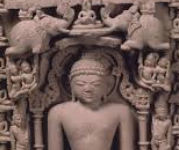
A living body is not merely an integration of limbs and flesh but it is the abode of the soul which potentially has perfect perception (Anant-darshana), perfect knowledge (Anant-jnana), perfect power (Anant-virya), and perfect bliss (Anant-sukha).
▼
Source
As quoted in Jainism and Indian Civilization (2004) by Raj Pruthi, p. 24.
3 months 3 weeks ago
Men are what their mothers made them.
▼
Source
Fate

3 months 3 weeks ago
Could this reaction against the personal by [analytic] philosophers … be, at bottom, one of fear? … Are … bright people … blindly afraid of their own precarious identity and unspeakable vulnerability as particular bodily beings?
▼
Source
p. xiii
3 months 3 weeks ago
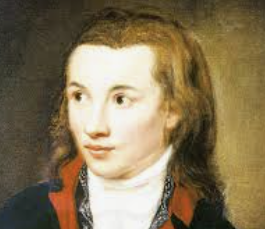
Denotation by means of sounds and markings is a remarkable abstraction. Three letters designate God for me; several lines a million things. How easy becomes the manipulation of the universe here, how evident the concentration of the intellectual world! Language is the dynamics of the spiritual realm. One word of command moves armies; the word Liberty entire nations.
▼
Source
Fragment No. 2
CivilSimian.com created by AxiomaticPanic, CivilSimian, Kalokagathia