
3 months 3 weeks ago
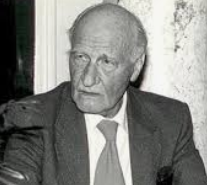
It could even be said, perhaps, that this very opposition, this threat from the world of total work, is what characterizes the situation of philosophy today more than its own particular content. Philosophy increasingly adopts — necessarily, it seems — the character of the alien, of mere intellectual luxury, of that which seems ever more intolerable and unjustifiable, the more exclusively the demands of the daily world of work take over the world of man.
▼
Source
pp. 65–66
3 months 3 weeks ago
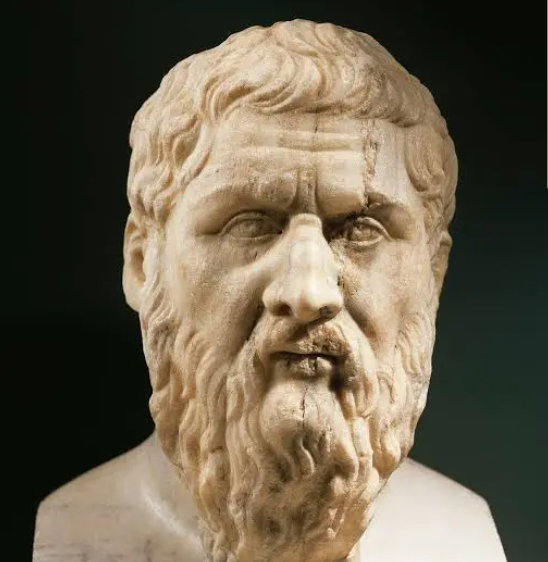
But why had science lost its way in the first place? What appeal could these teachings of Pythagoras and Plato have had for their contemporaries? They provided, I believe, an intellectually respectable justification for a corrupt social order. The mercantile tradition that had led to Ionian science also led to a slave economy. You could get richer if you owned a lot of slaves. Athens in the time of Plato and Aristotle had a vast slave population. All that brave Athenian talk about democracy applied only to a privileged few.
▼
Source
Carl Sagan, "Cosmos"

3 months 3 weeks ago
The obsession with suicide is characteristic of the man who can neither live nor die, and whose attention never swerves from this double impossibility.

3 months 3 weeks ago
[I]n the learned professions as in the unlearned, and in human things throughout, in every place and in every time, the true function of intellect is not that of talking, but of understanding and discerning with a view to performing!
3 months 3 weeks ago
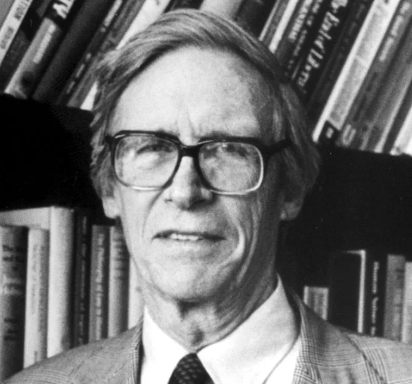
The first statement of the two principles reads as follows. First: each person is to have an equal right to the most extensive basic liberty compatible with a similar liberty for others. Second: social and economic inequalities are to be arranged so that they are both(a)reasonably expected to be to everyone's advantage, and (b) attached to positions and offices open to all.
▼
Source
Chapter II, Section 11, pg. 60
3 months 3 weeks ago
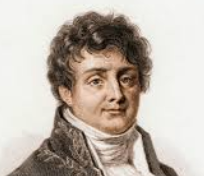
The earth would have only the same temperature as the heavens, were it not for two causes... One is the internal heat... possessed at its formation... only dissipated through the surface; the other is the continued action of the solar rays... which produce at the surface, the diversities of climate.
3 months 3 weeks ago
Bourgeois class domination is undoubtedly an historical necessity, but, so too, the rising of the working class against it. Capital is an historical necessity, but, so too, its grave digger, the socialist proletariat.
▼
Source
[http://www.marxists.org/archive/luxemburg/1915/junius/index.htm The Junius Pamphlet] (1915)
3 months 3 weeks ago
What I know at sixty, I knew as well at twenty. Forty years of a long, a superfluous, labor of verification.
3 months 3 weeks ago
Had there not been a natural goodness and indestructible force in my father, I see not how be could have bodied himself forth from these mean impediments. I suppose good precepts were not wanting. There was the Bible to read. Old John Orr, the schoolmaster, used from time to time to lodge with them; be was religious and enthusiastic (though in practice irregular with drink). In my grandfather, also, there seems to have been a certain geniality; for instance, he and a neighbor, Thomas Hogg, read "Anson's Voyages;" also tho "Arabian Nights," for which latter my father, armed with zealous conviction, scrupled not to censure them openly. By one means and another, at an early age he had acquired principles, lights that not only flickered, but shone steadily to guide his way.
3 months 3 weeks ago
Properly understood, then, the desire to act justly derives in part from the desire to express most fully what we are or can be, namely free and equal rational beings with the liberty to choose.
▼
Source
Chapter IV, Section 40, p. 256
3 months 3 weeks ago
Contemporary with Vitellio and Peccam was... Roger Bacon, a man of almost universal genius, and who wrote on almost every branch of science. He frequently quotes Alhazen on the subject of optics, and seems to have carefully studied his writings, as well as those of other Arabians, which were the fountains of natural knowledge in those days, and which had been introduced into Europe by means of the Moors in Spain. Notwithstanding the pains this great man took with the subject of opticks, it does not appear that, with respect to theory, he made any considerable advance upon what Alhazen had done before him.
▼
Source
Period I To the Revival of Letters in Erope
3 months 3 weeks ago
When all this is eliminated, what really remains? In place of the representative bodies created by general, popular elections, Lenin and Trotsky have laid down the soviets as the only true representation of political life in the land as a whole, life in the soviets must also become more and more crippled.Without general elections, without unrestricted freedom of press and assembly, without a free struggle of opinion, life dies out in every public institution, becomes a mere semblance of life, in which only the bureaucracy remains as the active element. Public life gradually falls asleep, a few dozen party leaders of inexhaustible energy and boundless experience direct and rule. Among them, in reality only a dozen outstanding heads do the leading and an elite of the working class is invited from time to time to meetings where they are to applaud the speeches of the leaders, and to approve proposed resolutions unanimously – at bottom, then, a clique affair – a dictatorship, to be sure, not the dictatorship of the proletariat but only the dictatorship of a handful of politicians, that is a dictatorship in the bourgeois sense, in the sense of the rule of the Jacobins (the postponement of the Soviet Congress from three-month periods to six-month periods!)
▼
Source
Chapter Six, "The Problem of Dictatorship" | Variant translation: Without general elections, without freedom of the press, freedom of speech, freedom of assembly, without the free battle of opinions, life in every public institution withers away, becomes
3 months 3 weeks ago
Consider the Koran... this wretched book was sufficient to start a world-religion, to satisfy the metaphysical need of countless millions for twelve hundred years, to become the basis of their morality and of a remarkable contempt for death, and also to inspire them to bloody wars and the most extensive conquests. In this book we find the saddest and poorest form of theism. Much may be lost in translation, but I have not been able to discover in it one single idea of value.
▼
Source
E. Payne, trans., Vol. II, Ch. XVII: On Man's Need for Metaphysics
3 months 3 weeks ago
If we could sleep twenty-four hours a day, we would soon return to the primordial slime, the beatitude of that perfect torpor before Genesis-the dream of every consciousness sick of itself.
3 months 3 weeks ago
About that age [16], or perhaps a year later, a friend sent me Sartor Resartus, and one of the most abiding remembrances of those days is the attic in which I used to read by the light only of my collier's lamp whilst going through Carlyle's most impressive book. I felt I was in the presence of some great power, the meaning of which I could only dimly guess at. I mark the reading of Sartor, however, as a real turning point, and went through the book three times in succession until the spirit of it somewhat entered into me. Since then I have learned much of the human failings and weaknesses of Carlyle, but I still remain a worshipper at his shrine. He was, indeed, to me in those days a hero, more particularly when Past and Present and the French Revolution followed in the wake of Sartor.
▼
Source
Keir Hardie, contribution to 'Character Sketches. I—The Labour Party And The Books That Helped To Make It', The Review of Reviews, Vol. XXXIII (June 1906), pp. 570-571
3 months 3 weeks ago
Of our desires some are natural and necessary, others are natural but not necessary; and others are neither natural nor necessary, but are due to groundless opinion.
3 months 3 weeks ago
The path of speech (mythos odoio) (by Parmenides) contains within itself the path of day and that of night. It is no coincidence that Parmenides' poem comprises two parts. What exactly the second part contains and why it is so is an ancient philological and exegetical problem that we will not address here and which Plato already denounced in its ambiguity. In fact, it is not possible to separate being and speech without identifying them, and it is not possible to identify them without, ipso facto, separating them. The “simulation” (the simul) is immediate and structural. Human beings are simulators precisely because they are beings of truth. They cannot tell the truth without lying and vice versa. In this sense, they are beings of mediation, beings that stand in the middle, as you happily recall, that is, beings that ‘work’ to translate immediate experience into knowledge, or into a transferential process. God and nature do not work, but human beings do, first and foremost in naming the fruit of sexuality; it then places humans in the relational milieu of parents and children, brothers and sisters, offered, either really or symbolically, in sacrifice to God, that is, to the community of speakers. [...] The 20th century cannot exist without Sigmund Freud, psychoanalysis cannot exist without philosophy, at least in my opinion.
▼
Source
Carlo Sini, quoted in Giorgio Bubbolini, [https://www.spiweb.it/libri/con-autore/intervista-a-carlo-sini/ Intervista a Carlo Sini], Spiweb.it, 17 November 2009.
3 months 3 weeks ago
A knowledge of different literatures is the best way to free one's self from the tyranny of any of them.
▼
Source
On Oscar Wilde (1882)
3 months 3 weeks ago
Fear of death pushed Seven Sleepers into a cave, Made Noah and his son build a ship; Nor did Moses and Adam think it pleasant to die Though they were promised paradise.
▼
Source
Translation of Kevin Blankinship[https://www.jadaliyya.com/Details/32488]
3 months 3 weeks ago
The cheapest sort of pride is national pride; for if a man is proud of his own nation, it argues that he has no qualities of his own of which he can be proud; otherwise he would not have recourse to those which he shares with so many millions of his fellowmen. The man who is endowed with important personal qualities will be only too ready to see clearly in what respects his own nation falls short, since their failings will be constantly before his eyes. But every miserable fool who has nothing at all of which he can be proud adopts, as a last resource, pride in the nation to which he belongs; he is ready and glad to defend all its faults and follies tooth and nail, thus reimbursing himself for his own inferiority.
▼
Source
Vol. 1, Ch. 3, Section 2: Pride
3 months 3 weeks ago
Self-knowledge — the bitterest knowledge of all and also the kind we cultivate least: what is the use of catching ourselves out, morning to night, in the act of illusion, pitilessly tracing each act back to its root, and losing case after case before our own tribunal?
3 months 3 weeks ago
The general holds back his cavalry to a pace that suits his infantry, for if its infantry is left behind, the cavalry will be surrounded by the enemy.
3 months 3 weeks ago
It is impossible for motion to subsist without place, and void, and time.
▼
Source
Book III, Ch. I, p. 136.

3 months 3 weeks ago
This is appropriate. Justice is the most 'political' or institutional of the virtues. The legitimacy of a state rests upon its claim to do justice. … Doing justice is not the primary purpose of the family, the classroom, the small business, even though a father, teacher, or employer ought to behave justly towards children, pupils, or employees when rearing them, teaching them, . and employing them.
3 months 3 weeks ago
Truth that has been merely learned is like an artificial limb, a false tooth, a waxen nose; at best, like a nose made out of another's flesh; it adheres to us only because it is put on. But truth acquired by thinking of our own is like a natural limb; it alone really belongs to us. This is the fundamental difference between the thinker and the mere man of learning. The intellectual attainments of a man who thinks for himself resemble a fine painting, where the light and shade are correct, the tone sustained, the colour perfectly harmonised; it is true to life. On the other hand, the intellectual attainments of the mere man of learning are like a large palette, full of all sorts of colours, which at most are systematically arranged, but devoid of harmony, connection and meaning.
▼
Source
Vol. 2, Ch. 22, § 261
3 months 3 weeks ago
We must suffer to the end, to the moment when we stop believing in suffering.
3 months 3 weeks ago
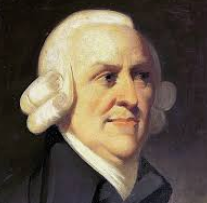
How many people ruin themselves by laying out money on trinkets of frivolous utility? What pleases these lovers of toys is not so much the utility, as the aptness of the machines which are fitted to promote it. All their pockets are stuffed with little conveniences. They contrive new pockets, unknown in the clothes of other people, in order to carry a greater number. They walk about loaded with a multitude of baubles, in weight and sometimes in value not inferior to an ordinary Jew's-box, some of which may sometimes be of some little use, but all of which might at all times be very well spared, and of which the whole utility is certainly not worth the fatigue of bearing the burden.
▼
Source
Chap. I.
3 months 3 weeks ago
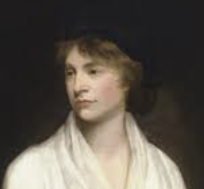
How can a rational being be ennobled by anything that is not obtained by its own exertions?
▼
Source
Ch. 3
3 months 3 weeks ago
The scientific enterprise as a whole does from time to time prove useful, open up new territory, display order, and test long-accepted belief. Nevertheless, the individual engaged on a normal research problem is almost never doing any one of these things. Once engaged, his motivation is of a rather different sort. What then challenges him is the conviction that, if only he is skillful enough, he will succeed in solving a puzzle that no one before has solved or solved so well.
▼
Source
p. 38.
3 months 3 weeks ago
The result of toppling tyranny in divided countries is usually civil war and ethnic cleansing.
▼
Source
[http://www.guardian.co.uk/commentisfree/2007/jul/31/comment.politics1 "The death of this crackpot creed is nothing to mourn,"] The Guardian (2007-07-31)
3 months 3 weeks ago
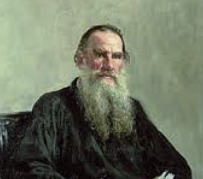
I sit on a man's back, choking him, and making him carry me, and yet assure myself and others that I am very sorry for him and wish to ease his lot by any means possible, except getting off his back.
▼
Source
Writings on Civil Disobedience and Nonviolence (1886)
3 months 3 weeks ago
One just principle from the depths of a cave is more powerful than an army.
3 months 3 weeks ago
And surely to know what this good is, is of great importance for the conduct of life, for in that case we shall be like archers shooting at a definite mark, and shall be more likely to do what is right. But, if this is the case, we must try to comprehend, in outline at least, what it is and to which of the sciences it belongs.
▼
Source
(Bk I, Ch I)
3 months 3 weeks ago
The bringing down of one of the most oppressive regimes, that of the Shah monarchy, was a remarkable event of twentieth century. Whether one finds the outcome of the Revolution in terms of the establishment of an Islamic Republic under the dominance of Ulama (Islamic clerics, in narrow, contemporary sense) agreeable or disappointing, a most remarkable aspect of this revolution that has become an object of interest of observers of contemporary events is the mass movement that underlies the revolution. Indeed, the kind of mass participation - in terms of both absolute and relative magnitude - in the movement leading to the revolution is still unprecedented.While the role of the Ulama, especially that of Imam Khomeini, received overwhelming attention worldwide, there were other powerful influences that shaped the ethos of the revolution. One such source of influence was Dr. Ali Shariati. A sociologist, trained at Sorbonne University (France), he was gunned down in United Kingdom by Savak for his anti-monarchy stance and popular influence among the modern educated and youth of pre-revolutionary Iran.
▼
Source
Mohammad Omar Farooq. "[http://globalwebpost.com/farooqm/writings/islamic/ali_shariati.html Humanity and the People Power: A Tribute to Dr. Ali Shariati]," at globalwebpost.com, September 2000.
3 months 3 weeks ago
Every man takes the limits of his own field of vision for the limits of the world.
▼
Source
"Psychological Observations"
3 months 3 weeks ago
One disgust, then another — to the point of losing the use of speech and even of the mind...The greatest exploit of my life is to be still alive.
3 months 3 weeks ago
A man must always live by his work, and his wages must at least be sufficient to maintain him. They must even upon most occasions be somewhat more, otherwise it would be impossible for him to bring up a family, and the race of such workmen could not last beyond the first generation.
▼
Source
Chapter VIII, p. 81.
3 months 3 weeks ago
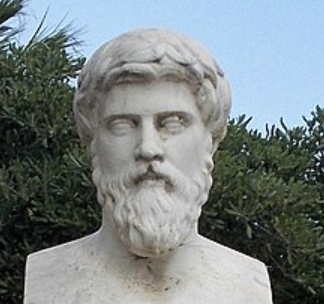
Thrasyllus the Cynic begged a drachm of Antigonus. "That," said he, "is too little for a king to give." "Why, then," said the other, "give me a talent." "And that," said he, "is too much for a Cynic (or, for a dog) to receive."
▼
Source
45 Antigonus I
3 months 3 weeks ago
The repression of liberty that took place in the countries in which Communist regimes were established cannot be adequately explained as a product of backwardness, or of errors in the application of Marxian theory. It was the result of a resolute attempt to realize an Enlightenment utopia - a condition of society in which no serious form of conflict any longer exists.
▼
Source
'Isaiah Berlin: The Value of Decency' (p.99)
3 months 3 weeks ago
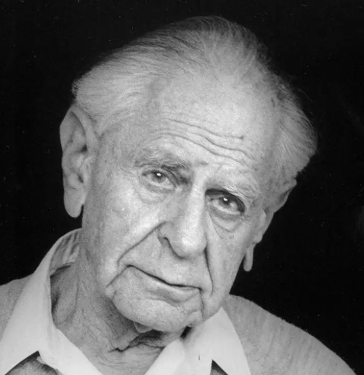
Bold ideas, unjustified anticipations, and speculative thought, are our only means for interpreting nature: our only organon, our only instrument, for grasping her. And we must hazard them to win our prize. Those among us who are unwilling to expose their ideas to the hazard of refutation do not take part in the scientific game.
▼
Source
Ch. 10 "Corroboration, or How a Theory Stands up to Tests", section 85: The Path of Science, p. 280.
3 months 3 weeks ago
The young Princess Bolkónskaya had brought some work in a gold-embroidered velvet bag. Her pretty little upper lip, on which a delicate dark down was just perceptible, was too short for her teeth, but it lifted all the more sweetly, and was especially charming when she occasionally drew it down to meet the lower lip. As is always the case with a thoroughly attractive woman, her defect—the shortness of her upper lip and her half-open mouth—seemed to be her own special and peculiar form of beauty. Everyone brightened at the sight of this pretty young woman, so soon to become a mother, so full of life and health, and carrying her burden so lightly. Old men and dull dispirited young ones who looked at her, after being in her company and talking to her a little while, felt as if they too were becoming, like her, full of life and health. All who talked to her, and at each word saw her bright smile and the constant gleam of her white teeth, thought that they were in a specially amiable mood that day.
▼
Source
Bk. I, Ch. II
3 months 3 weeks ago
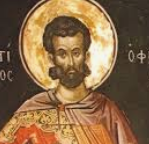
"If, therefore, any one makes the accusation, and furnishes proof that the said men [Christians] do anything contrary to the laws, you shall adjudge punishments in proportion to the offences. And this, by Hercules, you shall give special heed to, that if any man shall, through mere calumny, bring an accusation against any of these persons [Christians], you shall award to him more severe punishments in proportion to his wickedness."
▼
Source
The first apology of Justin, chapter LXVIII. In ANF1, that is, Roberts A, Donaldson J and Coxe AC (1885) Ante-Nicene Fathers, Vol 1. [Justin quotes from a letter of c122AD from the Emperor Hadrian to Minucius Fundanus. ANF1 footnote: "Generally credited a
3 months 3 weeks ago
What it lies in our power to do, it lies in our power not to do.
▼
Source
Book III, 5

3 months 3 weeks ago
The clergy are as like as peas.
▼
Source
"The Preacher", in The Index: A Weekly Paper (Feb. 5, 1880) pp. 62–3. Originally written as a parlor-lecture to some Divinity students, in 1867; afterwards enlarged from earlier writings, and read in its present form at the Divinity Chapel, Cambridge, MA,
3 months 3 weeks ago
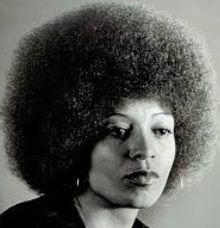
Nat Turner and John Brown were political prisoners in their time. The acts for which they were charged and subsequently hanged, were the practical extensions of their profound commitment to the abolition of slavery.
3 months 3 weeks ago
He speaks to me as no other philosopher does, direct and in his own human voice, a fellow spirit, a penetratingly perceptive friend, with a hand on my elbow and a twinkle in his eye. Although I frequently do not agree with what he says, I always listen to him.
▼
Source
Bryan Magee, in Confessions of a Philosopher: A Personal Journey through Western Philosophy from Plato to Popper (1999), p. 373
3 months 3 weeks ago
When you love someone, you hope — the more closely to be attached — that a catastrophe will strike your beloved.
3 months 3 weeks ago
It is the highest impertinence and presumption, therefore, in kings and ministers, to pretend to watch over the economy of private people, and to restrain their expence, either by sumptuary laws, or by prohibiting the importation of foreign luxuries. They are themselves always, and without any exception, the greatest spendthrifts in the society. Let them look well after their own expence, and they may safely trust private people with theirs. If their own extravagance does not ruin the state, that of their subjects never will.
▼
Source
Chapter III, p. 381.
3 months 3 weeks ago
To one commending an orator for his skill in amplifying petty matters, Agesilaus said, "I do not think that shoemaker a good workman that makes a great shoe for a little foot."
▼
Source
Of Agesilaus the Great
3 months 3 weeks ago
As the Genesis story teaches, knowledge cannot save us from ourselves. If we know more than before, it means only that we have greater scope to enact our fantasies. But – as the Genesis myth also teaches – there is no way we can rid ourselves of what we know. If we try to regain a state of innocence, the result can only be a worse madness. The message of Genesis is that in the most vital areas of human life there can be no progress, only an unending struggle with our own nature.
▼
Source
An Old Chaos: Humanism and Flying Saucers (pp. 79-80)
CivilSimian.com created by AxiomaticPanic, CivilSimian, Kalokagathia