

4 months ago
There is no English historian who has a right to be judged by a higher or severer test, for no one has spoken more deeply and truly on the character and dignity of history... He showed an intelligence of things which no other English historian has understood. He dwelt upon the invisible impersonal forces that act in history, and appreciated, often with rare sagacity, the true significance and sequence of events. But he was unable to follow the course he had pointed out, and failed even to maintain himself on the high ground he had reached. He could not distinguish in history what was unknown to him in religion: thus he fell to the exclusive contemplation of certain typical individuals, whose greatness appeared to supply what he wanted, an object of worship, and personified invisible elements in visible men. And now the belongings of his hero possess so great an importance that they distract his attention from him; he invests with an absurd dignity not only his relations, but their goods and chattels, and allows merely material things to eclipse the human interest of his subject. It is a history made up of eccentricities. This is the way that Mr. Dickens writes novels; for whom the spectacles of an elderly gentleman, a pair of mulberry coloured hose, or a wandering American pig, have greater attractions than any psychological problem.
▼
Source
Lord Acton, 'Literary Notices', The Rambler, Vol. X. New Series. Part LX (December 1858), p. 429 | Unsigned article attributed to Acton in Herbert Butterfield, Man on His Past: The Study of the History of Historical Scholarship (1955), p. 217, n. 3
4 months ago
Do not let habit, born from experience, force you along this road, directing aimless eye and echoing ear and tongue; but judge by reason the much contested proof which I have spoken.
▼
Source
Frag. B 7.3-8.1, quoted by Sextus Empiricus, Against the Mathematicians, vii. 3
4 months ago
The hazards of the generalized prisoner's dilemma are removed by the match between the right and the good.
▼
Source
Chapter IX, Section 86, p. 577
4 months ago
We find upon all occasions, the early Christian writers speak of the Father as superior to the Son, and in general they give him the title of God, as distinguished from the Son; and sometimes they expressly call him, exclusively of the Son, the only true God; a phraseology which does not at all accord with the idea of the perfect equality of all the persons in the Trinity. But it might well be expected, that the advances to the present doctrine of the Trinity should be gradual and slow. It was, indeed, some centuries before it was completely formed.
▼
Source
Part I : The History of Opinions Relating to Jesus Christ, § III : The Supremacy was always ascribed to the Father before the Council Of Nice

4 months ago
I remembered at this time the brilliant critical analysis of the German Social Democracy which Rosa Luxemburg had written in gaol in 1914, after her arrest for anti-militarist activity. The pamphlet had been signed by the pseudonym "Junius" and it was a confirmation of prophecies I had heard her make at a German Congress in Hanover many years before when she had engaged in a brilliant polemical duel with the German Revisionist, Edward Bernstein. Even then she had foreseen the development of that pernicious opportunism which was to result in the tragedies of the post-war years.
▼
Source
Angelica Balabanoff My Life As a Rebel (1938)
4 months ago
Compassion for animals is intimately connected with goodness of character, and it may be confidently asserted that he, who is cruel to living creatures, cannot be a good man. Moreover, this compassion manifestly flows from the same source whence arise the virtues of justice and loving-kindness towards men.
▼
Source
Part III, Ch. VIII, 7, [https://archive.org/stream/basisofmorality00schoiala#page/223/mode/2up p. 223]

4 months ago
An aphorism? Fire without flames. Understandable that no one tries to warm himself at it.
4 months ago
He saw human life and earthly happenings against a vast background of mystic spiritualism, of eternities and immensities; he was an individualist, to whom the development of the race depends on great personal virtues, on heroic abnegation and self-sacrificing activity. His rugged independence made it difficult for his contemporaries to 'place' him; he resolutely refused to be labelled, or to be identified with any specific intellectual, literary or political creed.
▼
Source
John George Robertson, 'Carlyle', in The Cambridge History of English Literature, Volume XIII: The Nineteenth Century II, eds. A. W. Ward and A. R. Waller (1916), p. 20
4 months ago
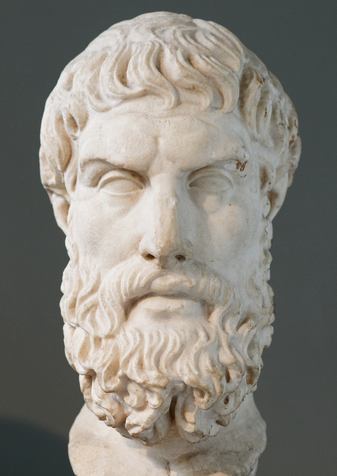
When pleasure is asserted to be the end of living, we are not then to understand that violent kind of delight or joy which arises from the gratification of the senses and passions, but merely that placid state of mind, which results from the absence of every cause of pain or uneasiness. Those pleasures, which arise from agitation, are not to be pursued as in themselves the end of living, but as means of arriving at that stable tranquility, in which true happiness consists. It is the office of reason to confine the pursuit of pleasure within the limits of nature, in order to the attainment of that happy state, in which the body is free from every kind of pain, and the mind from all perturbation. This state must not, however, be conceived to be perfect in proportion as it is inactive and torpid, but in proportion as all the functions of life are quietly and pleasantly performed. A happy life neither resembles a rapid torrent, nor a standing pool, but is like a gentle stream, that glides smoothly and silently along.
4 months ago
He goes on to develop all the consequences of the admission that it is. It must be uncreated and indestructible. It cannot have arisen out of nothing; for there is no such thing as nothing. Nor can it have arisen from something; for there is no room for anything but itself.
4 months ago
The whole afternoon was spent rejoicing as the demonstration spread across the city; no one walked alone for all San Juan was a single family.
▼
Source
"The Abolition of Slavery in Puerto Rico" (1893)
4 months ago
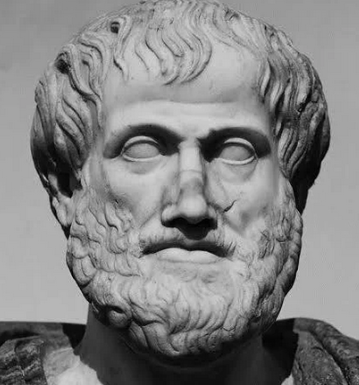
My lectures are published and not published; they will be intelligible to those who heard them, and to none beside.
▼
Source
Letter to Alexander the Great as quoted by William Whewell, History of the Inductive Sciences (1837), Ch. 2, Sect. 2
4 months ago
If one category had to be designated as an emblem of my thought, it would be neither Cantor's pure multiple, nor Godel's constructible, nor the void, by which being is named, nor even the event, in which the supplement of what-is-not-being-qua-being originates. It would be the generic.
▼
Source
Introduction
4 months ago
A great affliction of all Philistines is that idealities afford them no entertainment, but to escape from boredom they are always in need of realities.
▼
Source
E. Payne, trans. (1974) Vol. 1, p. 345
4 months ago
Nothing is a better proof of how far humanity has regressed than the impossibility of finding a single nation, a single tribe, among whom birth still provokes mourning and lamentations.
4 months ago
To desire you to read my book over and mark all the corrections you would wish me to make...would oblige me greatly: I know how much I shall be benefitted and I shall at the same time preserve the pretious right of private judgement for the sake of which our forefathers kicked out the Pope and the Pretender. I believe you to be much more infalliable than the Pope, but as I am a Protestant my conscience makes me scruple to submit to any unscriptural authority.
▼
Source
Letter to William Strahan (4 April 1760), quoted in Adam Smith, The Correspondence of Adam Smith, eds. E. C. Mossner and I. S. Ross (1987), pp. 67–68
4 months ago
It may be confidently asserted that no man chooses evil because it is evil; he only mistakes it for happiness, the good he seeks. And the desire of rectifying these mistakes, is the noble ambition of an enlightened understanding, the impulse of feelings that Philosophy invigorates.
▼
Source
A Vindication of the Rights of Men (1790)
4 months ago
When a nation is invited to join in a union with another, the ignorant, bedazzled statesman might rush into it, young people enamored of beautiful ideas and lacking good sense might celebrate it, and venal or demented politicians might welcome it as a mercy and glorify it with servile words, but he who feels in his heart the anguish of the patria, he who watches and foresees, must investigate and must say what elements constitute the character of the nation that invites and the nation that is invited, and whether they are predisposed toward a common labor by common antecedents and habits, and whether or not it is probable that the fearsome elements of the inviting nation will, in the union it aspires to, be developed to the endangerment of the invited one.
4 months ago
The least initial deviation from the truth is multiplied later a thousandfold.
▼
Source
I.5. 271b8-10. This line begins the Prologue of Mortimer J. Adler’s book, Ten Philosophical Mistakes

4 months ago
Cicero bent Greek ideas to his vision of the idealized Roman Republic, and his understanding of the mores—the morality and social attachments—of the gentlemanly statesmen who would hold power in a just republic. Readers familiar with Machiavelli’s Prince will hear curious echoes of that work in Cicero’s advice; curious because the pieties of Cicero’s advice to the would-be statesman were satirized by Machiavelli sixteen hundred years later. If his philosophy was Greek and eclectic, Cicero owed his constitutional theory to Polybius; he was born soon after Polybius died, and read his history. And Cicero greatly admired Polybius’s friend and employer Scipio the Younger. There are obvious differences of tone. Polybius celebrated Rome’s achievement of equipoise, while Cicero lamented the ruin of the republic. Cicero’s account of republican politics veers between a “constitutional” emphasis on the way that good institutions allow a state to function by recruiting men of good but not superhuman character, and a “heroic” emphasis on the role of truly great men in reconstituting the state when it has come to ruin. Cicero’s vanity was so notorious that everyone knew he had himself in mind as this hero—had he not saved the republic before when he quelled the conspiracy of Catiline?
4 months ago
As the strata of the earth preserve in succession the living creatures of past epochs, so the shelves of libraries preserve in succession the errors of the past and their expositions, which like the former were very lively and made a great commotion in their own age but now stand petrified and stiff in a place where only the literary palaeontologist regards them.
▼
Source
Vol. 2 "On Books and Writing" as translated in Essays and Aphorisms (1970), as translated by R. J. Hollingdale
4 months ago
Every act of courage is the work of an unbalanced man. Animals, normal by definition, are always cowardly except when they know themselves to be stronger, which is cowardice itself.
4 months ago
Among civilized and thriving nations, on the contrary, though a great number of people do no labor at all, many of whom consume the produce of ten times, frequently of a hundred times more labour than the greater part of those who work; yet the produce of the whole labour of the society is so great, that all are often abundantly supplied, and a workman, even of the lowest and poorest order, if he is frugal and industrious, may enjoy a greater share of the necessaries and conveniencies of life than it is possible for any savage to acquire.
▼
Source
Introduction and Plan of the Work, p. 2.
4 months ago
How many women thus waste life away the prey of discontent, who might have practised as physicians, regulated a farm, managed a shop, and stood erect, supported by their own industry, instead of hanging their heads surcharged with the dew of sensibility, that consumes the beauty to which it at first gave lustre.
▼
Source
Ch. 9

4 months ago
By now it may be clear that the position I'm developing is a sort of post-Darwinian Kantianism.
▼
Source
p. 104; from "The Road since Structure" (1990)
4 months ago
Knowledge is the conformity of the object and the intellect.
▼
Source
Attributed to Averroes, in: John Bartlett (1968) Familiar Quotations. p. 155

4 months ago
Contemporary liberals think of rights as universal human attributes that can be respected anywhere, but here they show a characteristic disregard of history. Current understandings of human rights developed along with the modern nation-state. It was the nation-state that emancipated individuals from the communal ties of medieval times and created freedom as it has come to be known in the modern world. This was not done without enormous conflict and severe costs. Large-scale violence was an integral feature of the process. If the US became a modern nation only after a civil war, France did so only after the Napoleonic wars and Germany after two world wars and the Cold War. In Africa and the Balkans the struggle for nationhood has run in parallel with ethnic cleansing, while the welding of China into a nation that is underway today involves the suppression of Muslim minorities and something not far from genocide in Tibet.
▼
Source
Armed Missionaries: Missionary Liberalism, Liberal Imperialism (pp. 238-9)
4 months ago
For it was my master who taught me not only how very little I knew but also that any wisdom to which I might ever aspire could consist only in realizing more fully the infinity of my ignorance.
4 months ago
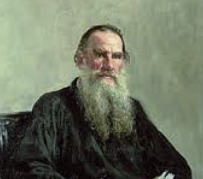
The workmen's revolution, with the terrors of destruction and murder, not only threatens us, but we have already been living upon its verge during the last thirty years, and it is only by various cunning devices that we have been postponing the crisis... The hatred and contempt of the oppressed people are increasing, and the physical and moral strength of the richer classes are decreasing: the deceit which supports all this is wearing out, and the rich classes have nothing wherewith to comfort themselves.
▼
Source
[http://books.google.com/books?id=P4dGAQAAIAAJ& What is to be Done] (1899) p. 262
4 months ago
To busy oneself with what is futile when one can do something useful, to attend to what is simple when one has the mettle to attempt what is difficult, is to strip talent of its dignity. It is a sin not to do what one is capable of doing.
4 months ago
But it is better perhaps to examine next the universal good, and to enquire in what sense the expression is used. Though such an investigation is likely to be difficult, because the persons who have introduced these ideas are our friends. Yet it will perhaps appear the best, and indeed the right course, at least for the preservation of truth, to do away with private feelings, especially as we are philosophers; for since both are dear to us, we are bound to prefer the truth.
▼
Source
(Bk. 1, Chapter III)

4 months ago
In order for capitalism to have a clear path, it needs to profane all that is sacred; there must be no limits to what is saleable. The totalitarian commercialism which is now the established Church throughout the West has come close to achieving this.
▼
Source
p. 85
4 months ago
There is no more mistaken path to happiness than worldliness, revelry, high life.
▼
Source
Our Relation to Others, § 24
4 months ago
Try as I will, I don't see what might exist...
4 months ago
The world neither ever saw, nor ever will see, a perfectly fair lottery.
▼
Source
[http://books.google.com/books?id=QItKAAAAYAAJ&q=%22The+world+neither+ever+saw+nor+ever+will+see+a+perfectly+fair+lottery%22&pg=PA76#v=onepage Chapter X, Part I].
4 months ago
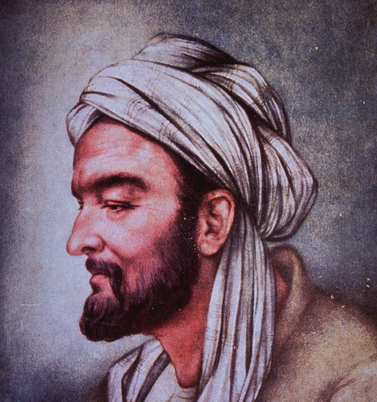
Religious law makes it illegal for the ignorant to drink wine, but intelligence makes it legal for the intellectual.
▼
Source
As quoted in Jason Goodwin, [http://www.jstor.org/stable/40261181 "The Glory That Was Baghdad"], The Wilson Quarterly, vol. 27, no. 2 (2003), p. 27
4 months ago
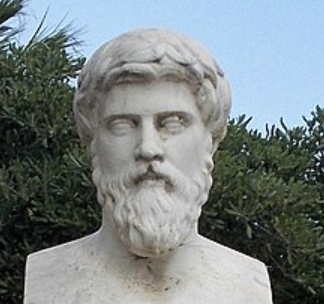
King Agis said, "The Lacedæmonians are not wont to ask how many, but where the enemy are."
▼
Source
58 Agis
4 months ago
The irony of scientific progress is that in solving human problems it creates problems that are not humanly soluble. Science has given humans a kind of power over the natural world achieved by no other animal. It has not given humans the ability to remodel the planet according to their wishes. The Earth is not a clock that can be wound up and stopped at will. A living system, the planet will surely rebalance itself. It will do so, however, without any regard for humans.
▼
Source
Sweet Morality (p. 212)
4 months ago
No rational argument will have a rational effect on a man who does not want to adopt a rational attitude.
▼
Source
Vol. 2, Ch. 24 "Oracular Philosophy and the Revolt against Reason"
4 months ago
He received me graciously... I made the sign of the Knights of the East and of Jerusalem, and he responded in the same manner, asking me with a mild smile what I had learned and gained in the Prussian and Scottish lodges. I told him everything as best I could, and told him what I had proposed to our Petersburg lodge, of the bad reception I had encountered, and of my rupture with the Brothers. Joseph Alexéevich, having remained silent and thoughtful for a good while, told me his view of the matter, which at once lit up for me my whole past and the future path I should follow. He surprised me by asking whether I remembered the threefold aim of the order: (1) The preservation and study of the mystery. (2) The purification and reformation of oneself for its reception, and (3) The improvement of the human race by striving for such purification. Which is the principal aim of these three? Certainly self-reformation and self-purification. Only to this aim can we always strive independently of circumstances. But at the same time just this aim demands the greatest efforts of us; and so, led astray by pride, losing sight of this aim, we occupy ourselves either with the mystery which in our impurity we are unworthy to receive, or seek the reformation of the human race while ourselves setting an example of baseness and profligacy. Illuminism is not a pure doctrine, just because it is attracted by social activity and puffed up by pride. On this ground Joseph Alexéevich condemned my speech and my whole activity, and in the depth of my soul I agreed with him.
▼
Source
Book VI, Chapter VIII

4 months ago
If we would stand up and be counted on the side of reason, we ought to drop terms like 'pseudoscience' and 'unscientific' from our vocabulary; they are just hollow phrases which do only emotive work for us.
▼
Source
"The Demise of the Demarcation Problem", in Cohen, R.S.; Laudan, L., Physics, Philosophy and Psychoanalysis: Essays in Honor of Adolf Grünbaum (1983)
4 months ago
The young have exalted notions, because they have not been humbled by life or learned its necessary limitations; moreover, their hopeful disposition makes them think themselves equal to great things—and that means having exalted notions. They would always rather do noble deeds than useful ones: Their lives are regulated more by moral feeling than by reasoning.... All their mistakes are due to excess and vehemence and their neglect of the maxim of Chilon [The maxim was Μηδὲν ἄγαν, Ne quid nimis, Never go to extremes.]. They overdo everything; they love too much, hate too much, and the same with everything else. And they think they know everything, and confidently affirm it, and this is the cause of their excess in everything.
▼
Source
καὶ μεγαλόψυχοι (οὐ γὰρ ὑπὸ τοῦ βίου πω τεταπείνωνται, ἀλλὰ τῶν ἀναγκαίων ἄπειροί εἰσιν, καὶ τὸ ἀξιοῦν αὑτὸν μεγάλων μεγαλοψυχία: τοῦτο δ᾽ εὐέλπιδος). καὶ μᾶλλον αἱροῦνται πράττειν τὰ καλὰ τῶν συμφερόντων: τῷ γὰρ ἤθει ζῶσι μᾶλλον ἢ τῷ λογισμῷ, ... καὶ ἅπα

4 months ago
A sect or party is an elegant incognito devised to save a man from the vexation of thinking.
▼
Source
June 20, 1831

4 months ago
Whoever challenged the racial hierarchy was marked a potential victim of the mob. The endless roster of the dead came to include every sort of insurgent—from the owners of successful Black businesses and workers pressing for higher wages to those who refused to be called “boy” and the defiant women who resisted white men’s sexual abuses. Yet public opinion had been captured, and it was taken for granted that lynching was a just response to the barbarous sexual crimes against white womanhood.
4 months ago
Impossible for me to know whether or not I take myself seriously. The drama of detachment is that we cannot measure its progress. We advance into a desert, and we never know where we are in it.
4 months ago
Goods can serve many other purposes besides purchasing money, but money can serve no other purpose besides purchasing goods.
▼
Source
Chapter I, p. 471.
4 months ago
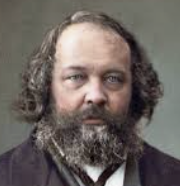
Everywhere, especially in France and England, social and religious societies are being formed which are wholly alien to the world of present-day politics, societies that derive their life from new sources quite unknown to us and that grow and diffuse themselves without fanfare. The people, the poor class, which without doubt constitutes the greatest part of humanity; the class whose rights have already been recognized in theory but which is nevertheless still despised for its birth, for its ties with poverty and ignorance, as well as indeed with actual slavery – this class, which constitutes the true people, is everywhere assuming a threatening attitude and is beginning to count the ranks of its enemy, far weaker in numbers than itself, and to demand the actualization of the right already conceded to it by everyone. All people and all men are filled with a kind of premonition, and everyone whose vital organs are not paralyzed faces with shuddering expectation the approaching future which will utter the redeeming word. Even in Russia, the boundless snow-covered kingdom so little known, and which perhaps also has a great future in store, even in Russia dark clouds are gathering, heralding storm. Oh, the air is sultry and pregnant with lightning. And therefore we call to our deluded brothers: Repent, repent, the Kingdom of the Lord is at hand!
▼
Source
"The Reaction in Germany" (1842)
4 months ago
The invention and spread of contraceptives is the proximate cause of our changing morals. The old moral code restricted sexual experience to marriage, because copulation could not be effectively separated from parentage, and parentage could be made responsible only through marriage. But to-day the dissociation of sex from reproduction has created a situation unforeseen by our fathers. All the relations of men and women are being changed by this one factor; and the moral code of the future will have to take account of these new facilities which invention has placed at the service of ancient desires.
▼
Source
Our Changing Morals, in The Mansions of Philosophy: A Survey of Human Life and Destiny (1929), Ch. 5. p. 119
4 months ago
My very own Plutarch – so perfect, so outstanding a judge of human actions.
▼
Source
Michel de Montaigne, 'On drunkenness', The Complete Essays, translated by M. A. Screech (1991; 2003), p. 389
4 months ago
The modern world inherits the Christian view in which salvation is played out in history. In Christian myth human events follow a design known only to God; the history of humankind is an ongoing story of redemption. This is an idea that informs virtually all of western thought – not least when it is intensely hostile to religion. From Christianity onwards, human salvation would be understood (at least in the west) as involving movement through time. All modern philosophies in which history is seen as a process of human emancipation – whether through revolutionary change or incremental improvement – are garbled versions of this Christian narrative, itself a garbled version of the original message of Jesus.
▼
Source
The Faith of Puppets: The Revelation of Philip K. Dick (p. 60)
CivilSimian.com created by AxiomaticPanic, CivilSimian, Kalokagathia