
4 months ago
All our problems are caused by forgetting what lives within us, and we sell our souls for the "bowl of stew" of bodily satisfactions.
▼
Source
p. 17
4 months ago
Far from it be the notion that the Supreme Being is corporeal, having a material form.

4 months ago
Whatever games are played with us, we must play no games with ourselves, but deal in our privacy with the last honesty and truth.
▼
Source
Illusions
4 months ago
I seek through comprehensive anticipatory design science and its reductions to physical practices to reform the environment instead of trying to reform men being intent thereby to accomplish proto-typed capabilities of doing more with less whereby in turn the wealth augmenting prospects of such design science regenerations will induce their spontaneous and economically successful industrial proliferation by world around services’ managements all of which chain reaction provoking events permit and induce all humanity to realize full lasting economic and physical success plus enjoyment of all the Earth without one individual interfering with or being advantaged at the expense of another.
4 months ago
Man is a creation of desire, not a creation of need.
▼
Source
The Psychoanalysis of Fire, ch. 2, "Fire and Reverie" (1938)
4 months ago
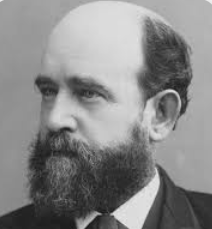
I am no sentimental admirer of the savage state. I do not get my ideas of the untutored children of nature from Rousseau, or Chateaubriand, or Cooper. I am conscious of its material and mental poverty, and its low and narrow range. I believe that civilization is not only the natural destiny of man, but the enfranchisement, elevation, and refinement of all his powers, and think that it is only in such moods as may lead him to envy the cud — chewing cattle, that a man who is free to the advantages of civilization could look with regret upon the savage state. But, nevertheless, I think no one who will open his eyes to the facts can resist the conclusion that there are in the heart of our civilization large classes with whom the veriest savage could not afford to exchange. It is my deliberate opinion that if, standing on the threshold of being, one were given the choice of entering life as a Tierra del Fuegan, a black fellow of Australia, an Esquimau in the Arctic Circle, or among the lowest classes in such a highly civilized country as Great Britain, he would make infinitely the better choice in selecting the lot of the savage. For those classes who in the midst of wealth are condemned to want, suffer all the privations of the savage, without his sense of personal freedom; they are condemned to more than his narrowness and littleness, without opportunity for the growth of his rude virtues; if their horizon is wider, it is but to reveal blessings that they cannot enjoy. There are some to whom this may seem like exaggeration, but it is only because they have never suffered themselves to realize the true condition of those classes upon whom the iron heel of modern civilization presses with full force. As De Tocqueville observes, in one of his letters to Mme. Swetchine, "we so soon become used to the thought of want that we do not feel that an evil which grows greater to the sufferer the longer it lasts becomes less to the observer by the very fact of its duration"; and perhaps the best proof of the justice of this observation is that in cities where there exists a pauper class and a criminal class, where young girls shiver as they sew for bread, and tattered and barefooted children make a home in the streets, money is regularly raised to send missionaries to the heathen! Send missionaries to the heathen! It would be laughable if it were not so sad. Baal no longer stretches forth his hideous, sloping arms; but in Christian lands mothers slay their infants for a burial fee! And I challenge the production from any authentic accounts of savage life of such descriptions of degradation as are to be found in official documents of highly civilized countries — in reports of sanitary commissioners and of inquiries into the condition of the laboring poor.
4 months ago
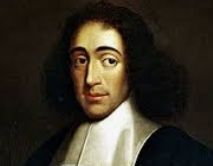
By Natura naturans we must understand what is in itself and is conceived through itself, or such attributes of substance as express an eternal and infinite essence, that is … God, insofar as he is considered as a free cause. But by Natura naturata I understand whatever follows from the necessity of God's nature, or from God's attributes, that is, all the modes of God's attributes insofar as they are considered as things which are in God, and can neither be nor be conceived without God.
▼
Source
Part I, Prop. XXIX, Scholium (trans: Edwin Curley, London: Penguin, 1996)
4 months ago
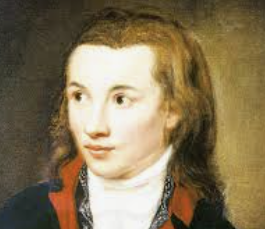
To become properly acquainted with a truth, we must first have disbelieved it, and disputed against it.

4 months ago
Most men and women, by birth or nature, lack the means to advance in wealth and power, but all have the ability to advance in knowledge.
▼
Source
As quoted in The Golden Ratio (2002) by Mario Livio
4 months ago
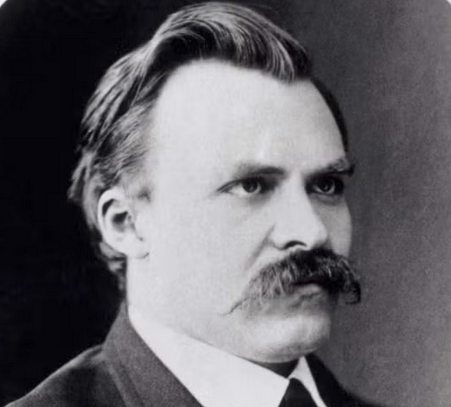
The only thing of interest in a refuted system is the personal element. It alone is what is forever irrefutable.
▼
Source
p. 25
4 months ago
Tolstoy regarded war as unavoidable, but challenged the dominant view that it, and its outcome, resulted from the decisions of a few “great men” such as Napoleon. He believed that war was the result of many unpredictable factors, and that the behavior of tens of thousands of men, from local commanders to simple soldiers, determined its outcome more than the decisions taken by a few great generals. …Tolstoy would not disagree with us if we would say that for him peace is not primarily a political achievement, but comes from [the moral compass of] conscience.
▼
Source
Massimo Introvigne, [https://bitterwinter.org/war-and-peace-and-the-tai-ji-men-case/ “War and Peace” and the Tai Ji Men Case], Bitter Winter (May 2023)
4 months ago
If men possessed wisdom, which stands in the same relation to the form of man as the sight to the eye, they would not cause any injury to themselves or to others, for the knowledge of the truth removes hatred and quarrels, and prevents mutual injuries.
▼
Source
Ch.11
4 months ago
Far or forgot to me is near; Shadow and sunlight are the same; The vanished gods to me appear; And one to me are shame and fame.
▼
Source
Brahma, st. 2
4 months ago
The wellspring of reality is the family of weightless generalized principles.
4 months ago
In any country, however new and vast, it would be possible to change "scarcity of labor" into "scarcity of employment" by increasing the price put on the use of land. If three families settled a virgin continent, one family could command the services of the others as laborers for hire just as fully as though they were its chattel slaves, if it was accorded the ownership of the land and could put its own price on its use. Wakefield proposed only that land should be held at what he called "a sufficient price "— that is, a price high enough to keep wages in new colonies only a little higher than wages in the mother-country, and to produce not actual inability to get employment on the part of laborers, but only such difficulty as would keep them tractable, and ready to accept what from his standpoint were reasonable wages. Yet it is evident that it would only require a somewhat greater increase in the price of land to go beyond this point and to bring about in the midst of abundant natural opportunities for the employment of labor, the phenomena of laborers vainly seeking employment. Now, in the United States we have not attempted to create "scarcity of employment" by Wakefield's plan. But we have made haste by sale and gift to put the public domain in the hands of private owners, and thus allowed speculation to bring about more quickly and effectually than he could have anticipated, more than Wakefield aimed at. The public domain is now practically gone; land is rising to European prices, and we are at last face to face with social difficulties which in the youth of men of my time we were wont to associate with "the effete monarchies of the Old World."
▼
Source
p. 182
4 months ago
It is requisite to choose the most excellent life; for custom will make it pleasant. Wealth is an infirm anchor, glory is still more infirm; and in a similar manner, the body, dominion, and honour. For all these are imbecile and powerless. What then are powerful anchors. Prudence, magnanimity, fortitude. These no tempest can shake. This is the Law of God, that virtue is the only thing that is strong; and that every thing else is a trifle.
▼
Source
"Pythagorean Ethical Sentences From Stobæus" (1904)
4 months ago
God is dead
4 months ago
There are four different theories concerning Divine Providence; they are all ancient, known from the time of the Prophets, when the true law was revealed to enlighten these dark regions.
▼
Source
Ch.17
4 months ago
A masterpiece of art has in the mind a fixed place in the chain of being, as much as a plant or a crystal.
▼
Source
Art
4 months ago
What humans have spontaneously identified as good and bad — or as positive and negative — are evolutionary complementations in need of more accurate identifications.
4 months ago
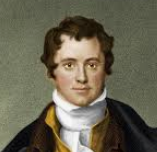
Almost immediately after the delivery of his lecture he collapsed, struck down by an illness which nearly proved fatal, and for weeks his life hung on a thread. He had been in a low feverish condition for some time previously, and a great dread had fallen upon him that he should die before he had completed his discoveries. It was in this condition of body and mind that he had applied himself to the task of putting together an account of his results.
4 months ago
Reason not with him, that will deny the principal truths!
4 months ago
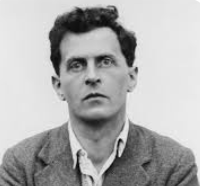
The thought is the significant proposition. (4)
▼
Source
Original German: Der Gedanke ist der sinnvolle Satz.
4 months ago
This idea is confirmed in Scripture; it is distinctly stated that one sole thing, fear of God, is the object of the whole Law with its affirmative and negative precepts, its promises and its historical examples, for it is said, "If thou wilt not observe to do all the words of this Law that are written in this book, that thou mayest fear this glorious and fearful name, the Lord thy God" (Deut. xxviii. 58) This is one of the two purposes of the Akedah (sacrifice or binding of Isaac).
▼
Source
Ch.24
4 months ago
By necessity, by proclivity, and by delight, we all quote.
▼
Source
Quotation and Originality
4 months ago
They are not multi-national, but supra-national — above nations. They don't need any passports. They can go in and out of countries without permission from anyone.
4 months ago
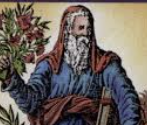
After his father's death, though he was still but a youth, his aspect was so venerable, and his habits so temperate that he was honored and even reverenced by elderly men, attracting the attention of all who saw and heard him speak, creating the most profound impression. That is the reason that many plausibly asserted that he was a child of the divinity. Enjoying the privilege of such a renown, of an education so thorough from infancy, and of so impressive a natural appearance he showed that he deserved all these advantages by deserving them, by the adornment of piety and discipline, by exquisite habits, by firmness of soul, and by a body duly subjected to the mandates of reason. An inimitable quiet and serenity marked all his words and actions, soaring above all laughter, emulation, contention, or any other irregularity or eccentricity; his influence at Samos was that of some beneficent divinity. His great renown, while yet a youth, reached not only men as illustrious for their wisdom as Thales at Miletus, and Bias at Prione, but also extended to the neighboring cities. He was celebrated everywhere as the "long-haired Samian," and by the multitude was given credit for being under divine inspiration.
▼
Source
Ch. 2 : Youth, Education, Travels
4 months ago
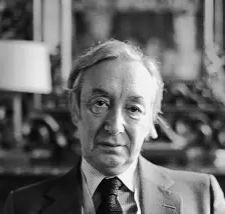
While moral rules may be propounded by authority the fact that these were so propounded would not validate them.
▼
Source
"The Meaning of Life".
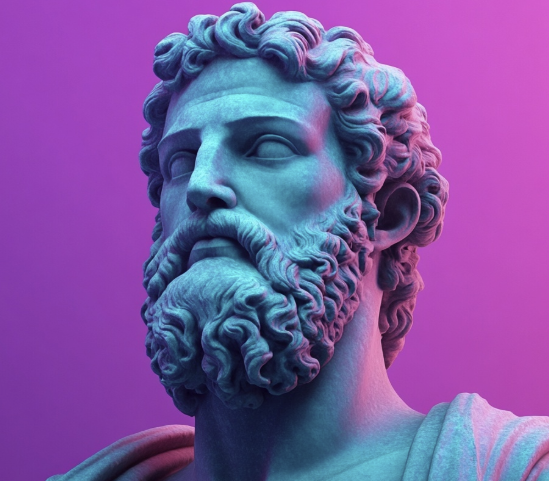
4 months ago
For what is a child? Ignorance. What is a child? Want of instruction. For where a child has knowledge, he is no worse than we are.
▼
Source
Book II, ch. 1, § 16
4 months ago
The world is always ungrateful to its great men. Florence has built a statue to Galileo, but hardly even mentions Pythagoras. The former had a ready guide in the treatises of Copernicus, who had been obliged to contend against the universally established Ptolemaic system. But neither Galileo nor modern astronomy discovered the emplacement of the planetary bodies. Thousands of ages before, it was taught by the sages of Middle Asia, and brought thence by Pythagoras, not as a speculation, but as a demonstrated science. "The numerals of Pythagoras," says Porphyry, "were hieroglyphical symbols, by means whereof he explained all ideas concerning the nature of all things." Verily, then, to antiquity alone have we to look for the origin of all things. p. 31
▼
Source
Helena Blavatsky, Isis Unveiled, Vol. I, Science, (1877)
4 months ago
Marriage and dependent children are a trap for the people! Morality carefully hides this distressing truth from us because it knows no remedy for the evil. But I , who bring a remedy must not dissimulate the woes from fathers, and I must not dissimulate from society its radical vice of pushing seven-eighths of all families into evil practices through poverty.
4 months ago
Burning in effigy. Kissing the picture of one's beloved... it aims at nothing at all; we just behave this way and then we feel satisfied.
▼
Source
Ch. 7 : Remarks on Frazer's Golden Bough, p. 123
4 months ago
What is faith? Is it a belief in otherworldly realities, in which imagination reigns supreme, and perhaps in truths expressed by sacred scriptures defined outside of all rationality, whose interpretation allows us to deduce everything and its opposite? Or is it the path of intelligence, indeed of the whole being, towards the Absolute, which precisely for this reason removes everything relative, all pretended knowledge, empties our soul and leads us into nothingness, into that “night” , from which alone the dawn can rise, or rather, the eternal light can reveal itself? These two questions belong, I believe, to every thinking consciousness of all time, but even more so in our time, that is, after the Enlightenment, after contemporary philology, which makes that faith as belief and that adherence to Scripture that was perhaps possible for a man of the Middle Ages extremely problematic. Must we pretend to believe in the existence of biblical characters and events that have been shown to have the same historical reality as the Homeric heroes and the Trojan War?
4 months ago
The wise through excess of wisdom is made a fool.
▼
Source
Experience
4 months ago
If Hegel be the inspired and too often incoherent prophet of the Absolute, if Bradley be its chivalrous knight, McTaggart is its devoted and extremely acute family solicitor.
▼
Source
From John McTaggart Ellis McTaggart (1928)
4 months ago
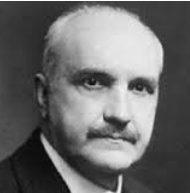
What renders man an imaginative and moral being is that in society he gives new aims to his life which could not have existed in solitude: the aims of friendship, religion, science, and art.
▼
Source
Ch. V: Democracy
4 months ago
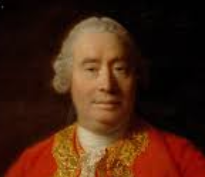
We must therefore glean up our experiments in this science from a cautious observation of human life, and take them as they appear in the common course of the world, by men's behaviour in company, in affairs, and in their pleasures. Where experiments of this kind are judiciously collected and compared, we may hope to establish on them a science, which will not be inferior in certainty, and will be much superior in utility to any other of human comprehension.
▼
Source
Introduction
4 months ago
Little is needed to ruin and upset everything, only a slight aberration from reason.
▼
Source
Book IV, ch. 3, § 4.
4 months ago
The following became universally known: first, that he maintains that the soul is immortal; second, that it changes into other kinds of living things; third, that events recur in certain cycles and that nothing is ever absolutely new; and fourth, that all living things should be regarded as akin. Pythagoras seems to have been the first to bring these beliefs into Greece.
▼
Source
Porphyrius in Life of Pythagoras
4 months ago
The aspects of things that are most important for us are hidden because of their simplicity and familiarity. (One is unable to notice something — because it is always before one's eyes.) The real foundations of his enquiry do not strike a man at all. Unless that fact has at some time struck him. — And this means: we fail to be struck by what, once seen, is most striking and most powerful.
▼
Source
§ 129
4 months ago
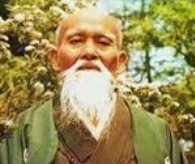
I felt the universe suddenly quake, and that a golden spirit sprang up from the ground, veiled my body, and changed my body into a golden one. At the same time my body became light. I was able to understand the whispering of the birds, and was clearly aware of the mind of God, the creator of the universe. At that moment I was enlightened: the source of Budo is God's love — the spirit of loving protection for all beings … Budo is not the felling of an opponent by force; nor is it a tool to lead the world to destruction with arms. True Budo is to accept the spirit of the universe, keep the peace of the world, correctly produce, protect and cultivate all beings in nature.
▼
Source
An account of an experience of transcendent awareness, soon after a contest where, unarmed, he defeated a naval officer armed with a bokken (wooden sword) without harming him; as quoted in Aikido (1985) by Kisshomaru Ueshiba
4 months ago
It makes a great difference in the force of a sentence whether a man be behind it or no.
▼
Source
p. 261
4 months ago
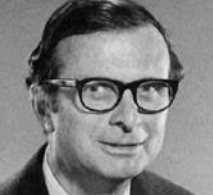
When one is considering systems it's always wise to raise questions about the most obvious and simple assumptions.
▼
Source
p. ix
4 months ago
England is the paradise of individuality, eccentricity, heresy, anomalies, hobbies, and humors.
▼
Source
"The British Character"
4 months ago
The most perfect philosophy of the natural kind only staves off our ignorance a little longer: as perhaps the most perfect philosophy of the moral or metaphysical kind serves only to discover larger portions of it. Thus the observation of human blindness and weakness is the result of all philosophy, and meets us at every turn, in spite of our endeavours to elude or avoid it.
▼
Source
Section 4 : Sceptical Doubts Concerning The Operations of The Understanding
4 months ago
If we carefully trace the terms nazar, and nazaret, throughout the best known works of ancient writers, we will meet them in connection with “Pagan” as well as Jewish adepts. Thus, Alexander Polyhistor says of Pythagoras that he was a disciple of the Assyrian Nazarrt, whom some suppose to be Ezekiel. Diogenes Laertius states most positively that Pythagoras, after being initiated into all the Mysteries of the Greeks and barbarians, “went into Egypt and afterward visited the Chaldeans and Magi;” and Apuleius maintains that it was Zoroaster who instructed Pythagoras. (p. 140)
▼
Source
The Veil of Isis, Part 1, Science.
4 months ago
A new word is like a fresh seed sown on the ground of the discussion.
▼
Source
p. 2e
4 months ago
The real Art of Peace is not to sacrifice a single one of your warriors to defeat an enemy. Vanquish your foes by always keeping yourself in a safe and unassailable position; then no one will suffer any losses. The Way of a Warrior, the Art of Politics, is to stop trouble before it starts. It consists in defeating your adversaries spiritually by making them realize the folly of their actions. The Way of a Warrior is to establish harmony.
4 months ago
Emerson broke away from all conditions of age or country and represented nothing except intelligence itself.
▼
Source
George Santayana, The Genteel Tradition in American Philosophy (1911), p. 50
4 months ago
The story begins with a somewhat disgruntled hero, who perceived of the world as populated with stupid people, everywhere committing the environmental fallacy. The fallacy was a case not merely of the “mind’s falling into error,” but rather of the mind leading all of us into incredible dangers as it first builds crisis and then attacks crisis. Like all heroes, this one looked about for resources, for aids that would help in a dangerous battle, and he found plenty of support – in both the past and the present. It won’t hurt to summarize the story thus far. If the intellect is to engage in the heroic adventure of securing improvement in the human condition, it cannot rely on “approaches,” like politics and morality, which attempt to tackle problems head-on, within the narrow scope. Attempts to address problems in such a manner simply lead to other problems, to an amplification of difficulty away from real improvement. Thus the key to success in the hero’s attempt seems to be comprehensiveness. Never allow the temptation to be clear, or to use reliable data, or to “come up to the standards of excellence,” divert you from the relevant, even though the relevant may be elusive, weakly supported by data, and requiring loose methods. Thus the academic world of Western twentieth century society is a fearsome enemy of the systems approach, using as it does a politics to concentrate the scholars’ attention on matters that are scholastically respectable but disreputable from a systems-planning point of view.
▼
Source
p. 145; cited in [http://filer.case.edu/nxb41/churchman.html C. WEST CHURCHMAN: CHAMPION OF THE SYSTEMS APPROACH], 2004-2007 Case Western Reserve University
CivilSimian.com created by AxiomaticPanic, CivilSimian, Kalokagathia