
4 months ago
I shall assume that your silence gives consent.
▼
Source
435b
4 months ago
Jésus a pleuré, Voltaire a souri; c'est de cette larme divine et de ce sourire humain qu'est faite la douceur de la civilisation actuelle.
▼
Source
Jesus wept; Voltaire smiled. Of that divine tear and that human smile is composed the sweetness of the present civilization. | Victor Hugo, Le centenaire de Voltaire, speech on Voltaire's centenary (30 May 1878)

4 months ago
Philosophy offers an antidote to melancholy. And many still believe in the depth of philosophy!
4 months ago
When two, or more men, know of one and the same fact, they are said to be CONSCIOUS of it one to another; which is as much as to know it together.
▼
Source
The First Part, Chapter 7, p. 31

4 months ago
Examine the man who lives in misery because he does not shine above other men; who goes about producing himself, pruriently anxious about his gifts and claims; struggling to force everybody, as it were begging everybody for God's sake, to acknowledge him a great man, and set him over the heads of men! Such a creature is among the wretchedest sights seen under this sun. A great man? A poor morbid prurient empty man; fitter for the ward of a hospital, than for a throne among men. I advise you to keep out of his way. He cannot walk on quiet paths; unless you will look at him, wonder at him, write paragraphs about him, he cannot live. It is the emptiness of the man, not his greatness. Because there is nothing in himself, he hungers and thirsts that you would find something in him. In good truth, I believe no great man, not so much as a genuine man who had health and real substance in him of whatever magnitude, was ever much tormented in this way.

4 months ago
One should emulate works and deeds of virtue, not arguments about it.
4 months ago
The true sign of decadence is not the collusion of the university and the state (something that is by no means incompatible with honest barbarity), but the theory and guarantee of academic freedom, when in reality people assume with brutal simplicity that the aim of study is to steer its disciples to a socially conceived individuality.
4 months ago
Structure joins the evocative concept of paradigm, a disarmingly simple dialectic of scientific change (long periods of paradigmatic "normal science" punctuated by short "revolutions"), and the apparent authority of historical example to show that major conceptual shifts in the natural sciences are effected not by logical argument alone but also by appeals to worldviews, religion, metaphysical commitments, notions of simplicity and order, and so on. The view that science, like other thought systems, advances or retreats through rhetoric and persuasion, not by logical necessity, was a revelation to people who had never practiced it or studied its history. The book comforted social scientists who wanted to assimilate their discipline to physics, Luddites who blamed social problems on scientists and engineers, and everyone who rejected authority. It repelled the philosophers of science at which it was aimed for the good reason that it undercut their belief that scientific knowledge advances by the application of rational criteria to the products of observation and experiment.
4 months ago
Parmenides: Whatever the subject of your hypothesis, if you suppose that it is or is not, or that it experiences any other affection, you must consider what happens to it and to any other particular things you may choose, and to a greater number and to all in the same way; and you must consider other things in relation to themselves and to anything else you may choose in any instance, whether you suppose that the subject of your hypothesis exists or does not exist, if you are to train yourself completely to see the truth perfectly.
▼
Source
136b-c
4 months ago
No one should try to live if he has not completed his training as a victim.
4 months ago
But if one Subject giveth Counsell to another, to do anything contrary to the Lawes, whether that Counsell proceed from evil intention, or from ignorance onely, it is punishable by the Common-wealth; because ignorance of the Law, is no good excuse, where every man is bound to take notice of the Lawes to which he is subject.
▼
Source
The Second Part, Chapter 25, p. 132
4 months ago
And wonderful it is to see how the Ideal or Soul, place it in what ugliest Body you may, will irradiate said Body with its own nobleness; will gradually, incessantly, mould, modify, new-form or reform said ugliest Body, and make it at last beautiful, and to a certain degree divine!
4 months ago
We ought to regard the interests of the state as of far greater moment than all else, in order that they may be administered well; and we ought not to engage in eager rivalry in despite of equity, nor arrogate to ourselves any power contrary to the common welfare. For a state well administered is our greatest safeguard. In this all is summed up: When the state is in a healthy condition all things prosper; when it is corrupt, all things go to ruin.
4 months ago
Unlike positive utilitarianism or so-called preference utilitarianism - neither of which can ever be wholly fulfilled - [negative utilitarianism] seems achievable in full.
▼
Source
"[https://www.utilitarianism.com/pinprick-argument.html The Pinprick Argument]", BLTC Research, 2005
4 months ago
A recognition of limits, of boundaries, may be the only thing that prevents power from dizzy collapse.
▼
Source
Chapter Two, The Encounter With Nothingness, p. 32
4 months ago
The Christian world seethed not only with apocryphal writings, but with hostile interpretations of writings not apocryphal.
4 months ago
At this point one of the priests, a very old man, said, “O Solon, Solon, you Greeks are always children: there is not such a thing as an old Greek.” And on hearing this Solon asked, “What do you mean by this saying?” The priest replied, “You are young in soul, every one of you. For you possess not a single belief that is ancient and derived from old tradition, nor is your understanding grey with age...“
▼
Source
Section 22
4 months ago
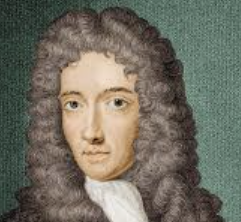
I consider, that as generally as Chymists are wont to appeal to Experience, and as confidently as they use to instance the several substances separated by the Fire from a Mixt Body, as a sufficient proof of their being its component Elements: Yet those differing Substances are many of them farr enough from Elementary simplicity, and may be yet look'd upon as mixt Bodies, most of them also retaining, somewhat... of the Nature of those Concretes whence they were forc'd.
4 months ago
In order to have the stuff of a tyrant, a certain mental derangement is necessary.
4 months ago
The long life of Thomas Hobbes covers almost the whole of the most critical period alike in the growth of modern science and in the development of the British Constitution. Born in the year of the Armada, Hobbes did not die until nine years before the great Revolution which finally determined the question whether the British Islands should be ruled constitutionally or absolutely. He lived through the Stuart attempt to convert England into an absolute monarchy, the Puritan revolution and great Civil War, the political and ecclesiastical experiments of the Long Parliament and of Cromwell, the restoration of the exiled line, and the beginnings of modern Whiggism and Nonconformity. Still more remarkable were the changes which came over the face of science during the same period. When Hobbes entered the University as a lad, the sham Aristotelianism of the Middle Ages was still officially taught in its lecture-rooms; before he died, mechanical science had been placed on a secure footing by Kepler, Galileo, and Descartes, the foundations of the scientific study of physiology and magnetism had been laid by Harvey and Gilbert, the Royal Society for experimental research into nature had been incorporated for more than a generation, analytical geometry had been created by Descartes, and the calculus by Leibniz and Newton, while it was only eight years after his death that the final exposition of the new mechanical conception of the universe was given by Newton's Principia. It is only natural that a philosopher who was also a keen observer of men and affairs, living through such a period of crisis, should have made the most daring of all attempts to base the whole of knowledge on the principles of mechanical materialism, and should also have become the creator of a purely naturalistic theory of ethics and sociology.
▼
Source
Alfred Edward Taylor, [https://books.google.com/books?id=gitLAAAAMAAJ Thomas Hobbes] (1908)
4 months ago
But in the days that are now passing over us, even fools are arrested to ask the meaning of them; few of the generations of men have seen more impressive days. Days of endless calamity, disruption, dislocation, confusion worse confounded: if they are not days of endless hope too, then they are days of utter despair. For it is not a small hope that will suffice, the ruin being clearly, either in action or in prospect, universal. There must be a new world, if there is to be any world at all!
4 months ago
Getting rid of predation isn't a matter of moralising. A python who kills a small human child isn't morally blameworthy. Nor is a lion who hunts and kills a terrified zebra. In both cases, the victim suffers horribly. But the predator lacks the empathetic and mind-reading skills needed to understand the implications of what s/he is doing. Some humans still display a similar deficit. From the perspective of the victim, the moral status or (lack of) guilty intent of a human or nonhuman predator is irrelevant. Either way, to stand by and watch the snake asphyxiate a child would be almost as morally abhorrent as to kill the child yourself. So why turn this principle on its head with beings of comparable sentience to human infants and toddlers? With power comes complicity.
▼
Source
"[https://io9.gizmodo.com/the-radical-plan-to-eliminate-earths-predatory-species-1613342963 The Radical Plan to Phase out Earth's Predatory Species]", io9, 30 Jul. 2014

4 months ago
An order of independent nations would permit diverse forms of self-government, religion, and culture in a “world of experiments” that would benefit all mankind.
4 months ago
We should consider for a moment how much the Christian understanding of life is based on the reality of "Grace"; let us also recall that the Holy Spirit Himself is called "Gift"; that the greatest Christian teachers have said that the Justice of God is based on Love; that something given, something free of all debt, something undeserved, something not-achieved - is presumed in everything achieved or laid claim to; that what is first is always something received — if we keep all this before our eyes, we can see the abyss that separates this other attitude from the inheritence of Christian Europe.
▼
Source
p. 20
4 months ago
But it's a false argument, because it assumes somehow that government is a way in which you put unselfish and ungreedy men in charge of selfish and greedy men. But government is an institution whereby the people who have the greatest drive to get power over their fellow men, get in a position of controlling them. Look at the record of government. Where are these philosopher kings that Plato supposedly was trying to develop?
▼
Source
Milton Friedman, [http://www.theopenmind.tv/tom/searcharchive_episode_transcript.asp?id=494 The Open Mind: Living Within Our Means] (1975)
4 months ago
The old philosophy of the Greeks had, as we have seen, become merged into the doctrine of the iatro-chemists; and this was now to be purified from the theosophical mysticism with which Paracelsus and his followers had enshrouded it. "The ical subtleties of the schoolmen much more," says Boyle, "declare the wit of him that uses them than increase the knowledge or remove the doubts of sober lovers of truth... For in such speculative inquiries where the naked knowledge of the truth is the thing principally aimed at, what does he teach me worth thanks, that does not, if he can, make his notion intelligible to me, but by mystical terms and ambiguous phrases darkens what he should clear up, and makes me add the trouble of guessing at the sense of what he equivocally expresses, to that of learning the truth of what he seems to deliver."
4 months ago
Jean Paul calls the most important night of his life the one when he discovered there was no difference between dying the next day or in thirty years. A revelation as significant as it is futile; if we occasionally manage to grasp its cogency, we resist on the other hand drawing its consequences, in immediacy the difference in question seeming to each of us somehow irreducible, even absolute: to exist is to prove that we have not understood to what point it is all one and the same thing to die now or no matter when.
4 months ago
[A] million blockheads looking authoritatively into one man of what you call genius, or noble sense, will make nothing but nonsense out of him and his qualities, and his virtues and defects, if they look till the end of time. He understands them, sees what they are; but that they should understand him, and see with rounded outline what his limits are,—this, which would mean that they are bigger than he, is forever denied them. Their one good understanding of him is that they at last should loyally say, "We do not quite understand thee; we perceive thee to be nobler and wiser and bigger than we, and will loyally follow thee."
4 months ago
Endless brooding over a question undermines you as much as a dull pain.
4 months ago
Medicine, guarded too by preliminary impediments, and frightful medusa-heads of quackery, which deter many generous souls from entering, is of the half-articulate professions, and does not much invite the ardent kinds of ambition. The intellect required for medicine might be wholly human, and indeed should by all rules be,—the profession of the Human Healer being radically a sacred one and connected with the highest priesthoods, or rather being itself the outcome and acme of all priesthoods, and divinest conquests of intellect here below. As will appear one day, when men take off their old monastic and ecclesiastic spectacles, and look with eyes again! In essence the Physician's task is always heroic, eminently human: but in practice most unluckily at present we find it too become in good part beaverish,—yielding a money-result alone. And what of it is not beaverish,—does not that too go mainly to ingenious talking, publishing of yourself, ingratiating of yourself; a partly human exercise or waste of intellect, and, alas, a partly vulpine ditto;—making the once sacred... Human Healer, more impossible for us than ever!
4 months ago
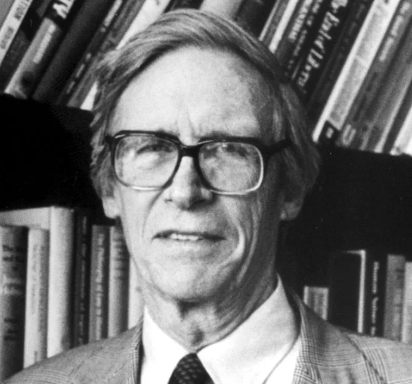
Intuitionism is not constructive, perfectionism is unacceptable.
▼
Source
Chapter I, Section 9, pg. 52
4 months ago
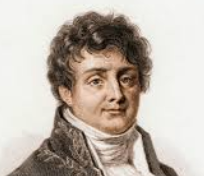
The heat of the earth is derived from three sources...1. ...Solar rays; the unequal distribution of which causes diversities of climate.2. ...The common temperature of the planetary spaces; being exposed to the radiation from the innumerable stars which surround the solar system.3. The earth preserves in its interior that primitive heat which it had at the time of the first formation of the planets. ...We will show ...the principle features of these phenomena.
4 months ago
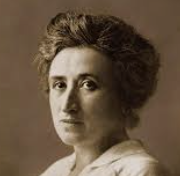
The Russo-Japanese War now gives to all an awareness that even war and peace in Europe – its destiny – isn’t decided between the four walls of the European concert, but outside it, in the gigantic maelstrom of world and colonial politics. And its in this that the real meaning of the current war resides for social-democracy, even if we set aside its immediate effect: the collapse of Russian absolutism. This war brings the gaze of the international proletariat back to the great political and economic connectedness of the world, and violently dissipates in our ranks the particularism, the pettiness of ideas that form in any period of political calm. The war completely rends all the veils which the bourgeois world – this world of economic, political and social fetishism – constantly wraps us in. The war destroys the appearance which leads us to believe in peaceful social evolution; in the omnipotence and the untouchability of bourgeois legality; in national exclusivism; in the stability of political conditions; in the conscious direction of politics by these “statesmen” or parties; in the significance capable of shaking up the world of the squabbles in bourgeois parliaments; in parliamentarism as the so-called center of social existence. War unleashes – at the same time as the reactionary forces of the capitalist world – the generating forces of social revolution which ferment in its depths.
▼
Source
[http://www.marxists.org/archive/luxemburg/1904/05/01.htm "In the Storm" in Le Socialiste] as translated by Mitch Abidor (1 - 8 May 1904)
4 months ago
Better to be an animal than a man, an insect than an animal, a plant than an insect, and so on. Salvation? Whatever diminishes the kingdom of consciousness and compromises its supremacy.
4 months ago
Clearness, emphatic clearness, was his highest category of man's thinking power. He delighted always to hear good argument. He would often say, I would like to hear thee argue with him." He said this of Jeffrey and me, with an air of such simple earnestness, not two years ago (1830), and it was his true feeling. I have often pleased him much by arguing with men (as many years ago I was prone to do) in his presence. He rejoiced greatly in my success, at all events in my dexterity and manifested force. Others of us he admired for our "activity," our practical valor and skill, all of us (generally speaking) for our decent demeanor in the world. It is now one of my greatest blessings (for which I would thank Heaven from the heart) that he lived to see me, through various obstructions, attain some look of doing well. He had "educated" me against much advice, I believe, and chiefly, if not solely, from his own noble faith. James Bell, one of our wise men, had told him, "Educate a boy, and he grows up to despise his ignorant parents." My father once told me this, and added, "Thou hast not done so; God be thanked for it." I have reason to think my father was proud of me (not vain, for he never, except when provoked, openly bragged of us); that here too he lived to see the pleasure of the Lord prosper in his hands. Oh, was it not a happiness for me! The fame of all this planet were not henceforth so precious.
4 months ago
Essentially the fault lies in the fact that the democratic political process is at best regulated rivalry; it does not even in theory have the desirable properties that price theory ascribes to truly competitive markets.
▼
Source
Chapter IV, Section 36, p. 226
4 months ago
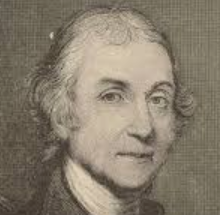
If the power of government be very extensive, and the subjects of it have, consequently, little power over their own actions, that government is tyrannical, and oppressive; whether, with respect to its form, it be a monarchy, an aristocracy, or even a republic.
▼
Source
Section III, "Of Civil Liberty"
4 months ago
The Bolsheviks themselves will not want, with hand on heart, to deny that, step by step, they have to feel out the ground, try out, experiment, test now one way now another, and that a good many of their measures do not represent priceless pearls of wisdom. Thus it must and will be with all of us when we get to the same point–even if the same difficult circumstances may not prevail everywhere.
▼
Source
Chapter Six, "The Problem of Dictatorship"
4 months ago
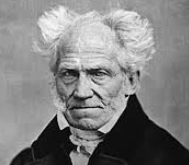
There is only one inborn erroneous notion … that we exist in order to be happy … So long as we persist in this inborn error … the world seems to us full of contradictions. For at every step, in great things and small, we are bound to experience that the world and life are certainly not arranged for the purpose of maintaining a happy existence … hence the countenances of almost all elderly persons wear the expression of … disappointment.
▼
Source
Vol II "On the Road to Salvation"
4 months ago
We do not rush toward death, we flee the catastrophe of birth, survivors struggling to forget it. Fear of death is merely the projection into the future of a fear which dates back to our first moment of life. We are reluctant, of course, to treat birth as a scourge: has it not been inculcated as the sovereign good — have we not been told that the worst came at the end, not at the outset of our lives? Yet evil, the real evil, is behind, not ahead of us. What escaped Jesus did not escape Buddha: "If three things did not exist in the world, O disciples, the Perfect One would not appear in the world. …" And ahead of old age and death he places the fact of birth, source of every infirmity, every disaster.
4 months ago
If the "Frederick" thus fails both as a biography and a history of the reign and adds little to knowledge, it is none the less full of purple patches. It has been called the largest and most varied show-box in historical literature. Mrs. Carlyle, an exacting critic, pronounced it the best of her husband's works. It exhibits an undiminished power of mise-en-scène, freshness of humour, and mastery of character-painting. Emerson pronounced it the wittiest book ever written. Carlyle never composed anything more brilliant than the story of Voltaire's visit to Potsdam, and the portraits of the rulers of Europe are in his best style.
▼
Source
G. P. Gooch, History and Historians in the Nineteenth Century (1913), p. 331
4 months ago
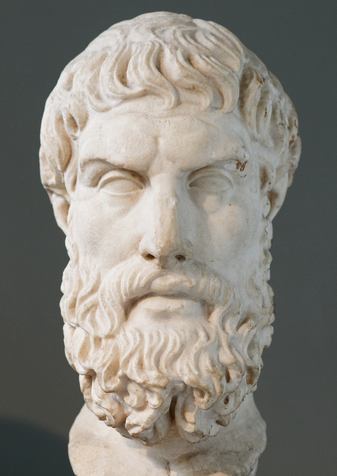
If you reject absolutely any single sensation without stopping to discriminate with respect to that which awaits confirmation between matter of opinion and that which is already present, whether in sensation or in feelings or in any immediate perception of the mind, you will throw into confusion even the rest of your sensations by your groundless belief and so you will be rejecting the standard of truth altogether. If in your ideas based upon opinion you hastily affirm as true all that awaits confirmation as well as that which does not, you will not escape error, as you will be maintaining complete ambiguity whenever it is a case of judging between right and wrong opinion.
4 months ago
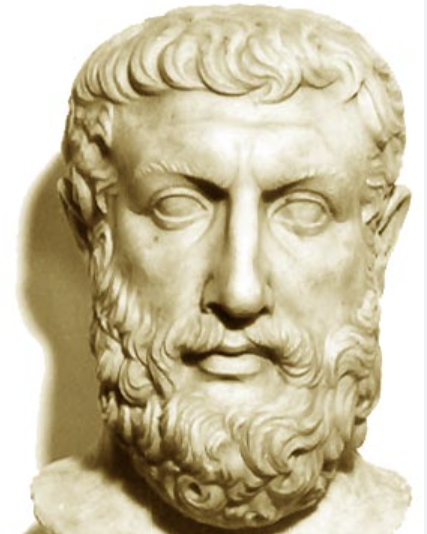
The history of the essence of nihilism (i.e., the belief that being is nothing) begins with Parmenides, who also affirms the eternity of Being and therefore the impossibility that it, in becoming, is not, i.e., is nothing. It is with Parmenides that the separation of beings from Being begins.
4 months ago
Love is... born with the pleasure of looking at each other, it is fed with the necessity of seeing each other, it is concluded with the impossibility of separation!
▼
Source
Amor (1887)
4 months ago
They know me well. How could they conceal a resplendent sun?
▼
Source
Translation of Safwan Khatib[https://thebaffler.com/latest/why-read-the-classics-kilito]
4 months ago
Philosophy of religion … really amounts to … philosophizing on certain favorite assumptions that are not confirmed at all.
▼
Source
E. Payne, trans. (1974) Vol. 1, p. 143
4 months ago
We have lost, being born, as much as we shall lose, dying. Everything.
4 months ago
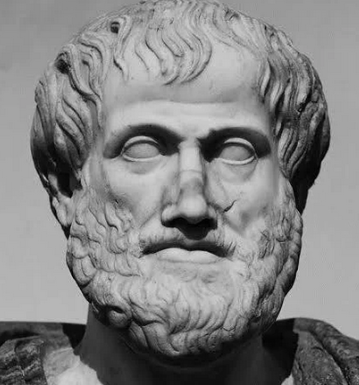
Since causes are four in number, to know them all is the business of the natural philosopher, who also referring to the cause why a thing is to all of them, viz. to matter, form, that which moves, and for the sake of which a thing subsists, physically assigns a reason. Frequently, however, three of these causes pass into one: for the cause why a thing is, and that for the sake of which it is, are one. But that which motion first originates, is in species the same with these... There are three treatises; once concerning that which is immoveable; another concerning that which is moved, indeed, but is incorruptible; and a third concerning corruptible natures. So the cause of why a thing is, is assigned by him who refers to matter, to essence, and to the first mover... But there are two principles which are naturally motive; of which, one is not physical, because it does not contain in itself the principle of motion. And if there is any thing which moves without being moved, it is of this kind; as is that which is perfectly immoveable, that which is the first of all things, together with essence and form: for it is the end, and that for the sake of which a thing subsists. So that since nature is for the sake of something, it is also necessary to know this cause.
▼
Source
Book II, Ch. VII, pp. 124-126.
4 months ago
It was imperative to make common cause with the oppressed, in order to secure a new system opposed to the ambitions and governing habits of the oppressors.

4 months ago
I say cowardice, because the standards which is Isaiah Berlin himself has set for anyone who undertakes such an enterprise are dauntingly high. His ability to catch the allegiances and the emotional tone of the authors he has written about, as well as his ability to meet the commentator's first duty to the subtleties of their thought, has always meant that their per sonalities and ideas alike have remained in tact and alive.
▼
Source
Introduction in The Idea of freedom: Essays in Honour of Isaiah Berlin (1979), Edited by Alan Ryan.
CivilSimian.com created by AxiomaticPanic, CivilSimian, Kalokagathia