

5 months ago
The harmony between word and deed in Socrates' life is Dorian... manifested in the courage he showed at Delium. This harmonic accord... distinguishes Socrates from a sophist... who can give... fine and beautiful discourses on courage, but is not courageous... Unlike the sophist, he can use parrhesia and speak freely because what he says accords... with what he thinks... which accords... with what he does.

5 months ago
What is that the inherence of which, will render the body alive? The soul. ...Then whatever the soul possesses, to that she comes bearing life? ...And is there an opposite to life? Death. Then the soul, as she has been acknowledged, will never receive the opposite of what she brings. ...And what do we call the principle which does not admit of death? The immortal. And does the soul admit of death? No. Then the soul is immortal? Yes.

5 months ago
God didn't die, he was transformed into money.
▼
Source
As quoted in [https://libcom.org/article/god-didnt-die-he-was-transformed-money-interview-giorgio-agamben-peppe-sava "God didn't die, he was transformed into money" - An interview with Giorgio Agamben - Peppe Savà], libcom.org.
5 months ago
Unbelievers (so called) as well as of believers, there are many species, including almost every variety of moral type. But the best among them, as no one who has had opportunities of really knowing them will hesitate to affirm (believers rarely have that opportunity), are more genuinely religious, in the best sense of the word religion, than those who exclusively arrogate to themselves the title.
▼
Source
([https://archive.org/details/autobiography01mill/page/45/mode/1up pp. 45–46])
5 months ago
Life, individual or collective, personal or historic, is the one entity in the universe whose substance is compact of danger, of adventure. It is, in the strict sense of the word, drama. … The primary, radical meaning of life appears when it is employed in the sense not of biology, but of biography. For the very strong reason that the whole of biology is quite definitely only a chapter in certain biographies, it is what biologists do in the portion of their lives open to biography.
▼
Source
Chap.IX: The Primitive and the Technical
5 months ago
...undefiled by pleasures, invulnerable to any pain, untouched by arrogance, unaffected by meanness, an athlete in the greatest of all contests—the struggle not to be overwhelmed by anything that happens. (Hays translation)
▼
Source
III, 4
5 months ago
I consider those developments in physics during the last decades which have shown how problematical such concepts as "objective" and "subjective" are, a great liberation of thought. The whole thing started with the theory of relativity. In the past, the statement that two events are simultaneous was considered an objective assertion, one that could be communicated quite simply and that was open to verification by any observer. Today we know that 'simultaneity' contains a subjective element, inasmuch as two events that appear simultaneous to an observer at rest are not necessarily simultaneous to an observer in motion. However, the relativistic description is also objective inasmuch as every observer can deduce by calculation what the other observer will perceive or has perceived. For all that, we have come a long way from the classical ideal of objective descriptions. In quantum mechanics the departure from this ideal has been even more radical. We can still use the objectifying language of classical physics to make statements about observable facts. For instance, we can say that a photographic plate has been blackened, or that cloud droplets have formed. But we can say nothing about the atoms themselves. And what predictions we base on such findings depend on the way we pose our experimental question, and here the observer has freedom of choice. Naturally, it still makes no difference whether the observer is a man, an animal, or a piece of apparatus, but it is no longer possible to make predictions without reference to the observer or the means of observation. To that extent, every physical process may be said to have objective and subjective features. The objective world of nineteenth-century science was, as we know today, an ideal, limiting case, but not the whole reality. Admittedly, even in our future encounters with reality we shall have to distinguish between the objective and the subjective side, to make a division between the two. But the location of the separation may depend on the way things are looked at; to a certain extent it can be chosen at will. Hence I can quite understand why we cannot speak about the content of religion in an objectifying language. The fact that different religions try to express this content in quite distinct spiritual forms is no real objection. Perhaps we ought to look upon these different forms as complementary descriptions which, though they exclude one another, are needed to convey the rich possibilities flowing from man's relationship with the central order.
5 months ago
Contentment is natural wealth; luxury, artificial poverty.
▼
Source
As reported by Charles Simmons in A Laconic Manual and Brief Remarker, containing over a thousand subjects alphabetically and systematically arranged (North Wrentham, Mass. 1852), [http://books.google.de/books?id=YOAyAQAAMAAJ&pg=PA103&dq=socrates p. 103].
5 months ago
A leftist government doesn't exist because being on the left has nothing to do with governments.
▼
Source
from L'Abécédaire de Gilles Deleuze: G comme Gauche (“Gilles Deleuze's Alphabet Book: Left-wing Politics”), 1988–1989.
5 months ago
We regard society as the ensemble and union of men engaged in useful work. We can conceive of no other kind of society.
5 months ago
Those only are happy (I thought) who have their minds fixed on some object other than their own happiness; on the happiness of others, on the improvement of mankind, even on some art or pursuit, followed not as a means, but as itself an ideal end. Aiming thus at something else, they find happiness by the way.
▼
Source
([https://archive.org/details/autobiography01mill/page/141/mode/1up p. 142])
5 months ago
Man’s being is made of such strange stuff as to be partly akin to nature and partly not, at once natural and extranatural, a kind of ontological centaur, half immersed in nature, half transcending it.
▼
Source
“Man has no nature”
5 months ago
Whatever happens at all happens as it should; you will find this true, if you watch narrowly.
▼
Source
IV, 10
5 months ago
Build your opponent a golden bridge to retreat across.
▼
Source
This has appeared as a variant of Sun Tzu's assertion to "leave a way of escape." Tu Mu, commenting on Sun Tzu, advises, "Show him there is a road to safety..." Ch. 7; it has also recently appeared on the internet attributed to Scipio Africanus, but witho

5 months ago
In the conduct of life, habits count for more than maxims, because habit is a living maxim, becomes flesh and instinct. To reform one's maxims is nothing: it is but to change the title of the book. To learn new habits is everything, for it is to reach the substance of life. Life is but a tissue of habits.
5 months ago
If it be said, that an Omnipotent Creator, though under no necessity of employing contrivances such as man must use, thought fit to use them in order to leave traces that would enable man to recognize his creative hand, the answer is that this equally implies a limit to his omnipotence. For if he wanted men to know that they themselves and the world are his work, he, being omnipotent, had only to will that they should be aware of it.
▼
Source
pages 177-178;Early Modern Texts page 16
5 months ago
Always take the short cut; and that is the rational one. Therefore say and do everything according to soundest reason.
▼
Source
IV, 51
5 months ago
The principles of ethics come from our own nature as social, reasoning beings.
▼
Source
Chapter 6, A New Understanding Of Ethics, p. 149

5 months ago
Be gentle to all and stern with yourself.
▼
Source
Maxim 55, p. 259

5 months ago
It is the modest, not the presumptuous, inquirer who makes a real and safe progress in the discovery of divine truths. One follows Nature and Nature's God; that is, he follows God in his works and in his word.
▼
Source
Letter to Alexander Pope; compare: "Slave to no sect, who takes no private road, But looks through Nature up to Nature’s God", Alexander Pope, Essay on Man, epistle iv. line 331.
5 months ago
Man, if he is to remain man, must advance by way of consciousness. There is no road leading backward. ... We can no longer veil reality from ourselves by renouncing self-consciousness without simultaneously excluding ourselves from the historical course of human existence.
5 months ago
The only thing that isn't worthless: to live this life out truthfully and rightly. And be patient with those who don't.
▼
Source
VI, 47 (Hays translation)
5 months ago
The principal crime of the human race, the highest guilt charged upon the world, the whole procuring cause of judgment, is idolatry.
▼
Source
Chapter I, Wide Scope of the Word Idolatry, translated by the Rev. S. Thelwall
5 months ago
In his place, concord will appear, brooding peace and prosperity on the happy land; joy fitting in every face, content in every heart; a people unoppressed, undisturbed, unalarmed; busy to improve their private property and the public stock; fleets covering the ocean; bringing home wealth by the returns of industry; carrying assistance or terror abroad by the direction of wisdom; and asserting triumphantly the right and the honour of Great Britain, as far as waters roll and as winds can waft them.Those who live to see such happy days, and to act in so glorious a scene, will perhaps call to mind with some tenderness of sentiment, when he is no more, a man, who contributed his mite to carry on so good a work, and who desired life for nothing so much, as to see a king of Great Britain the most popular man in his country, and a patriot king at the head of an united people.
▼
Source
pp. 225-226
5 months ago
That which had grown from the earth, to the earth, But that which has sprung from heavenly seed, Back to the heavenly realms returns. This is either a dissolution of the mutual involution of the atoms, or a similar dispersion of the unsentient elements.
▼
Source
VII, 50

5 months ago
A word spoken in season, at the right moment, is the mother of ages.
▼
Source
Reported in Josiah Hotchkiss Gilbert, Dictionary of Burning Words of Brilliant Writers (1895), p. 561.
5 months ago
It is no more evident that democratic institutions are to be measured by the sort of person they create than that they are to be measured against divine commands. … Even if the typical character types of liberal democracies are bland, calculating, petty, and unheroic, the prevalence of such people may be a reasonable price to pay for political freedom.
5 months ago
I do nobody harm, I say none harm, I think none harm, but wish everybody good. And if this be not enough to keep a man alive, in good faith, I long not to live.
▼
Source
Thomas More's Account, in a letter to his daughter Margaret Roper, of his Second Interrogation
5 months ago
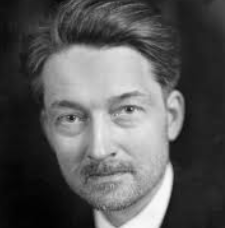
Things are opaque to us, and we are opaque to ourselves.
▼
Source
p. 117.
5 months ago
If thou canst see sharp, look and judge wisely, says the philosopher.
▼
Source
VIII, 38
5 months ago
Were we required to characterise this age of ours by any single epithet, we should be tempted to call it, not an Heroical, Devotional, Philosophical, or Moral Age, but, above all others, the Mechanical Age. It is the Age of Machinery, in every outward and inward sense of that word; the age which, with its whole undivided might, forwards, teaches and practises the great art of adapting means to ends. Nothing is now done directly, or by hand; all is by rule and calculated contrivance. For the simplest operation, some helps and accompaniments, some cunning abbreviating process is in readiness. Our old modes of exertion are all discredited, and thrown aside. On every hand, the living artisan is driven from his workshop, to make room for a speedier, inanimate one. The shuttle drops from the fingers of the weaver, and falls into iron fingers that ply it faster.
5 months ago
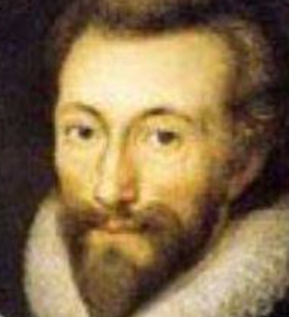
The peripatetics look on God as they do on carpenters, who build with stone and timber, without any infusion of life. But the world which is God's building is full of spirit, quick and living.
5 months ago
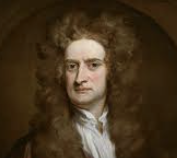
I have that honour for him as to believe that he wrote good sense; and therefore take that sense to be his which is the best.
▼
Source
Speaking of the apostle John's writings. Cited in The Watchtower magazine, 1977, 4/15.
5 months ago
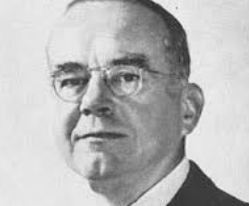
The managers will exercise their control over the instruments of production and gain preference in the distribution of the products, not directly, through property rights vested in them as individuals, but indirectly, through their control of the state which in turn will own and control the instruments of production. The state – that is, the institutions which comprise the state – will if we wish to put it that way, be the “property” of the managers’.
▼
Source
p. 71–72; As cited in: Stijn Maria Verhagen (2005). Zorglogica’s uit balans. p. 300
5 months ago
The universal intelligence puts itself in motion for every separate effect... or it puts itself in motion once, and everything else comes by way of a sequence in a manner; or individual elements are the origin of all things. In a word, if there is a god, all is well; and if chance rules, do not thou be governed by it.
▼
Source
IX, 28
5 months ago
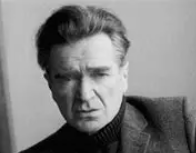
I don't need any support, advice, or compassion, because even if I am the most ruinous man, I still feel so powerful, so strong and fierce. For I am the only one that lives without hope.
5 months ago
The work we desire and prize is not the courage to die decently, but to live manfully.
5 months ago
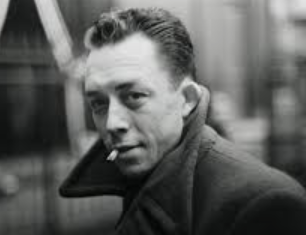
He realized now that to be afraid of this death he was staring at with animal terror meant to be afraid of life. Fear of dying justified a limitless attachment to what is alive in man. And all those who had not made the gestures necessary to live their lives, all those who feared and exalted impotence — they were afraid of death because of the sanction it gave to a life in which they had not been involved. They had not lived enough, never having lived at all.
5 months ago
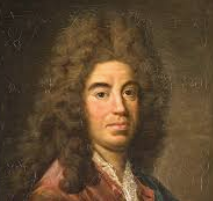
Magic is nothing but the wisdom of the Creator revealed and planted in the creature. It is a name — as Agrippa saith — "not distasteful to the very Gospel itself."
5 months ago
All kinds of music are not suited to praise God and to be heard in the sanctuary; all methods of philosophy are not fit for discoursing worthily of God, His power, the principles of His operations, and His mysteries.
▼
Source
Of Freethinkers (23)
5 months ago
Only to the rational animal is it given to follow voluntarily what happens; but simply to follow is a necessity imposed on all.
▼
Source
X, 28
5 months ago
Can it really be that for us existence means exile, and nothingness, home?
5 months ago
Where this will end? In the Abyss, one may prophecy; whither all Delusions are, at all moments, travelling; where this Delusion has now arrived. For if there be a Faith, from of old, it is this, as we often repeat, that no Lie can live for ever. The very Truth has to change its vesture, from time to time; and be born again. But all Lies have sentence of death written down against them, and Heaven's Chancery itself; and, slowly or fast, advance incessantly towards their hour.
▼
Source
Pt. I, Bk. VI, ch. 3.
5 months ago
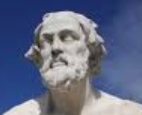
At this point of his effort man stands face to face with the irrational. He feels within him his longing for happiness and for reason. The absurd is born of this confrontation between the human need and the unreasonable silence of the world. This must not be forgotten. This must be clung to because the whole consequence of a life can depend on it. The irrational, the human nostalgia, and the absurd that is born of their encounter — these are the three characters in the drama that must necessarily end with all the logic of which an existence is capable.
5 months ago
The secret of happiness is freedom and the secret of freedom is courage.
▼
Source
Book II, 2.43
5 months ago
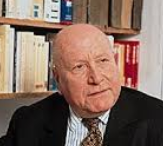
Shortly after 9/11 a French spokesman for the activist group ATTAC quoted the adage: "He who sows the wind shall reap the whirlwind." French prime minister Lionel Jospin seemed to be pointing in this direction when he asked, "What lesson are the Americans going to draw from what has happened?" The lesson, Jospin indicated, should be for the U.S. to moderate her unilateralism. For Cardinal Karl Lehmann, president of the German Bishops' Conference, the lesson to be drawn from terrorism was that "the West must not seek to dominate the rest of the world."
5 months ago
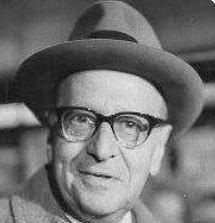
Whoever desires to live among men has to obey their laws—this is what the secular morality of Western civilization comes down to. … Rationality in the form of such obedience swallows up everything, even the freedom to think.
▼
Source
p. 29.
5 months ago
Know the joy of life by piling good deed on good deed until no rift or cranny appears between them.
▼
Source
τί λοιπὸν ἢ ἀπολαύειν τοῦ ζῆν συνάπτοντα ἄλλο ἐπ ἄλλῳ ἀγαθόν, ὥστε μηδὲ τὸ βραχύτατον διάστημα ἀπολείπειν; | XII, 29
5 months ago
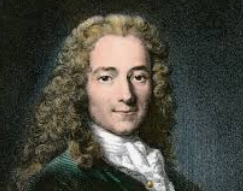
Fools admire everything in an author of reputation.
5 months ago
If truth were not boring, science would have done away with God long ago. But God as well as the saints is a means to escape the dull banality of truth.
CivilSimian.com created by AxiomaticPanic, CivilSimian, Kalokagathia