

8 months 2 days ago
To oppose the torrent of scholastic religion by such feeble maxims as these, that it is impossible for the same thing to be and not to be, that the whole is greater than a part, that two and three make five; is pretending to stop the ocean with a bullrush. Will you set up profane reason against sacred mystery? No punishment is great enough for your impiety. And the same fires, which were kindled for heretics, will serve also for the destruction of philosophers.
▼
Source
source
Part XI - With regard to reason or absurdity



5 months 5 days ago
Though it is often assumed that naturalism must be hostile to religion, the opposite is true. Enemies of religion think of it as an intellectual error, which humanity will eventually grow out of. It is hard to square this view with Darwinian science - why should religion be practically universal, if it has no evolutionary value?
▼
Source
source
Sweet Morality (p. 224)

6 months 1 week ago
The supreme effort of the avant-guard is onward, ever onward.
▼
Source
source
Light and Shadows in the Life of an Avant-Guard
6 months 3 weeks ago
I did not hate the author of my misfortunes - truth and justice acquit me of that; I rather pitied the hard destiny to which he seemed condemned. But I thought with unspeakable loathing of those errors, in consequence of which every man is fated to be, more or less, the tyrant or the slave. I was astonished at the folly of my species, that they did not rise up as one man, and shake off chains so ignominious, and misery so insupportable. So far as related to myself, I resolved - and this resolution has never been entirety forgotten by me - to hold myself disengaged from this odious scene, and never fill the part either of the oppressor or the sufferer.
7 months 4 weeks ago
The governors of the world believe, and have always believed, that virtue can only be taught by teaching falsehood, and that any man who knew the truth would be wicked. I disbelieve this, absolutely and entirely. I believe that love of truth is the basis of all real virtue, and that virtues based upon lies can only do harm.
8 months 4 weeks ago
To one unnamed, whose name will one day be named, is dedicated, with this little work, the entire authorship, as it was from the beginning.
7 months 4 weeks ago
The gods we stand by are the gods we need and can use, the gods whose demands on us are reinforcements of our demands on ourselves and on one another. What I then propose to do is, briefly stated, to test saintliness by common sense, to use human standards to help us decide how far the religious life commends itself as an ideal kind of human activity . ... It is but the elimination of the humanly unfit, and the survival of the humanly fittest, applied to religious beliefs; and if we look at history candidly and without prejudice, we have to admit that no religion has ever in the long run established or proved itself in any other way. Religions have approved themselves; they have ministered to sundry vital needs which they found reigning. When they violated other needs too strongly, or when other faiths came which served the same needs better, the first religions were supplanted.
▼
Source
source
Lectures XIV and XV, "The Value of Saintliness"
3 months 3 weeks ago
Remember, that to change thy mind upon occasion, and to follow him that is able to rectify thee, is equally ingenuous, as to find out at the first, what is right and just, without help. For of thee nothing is required, that is beyond the extent of thine own deliberation and judgment, and of thine own understanding.
▼
Source
source
VII, 14

4 months 6 days ago
A political, economic, and social order created merely for the sake of temporal life is exclusively characteristic of the modern world, that is, of the antitraditional world.
4 months 1 week ago
A great fortune is a great slavery.
▼
Source
source
From Ad Polybium De Consolatione (Of Consolation, To Polybius), chap. VI, line 5

4 months 2 weeks ago
Our "Theories of Taste," as they are called, wherein the deep, infinite, unspeakable Love of Wisdom and Beauty, which dwells in all men, is "explained," made mechanically visible, from "Association" and the like, ...

6 months 2 weeks ago
The intellectual is called on the carpet. ... Don't you conceal something? You talk a language which is suspect. You don't talk like the rest of us, like the man in the street, but rather like a foreigner who does not belong here. We have to cut you down to size, expose your tricks, purge you.
▼
Source
source
p. 192
6 months 4 weeks ago
The administrators of the executive power may be either elective or not; and in the former case all or only some of them may be elective. They are elective in a proper democracy, that is to say, in a democracy which recognizes representation. If all the public officials are directly elected by the whole people, the democracy is a pure democracy; if only some, it is a mixed democracy. The public officials may also fill vacancies themselves; this is the case in a pure aristocracy. But if only some of the magistrates are thus replaced by the public officers, and if the others are again directly elected by the people, then the form of government is that of a democratic aristocracy. A permanent president (monarch) may also be elected to exercise the executive power during his lifetime. In all these cases, either all citizens of the commonwealth, or only some of them, are eligible to office. Eligibility may, therefore, be limited or unlimited.
6 months 3 weeks ago
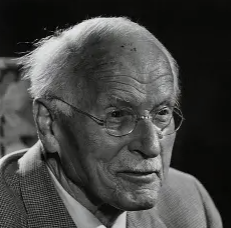
It is a woman's outstanding characteristic that she can do anything for the love of a man. But those women who can achieve something important for the love of a thing are most exceptional, because this does not really agree with their nature. Love for a thing is a man's prerogative. But since masculine and feminine elements are united in our human nature, a man can live in the feminine part of himself, I and a woman in her masculine part. None the less the feminine element in man is only something in the background, as is the masculine element in woman. If one lives out the opposite sex in oneself one is living in one's own background, and one's real individuality suffers. A man should live as a man and a woman as a woman.
▼
Source
source
P. 243
8 months 5 days ago
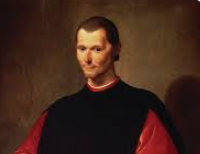
This return of Republics back to their principles also results from the simple virtue of one man, without depending on any law that excites him to any execution: none the less, they are of such influence and example that good men desire to imitate him, and the wicked are ashamed to lead a life contrary to those examples.
▼
Source
source
Book 3, Ch. 1

3 months 3 weeks ago
Whatever the virtue may be, from whatever source it may come, it is worthy of esteem... Mind, beauty, wealth, nobility, although the children of chance, all have their own value, as skill, learning and virtue have theirs.
4 months 3 weeks ago
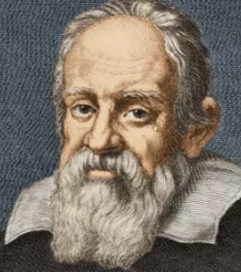
All truths are easy to understand once they are discovered; the point is to discover them.
▼
Source
source
As quoted in Angels in the workplace: stories and inspirations for creating a new world of work (1999) by Melissa Giovagnoli

4 months 2 weeks ago
He who first shortened the labor of copyists by device of movable types was disbanding hired armies, and cashiering most kings and senates, and creating a whole new democratic world: he had invented the art of printing.
▼
Source
source
Bk. I, ch. 5.
6 months 2 weeks ago
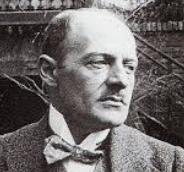
In the ancient notion of love, on the other hand, there is an element of anxiety. The noble fears the descent to the less noble, is afraid of being infected and pulled down. The "sage" of antiquity does not have the same firmness, the same inner certainty of himself and his own value, as the genius and hero of Christian love.
▼
Source
source
L. Coser, trans. (1961), p. 92

5 months 3 weeks ago
The images of mankind have become the most basic thing about them. And they're all software, and disembodied.
▼
Source
source
(p. 346)
6 months 1 week ago
Do not all theists insist that there can be no morality, no justice, honesty or fidelity without the belief in a Divine Power? Based upon fear and hope, such morality has always been a vile product, imbued partly with self-righteousness, partly with hypocrisy. As to truth, justice, and fidelity, who have been their brave exponents and daring proclaimers? Nearly always the godless ones: the Atheists; they lived, fought, and died for them. They knew that justice, truth, and fidelity are not conditioned in heaven, but that they are related to and interwoven with the tremendous changes going on in the social and material life of the human race; not fixed and eternal, but fluctuating, even as life itself.
5 months 3 weeks ago
An appeal to his alarm is never a good plan to rid oneself of a spirited young man.
▼
Source
source
The Pavilion on the Links, ch. III.
5 months 3 weeks ago
Literacy affects the physiology as well as the psychic life of the African.
▼
Source
source
(p. 38)
5 months 3 weeks ago
One of the things that happens at the speed of light is that people lose their goals in life. So what takes the place of goals and objectives? Well, role-playing is coming in very fast.
▼
Source
source
Interview between Californian Governor Jerry Brown and Marshall McLuhan, 1977
4 months 1 week ago
All right, men are as they should be, can be. What should they be? Surely not more than they can be! And what can they be? Not more, again, than they - can, than they have the competence, the force, to be. But this they really are, because what they are not, they are incapable of being; for to be capable means - really to be. One is not capable for anything that one really is not; one is not capable of anything that one does not really do. Could a man blinded by cataract see? Oh, yes, if he had his cataract successfully removed. But now he cannot see because he does not see. Possibility and reality always coincide. One can do nothing that one does not, as one does nothing that one cannot.
▼
Source
source
Cambridge 1995, p. 291
6 months 1 week ago
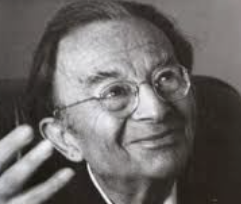
People have committed suicide because of their failure to realize the passions for love, power, fame, revenge. Cases of suicide because of a lack of sexual satisfaction are virtually nonexistent.
▼
Source
source
p. 30
7 months 3 weeks ago
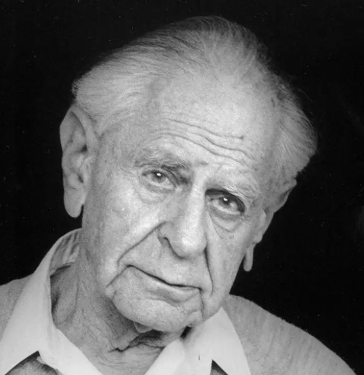
In speaking of sociological laws or natural laws of social life I have in mind such laws as are formulated by modern economic theories, for instance, the theory of international trade, or the theory of the trade cycle. These and other important sociological laws are connected with the functioning of social institutions. These laws play a role in our social life corresponding to the role played in mechanical engineering by, say, the principle of the lever. For institutions, like levers, are needed if we want to achieve anything which goes beyond the power of our muscles. Like machines, institutions multiply our power for good or evil. Like machines, they need intelligent supervision by someone who understands their way of functioning and, most of all, their purpose, since we cannot build them so that they work entirely automatically.
▼
Source
source
Karl Popper, The Open Society and its Enemies, Vol I Plato Chapter 5: Nature and Convention. P. 67

8 months 5 days ago
It is not death, it is dying that alarms me.
▼
Source
source
Book II, Ch. 13

3 months 3 weeks ago
Everywhere and at all times it is in thy power piously to acquiesce in thy present condition, and to behave justly to those who are about thee, and to exert thy skill upon thy present thoughts, that nothing shall steal into them without being well examined.
▼
Source
source
VII, 54
7 months 2 weeks ago
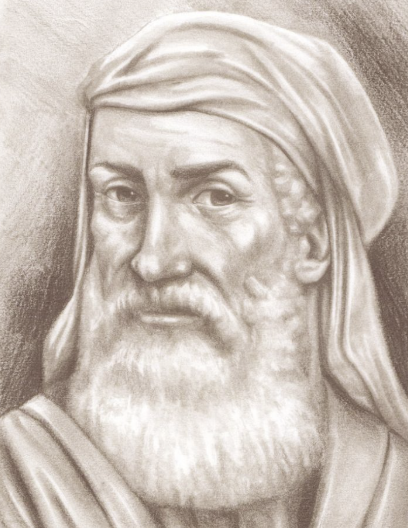
As it has long been and shall be, not ever, I think, will unfathomable time be emptied of either. This quote refers to Love and Strife, the fundamental opposing and ordering forces in Empedocles' model of the cosmos.
▼
Source
source
fr. 16
6 months 4 weeks ago
One can only become a philosopher, but not be one. As one believes he is a philosopher, he stops being one.
▼
Source
source
"Selected Aphorisms from the Athenaeum (1798)", Dialogue on Poetry and Literary Aphorisms, Ernst Behler and Roman Struc, trans. (Pennsylvania University Press:1968) #54
4 months 2 weeks ago
It depends on what we read, after all manner of Professors have done their best for us.
4 months 1 week ago
Who, then, can be more ignorant of nature than he who classes this cruel and hurtful vice as belonging to her best and most polished work?


4 months 2 weeks ago
This, evidently was not a minor civilization, produced by inferior people. It ranks with the highest civilizations of history, and some, like Keyserling, would place it at the head and summit of all. The British conquest of India was the invasion and destruction of a high civilization by a trading company utterly without scruple or principle, careless of art, greedy of gain, overrunning with fire and sword a country temporarily disordered and helpless, bribing and murdering, annexing and stealing, and beginning that career of illegal and "legal" plunder which has now gone on ruthlessly for one hundred and seventy-three years, and goes on at this moment while in our secure comfort we write and read. Those who have seen the unspeakable poverty and physiological weakness of the Hindus today will hardly believe that it was the wealth of eighteenth century India which attracted the commercial pirates of England and France.
6 months 1 week ago
I have written a good number of drafts and small reflections. They are not waiting for the last touch but for the sunlight to wake them up.
▼
Source
source
B 29
5 months 3 weeks ago
It is an article of passionate faith among "politically correct" biologists and anthropologists that brain size has no connection with intelligence; that intelligence has nothing to do with genes; and that genes are probably nasty fascist things anyway.

7 months 2 days ago
The territorial aristocracy of former ages was either bound by law, or thought itself bound by usage, to come to the relief of its serving-men and to relieve their distresses. But the manufacturing aristocracy of our age first impoverishes and debases the men who serve it and then abandons them to be supported by the charity of the public.
▼
Source
source
Book Two, Chapter XX.

4 months 6 days ago
No, the enjoyment of an idle life doesn't cost any money. The capacity for true enjoyment of idleness is lost in the moneyed class and can be found only among people who have a supreme contempt for wealth. It must come from an inner richness of the soul in a man who loves the simple ways of life and who is somewhat impatient with the business of making money.
▼
Source
source
p. 155
CivilSimian.com created by AxiomaticPanic, CivilSimian, Kalokagathia