
1 week 6 days ago
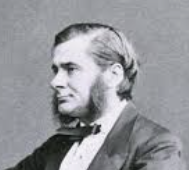
Mr. Darwin's hypothesis is not, so far as I am aware, inconsistent with any known biological fact; on the contrary, if admitted, the facts of Development, of Comparative Anatomy, of Geographical Distribution, and of Palaeontology, become connected together, and exhibit a meaning such as they never possessed before; and I, for one, am fully convinced that if not precisely true, that hypothesis is as near an approximation to the truth as, for example, the Copernican hypothesis was to the true theory of the planetary motions.
▼
Source
Ch.2, p. 127
1 week 6 days ago
I adopt Mr. Darwin's hypothesis, therefore, subject to the production of proof that physiological species may be produced by selective breeding; just as a physical philosopher may accept the undulatory theory of light, subject to the proof of the existence of the hypothetical ether; or as the chemist adopts the atomic theory, subject to the proof of the existence of atoms; and for exactly the same reasons, namely, that it has an immense amount of primâ facie probability: that it is the only means at present within reach of reducing the chaos of observed facts to order; and lastly, that it is the most powerful instrument of investigation which has been presented to naturalists since the invention of the natural system of classification and the commencement of the systematic study of embryology.
▼
Source
Ch.2, p. 128
1 week 6 days ago
The whole analogy of natural operations furnishes so complete and crushing an argument against the intervention of any but what are termed secondary causes, in the production of all the phenomena of the universe; that, in view of the intimate relations between Man and the rest of the living world; and between the forces exerted by the latter and all other forces, I can see no excuse for doubting that all are co-ordinated terms of Nature's great progression, from the formless to the formed-from the inorganic to the organic-from blind force to conscious intellect and will.
▼
Source
Ch.2, p. 128
1 week 6 days ago
I have endeavoured to show that no absolute structural line of demarcation, wider than that between the animals which immediately succeed us in the scale, can be drawn between the animal world and ourselves; and I may add the expression of my belief that the attempt to draw a physical distinction is equally futile, and that even the highest faculties of feeling and of intellect begin to germinate in lower forms of life.
▼
Source
Ch.2, p. 129
1 week 6 days ago
In comparing civilized man with the animal world, one is as the Alpine traveller, who sees the mountains soaring into the sky and can hardly discern where the deep shadowed crags and roseate peaks end, and where the clouds of heaven begin. Surely the awe-struck voyager may be excused if, at first, he refuses to believe the geologist, who tells him that these glorious masses are, after all, the hardened mud of primeval seas, or the cooled slag of subterranean furnaces-of one substance with the dullest clay, but raised by inward forces to that place of proud and seemingly inaccessible glory. But the geologist is right; and due reflection on his teachings, instead of diminishing our reverence and our wonder, adds all the force of intellectual sublimity, to the mere aesthetic intuition of the uninstructed beholder.
▼
Source
Ch.2, p. 131-132
1 week 6 days ago
Our reverence for the nobility of manhood will not be lessened by the knowledge, that Man, is in substance and in structure, one with the brutes; for, he alone possesses the marvellous endowment of intelligible and rational speech, whereby, in the secular period of his existence, he has slowly accumulated and organized the experience which is almost wholly lost with the cessation of every individual life in other animals; so that now he stands raised upon it as on a mountain top, far above the level of his humble fellows, and transfigured from his grosser nature by reflecting, here and there, a ray from the infinite source of truth.
▼
Source
Ch.2, p. 132
1 week 6 days ago
So far from a gradual progress towards perfection forming any necessary part of the Darwinian creed, it appears to us that it is perfectly consistent with indefinite persistence in one state, or with a gradual retrogression.
1 week 6 days ago
We have always thought that Mr. Darwin has unnecessarily hampered himself by adhering so strictly to his favourite "Natura non facit saltum." We greatly suspect that she does make considerable jumps in the way of variation now and then, and that these saltations give rise to some of the gaps which appear to exist in the series of known forms.
1 week 6 days ago
For every man the world is as fresh as it was at the first day, and as full of untold novelties for him who has the eyes to see them.
1 week 6 days ago
The life, the fortune, and the happiness of every one of us, and, more or less, of those who are connected with us, do depend upon our knowing something of the rules of a game infinitely more difficult and complicated than chess. It is a game which has been played for untold ages, every man and woman of us being one of the two players in a game of his or her own. The chessboard is the world, the pieces are the phenomena of the universe, the rules of the game are what we call the laws of Nature. The player on the other side is hidden from us. We know that his play is always fair, just, and patient. But also we know, to our cost, that he never overlooks a mistake, or makes the smallest allowance for ignorance. To the man who plays well, the highest stakes are paid, with that sort of overflowing generosity with which the strong shows delight in strength. And one who plays ill is checkmated - without haste, but without remorse.
1 week 6 days ago
Education is the instruction of the intellect in the laws of Nature, under which name I include not merely things and their forces, but men and their ways; and the fashioning of the affections and of the will into an earnest and loving desire to move in harmony with those laws. For me, education means neither more nor less than this. Anything which professes to call itself education must be tried by this standard, and if it fails to stand the test, I will not call it education, whatever may be the force of authority, or of numbers, upon the other side.
1 week 6 days ago
The only medicine for suffering, crime, and all the other woes of mankind, is wisdom.
1 week 6 days ago
If a well were sunk at our feet in the midst of the city of Norwich, the diggers would very soon find themselves at work in that white substance almost too soft to be called rock, with which we are all familiar as "chalk".
1 week 6 days ago
The chalk is no unimportant element in the masonry of the earth's crust, and it impresses a peculiar stamp, varying with the conditions to which it is exposed, on the scenery of the districts in which it occurs.
1 week 6 days ago
What is this wide-spread component of the surface of the earth? and whence did it come? You may think this no very hopeful inquiry. You may not unnaturally suppose that the attempt to solve such problems as these can lead to no result, save that of entangling the inquirer in vague speculations, incapable of refutation and of verification. If such were really the case, I should have selected some other subject than a "piece of chalk" for my discourse. But, in truth, after much deliberation, I have been unable to think of any topic which would so well enable me to lead you to see how solid is the foundation upon which some of the most startling conclusions of physical science rest.
1 week 6 days ago
A great chapter of the history of the world is written in the chalk. Few passages in the history of man can be supported by such an overwhelming mass of direct and indirect evidence as that which testifies to the truth of the fragment of the history of the globe, which I hope to enable you to read, with your own eyes, tonight. Let me add, that few chapters of human history have a more profound significance for ourselves. I weigh my words well when I assert, that the man who should know the true history of the bit of chalk which every carpenter carries about in his breeches-pocket, though ignorant of all other history, is likely, if he will think his knowledge out to its ultimate results, to have a truer, and therefore a better, conception of this wonderful universe, and of man's relation to it, than the most learned student who is deep-read in the records of humanity and ignorant of those of Nature.
1 week 6 days ago
The language of the chalk is not hard to learn, not nearly so hard as Latin, if you only want to get at the broad features of the story it has to tell; and I propose that we now set to work to spell that story out together.
1 week 6 days ago
Only two suppositions seem to be open to us - Either each species of crocodile has been specially created, or it has arisen out of some pre-existing form by the operation of natural causes. Choose your hypothesis; I have chosen mine. I can find no warranty for believing in the distinct creation of a score of successive species of crocodiles in the course of countless ages of time.
1 week 6 days ago
A small beginning has led us to a great ending. If I were to put the bit of chalk with which we started into the hot but obscure flame of burning hydrogen, it would presently shine like the sun. It seems to me that this physical metamorphosis is no false image of what has been the result of our subjecting it to a jet of fervent, though nowise brilliant, thought to-night. It has become luminous, and its clear rays, penetrating the abyss of the remote past, have brought within our ken some stages of the evolution of the earth. And in the shifting "without haste, but without rest" of the land and sea, as in the endless variation of the forms assumed by living beings, we have observed nothing but the natural product of the forces originally possessed by the substance of the universe.
1 week 6 days ago
The great tragedy of Science - the slaying of a beautiful hypothesis by an ugly fact.
▼
Source
Presidential Address at the British Association, "Biogenesis and abiogenesis" (1870); later published in Collected Essays, Vol. 8, p. 229
1 week 6 days ago
If some great Power would agree to make me always think what is true and do what is right, on condition of being turned into a sort of clock and wound up every morning before I got out of bed, I should instantly close with the offer. The only freedom I care about is the freedom to do right; the freedom to do wrong I am ready to part with on the cheapest terms to any one who will take it of me.
▼
Source
"On Descartes' Discourse touching the method of using one's reason rightly and of seeking scientific truth"
1 week 6 days ago
I can assure you that there is the greatest practical benefit in making a few failures early in life. You learn that which is of inestimable importance - that there are a great many people in the world who are just as clever as you are. You learn to put your trust, by and by, in an economy and frugality of the exercise of your powers, both moral and intellectual; and you very soon find out, if you have not found it out before, that patience and tenacity of purpose are worth more than twice their weight of cleverness.
▼
Source
On Medical Education
1 week 6 days ago
The only good that I can see in the demonstration of the truth of "Spiritualism" is to furnish an additional argument against suicide. Better live a crossing-sweeper than die and be made to talk twaddle by a "medium" hired at a guinea a séance.
▼
Source
Review in the Daily News (17 October 1871), quoted in Life and Letters of Thomas Henry Huxley F.R.S (1900) edited by Leonard Huxley, Vol. 1, p. 452
1 week 6 days ago
I do not advocate burning your ship to get rid of the cockroaches.
▼
Source
Said in reference to those who wished to abolish all religious teaching, rather than freeing state education from Church controls, in Critiques and Addresses (1873) p. 90
1 week 6 days ago
That mysterious independent variable of political calculation, Public Opinion.
▼
Source
Universities, Actual and Ideal
1 week 6 days ago
In an ideal University, as I conceive it, a man should be able to obtain instruction in all forms of knowledge, and discipline in the use of all the methods by which knowledge is obtained. In such a University, the force of living example should fire the student with a noble ambition to emulate the learning of learned men, and to follow in the footsteps of the explorers of new fields of knowledge. And the very air he breathes should be charged with that enthusiasm for truth, that fanaticism of veracity, which is a greater possession than much learning; a nobler gift than the power of increasing knowledge; by so much greater and nobler than these, as the moral nature of man is greater than the intellectual; for veracity is the heart of morality.
▼
Source
Universities, Actual and Ideal
1 week 6 days ago
Becky Sharp's acute remark that it is not difficult to be virtuous on ten thousand a year, has its application to nations; and it is futile to expect a hungry and squalid population to be anything but violent and gross.
▼
Source
"Joseph Priestley"
1 week 6 days ago
The consciousness of brutes would appear to be related to the mechanism of their body simply as a collateral product of its working, and to be as completely without any power of modifying that working as the steam-whistle which accompanies the work of a locomotive engine is without influence upon its machinery. Their volition, if they have any, is an emotion indicative of physical changes, not a cause of such changes.
1 week 6 days ago
If the brutes have consciousness and no souls, then it is clear that, in them, consciousness is a direct function of material changes; while, if they possess immaterial subjects of consciousness, or souls, then, as consciousness is brought into existence only as the consequence of molecular motion of the brain, it follows that it is an indirect product of material changes. The soul stands related to the body as the bell of a clock to the works, and consciousness answers to the sound which the bell gives out when it is struck.
1 week 6 days ago
It is quite true that, to the best of my judgment, the argumentation which applies to brutes holds equally good of men; and, therefore, that all states of consciousness in us, as in them, are immediately caused by molecular changes of the brain-substance. It seems to me that in men, as in brutes, there is no proof that any state of consciousness is the cause of change in the motion of the matter of the organism. If these positions are well based, it follows that our mental conditions are simply the symbols in consciousness of the changes which takes place automatically in the organism; and that, to take an extreme illustration, the feeling we call volition is not the cause of a voluntary act, but the symbol of that state of the brain which is the immediate cause of that act.
1 week 6 days ago
Logical consequences are the scarecrows of fools and the beacons of wise men.
1 week 6 days ago
I really have no claim to rank myself among fatalistic, materialistic, or atheistic philosophers. Not among fatalists, for I take the conception of necessity to have a logical, and not a physical foundation; not among materialists, for I am utterly incapable of conceiving the existence of matter if there is no mind in which to picture that existence; not among atheists, for the problem of the ultimate cause of existence is one which seems to me to be hopelessly out of reach of my poor powers. Of all the senseless babble I have ever had occasion to read, the demonstrations of these philosophers who undertake to tell us all about the nature of God would be the worst, if they were not surpassed by the still greater absurdities of the philosophers who try to prove that there is no God.
1 week 6 days ago
All truth, in the long run, is only common sense clarified.
▼
Source
"On the Study of Biology"
1 week 6 days ago
The students of physical science are not unfrequently told that their pursuits unfit them for the estimation of moral probability. And it may be so, for I am afraid that to those who are accustomed to severe reasoning, either in the province of Science or in that of Law, reasoning from 'moral probability' is apt to be regarded as a process of accumulating inconclusive arguments, in the hope that a great heap of them may, at least, look as firm as one good demonstration.
▼
Source
The Evidence of the Miracle of the Resurrection
1 week 6 days ago
The man of science who commits himself to even one statement which turns out to be devoid of good foundation loses somewhat of his reputation among his fellows, and if he be guilty of the same error often he loses not only his intellectual, but his moral standing among them. For it is justly felt that errors of this kind have their root rather in the moral than in the intellectual nature.
▼
Source
The Evidence of the Miracle of the Resurrection
1 week 6 days ago
I cannot say that I am in the slightest degree impressed by your bigness, or your material resources, as such. Size is not grandeur, and territory does not make a nation. The great issue, about which hangs true sublimity, and the terror of overhanging fate, is what are you going to do with all these things?
▼
Source
"Address on University Education" (1876), delivered at the formal opening of Johns Hopkins University, Baltimore, Maryland, September 12, 1876. Huxley, American Addresses (1877), p. 125.
1 week 6 days ago
Perhaps the most valuable result of all education is the ability to make yourself do the thing you have to do, when it ought to be done, whether you like it or not; it is the first lesson that ought to be learned; and, however early a man's training begins, it is probably the last lesson that he learns thoroughly.
▼
Source
Technical Education
1 week 6 days ago
The great end of life is not knowledge but action.
▼
Source
"Technical Education"
1 week 6 days ago
The saying that a little knowledge is a dangerous thing is, to my mind, a very dangerous adage. If knowledge is real and genuine, I do not believe that it is other than a very valuable possession, however infinitesimal its quantity may be. Indeed, if a little knowledge is dangerous, where is the man who has so much as to be out of danger?
▼
Source
"On Elementary Instruction in Physiology"
1 week 6 days ago
If the hypothesis of evolution is true, living matter must have arisen from non-living matter; for by the hypothesis the condition of the globe was at one time such, that living matter could not have existed in it, life being entirely incompatible with the gaseous state.
▼
Source
In the Encyclopaedia Britannica, Ninth edition, (1876) Vol. III, "Biology", p. 689. Also quoted in Joseph Cook (1878), Biology, with Preludes on Current Events, Houghton, Osgood, p. 39
1 week 6 days ago
History warns us, however, that it is the customary fate of new truths to begin as heresies and to end as superstitions; and, as matters now stand, it is hardly rash to anticipate that, in another twenty years, the new generation, educated under the influences of the present day, will be in danger of accepting the main doctrines of the 'Origin of Species' with as little reflection, and it may be with as little justification, as so many of our contemporaries, twenty years ago, rejected them. Against any such a consummation let us all devoutly pray; for the scientific spirit is of more value than its products, and irrationally held truths may be more harmful than reasoned errors.
▼
Source
The Coming of Age of The Origin of Species (1880); Collected Essays, vol. 2

2 weeks 2 days ago
There will be a time when those trying to turn the world into a Colosseum for their own amusement will be raw meat thrown to the wolves themselves, and the rest of us will watch, as justice is served, with a clean conscience.
2 weeks 2 days ago
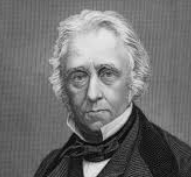
I say that where the public morality is concerned it may be the duty of the State to interfere with the contracts of individuals... It must then, I think, be admitted that, where health is concerned, and where morality is concerned, the State is justified in interfering with the contracts of individuals.
▼
Source
Speech in the House of Commons (22 May 1846), quoted in Speeches of the Right Honourable T. B. Macaulay, M.P. (1854), p. 442
2 weeks 2 days ago
At last I have attained true glory. As I walked through Fleet Street the day before yesterday, I saw a copy of Hume at a bookseller's window with the following label: "Only 2l. 2s. Hume's History of England in eight volumes, highly valuable as an introduction to Macaulay." I laughed so convulsively that the other people who were staring at the books took me for a poor demented gentleman.
▼
Source
Alas for poor David! Journal entry (8 March 1849), quoted in George Otto Trevelyan, The Life and Letters of Lord Macaulay, Volume II (1876), p. 253
2 weeks 2 days ago
It is odd that the last twenty-five years which have witnessed the greatest progress ever made in physical science-the greatest victories ever achieved by mind over matter-should have produced hardly a volume that will be remembered in 1900.
▼
Source
Journal entry (9 March 1850), quoted in Thomas Macaulay, The Letters of Thomas Babington Macaulay: Volume 5, January 1849-December 1855, ed. Thomas Pinney (1981), p. 99
2 weeks 2 days ago
I finished the Iliad to-day... I never admired the old fellow so much, or was so strongly moved by him. What a privilege genius like his enjoys! I could not tear myself away. I read the last five books at a stretch during my walk to-day, and was at last forced to turn into a bypath, lest the parties of walkers should see me blubbering for imaginary beings, the creations of a ballad-maker who has been dead two thousand seven hundred years. What is the power and glory of Caesar and Alexander to that? Think what it would be to be assured that the inhabitants of Monomotapa would weep over one's writings.
▼
Source
Anno Domini 4551! Letter to his niece Margaret (August 1851), quoted in George Otto Trevelyan, The Life and Letters of Lord Macaulay, Volume II (1876), pp. 186-187
2 weeks 2 days ago
I believe that the progress of experimental science, the free intercourse of nation with nation, the unrestricted influx of commodities from countries where they are cheap, and the unrestricted efflux of labour towards countries where it is dear, will soon produce, nay, I believe that they are beginning to produce, a great and most blessed social revolution.
▼
Source
Speech in Edinburgh (2 November 1852), quoted in Speeches of the Right Honourable T. B. Macaulay, M.P. (1854), p. 517
2 weeks 2 days ago
Joe Hume talked to me very earnestly about the necessity of an union of Liberals. He said much about Ballot and the Franchise. I told him that I could easily come to some compromise with him and his friends on these matters, but that there were other questions about which I feared that there was an irreconcileable difference, particularly the vital question of national defence. He seemed quite confounded, and had absolutely nothing to say. I am fully determined to make them eat their words on that point, or to have no political connection with them.
▼
Source
Journal entry (November 1852), quoted in George Otto Trevelyan, The Life and Letters of Lord Macaulay, Volume II (1876), p. 368
2 weeks 2 days ago
Your Constitution is all sail and no anchor.
▼
Source
Letter to H.S. Randall, author of a Life of Thomas Jefferson
2 weeks 2 days ago
Those who compare the age in which their lot has fallen with a golden age which exists only in imagination, may talk of degeneracy and decay; but no man who is correctly informed as to the past, will be disposed to take a morose or desponding view of the present.
▼
Source
Vol. I, ch. 1
CivilSimian.com created by AxiomaticPanic, CivilSimian, Kalokagathia