
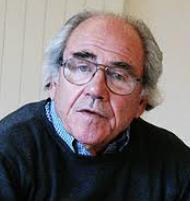
1 month ago
One may dream of a culture where everyone bursts into laughter when someone says: this is true, this is real.
1 month ago
If the thought enunciates an object as a truth, it is only as a challenge to this object's own self-fulfillment.
1 month ago
Not only does reality resist those who still criticize it, but it also abandons those who defend it. Maybe it is a way for reality to get its revenge from those who claim to believe in it for the sole purpose of eventually transforming it: sending back its supporters to their own desires.
1 month ago
The simulacrum now hides, not the truth, but the fact that there is none, that is to say, the continuation of Nothingness.
1 month ago
Today's terrorism is not the product of a traditional history of anarchism, nihilism, or fanaticism. It is instead the contemporary partner of globalization.
▼
Source
The Spirit of Terrorism (2003) "The Violence of the Global"
1 month ago
Particularly in the case of all professional of press-images which testify of the real events. In making reality, even the most violent, emerge to the visible, it makes the real substance disappear. It is like the Myth of Eurydice : when Orpheus turns around to look at her, she vanishes and returns to hell. That is why, the more exponential the marketing of images is growing the more fantastically grows the indifference towards the real world. Finally, the real world becomes a useless function, a collection of phantom shapes and ghost events. We are not far from the silhouettes on the walls of the cave of Plato.
1 month ago
This realistic image, however, does not catch at all what really is, but what should not be - death and misery - what should not exist, from our moral and humanistic point of view. And at the same time making an aesthetic and commercial, perfectly immoral use and abuse of this misery. Images that actually testify, behind their pretended "objectivity", of a deep denial of the real, and of an equal denial of the image - assigned to present what does not even want to be represented, assigned to the rape of the real by burglary.
1 month ago
The world is not dialectical -- it is sworn to extremes, not to equilibrium, sworn to radical antagonism, not to reconciliation or synthesis. This is also the principle of evil.
▼
Source
Jean Baudrillard in: Eldon Taylor What Does That Mean?: Exploring Mind, Meaning, and Mysteries, Hay House, Inc, 15 January 2010, p. 171
1 month ago
To challenge and to cope with this paradoxical state of things, we need a paradoxical way of thinking; since the world drifts into delirium, we must adopt a delirious point of view. We must no longer assume any principle of truth, of causality, or any discursive norm. Instead, we must grant both the poetic singularity of events and the radical uncertainty of events. It is not easy. We usually think that holding to the protocols of experimentation and verification is the most difficult thing. But in fact the most difficult thing is to renounce the truth and the possibility of verification, to remain as long as possible on the enigmatic, ambivalent, and reversible side of thought.
▼
Source
The Vital Illusion (2000) "The Murder of the Real". Wellek Library Lectures given May 1999 at the University of California, Irvine
1 month ago
There are only a few images that are not forced to provide meaning, or have to go through the filter of a specific idea.
1 month ago
So-called "realist" photography does not capture the "what is." Instead, it is preoccupied with what should not be, like the reality of suffering for example.
1 month ago
It is perhaps not a surprise that photography developed as a technological medium in the industrial age, when reality started to disappear. It is even perhaps the disappearance of reality that triggered this technical form. Reality found a way to mutate into an image.
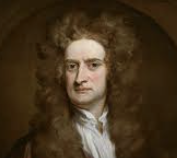
1 month ago
Plato is my friend - Aristotle is my friend - but my greatest friend is truth.
▼
Source
These are notes in Latin that Newton wrote to himself that he titled: Quaestiones Quaedam Philosophicae [Certain Philosophical Questions] (c. 1664)
1 month ago
The best and safest method of philosophizing seems to be, first to enquire diligently into the properties of things, and to establish these properties by experiment, and then to proceed more slowly to hypothesis for the explanation of them. For hypotheses should be employed only in explaining the properties of things, but not assumed in determining them, unless so far as they may furnish experiments.
▼
Source
Letter to Ignatius Pardies (1672) Philosophical Transactions of the Royal Society (Feb. 1671/2) as quoted by William L. Harper
1 month ago
I have not been able to discover the cause of those properties of gravity from phenomena, and I frame no hypotheses; for whatever is not deduced from the phenomena is to be called a hypothesis, and hypotheses, whether metaphysical or physical, whether of occult qualities or mechanical, have no place in experimental philosophy.
▼
Source
Letter to Robert Hooke (15 February 1676) [5 February 1676 (O.S.)]
1 month ago
Bullialdus wrote that all force respecting the Sun as its center & depending on matter must be reciprocally in a duplicate ratio of the distance from the center.
▼
Source
Letter to Edmund Halley (June 20, 1686) quoted in I. Bernard Cohen and George E. Smith, ed.s, The Cambridge Companion to Newton (2002) p. 204
1 month ago
1. Fidelity & Allegiance sworn to the King is only such a fidelity and obedience as is due to him by the law of the land; for were that faith and allegiance more than what the law requires, we would swear ourselves slaves, and the King absolute; whereas, by the law, we are free men, notwithstanding those Oaths. 2. When, therefore, the obligation by the law to fidelity and allegiance ceases, that by the Oath also ceases...
▼
Source
Letter to Dr. Covel Feb. 21, (1688-9) Thirteen Letters from Sir Isaac Newton to J. Covel, D.D.
1 month ago
It seems to me, that if the matter of our sun and planets and all the matter of the universe, were evenly scattered throughout all the heavens, and every particle had an innate gravity towards all the rest, and the whole of space throughout which this matter was scattered was but finite, the matter on [toward] the outside of this space would, by its gravity, tend towards all the matter on the inside, and, by consequence, fall down into the middle of the whole space, and there compose one great spherical mass. But if the matter was evenly disposed throughout an infinite space it could never convene into one mass; but some of it would convene into one mass and some into another, so as to make an infinite number of great masses, scattered at great distances from one another throughout all that infinite space.
▼
Source
Four Letters to Bentley (1692) first letter
1 month ago
To explain all nature is too difficult a task for any one man or even for any one age. 'Tis much better to do a little with certainty, & leave the rest for others that come after you, than to explain all things by conjecture without making sure of any thing.
▼
Source
Statement from unpublished notes for the Preface to Opticks (1704) quoted in Never at Rest: A Biography of Isaac Newton (1983) by Richard S. Westfall, p. 643
1 month ago
I have studied these things - you have not.
▼
Source
Reported as Newton's response, whenever Edmond Halley would say anything disrespectful of religion, by Sir David Brewster in The Life of Sir Isaac Newton (1831)
1 month ago
I do not know what I may appear to the world, but to myself I seem to have been only like a boy playing on the sea-shore, and diverting myself in now and then finding a smoother pebble or a prettier shell than ordinary, whilst the great ocean of truth lay all undiscovered before me.
▼
Source
Memoirs of the Life, Writings, and Discoveries of Sir Isaac Newton (1855) by Sir David Brewster (Volume II. Ch. 27).
1 month ago
In default of any other proof, the thumb would convince me of the existence of a God.
▼
Source
Stanislas (1856)
1 month ago
It is the perfection of God's works that they are all done with the greatest simplicity. He is the God of order and not of confusion. And therefore as they would understand the frame of the world must endeavor to reduce their knowledge to all possible simplicity, so must it be in seeking to understand these visions.
▼
Source
Cited in Rules for methodizing the Apocalypse, Rule 9, from a manuscript published in The Religion of Isaac Newton (1974) by Frank E. Manuel
1 month ago
Truth is ever to be found in simplicity, and not in the multiplicity and confusion of things.
▼
Source
Cited in Rules for methodizing the Apocalypse, Rule 9, from a manuscript published in The Religion of Isaac Newton (1974) by Frank E. Manuel, p. 120
1 month ago
God created everything by number, weight and measure.
▼
Source
As quoted in Symmetry in Plants (1998) by Roger V. Jean and Denis Barabé, p. xxxvii
1 month ago
Our design, not respecting arts, but philosophy, and our subject, not manual, but natural powers, we consider chiefly those things which relate to gravity, levity, elastic force, the resistance of fluids, and the like forces, whether attractive or impulsive; and therefore we offer this work as mathematical principles of philosophy; for all the difficulty of philosophy seems to consist in this - from the phenomena of motions to investigate the forces of nature, and then from these forces to demonstrate the other phenomena...
▼
Source
Preface
1 month ago
I wish we could derive the rest of the phenomena of nature by the same kind of reasoning from mechanical principles; for I am induced by many reasons to suspect that they may all depend upon certain forces by which the particles of bodies, by some causes hitherto unknown, are either mutually impelled towards each other, and cohere in regular figures, or are repelled and recede from each other; which forces being unknown, philosophers have hitherto attempted the search of nature in vain; but I hope the principles here laid down will afford some light either to that or some truer method of philosophy.
▼
Source
Preface
1 month ago
Rational mechanics must be the science of the motions which result from any forces, and of the forces which are required for any motions, accurately propounded and demonstrated. For many things induce me to suspect, that all natural phenomena may depend upon some forces by which the particles of bodies are either drawn towards each other, and cohere, or repel and recede from each other: and these forces being hitherto unknown, philosophers have pursued their researches in vain. And I hope that the principles expounded in this work will afford some light, either to this mode of philosophizing, or to some mode which is more true.
▼
Source
Preface, translation in William Whewell's History of the Inductive Sciences
1 month ago
I do not define time, space, place, and motion, as being well known to all. Only I must observe, that the common people conceive those quantities under no other notions but from the relation they bear to sensible objects. And thence arise certain prejudices, for the removing of which it will be convenient to distinguish them into absolute and relative, true and apparent, mathematical and common.
▼
Source
Definitions - Scholium
1 month ago
It is indeed a matter of great difficulty to discover, and effectually to distinguish, the true motions of particular bodies from the apparent; because the parts of that immovable space, in which those motions are performed, do by no means come under the observation of our senses. Yet the thing is not altogether desperate; for we have some arguments to guide us, partly from the apparent motions, which are the differences of the true motions; partly from the forces, which are the causes and effects of the true motions.
▼
Source
Definitions - Scholium
1 month ago
We are to admit no more causes of natural things than such as are both true and sufficient to explain their appearances.
▼
Source
"Rules of Reasoning in Philosophy" : Rule I
1 month ago
Every body continues in its state of rest, or of uniform motion in a right line, unless it is compelled to change that state by forces impressed upon it.
▼
Source
Laws of Motion, I
1 month ago
The alteration of motion is ever proportional to the motive force impressed; and is made in the direction of the right line in which that force is impressed.
▼
Source
Laws of Motion, II
1 month ago
To every action there is always opposed an equal reaction; or, the mutual actions of two bodies upon each other are always equal, and directed to contrary parts.
▼
Source
Laws of Motion, III
1 month ago
But it is not to be conceived that mere mechanical causes could give birth to so many regular motions: since the Comets range over all parts of the heavens, in very eccentric orbits. For by that kind of motion they pass easily through the orbs of the Planets, and with great rapidity; and in their aphelions, where they move the slowest, and are detain'd the longest, they recede to the greatest distances from each other, and thence suffer the least disturbance from their mutual attractions.
1 month ago
Idolatry is a more dangerous crime because it is apt by the authority of Kings & under very specious pretenses to insinuate it self into mankind. Kings being apt to enjoyn the honour of their dead ancestors: & it seeming very plausible to honour the souls of Heroes & Saints & to believe that they can heare us & help us & are mediators between God & man & reside & act principally in the temples & statues dedicated to their honour & memory? And yet this being against the principal part of religion is in scripture condemned & detested above all other crimes. The sin consists first in omitting the service of the true God.
▼
Source
Of Idolatry
1 month ago
The other part of the true religion is our duty to man. We must love our neighbour as our selves, we must be charitable to all men for charity is the greatest of graces, greater then even faith or hope & covers a multitude of sins. We must be righteous & do to all men as we would they should do to us.
▼
Source
Of Humanity
1 month ago
Yet sometimes vegetables and animals are, by certain epithets or circumstances, extended to other significations; as a Tree, when called the tree of life or of knowledge; and a Beast, when called the old serpent, or worshiped. When a Beast or Man is put for a kingdom, his parts and qualities are put for the analogous parts and qualities of the kingdom; as the head of a Beast, for the great men who precede and govern; the tail for the inferior people, who follow and are governed; the heads, if more than one, for the number of capital parts, or dynasties, or dominions in the kingdom, whether collateral or successive, with respect to the civil government; the horns on any head, for the number of kingdoms in that head, with respect to military power...
▼
Source
Vol. I, Ch. 2: Of the Prophetic Language
1 month ago
When a man is taken in a mystical sense, his qualities are often signified by his actions, and by the circumstances of things about him. So a Ruler is signified by his riding on a beast; a Warrior and Conqueror, by his having a sword and bow; a potent man, by his gigantic stature; a Judge, by weights and measures... the affliction or persecution which a people suffers in laboring to bring forth a new kingdom, by the pain of a woman in labor to bring forth a man-child; the dissolution of a body politic or ecclesiastic, by the death of a man or beast; and the revival of a dissolved dominion, by the resurrection of the dead.
▼
Source
Vol. I, Ch. 2: Of the Prophetic Language
1 month ago
I can calculate the motions of erratic bodies, but not the madness of a multitude.
▼
Source
As quoted in "Mammon and the Money Market", in The Church of England Quarterly Review (1850), p. 142

1 month 1 week ago
There's no objective morality, but that's not the real point. It's not the point that morality has to somehow be a stone, or something that can be touched.
The options that are available to choose are determined to a point, and this is the objective aspect of morality, ethics, goodness, fairness, justice.
The subjective aspect can still remain subjective, but that doesn't mean goodness is relative.....at all. The measure of a man is a man.
1 month 1 week ago
There is one ethical principle, either you are preserving life generally, or you aren't. Preserving life in your ends and your means determines whether you are good or evil.
1 month 1 week ago
There are two kinds of people, killers, and everybody else.
1 month 1 week ago
Pure justice emerges from symmetry applied human life, and human beings as ends in themselves.
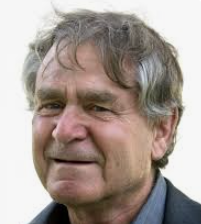
1 month 1 week ago
To conclude: there are two well-known minor ways in which language has mattered to philosophy. On the one hand there is a belief that if only we produce good definitions, often marking out different senses of words that are confused in common speech, we will avoid the conceptual traps that ensnared our forefathers. On the other hand is a belief that if only we attend sufficiently closely to our mother tongue and make explicit the distinctions there implicit, we shall avoid the conceptual traps. One or the other of these curiously contrary beliefs may nowadays be most often thought of as an answer to the question Why does language matter to philosophy? Neither seems to me enough.
▼
Source
Ian Hacking (1975), Why Does Language Matter to Philosophy?, p. 7.
1 month 1 week ago
Well, he wasn't a relativist. There's a long and complicated story of the rise of a desire for scientific relativism. Part of it may well be simply sort of rage against reason, the fear of the sciences and a kind of total dislike of the arrogance of a great many scientists who say we're finding out the truth about everything-and here [with Kuhn] there was a way to undermine that arrogance.
▼
Source
Ian Hacking, in Gary Stix, "A Q&A with Ian Hacking on Thomas Kuhn's Legacy as "The Paradigm Shift" Turns 50"
1 month 1 week ago
There are two ways in which a science develops; in response to problems which is itself creates, and in response to problems that are forced on it from the outside.
▼
Source
Chapter 1, An Absent Family Of Ideas, p. 4.
1 month 1 week ago
Pascal is called the founder of modern probability theory. He earns this title not only for the familiar correspondence with Fermat on games of chance, but also for his conception of decision theory, and because he was an instrument in the demolition of probabilism, a doctrine which would have precluded rational probability theory.
▼
Source
Chapter 3, Opinion, p. 23.
1 month 1 week ago
Opinion is the companion of probability within the medieval epistemology.
▼
Source
Chapter 3, Opinion, p. 28.
1 month 1 week ago
Many modern philosophers claim that probability is relation between an hypothesis and the evidence for it.
▼
Source
Chapter 4, Evidence, p. 31.
CivilSimian.com created by AxiomaticPanic, CivilSimian, Kalokagathia