


1 week 6 days ago
What an incitation to hilarity, hearing the word goal while following a funeral procession!

1 month 2 weeks ago
I believe in Christianity as I believe that the sun has risen. Not only because I see it, but because by it I see everything else.
▼
Source
source
"Is Theology Poetry?", 1945
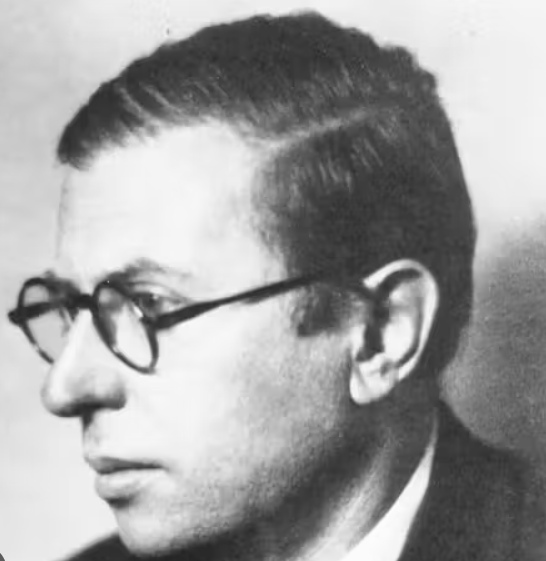
1 month 2 weeks ago
I have nothing but contempt for you idiotic chosen ones who have the heart to rejoice when there are the damned in Hell and the poor on earth; as for me, I am on the side of men and I will not leave it.
▼
Source
source
Act 6, sc. 6
2 weeks 1 day ago
I took some pains to convince you that the Whigs, as a party in the state, were of the highest value to the public welfare, and constituted the party to which a liberal-minded and enlightened man would adhere.
▼
Source
source
Letter to H. B. Rosser (7 March 1820), quoted in C. Kegan Paul, William Godwin: His Friends and Contemporaries, Vol. II (1876), p. 263
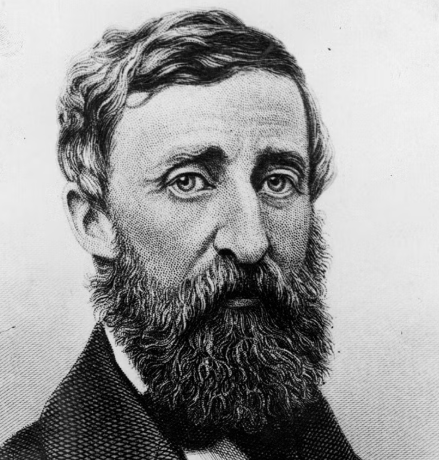
1 month 2 weeks ago
The rush to California, for instance, and the attitude, not merely of merchants, but of philosophers and prophets, so called, in relation to it, reflect the greatest disgrace on mankind. That so many are ready to live by luck, and so get the means of commanding the labor of others less lucky, without contributing any value to society!
▼
Source
source
p. 487
2 months 2 weeks ago
You want to know whether I can make a long speech, such as you are in the habit of hearing; but that is not my way. Socrates speaking to Alcibiades
2 days ago
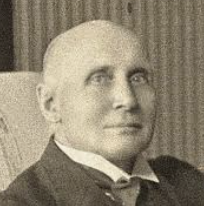
Familiar things happen, and mankind does not bother about them. It requires a very unusual mind to undertake the analysis of the obvious.
▼
Source
source
Ch. 1: "The Origins of Modern Science", p. 6
2 weeks 4 days ago
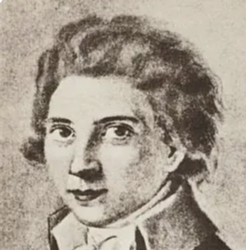
The romantic poetry is a progressive universal poetry.
▼
Source
source
Progressive Universalpoesie (1798)
1 week 2 days ago
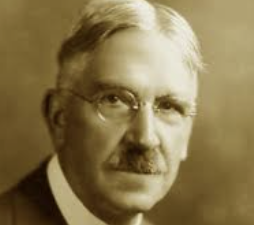
The true antithesis of nature is not art but arbitrary conceit, fantasy, and stereotyped convention.
▼
Source
source
p. 158
1 week 3 days ago
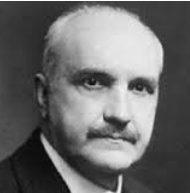
Matters of religion should never be matters of controversy. We neither argue with a lover about his taste, nor condemn him, if we are just, for knowing so human a passion.
▼
Source
source
Ch. VI
2 months 3 days ago
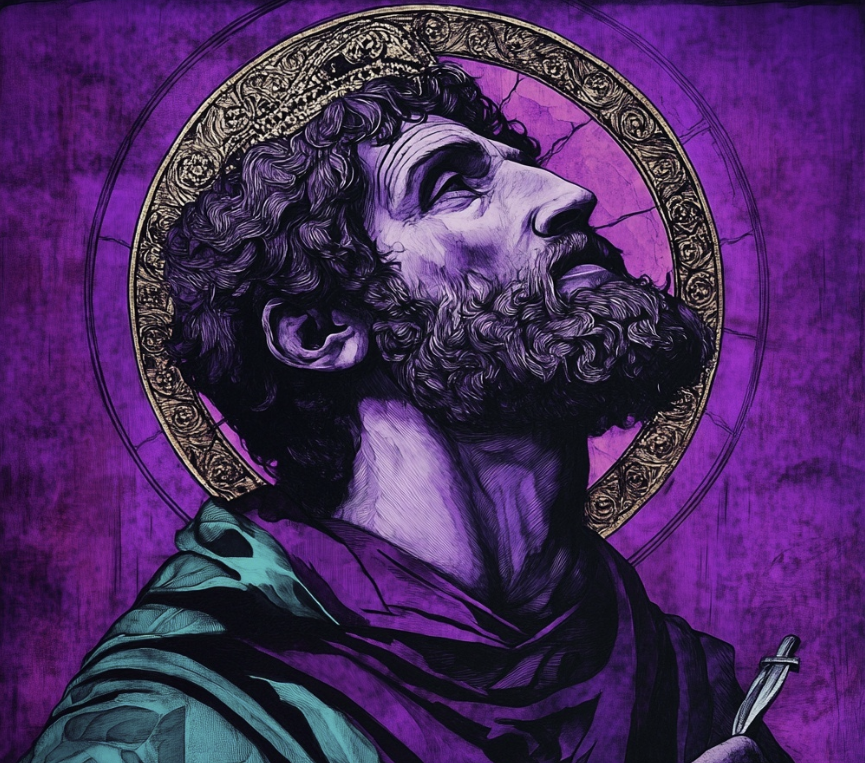
If thou shouldst say, 'It is enough, I have reached perfection,' all is lost. For it is the function of perfection to make one know one's imperfection.
▼
Source
source
Quoted by Aldous Huxley, in The Perennial Philosophy (1945)
1 week 2 days ago
On fact, the whole machinery of our intelligence, our general ideas and laws, fixed and external objects, principles, persons, and gods, are so many symbolic, algebraic expressions. They stand for experience; experience which we are incapable of retaining and surveying in its multitudinous immediacy. We should flounder hopelessly, like the animals, did we not keep ourselves afloat and direct our course by these intellectual devices.
▼
Source
source
Theory helps us to bear our ignorance of fact. Pt. III, Form; § 30: "The average modified in the direction of pleasure.", p. 125

Just now
The period of the actual revolution, the so-called transitory stage, must be the introduction, the prelude to the new social conditions. It is the threshold to the NEW LIFE, the new HOUSE OF MAN AND HUMANITY. As such it must be of the spirit of the new life, harmonious with the construction of the new edifice.
1 month 2 weeks ago
There lies before us, if we choose, continual progress in happiness, knowledge, and wisdom. Shall we, instead, choose death, because we cannot forget our quarrels? We appeal as human beings to human beings: Remember your humanity, and forget the rest. If you can do so, the way lies open to a new Paradise; if you cannot, there lies before you the risk of universal death.

1 month 2 weeks ago
To pray to God is to flatter oneself that with words one can alter nature.
▼
Source
source
Notebooks, c.1735-c.1750
3 days ago
I also am other than what I imagine myself to be. To know this is forgiveness.
▼
Source
source
p. 200
1 week 3 days ago
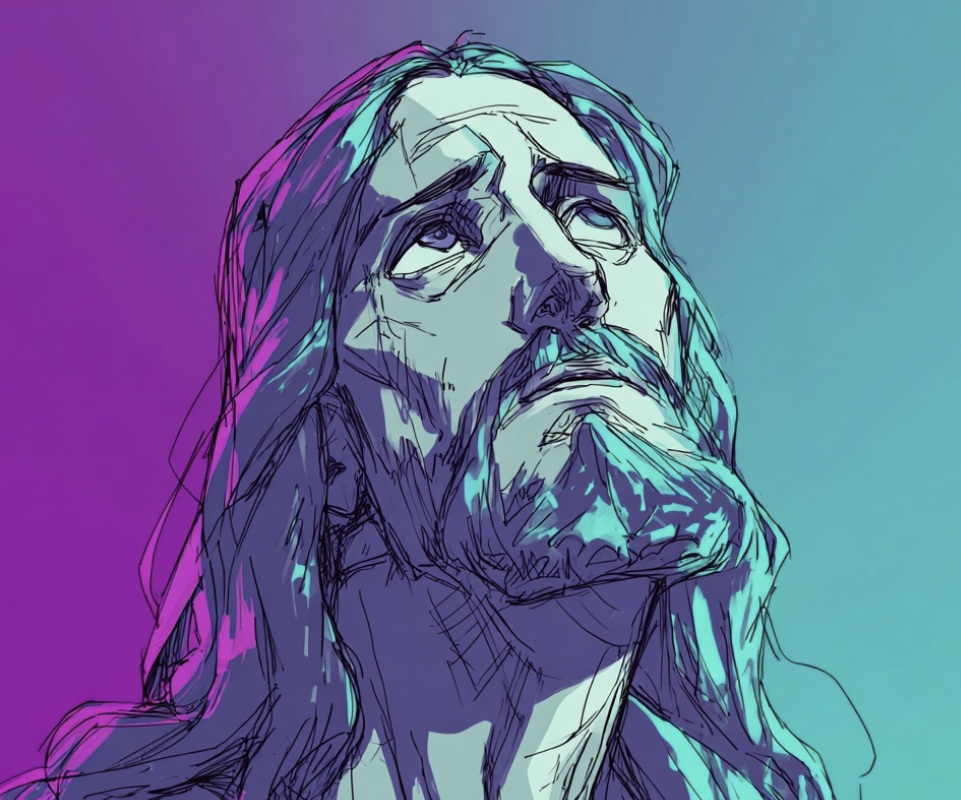
The kingdom of heaven is like unto leaven, which a woman took, and hid in three measures of meal, till the whole was leavened.
▼
Source
source
13:33 (KJV)
1 week 6 days ago
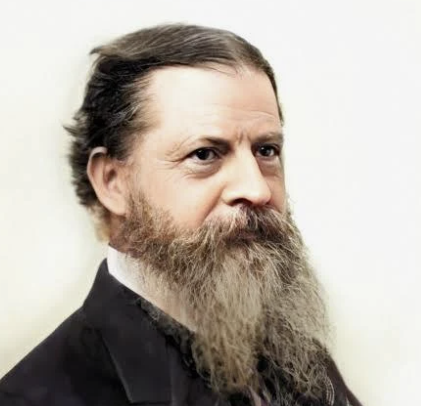
The old dualistic notion of mind and matter, so prominent in Cartesianism, as two radically different kinds of substance, will hardly find defenders to-day. Rejecting this, we are driven to some form of hylopathy, otherwise called monism.
1 week 6 days ago
By an object, I mean anything that we can think, i.e. anything we can talk about.
▼
Source
source
"Reflections on Real and Unreal Objects", Undated, MS 966
2 months 1 day ago
Life is one long struggle in the dark.
▼
Source
source
Book II, line 54 (tr. Rouse)
1 month 3 weeks ago
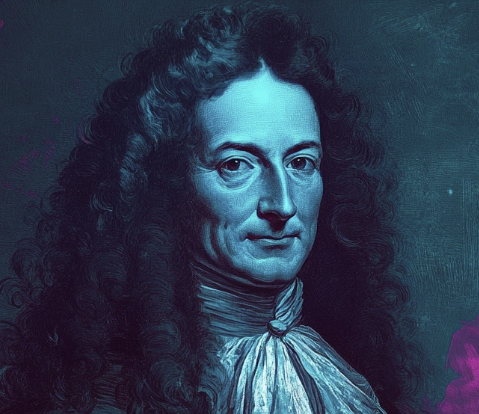
I have said more than once, that I hold space to be something purely relative, as time; an order of coexistences, as time is an order of successions.
▼
Source
source
Third letter to Samuel Clarke, February 25, 1716
1 month 1 week ago
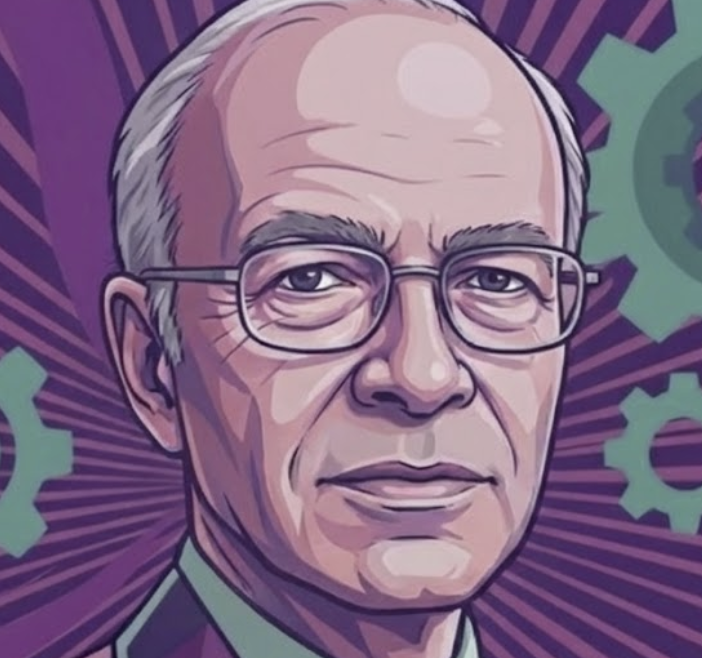
We are responsible not only for what we do but also for what we could have prevented.
▼
Source
source
Introduction (p. xv)
1 month 2 weeks ago
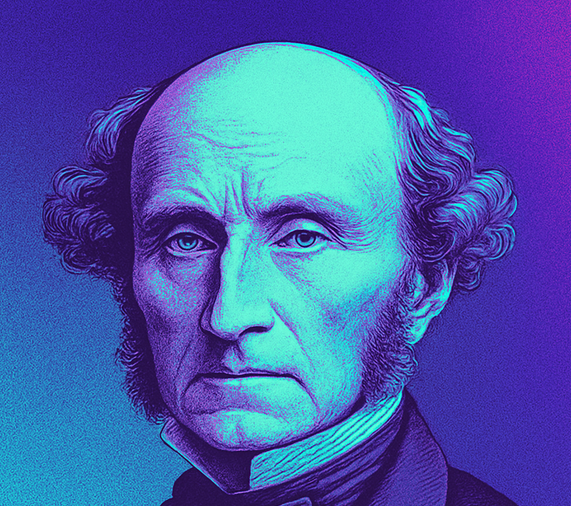
The remedies for all our diseases will be discovered long after we are dead; and the world will be made a fit place to live in, after the death of most of those by whose exertions it will have been made so. It is to be hoped that those who live in those days will look back with sympathy to their known and unknown benefactors.
▼
Source
source
Diary, April 15, 1854, in The Collected Works of John Stuart Mill, Toronto, 1988, vol. 27, p. 668
2 weeks 4 days ago
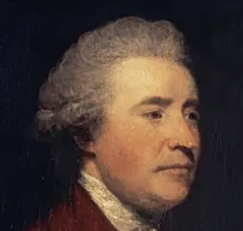
We must not always judge of the generality of the opinion by the noise of the acclamation.
▼
Source
source
No. 1
1 week 1 day ago
Logical empiricism holds the view, notwithstanding some its assertions, that the forms of knowledge and consequently the relations of man to nature and to other men never change. According to rationalism, too, all subjective and objective potentialities are rooted in insights which the individual already possesses, but rationality uses existing objects as well as the active inner striving and ideas of man to construct standards for the future. In this regard, it is not so closely associated with the present order as is empiricism.
▼
Source
source
p. 148.
2 days ago
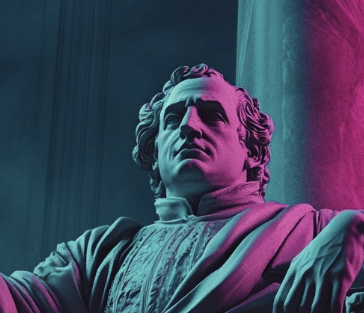
With the sense of sight, the idea communicates the emotion, whereas, with sound, the emotion communicates the idea, which is more direct and therefore more powerful.
▼
Source
source
Ch. 29, June 10, 1943.
1 month 3 weeks ago
Every thing in the world is purchased by labour.
▼
Source
source
Part II, Essay 1: Of Commerce
1 month 2 weeks ago
The devil...the prowde spirit...cannot endure to be mocked.
▼
Source
source
Thomas More, quoted at the beginning of The Screwtape Letters

1 week 3 days ago
The absolute idea is the subject in its final form, thought. The otherness and negation is the object, being. The absolute idea now has to be interpreted as objective being. Hegel's Logic thus ends where it began, with the category of being. This, however is a different being that can no longer be explained thought he concepts applied in the analysis that opened the Logic. For being now is understood in its notion that is, as a concrete totality wherein all particular forms subsist as the essential distinctions and relations of on comprehensive principle. Thus comprehended, being is nature, and dialectical thought passes on to the Philosophy of Nature.
▼
Source
source
P. 165-166

2 months 2 weeks ago
One does not discover the absurd without being tempted to write a manual of happiness. "What! — by such narrow ways — ?" There is but one world, however. Happiness and the absurd are two sons of the same earth. They are inseparable. It would be a mistake to say that happiness necessarily springs from the absurd discovery. It happens as well that the feeling of the absurd springs from happiness.
1 month 2 weeks ago
"They have an engine called the Press whereby the people are deceived."
▼
Source
source
Ch. 13 : They Have Pulled Down Deep Heaven on Their Heads
1 week 6 days ago
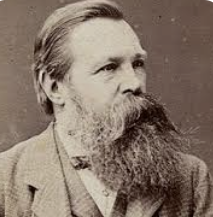
Wherever big industries displaced manufacture, the bourgeoisie developed in wealth and power to the utmost and made itself the first class of the country. The result was that wherever this happened, the bourgeoisie took political power into its own hands and displaced the hitherto ruling classes, the aristocracy, the guildmasters, and their representative, the absolute monarchy. The bourgeoisie annihilated the power of the aristocracy, the nobility, by abolishing the entailment of estates - in other words, by making landed property subject to purchase and sale, and by doing away with the special privileges of the nobility. It destroyed the power of the guildmasters by abolishing guilds and handicraft privileges. In their place, it put competition - that is, a state of society in which everyone has the right to enter into any branch of industry, the only obstacle being a lack of the necessary capital.
5 months 3 weeks ago
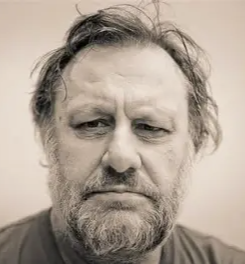
Canned laughter: After some supposedly funny or witty remark you can hear the laughter and applause included in the soundtrack of the show itself - here we have the exact counterpart of the Chorus in classical tragedy; it is here that we have to look for 'living Antiquity.' That is to say, why this laughter? The first possible answer - that it serves to remind us when to laugh - is interesting enough, because it implies the paradox that laughter is a matter of duty and not of some spontaneous feeling; but this answer is not sufficient because we do not usually laugh. The only correct answer would be that the Other - embodied in the television set - is relieving us even of our duty to laugh - is instead laughing for us. So even if, tired from a hard days stupid work, all evening we did nothing but gaze drowsily into the television screen, we can say afterwards that objectively, through the medium of the other, we had a really good time.
2 months 2 weeks ago
I shall assume that your silence gives consent.
1 month 3 weeks ago
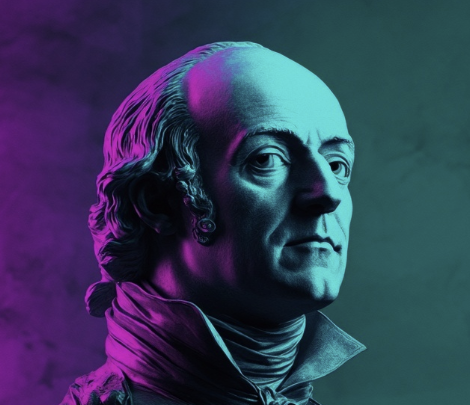
Every man is rich or poor according to the degree in which he can afford to enjoy the necessaries, conveniences, and amusements of human life. But after the division of labour has once thoroughly taken place, it is but a very small part of these with which a man's own labour can supply him. The far greater part of them he must derive from the labour of other people, and he must be rich or poor according to the quantity of that labour which he can command, or which he can afford to purchase. The value of any commodity, therefore, to the person who possesses it, and who means not to use or consume it himself, but to exchange it for other commodities, is equal to the quantity of labour which it enables him to purchase or command. Labour, therefore, is the real measure of the exchangeable value of all commodities.
▼
Source
source
Chapter V.
2 days ago
There are no whole truths; all truths are half-truths. It is trying to treat them as whole truths that plays the devil.
▼
Source
source
Prologue.

2 months 2 weeks ago
When someone hides something behind a bush and looks for it again in the same place and finds it there as well, there is not much to praise in such seeking and finding. Yet this is how matters stand regarding seeking and finding "truth" within the realm of reason. If I make up the definition of a mammal, and then, after inspecting a camel, declare "look, a mammal' I have indeed brought a truth to light in this way, but it is a truth of limited value. That is to say, it is a thoroughly anthropomorphic truth which contains not a single point which would be "true in itself" or really and universally valid apart from man. At bottom, what the investigator of such truths is seeking is only the metamorphosis of the world into man.

2 months 5 days ago
Reason in man is rather like God in the world.
▼
Source
source
Opuscule II, De Regno On Kingship, c. 1267
3 weeks 1 day ago
What a hell of an economic system! Some are replete with everything while others, whose stomachs are no less demanding, whose hunger is just as recurrent, have nothing to bite on. The worst of it is the constrained posture need puts you in. The needy man does not walk like the rest; he skips, slithers, twists, crawls.
1 week 3 days ago
And whereas many men, by accident unevitable, become unable to maintain themselves by their labour; they ought not to be left to the Charity of private persons; but to be provided for, (as far-forth as the necessities of Nature require,) by the Lawes of the Common-wealth. For as it is Unchariablenesse in any man, to neglect the impotent; so it is in the Soveraign of a Common-wealth, to expose them to the hazard of such uncertain Charity.
▼
Source
source
The Second Part, Chapter 30, p. 181
3 weeks 1 day ago
A common monetary standard will be established, with the consent of the various governments, by which industrial transactions will be greatly facilitated. Three spheres made respectively of gold, silver, and platinum, and each weighing fifty grammes, would differ sufficiently in value for the purpose. The sphere should have a small flattened base, and on the great circle parallel to it the Positivist motto would be inscribed. At the pole would be the image of the immortal Charlemagne, the founder of the Western Republic, and round the image his name would be engraved, in its Latin form, Carolus; that name, respected as it is by all nations of Europe alike, would be the common appellation of the universal monetary standard.
▼
Source
source
p. 430
2 weeks 3 days ago
Instinct is blind;-a consciousness without insight. Freedom, as the opposite of Instinct, is thus seeing, and clearly conscious of the grounds of its activity.
▼
Source
source
p. 7
2 months 2 weeks ago
It is my own experience ... that commentators are far more ingenious at finding meaning than authors are at inserting it.
1 month 2 weeks ago
Revolutions never go backwards.
▼
Source
source
p. 214
1 month 2 weeks ago
If there is anything in the world that can really be called a man's property, it is surely that which is the result of his mental activity.
▼
Source
source
Unverified attribution noted in Respectfully Quoted: A Dictionary of Quotations (1993), ed. Suzy Platt, Library of Congress, p. 227
1 week 6 days ago
When I happen to be busy, I never give a moment's thought to the "meaning" of anything, particularly of whatever it is I am doing. A proof that the secret of everything is in action and not abstention, that fatal cause of consciousness.
1 week 6 days ago
The flesh spreads, further and further, like a gangrene upon the surface of the globe. It cannot impose limits upon itself, it continues to be rife despite its rebuffs, it takes its defeats for conquests, it has never learned anything. It belongs above all to the realm of the Creator, and it is indeed in the flesh that He has projected His maleficent instincts.
1 week 6 days ago
Everyone must destroy their life. According to the way they do it, they're either triumphants or failures.
1 month 2 weeks ago
To require that a so-called layman should not use his own reason in religious matters, particularly since religion is to be appreciated as moral, but instead follow the appointed clergyman and thus someone else's reason, is an unjust demand because as to morals every man must account for all his doings. The clergyman will not and even cannot assume such a responsibility.
▼
Source
source
Kant, Immanuel (1996), pages 94-95

1 month 1 week ago
The only knowledge that can truly orient action is knowledge that frees itself from mere human interests and is based in Ideas-in other words knowledge that has taken a theoretical attitude.
▼
Source
source
p. 301
CivilSimian.com created by AxiomaticPanic, CivilSimian, Kalokagathia