

1 month 2 weeks ago
The theoretical understanding of the world, which is the aim of philosophy, is not a matter of great practical importance to animals, or to savages, or even to most civilized men.
▼
Source
source
Ch. 1: Mysticism and Logic

3 weeks 1 day ago
Our youth we can have but to-day, We may always find time to grow old. Can Love be controlled by Advice?
▼
Source
source
reported in Bartlett's Familiar Quotations, 10th ed. (1919).

2 months 1 week ago
I was assailed by memories of a life that wasn't mine anymore, but one in which I'd found the simplest and most lasting joys.
2 months 5 days ago
It is better to conceal ignorance than to expose it.
5 months 3 weeks ago
One should oppose the fascination with Hitler according to which Hitler was, of course, a bad guy, responsible for the death of millions — but he definitely had balls, he pursued with iron will what he wanted. … This point is not only ethically repulsive, but simply wrong: no, Hitler did not ‘have the balls’ to really change things; he did not really act, all his actions were fundamentally reactions, i.e., he acted so that nothing would really change, he stages a big spectacle of Revolution so that the capitalist order could survive.”
In this precise sense of violence, Gandhi was more violent than Hitler: Gandhi’s movement effectively endeavored to interrupt the basic functioning of the British colonial state.
1 month 1 week ago
A text is not a text unless it hides from the first comer, from the first glance, the law of its composition and the rules of its game. A text remains, moreover, forever imperceptible. Its law and its rules are not, however, harbored in the inaccessibility of a secret; it is simply that they can never be booked, in the present, into anything that could rigorously be called a perception.
▼
Source
source
Plato's Pharmacy, intro

2 months 2 weeks ago
So far no one had had enough courage and intelligence to reveal me to my dear Germans. My problems are new, my psychological horizon frighteningly comprehensive, my language bold and clear; there may well be no books written in German which are richer in ideas and more independent than mine.
1 month 2 weeks ago
The governors of the world believe, and have always believed, that virtue can only be taught by teaching falsehood, and that any man who knew the truth would be wicked. I disbelieve this, absolutely and entirely. I believe that love of truth is the basis of all real virtue, and that virtues based upon lies can only do harm.
1 month 2 weeks ago
And we feel that the hero has lived all the details of this night like annunciations, promises, or even that he lived only those that were promises, blind and deaf to all that did not herald adventure. We forget that the future was not yet there; the man was walking in the night without forethought, a night which offered him a choice of dull rich prizes, and he did not make his choice.
▼
Source
source
Diary entry of Saturday noon (10 February?)
1 month 2 weeks ago
An early morning walk is a blessing for the whole day.
▼
Source
source
April 20, 1840

1 month 2 weeks ago
I shall need only myself to be happy.
▼
Source
source
As quoted in The prophetic voice, 1758-1778 by Lester G. Crocke, p. 148.

3 weeks 6 days ago
In this theater of man's life it is reserved only for God and angels to be lookers on.
▼
Source
source
Francis Bacon, in The Advancement of Learning (1605) Book II, xx, 8.
2 weeks 2 days ago
It's easier for a Russian to become an atheist than for anyone else in the world.
▼
Source
source
Part 4, Chapter 7
1 month 2 weeks ago
There are two motives for reading a book: one, that you enjoy it; the other, that you can boast about it.
1 month 2 weeks ago
In capitalist society however where social reason always asserts itself only post festum great disturbances may and must constantly occur.
▼
Source
source
Vol. II, Ch. XVI, p. 319.

1 month 5 days ago
Sweet exists by convention, bitter by convention, colour by convention; atoms and Void [alone] exist in reality.
▼
Source
source
(trans. Freeman 1948), p. 92.

1 week 4 days ago
How important can it be that I suffer and think? My presence in this world will disturb a few tranquil lives and will unsettle the unconscious and pleasant naiveté of others. Although I feel that my tragedy is the greatest in history - greater than the fall of empires - I am nevertheless aware of my total insignificance. I am absolutely persuaded that I am nothing in this universe; yet I feel that mine is the only real existence.
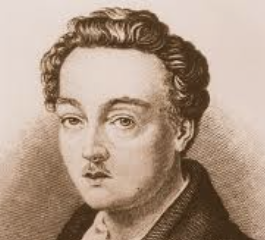
2 weeks 1 day ago
We have not made the Revolution, the Revolution has made us.
▼
Source
source
Act II.
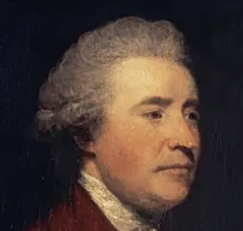
2 weeks 2 days ago
A great revolution is on the point of being accomplished. It is a revolution not in human affairs, but in man himself.
▼
Source
source
p. 2
1 week 4 days ago
True confessions are written with tears only. But my tears would drown the world, as my inner fire would reduce it to ashes.
1 month 2 weeks ago
Just as we teach children to avoid being destroyed by motor cars if they can, so we should teach them to avoid being destroyed by cruel fanatics, and to this end we should seek to produce independence of mind, somewhat sceptical and wholly scientific, and to preserve, as far as possible, the instinctive joy of life that is natural to healthy children. This is the task of a liberal education: to give a sense of the value of things other than domination, to help create wise citizens of a free community, and through the combination of citizenship with liberty in individual creativeness to enable men to give to human life that splendour which some few have shown that it can achieve.
▼
Source
source
Ch. 18: The Taming of Power
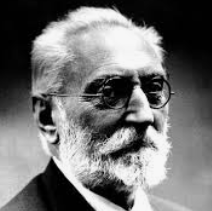
2 days ago
True science teaches, above all, to doubt and be ignorant.

1 month 2 weeks ago
Superstition sets the whole world in flames; philosophy quenches them.
▼
Source
source
Dictionnaire philosophique (1822), "Superstition"

3 weeks ago
I thanke God for my happy Dreams|dreames, as I doe for my good rest, for there is a satisfaction in them unto reasonable desires, and such as can be content with a fit of happinesse; and surely it is not a melancholy conceite to thinke we are all asleepe in this world, and that the conceits of this life are as meare dreames to those of the next, as the Phantasmes of the night, to the conceit of the day. There is an equall delusion in both, and the one doth but seeme to bee the embleme or picture of the other;
▼
Source
source
Section 12
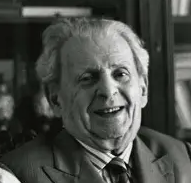
1 week 4 days ago
The detour to ideality leads to coinciding with oneself, that is, to certainty, which remains the guide and guarantee of the whole spiritual adventure of being.
▼
Source
source
The Levinas reader by Levinas, Emmanuel p. 89

2 months 1 day ago
A man might say, "The things that are in the world are what God has made. ... Why should I not love what God has made?" ...Suppose, my brethren, a man should make for his betrothed a ring, and she should prefer the ring given her to the betrothed who made it for her, would not her heart be convicted of infidelity? ... God has given you all these things: therefore, love him who made them.
▼
Source
source
Second Homily, as translated by John Burnaby (1955), pp. 275-276
1 month 2 weeks ago
I am as desirous of being a good neighbor as I am of being a bad subject.
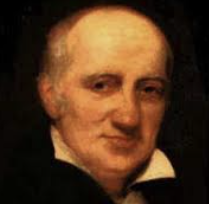
1 week 6 days ago
I did not hate the author of my misfortunes - truth and justice acquit me of that; I rather pitied the hard destiny to which he seemed condemned. But I thought with unspeakable loathing of those errors, in consequence of which every man is fated to be, more or less, the tyrant or the slave. I was astonished at the folly of my species, that they did not rise up as one man, and shake off chains so ignominious, and misery so insupportable. So far as related to myself, I resolved - and this resolution has never been entirety forgotten by me - to hold myself disengaged from this odious scene, and never fill the part either of the oppressor or the sufferer.
2 months 2 weeks ago
One common false conclusion is that because someone is truthful and upright towards us he is spreading the truth. Thus the child believes his parents' judgements, the Christian believes the claims of the church's founders. Likewise, people do not want to admit that all those things which men defended with the sacrifice of their lives and happiness in earlier centuries were nothing but errors.
2 days ago
But the capacity to enjoy is impossible without the capacity to suffer; and the faculty of enjoyment is one with that of pain. Whosoever does not suffer does not enjoy, just as whosoever is insensible to cold is insensible to heat.

1 month 2 weeks ago
And all the time - such is the tragi-comedy of our situation - we continue to clamor for those very qualities we are rendering impossible. You can hardly open a periodical without coming across the statement that what our civilization needs is more "drive", or dynamism, or self-sacrifice, or "creativity". In a sort of ghastly simplicity we remove the organ and demand the function. We make men without chests and expect of them virtue and enterprise. We laugh at honour and are shocked to find traitors in our midst. We castrate and bid the geldings be fruitful.
1 month 2 weeks ago
The foundations on which several duties are built, and the foundations of right and wrong from which they spring, are not perhaps easily to be let into the minds of grown men, not us'd to abstract their thoughts from common received opinions. Much less are children capable of reasonings from remote principles. They cannot conceive the force of long deductions. The reasons that move them must be obvious, and level to their thoughts, and such as may be felt and touched. But yet, if their age, temper, and inclination be consider'd, they will never want such motives as may be sufficient to convince them.
▼
Source
source
Sec. 81

1 month 2 weeks ago
In Mohammedanism the narrow principle of the Jews is expanded into universality and thereby overcome. Here, God is no longer, as in the Far East, regarded as existent in an immediately sensory way but is conceived as the one infinite power elevated above all the multiplicity of the world. Mohammedanism is, therefore, in the strictest sense of the word, the religion of sublimity.
▼
Source
source
Hegel, Philosophy of Mind (quoted by W. Wallace & A. V. Miller in Philosophy of Mind, Oxford 2010; also quoted in other words by Slavoj Žižek in A Glance into the Archives of Islam, Lacan dot com, 1997).

1 month 3 weeks ago
Let me mention another requirement for a better understanding of Holy Scripture. I would suggest that you read those commentators who do not stick so closely to the literal sense. The ones I would recommend most highly after St. Paul himself are Origen, Ambrose, Jerome, and Augustine. Too many of our modern theologians are prone to a literal interpretation, which they subtly misconstrue.
▼
Source
source
p.37
2 weeks 1 day ago
The statue of Freedom has not been cast yet, the furnace is hot, we can all still burn our fingers.
▼
Source
source
Act I.
2 days ago
"The bitterest sorrow that man can know is to aspire to do much and to achieve nothing"... so Herodotus relates that a Persian said to a Theban at a banquet (book ix., chap. xvi.). And it is true. With knowledge and desire we can embrace everything , or almost everything; with the will nothing, or almost nothing. And contemplation is not happiness - no! not if this contemplation implies impotence. And out of this collision between our knowledge and our power pity arises.
1 month 2 weeks ago
When we have chosen the vocation in which we can contribute most to humanity, burdens cannot bend us because they are only sacrifices for all. Then we experience no meager, limited, egotistic joy, but our happiness belongs to millions, our deeds live on quietly but eternally effective, and glowing tears of noble men will fall on our ashes.
▼
Source
source
Writings of the Young Marx on Philosophy and Society, L. Easton, trans. (1967), p. 39
1 month 3 weeks ago
The people resemble a wild beast, which, naturally fierce and accustomed to live in the woods, has been brought up, as it were, in a prison and in servitude, and having by accident got its liberty, not being accustomed to search for its food, and not knowing where to conceal itself, easily becomes the prey of the first who seeks to incarcerate it again.
▼
Source
source
Book 1, Ch. 16
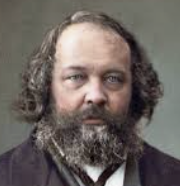
1 week 6 days ago
All religions are cruel, all founded on blood; for all rest principally on the idea of sacrifice - that is, on the perpetual immolation of humanity to the insatiable vengeance of divinity.
1 month 2 weeks ago
Write it on your heart that every day is the best day in the year.
▼
Source
source
Works and Days
2 months 1 week ago
Nothing can discourage the appetite for divinity in the heart of man.
2 months 2 weeks ago
Whereas the man of action binds his life to reason and its concepts so that he will not be swept away and lost, the scientific investigator builds his hut right next to the tower of science so that he will be able to work on it and to find shelter for himself beneath those bulwarks which presently exist. And he requires shelter, for there are frightful powers which continuously break in upon him, powers which oppose scientific "truth" with completely different kinds of "truths" which bear on their shields the most varied sorts of emblems.
2 months 2 weeks ago
The natural way of doing this [seeking scientific knowledge or explanation of fact] is to start from the things which are more knowable and obvious to us and proceed towards those which are clearer and more knowable by nature; for the same things are not 'knowable relatively to us' and 'knowable' without qualification. So in the present inquiry we must follow this method and advance from what is more obscure by nature, but clearer to us, towards what is more clear and more knowable by nature. Now what is to us plain and obvious at first is rather confused masses, the elements and principles of which became known to us by later analysis...
2 weeks 2 days ago
Africa, time out of mind, had been in a state of slavery, therefore the inhabitants only changed one species of slavery for another. However, he was sorry to say, that, in changing from African to European slavery, they generally changed much for the worse, which certainly was a matter of reproach somewhere, and deserved serious consideration.
▼
Source
source
Speech in the House of Commons (5 June 1777), quoted in The Works and Speeches of Edmund Burke, Volume III: Party, Parliament, and the American War, 1774-1780, eds. Warren M. Elofson and John A. Woods (1981), p. 341
2 months 1 week ago
Query: How to contrive not to waste one's time? Answer: By being fully aware of it all the while. Ways in which this can be done: By spending one's days on an uneasy chair in a dentist's waiting room; by remaining on one's balcony all a Sunday afternoon; by travelling by the longest and least-convenient train routes, and of course standing all the way; by queueing at the box-office of theatres and then not booking a seat.

2 months 1 week ago
The dullness of fact is the mother of fiction.
1 month 2 weeks ago
Pleasure is in itself a good; nay, even setting aside immunity from pain, the only good: pain is in itself an evil; and, indeed, without exception, the only evil; or else the words good and evil have no meaning. And this is alike true of every sort of pain, and of every sort of pleasure.
▼
Source
source
Ch. 10: Of Motives
1 month 2 weeks ago
As soon as the land of any country has all become private property, the landlords, like all other men, love to reap where they never sowed, and demand a rent even for its natural produce.
▼
Source
source
Chapter VI, p. 60.
2 weeks 1 day ago
Who am I? Subject and object in one - contemplating and contemplated, thinking and thought of. As both must I have become what I am.
▼
Source
source
Jane Sinnett, trans 1846 p. 71

3 weeks 1 day ago
All things are in all.
▼
Source
source
V 9; as translated by Dorothea Waley Singer
CivilSimian.com created by AxiomaticPanic, CivilSimian, Kalokagathia