

1 week ago
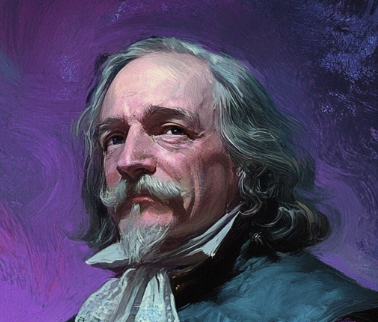
Power as is really divided, and as dangerously to all purposes, by sharing with another an Indirect Power, as a Direct one.
▼
Source
source
The Third Part, Chapter 42, p. 315

1 month 1 week ago
When I was a student in the 1950s, I read Husserl, Sartre, Merleau-Ponty. When you feel an overwhelming influence, you try to open a window. Paradoxically enough, Heidegger is not very difficult for a Frenchman to understand. When every word is an enigma, you are in a not-too-bad position to understand Heidegger. Being and Time is difficult, but the more recent works are clearer. Nietzsche was a revelation to me. I felt that there was someone quite different from what I had been taught. I read him with a great passion and broke with my life, left my job in the asylum, left France: I had the feeling I had been trapped. Through Nietzsche, I had become a stranger to all that.
▼
Source
source
Truth, Power, Self : An Interview with Michel Foucault
1 month 1 week ago
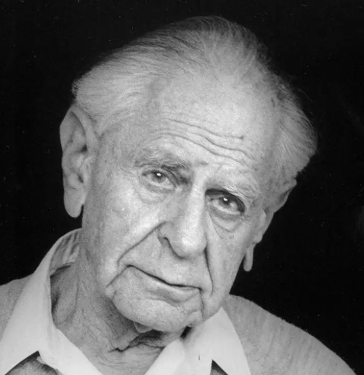
Science must begin with myths, and with the criticism of myths.
▼
Source
source
Ch. 1 "Science : Conjectures and Refutations", Section VII
1 week 4 days ago
The whole nature of man presupposes woman, both physically and spiritually. His system is tuned into woman from the start, just as it is prepared for a quite definite world where there is water, light, air, salt, carbohydrates etc.
▼
Source
source
"Two Essays in Analytical Psychology" In CW 7: P. 188
1 month 2 weeks ago
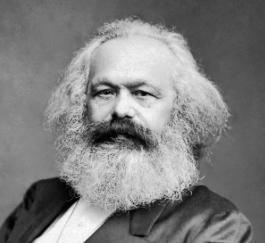
The process is so complicated that it offers ever so many occasions for running abnormally.
▼
Source
source
Vol. II, Ch. XXI, p. 500.
1 month 4 days ago
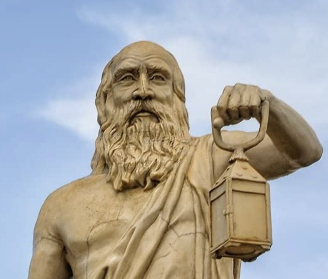
Asked where he came from, he said, "I am a citizen of the world."
▼
Source
source
Diogenes Laërtius, vi. 63
Just now
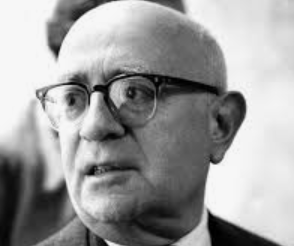
It suffices to remember how many sorrows he is spared who no longer thinks too many thoughts, how much more "in accordance with reality" a person behaves when he affirms that the real is the right, how much more capacity to use the machinery falls to the person who integrates himself with it uncomplainingly.
▼
Source
source
p. 286
1 month 2 weeks ago
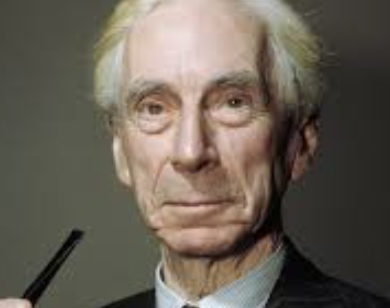
Why in any case, this glorification of man? How about lions and tigers? They destroy fewer animals or human lives than we do, and they are much more beautiful than we are. How about ants? They manage the Corporate State much better than any Fascist. Would not a world of nightingales and larks and deer be better than our human world of cruelty and injustice and war? The believers in Cosmic Purpose make much of our supposed intelligence, but their writings make one doubt it. If I were granted omnipotence, and millions of years to experiment in, I should not think Man much to boast of as the final result of all my efforts.
▼
Source
source
Religion and Science, 1935
2 months 4 days ago
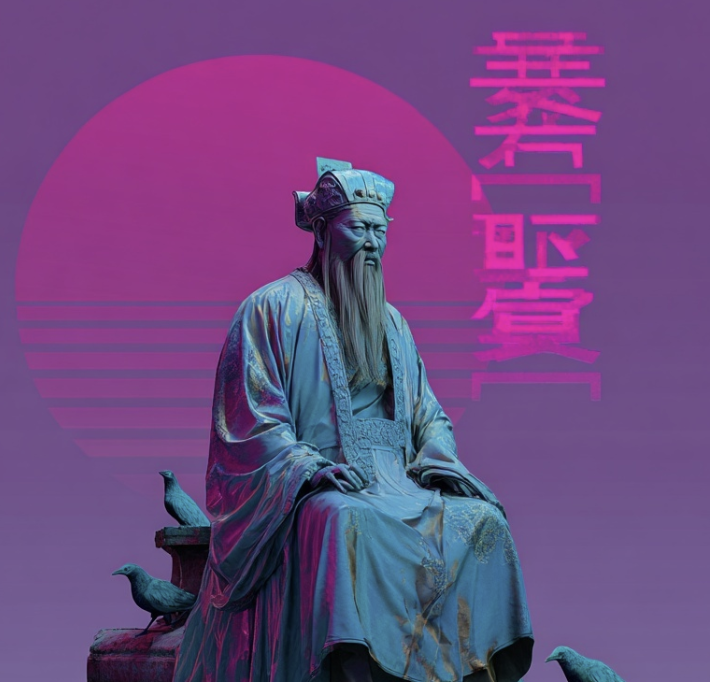
The superior man, when resting in safety, does not forget that danger may come. When in a state of security he does not forget the possibility of ruin. When all is orderly, he does not forget that disorder may come. Thus his person is not endangered, and his States and all their clans are preserved.
1 day ago
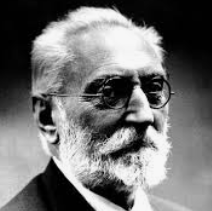
Faith makes us live by showing us that life, although it is dependent upon reason, has its well spring and source of power elsewhere, in something supernatural and miraculous. Cournot the mathematician, a man of singularly well-balanced and scientifically equipped mind has said that it is this tendency towards the supernatural and miraculous that gives life, and that when it is lacking, all the speculations of reason lead to nothing but affliction of the spirit. ...And in truth we wish to live.
1 week 5 days ago
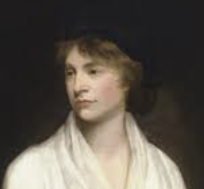
It is justice, not charity, that is wanting in the world.
▼
Source
source
Ch. 4

2 weeks 6 days ago
Be substantially great in thyself, and more than thou appearest unto others.
▼
Source
source
Part I, Section XIX
2 weeks 1 day ago
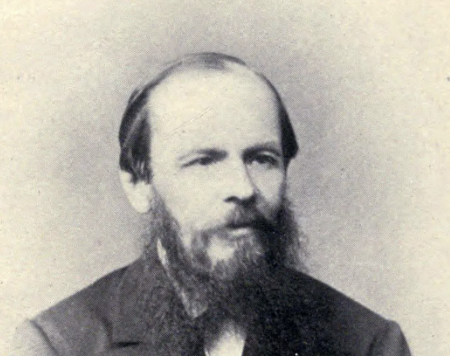
Is it really not possible to touch the gaming table without being instantly infected by superstition?
1 month 1 week ago
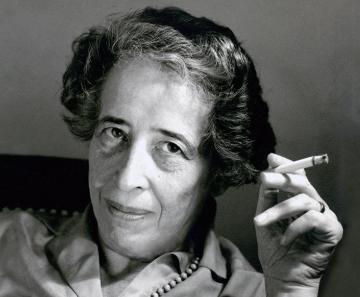
Power and violence are opposites; where the one rules absolutely, the other is absent. Violence appears where power is in jeopardy, but left to its own course it ends in power's disappearance.
▼
Source
source
"On Violence"
1 month 2 weeks ago
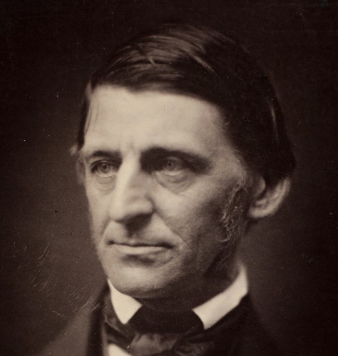
We are reformers in spring and summer; in autumn and winter we stand by the old - reformers in the morning, conservatives at night. Reform is affirmative, conservatism is negative; conservatism goes for comfort, reform for truth.
▼
Source
source
p. 223
2 weeks 1 day ago
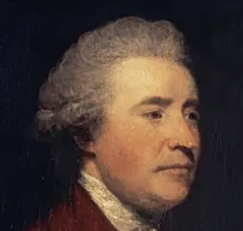
...my extreme anxiety about the Object of our common sollicitude and my clear and decided conviction, that there is one part of the War, which instead of being postponed and considered in a secondary light, ought to have priority over every other, and requires our most early and our most careful attention; I mean La Vendée. ... This is a War directly against Jacobinism and its principles. It strikes at the Enemy in his weakest and most vulnerable part. At La Vendée with infinitely less Charge, we may make an impression likely to be decisive. This goes to the heart of the Business.
▼
Source
source
Letter to the Home Secretary Henry Dundas (8 October 1793), quoted in P. J. Marshall and John A. Woods (eds.)

1 month 3 weeks ago
...it is the peculiar and perpetual error of the human understanding to be more moved and excited by affirmatives than by negatives...
▼
Source
source
Aphorism 46
1 week ago
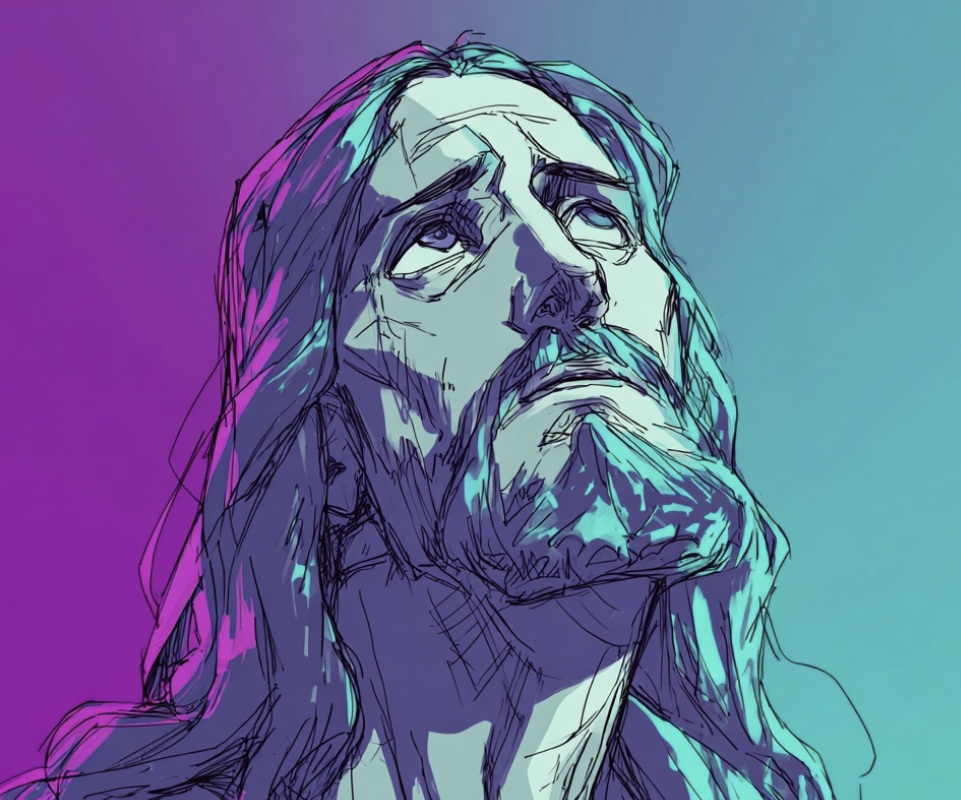
You have heard that it was said to those of old, 'You shall not commit adultery.' But I say to you that whoever looks at a woman to lust for her has already committed adultery with her in his heart. If your right eye causes you to sin, pluck it out and cast it from you; for it is more profitable for you that one of your members perish, than for your whole body to be cast into hell. And if your right hand causes you to sin, cut it off and cast it from you; for it is more profitable for you that one of your members perish, than for your whole body to be cast into hell.
▼
Source
source
Exodus 20:14, Seventh Commandment Matthew 5:27-30 (NKJV)
1 month 2 weeks ago
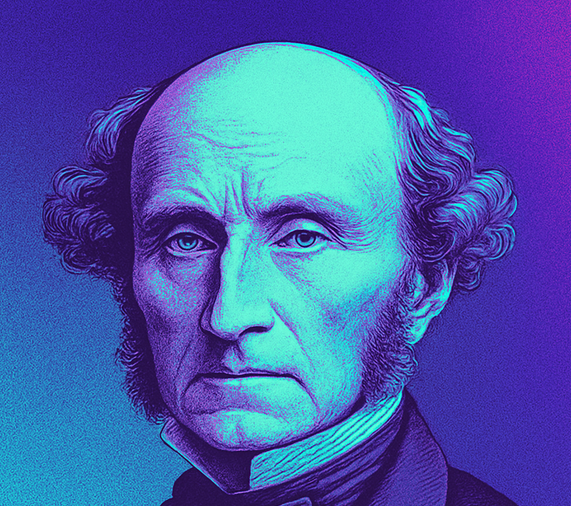
May it not be the fact that mankind, who after all are made up of single human beings, obtain a greater sum of happiness when each pursues his own, under the rules and conditions required by the good of the rest, than when each makes the good of the rest his only object, and allows himself no personal pleasures not indispensable to the preservation of his faculties? The regimen of a blockaded town should be cheerfully submitted to when high purposes require it, but is it the ideal perfection of human existence?
▼
Source
source
Auguste Comte and Positivism, p. 142
2 months 2 weeks ago
Since the science of nature is conversant with magnitudes, motion, and time, each of which must necessarily be either infinite or finite...[we] should speculate the infinite, and consider whether it is or not; and if it is what it is. ...[A]ll those who appear to have touched on a philosophy of this kind... consider it as a certain principle of beings. Some, indeed, as the Pythagoreans and Plato, consider it, per se, not as being an accident to any thing else, but as having an essential subsistence... the Pythagoreans... consider the infinite as subsisting in sensibles; for they do not make number to be separate; and they assert that what is beyond the heavens is infinite; but Plato says that beyond the heavens there is not any body, nor ideas, because these are no where: he affirms, however, that the infinite is both in sensibles, and in ideas. ...Plato establishes two infinities, viz. the great and the small.
2 weeks ago
We have a priori reasons for believing that in every sentence there is some one order of words more effective than any other; and that this order is the one which presents the elements of the proposition in the succession in which they may be most readily put together.
▼
Source
source
Pt. I, sec. 3, "The Principle of Economy Applied to Sentences"
2 weeks 1 day ago
When he entered into the Whig party, he did not conceive that they pretended to any discoveries. They did not affect to be better Whigs, than those were who lived in the days in which principle was put to the test. Some of the Whigs of those days were then living. They were what the Whigs had been at the Revolution; what they had been during the reign of queen Anne; what they had been at the accession of the present royal family.
▼
Source
source
p. 409

1 month 4 weeks ago
So clearly will truths kindle light for truths.
▼
Source
source
Book I, line 1117 (tr. W. H. D. Rouse and M. F. Smith)
1 month 2 weeks ago
The very cannibalism of the counterrevolution will convince the nations that there is only one way in which the murderous death agonies of the old society and the bloody birth throes of the new society can be shortened, simplified and concentrated, and that way is revolutionary terror.
▼
Source
source
"The Victory of the Counter-Revolution in Vienna," Neue Rheinische Zeitung, 7 November 1848.

3 weeks 5 days ago
We have two ears and one mouth, so we should listen more than we say.
▼
Source
source
As quoted in Diogenes Laërtius Lives and Opinions of Eminent Philosophers, vii. 23.

1 month 2 weeks ago
You need only look around you, replied PHILO, to satisfy yourself with regard to this question. A tree bestows order and organisation on that tree which springs from it, without knowing the order; an animal in the same manner on its offspring; a bird on its nest; and instances of this kind are even more frequent in the world than those of order, which arise from reason and contrivance. To say, that all this order in animals and vegetables proceeds ultimately from design, is begging the question; nor can that great point be ascertained otherwise than by proving, a priori, both that order is, from its nature, inseparably attached to thought; and that it can never of itself, or from original unknown principles, belong to matter.
▼
Source
source
Philo to Demea, Part VII
1 month 2 weeks ago
The art of being wise is the art of knowing what to overlook.
▼
Source
source
Ch. 22
1 month 2 weeks ago
People who originally have no means but are ultimately able to earn a great deal, through whatever talents they may possess, almost always come to think that these are permanent capital and that what they gain through them is interest. Accordingly, they do not put aside part of their earnings to form a permanent capital, but spend their money as fast as they earn it. But they are then often reduced to poverty because their earnings decrease or come to an end after their talent, which was of a transitory nature, is exhausted, as happens, for example, in the case of almost all the fine arts; or because it could be brought to bear only under a particular set of circumstances that has ceased to exist.
▼
Source
source
E. Payne, trans. (1974) Vol. 1, p. 348
1 month 2 weeks ago
We have to learn to think in a new way. We have to learn to ask ourselves, not what steps can be taken to give military victory to whatever group we prefer, for there no longer are such steps; the question we have to ask ourselves is: what steps can be taken to prevent a military contest of which the issue must be disastrous to all parties?

1 week 3 days ago
When you have understood that nothing is, that things do not even deserve the status of appearances, you no longer need to be saved, you are saved, and miserable forever.
1 month 2 weeks ago
That a joint stock company should be able to carry on successfully any branch of foreign trade, when private adventurers can come into any sort of open and fair competition with them, seems contrary to all experience.
▼
Source
source
Chapter I, Part III, Article I, p. 810.

1 month 1 week ago
Some day you will be old enough to start reading fairy tales again.
▼
Source
source
The Lion, the Witch and the Wardrobe (1950), Dedication: "To Lucy Barfield"
1 day ago
Not without reason did he who had the right to do so speak of the foolishness of the cross. Foolishness, without a doubt, foolishness. And the American humorist, Oliver Wendell Holmes, was not altogether wide of the mark in making one of the characters in his ingenious conversations say that he thought better of those who were confined in a lunatic asylum on account of religious mania than of those who, while professing the same religious principles, kept their wits and appeared to enjoy life very well outside the asylums. But those who are at large, are they not really, thanks to God, mad too? Are there not mild madnesses, which not only permit us to mix with our neighbors without danger to society, but which rather enable us to do so, for by means of them we are able to attribute a meaning and finality to life and society?
1 month 2 weeks ago
By means of ever more effective methods of mind-manipulation, the democracies will change their nature; the quaint old forms- elections, parliaments, Supreme Courts and all the rest-will remain. The underlying substance will be a new kind of non-violent totalitarianism. All the traditional names, all the hallowed slogans will remain exactly what they were in the good old days. Democracy and freedom will be the theme of every broadcast and editorial-but democracy and freedom in a strictly Pickwickian sense. Meanwhile the ruling oligarchy and its highly trained elite of soldiers, policemen, thought-manufacturers and mind-manipulators will quietly run the show as they see fit.
▼
Source
source
Chapter 3, p. 25

3 weeks 5 days ago
The most momentous thing in human life is the art of winning the soul to good or to evil.
▼
Source
source
As quoted in Lives and Opinions of Eminent Philosophers, as translated by Robert Drew Hicks (1925)
1 day ago
To say that everything is idea or that everything is spirit, is the same as saying that everything is matter or that everything is energy, for if everything is idea or spirit, just as my consciousness is, it is not plain why the diamond should not endure for ever, if my consciousness, because it is idea or spirit, endures forever.
1 month 2 weeks ago
There is one very serious defect to my mind in Christ's moral character, and that is that He believed in hell. I do not myself feel that any person who is really profoundly humane can believe in everlasting punishment.
▼
Source
source
"The Moral Problem"
1 month 2 weeks ago
We forfeit three-fourths of ourselves in order to be like other people.
▼
Source
source
As attributed in Dictionary of Quotations from Ancient and Modern English and Foreign Sources (1899) by James Wood, p. 624
1 month 2 weeks ago
The sublime is excited in me by the great stoical doctrine, Obey thyself.
▼
Source
source
p. 14

1 month 1 week ago
I squander untold effort making an arrangement of my thoughts that may have no value whatever.
▼
Source
source
p. 33e
1 month 5 days ago
A person may be greedy, envious, cowardly, cold, ungenerous, unkind, vain, or conceited, but behave perfectly by a monumental effort of will.
▼
Source
source
"Moral Luck" (1976), p. 32.
1 month 1 week ago
I am almost inclined to set it up as a canon that a children's story which is enjoyed only by children is a bad children's story. The good ones last. A waltz which you can like only when you are waltzing is a bad waltz.
▼
Source
source
"On Three Ways of Writing for Children" (1952) - in Of Other Worlds: Essays and Stories (1967), p. 24
1 month 2 weeks ago
The aggregate capital appears as the capital stock of all individual capitalists combined. This joint stock company has in common with many other stock companies that everyone knows what he puts in, but not what he will get out of it.
▼
Source
source
Vol. II, Ch. XX, p. 437.
2 weeks 5 days ago
The pit of a theatre is the one place where the tears of virtuous and wicked men alike are mingled.
1 week ago
Thou shalt do no murder, Thou shalt not commit adultery, Thou shalt not steal, Thou shalt not bear false witness, Honour thy father and thy mother: and, Thou shalt love thy neighbour as thyself.
▼
Source
source
19:18-19 (KJV)
1 week 3 days ago
Opinions, yes; convictions, no. That is the point of departure for an intellectual pride.
1 month 2 weeks ago
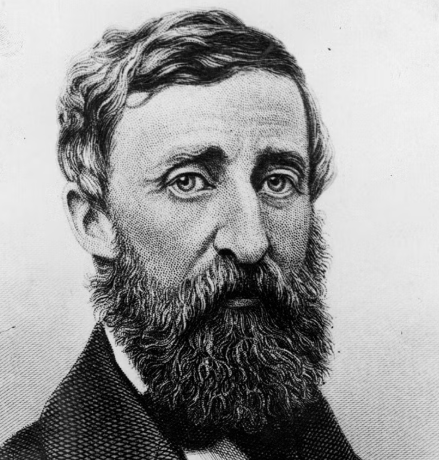
There are various, nay, incredible faiths; why should we be alarmed at any of them? What man believes, God believes.

1 month 2 weeks ago
Let me have none of your Popish stuff! Get away with you, good morning.
▼
Source
source
Last words (June 1809), as quoted in The Fortnightly, vol. 25; vol. 31, p. 398
1 week ago
What is exalted among men is an abomination in the sight of God.
▼
Source
source
16:15 ESV

1 month 2 weeks ago
It is easier to discover a deficiency in individuals, in states, and in providence, than to see their real import or value.
CivilSimian.com created by AxiomaticPanic, CivilSimian, Kalokagathia