

2 weeks 6 days ago
A pair of statements may be taken conjunctively or disjunctively; for example, "It lightens and it thunders," is conjunctive, "It lightens or it thunders" is disjunctive. Each such individual act of connecting a pair of statements is a new monad for the mathematician.
▼
Source
source
p. 268
2 months 2 weeks ago
Natural justice is a symbol or expression of usefulness, to prevent one person from harming or being harmed by another.

1 month 2 weeks ago
The usage of the words "public" and "public sphere" betrays a multiplicity of concurrent meanings. Their origins go back to various historical phases and, when applied synchronically to the conditions of a bourgeois society that is industrially advanced and constituted as a social-welfare state, they fuse into a clouded amalgam. Yet the very conditions that make the inherited language seem inappropriate appear to require these words, however confused their employment.
▼
Source
source
p. 1 as cited in: Gandy, M (1997) "Ecology, modernity and the intellectual legacy of the Frankfurt School". In: Light, A and Smith, JM, (eds.) Space, Place and Environmental Ethics. p. 240

2 weeks 3 days ago
But I say unto you, That whosoever is angry with his brother without a cause shall be in danger of the judgment: and whosoever shall say to his brother, Raca, shall be in danger of the council: but whosoever shall say, Thou fool, shall be in danger of hell fire.
▼
Source
source
5:22, King James Version.

2 months 1 week ago
Now what has been said about the Jews is also to be understood about Cahorsins, and anyone else depending upon the depravity of usury.
▼
Source
source
art. 4

2 months 3 weeks ago
It pays to be obvious, especially if you have a reputation for subtlety.
2 months 3 weeks ago
We can hope that the ways of peace will attract the Arabic nations, for their territory and opportunities are broad enough for immeasurable advance, if the energies vented in spleen, are turned instead to a modernisation of the technology, a restoration of the soil, and a renovation of the economic, social, and political structure of those great and venerable lands.
1 month 2 weeks ago
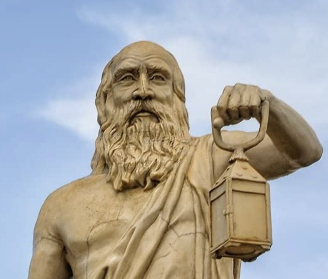
When some one boasted that at the Pythian games he had vanquished men, Diogenes replied, "Nay, I defeat men, you defeat slaves."
▼
Source
source
Diogenes Laërtius, vi. 33, 43
3 weeks 1 day ago
Women are systematically degraded by receiving the trivial attentions which men think it manly to pay to the sex, when, in fact, men are insultingly supporting their own superiority.
▼
Source
source
Ch. 4

1 month 3 weeks ago
There is something which unites magic and applied science while separating both from the wisdom of earlier ages. For the wise men of old the cardinal problem had been how to conform the soul to reality, and the solution had been knowledge, self-discipline, and virtue. For magic and applied science alike the problem is how to subdue reality to the wishes of men.
1 month 3 weeks ago
Most books belong to the house and streets only, and in the fields their leaves feel very thin.
1 month 3 weeks ago
The first intellectual operation in which I arrived at any proficiency, was dissecting a bad argument, and finding in what part the fallacy lay: and though whatever capacity of this sort I attained was due to the fact that it was an intellectual exercise in which I was most perseveringly drilled by my father, yet it is also true that the school logic, and the mental habits acquired in studying it, were among the principal instruments of this drilling. I am persuaded that nothing, in modern education, tends so much, when properly used, to form exact thinkers, who attach a precise meaning to words and propositions, and are not imposed on by vague, loose, or ambiguous terms. The boasted influence of mathematical studies is nothing to it; for in mathematical processes, none of the real difficulties of correct ratiocination occur.
▼
Source
source
(p. 19)

1 month 2 weeks ago
Tomorrow we will be back on the vast ocean.
▼
Source
source
The Routledge Dictionary of Latin Quotations: The Illiterati's Guide to Latin Maxims, Mottoes, Proverbs and Sayings

1 month 6 days ago
As long as Man continues to be the ruthless destroyer of lower living beings, he will never know health or peace. For as long as men massacre animals, they will kill each other. Indeed, he who sows the seed of murder and pain cannot reap joy and love.
▼
Source
source
Attribution to Pythagoras by Ovid, as quoted in The Extended Circle: A Dictionary of Humane Thought (1985) by Jon Wynne-Tyson, p. 260; also in Vegetarian Times, No. 168 (August 1991), p. 4
2 months 1 week ago
When I see someone in anxiety, I say to myself, What can it be that this fellow wants? For if he did not want something that was outside of his control, how could he still remain in anxiety?
▼
Source
source
Book II, ch. 13, 1.
1 week 4 days ago
In the most secret chamber of the spirit of him who believes himself convinced that death puts an end to his personal consciousness, his memory, for ever, and all unknown to him perhaps, there lurks a shadow, a vague shadow, a shadow of uncertainty, and while he says within himself, "Well, let us live this life that passes away, for there is no other!" the silence of this secret chamber speaks to him and murmurs, "Who knows!... " These voices are like the humming of a mosquito when the south-west wind roars through the trees in the wood; we cannot distinguish this faint humming, yet nevertheless, merged in the clamor of the storm, it reaches the ear.
2 months 3 weeks ago
Outside intelligences, exploring the Solar System with true impartiality, would be quite likely to enter the Sun in their records thus: Star X, spectral class G0, 4 planets plus debris.
1 month 3 weeks ago
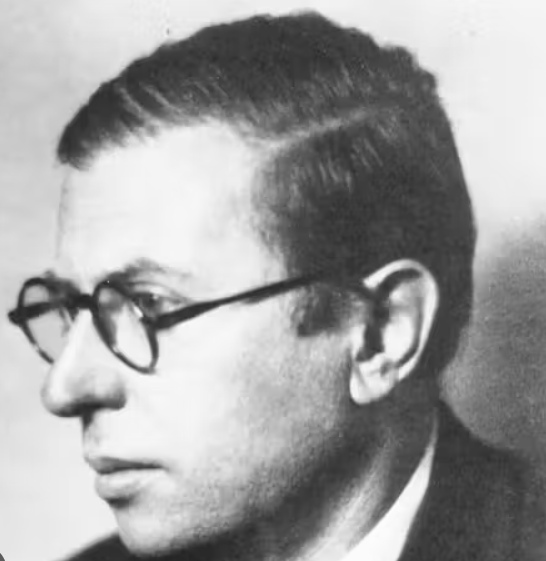
Some men are born committed to action: they do not have a choice, they have been thrown on a path, at the end of that path, an act awaits them, their act.
▼
Source
source
Act 1

1 month 2 weeks ago
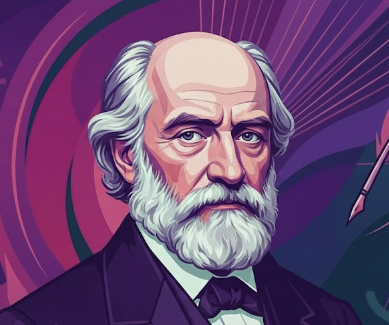
Religion is, as it were, the calm bottom of the sea at its deepest point, which remains calm however high the waves on the surface may be.
▼
Source
source
p. 53e
1 month 3 weeks ago
Opinion is like a pendulum and obeys the same law. If it goes past the centre of gravity on one side, it must go a like distance on the other; and it is only after a certain time that it finds the true point at which it can remain at rest.
▼
Source
source
Vol. 2 "Further Psychological Observations" as translated in Essays and Aphorisms (1970), as translated by R. J. Hollingdale
1 month 2 weeks ago
He was going into a theatre, meeting face to face those who were coming out, and being asked why, "This," he said, "is what I practise doing all my life."
▼
Source
source
Diogenes Laërtius, vi. 64
2 weeks 3 days ago
Whoever shall find the interpretation of these words shall not taste of death. (1) I have not a devil; but I honour my Father, and ye do dishonour me. And I seek not mine own glory: there is one that seeketh and judgeth. Verily, verily, I say unto you, If a man keep my saying, he shall never see death.
▼
Source
source
(John 8:49-51)
3 days ago
Human beings, viewed as behaving systems, are quite simple. The apparent complexity of our behavior over time is largely a reflection of the complexity of the environment in which we find ourselves.
▼
Source
source
p. 53.
1 month 3 weeks ago
Every story of conversion is the story of a blessed defeat.
▼
Source
source
Foreword to Joy Davidman's Smoke on the Mountain, 1954
1 month 4 weeks ago
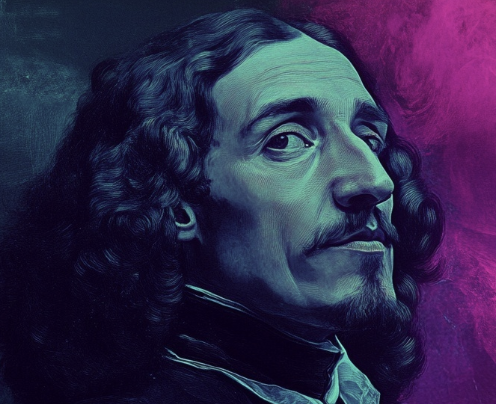
My opinion concerning God differs widely from that which is ordinarily defended by modern Christians. For I hold that God is of all things the cause immanent, as the phrase is, not transient. I say that all things are in God and move in God, thus agreeing with Paul, and, perhaps, with all the ancient philosophers, though the phraseology may be different ; I will even venture to affirm that I agree with all the ancient Hebrews, in so far as one may judge from their traditions, though these are in many ways corrupted. The supposition of some, that I endeavour to prove in the Tractatus Theologico-Politicus the unity of God and Nature (meaning by the latter a certain mass or corporeal matter), is wholly erroneous. As regards miracles, I am of opinion that the revelation of God can only be established by the wisdom of the doctrine, not by miracles, or in other words by ignorance.
▼
Source
source
Letter 21 (73) to Henry Oldenburg , November
1 month 3 weeks ago
Eh bien, continuons... Well, let's get on with it.

1 month 3 weeks ago
For nature beats in perfect tune, And rounds with rhyme her every rune, Whether she work in land or sea, Or hide underground her alchemy. Thou canst not wave thy staff in air, Or dip thy paddle in the lake, But it carves the bow of beauty there, And the ripples in rhymes the oar forsake.
▼
Source
source
Wood-notes, no. II, st. 7

2 weeks 6 days ago
Only one thing matters: learning to be the loser.
2 months 3 weeks ago
It is because you yourself fear the propaganda created, after all, only by the stupidity of your own bigots.
1 week 4 days ago
...as the great Unitarian preacher Channing pointed out, that in France and Spain there are multitudes who have proceeded from rejecting Popery to absolute atheism, because "the fact is, that false and absurd doctrines, when exposed, have a natural tendency to beget skepticism in those who receive them without reflection. None are so likely to believe too little as those who have begun by believing too much." Here is, indeed, the terrible danger of believing too much. But no! the terrible danger comes from another quarter - from seeking to believe with the reason and not with the life.
2 weeks 6 days ago
Since the only things we remember are humiliations and defeats, what is the use of all the rest?

1 month 3 weeks ago
Superstition is to religion what astrology is to astronomy, the mad daughter of a wise mother. These daughters have too long dominated the earth.
▼
Source
source
"Whether it is useful to maintain the people in superstition," Treatise on Toleration, 1763
1 month 3 weeks ago
Seeing only what is fair, Sipping only what is sweet, Thou dost mock at fate and care.
▼
Source
source
To the Humble Bee, st. 6
1 month 3 weeks ago
Freedom is the greatest of political goods. I do not say freedom is the greatest of all goods: the best things come from within-they are such things as creative art, and love, and thought. Such things can be helped or hindered by political conditions, but not actually produced by them; and freedom is, both in itself and in its relation to these other goods the best thing that political and economic conditions can secure.
▼
Source
source
Ch. V: Government and Law, p. 75
2 weeks 3 days ago
The passion of laughter is nothing else but a sudden glory arising from sudden conception of some eminency in ourselves, by comparison with the infirmities of others, or with our own formerly...
▼
Source
source
The Elements of Law, Natural and Politic Pt. I Human Nature (1640) Ch. 9

2 months 1 week ago
We are all sprung from a heavenly seed.
▼
Source
source
Book II, line 991 (tr. Munro)
1 month 3 weeks ago
The open society is one in which men have learned to be to some extent critical of taboos, and to base decisions on the authority of their own intelligence.
▼
Source
source
Vol. 1, Endnotes to the Chapters : Notes to the Introduction.
3 weeks 4 days ago
Through a wise and salutary neglect [of the colonies], a generous nature has been suffered to take her own way to perfection; when I reflect upon these effects, when I see how profitable they have been to us, I feel all the pride of power sink and all presumption in the wisdom of human contrivances melt and die away within me. My vigour relents. I pardon something to the spirit of liberty.
3 weeks 1 day ago
It is justice, not charity, that is wanting in the world.
▼
Source
source
Ch. 4
1 month 3 weeks ago
Superstition sets the whole world in flames; philosophy quenches them.
▼
Source
source
Dictionnaire philosophique (1822), "Superstition"
1 month 3 weeks ago
There was once a millionaire who bought an infinite number of pairs of shoes and, whenever he bought a pair of shoes, he also bought a pair of socks. We can make a selection choosing one out of each pair of shoes, because we can choose always the right shoe or always the left shoe. Thus, so far as the shoes are concerned, selections exist. But, as regards the socks, where there is no distinction of right and left, we cannot use this rule of selection.
▼
Source
source
pp. 93-93
2 weeks 3 days ago
The open society is one that is deemed in principle to embrace all humanity.
▼
Source
source
Chapter IV

2 months 3 weeks ago
The truth is always in the minority, and the minority is always stronger than the majority, because as a rule the minority is made up of those who actually have an opinion, while the strength of the majority is illusory, formed of that crowd which has no opinion - and which therefore the next moment (when it becomes clear that the minority is the stronger) adopts the latter's opinion, which now is in the majority, i.e. becomes rubbish by having the whole retinue and numerousness on its side, while the truth is again in a new minority.
1 month 3 weeks ago
The best authorities are unanimous in saying that a war with H-bombs might possibly put an end to the human race. It is feared that if many H-bombs are used there will be universal death, sudden only for a minority, but for the majority a slow torture of disease and disintegration. Many warnings have been uttered by eminent men of science and by authorities in military strategy. None of them will say that the worst results are certain. What they do say is that these results are possible, and no one can be sure that they will not be realized. We have not yet found that the views of experts on this question depend in any degree upon their politics or prejudices. They depend only, so far as our researches have revealed, upon the extent of the particular expert's knowledge. We have found that the men who know most are the most gloomy.

2 months 3 weeks ago
What, then, is that incalculable feeling that deprives the mind of the sleep necessary to life? A world that can be explained even with bad reasons is a familiar world. But, on the other hand, in a universe suddenly divested of illusions and lights, man feels an alien, a stranger. His exile is without remedy since he is deprived of the memory of a lost home or the hope of a promised land. This divorce between man and his life, the actor and his setting, is properly the feeling of absurdity.
1 month 4 weeks ago
Nature is satisfied with little; and if she is, I am also.
▼
Source
source
As quoted in The Story of Philosophy (1933) by Will Durant, p. 176

2 months 2 days ago
Concerning the female sorcerer. Roman law also prescribes this. Why does the law name women more than men here, even though men are also guilty of this? Because women are more susceptible to those superstitions of Satan; take Eve, for example. They are commonly called "wise women." Let them be killed.
▼
Source
source
Sermon on Exodus, 1526, WA XVI, p. 551 as quoted in Luther on Women: A Sourcebook, edited by Susan C. Karant-Nunn, Merry E. Wiesner-Hanks, (2003), p. 231
3 weeks 1 day ago
The division of Philosopher and Poet is only apparent, and to the disadvantage of both. It is a sign of disease, and of a sickly constitution.

1 month ago
For the world, I count it not an Inn, but a Hospital, and a place, not to live, but to die in.
▼
Source
source
Section 11

2 months 3 weeks ago
Unpleasant, even dangerous, qualities can be found in every nation and every individual: it is cruel to demand that the Jew be an exception. In him, these qualities may even be dangerous and revolting to an unusual degree; and perhaps the young stock-exchange Jew is altogether the most disgusting invention of mankind.
CivilSimian.com created by AxiomaticPanic, CivilSimian, Kalokagathia