

2 weeks 2 days ago
A good American makes propaganda for whatever existence has forced him to become.
▼
Source
source
"Cousins," from Him With His Foot in His Mouth and Other Stories (1984), p. 263
3 months 1 day ago
Faith is a living, bold trust in God's grace, so certain of God's favor that it would risk death a thousand times trusting in it. Such confidence and knowledge of God's grace makes you happy, joyful and bold in your relationship to God and all creatures. The Holy Spirit makes this happen through faith. Because of it, you freely, willingly and joyfully do good to everyone, serve everyone, suffer all kinds of things, love and praise the God who has shown you such grace.
▼
Source
source
An Introduction to St. Paul's Letter to the Romans fromDr. Martin Luthers Vermischte Deutsche Schriften. Johann K. Irmischer, ed. Vol. 63(Erlangen: Heyder and Zimmer, 1854), pp. 124-125. (EA 63:124-125)
2 months 3 weeks ago
...the reality of society involves the socialization of certain unrealities.
▼
Source
source
p. 455
2 months 2 weeks ago
I think of the course of human history as a long, swelling, increasingly polyphonic poem - a poem that leads up to nothing save itself. When the species is extinct, "human nature's total message" will not be a set of propositions, but a set of vocabularies - the more, and the more various, the better.
▼
Source
source
Response to Hartshorne in 'Rorty and Pragmatism, The Philosopher Responds to his Critics', p. 33
2 months 3 weeks ago
Intellectuals cannot be good revolutionaries; they are just good enough to be assassins.
▼
Source
source
Act 5, sc. 3
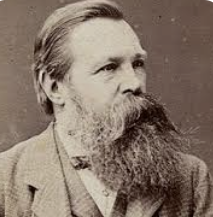
1 month 2 weeks ago
Since the communists cannot enter upon the decisive struggle between themselves and the bourgeoisie until the bourgeoisie is in power, it follows that it is in the interest of the communists to help the bourgeoisie to power as soon as possible in order the sooner to be able to overthrow it.
2 months 2 weeks ago
Rather, we heirs of Enlightenment think of enemies of liberal democracy like Nietzsche or Loyola as, to use Rawls's word, "mad." We do so because there is no way to see them as fellow citizens of our constitutional democracy, people whose life plans might, given ingenuity and good will, be fitted in with those of other citizens. They are crazy because the limits of sanity are set by what we can take seriously. This, in turn, is determined by our upbringing, our historical situation.
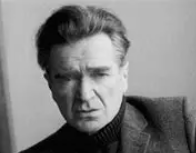
1 month 2 weeks ago
Beware of thinkers whose minds function only when they are fueled by a quotation.
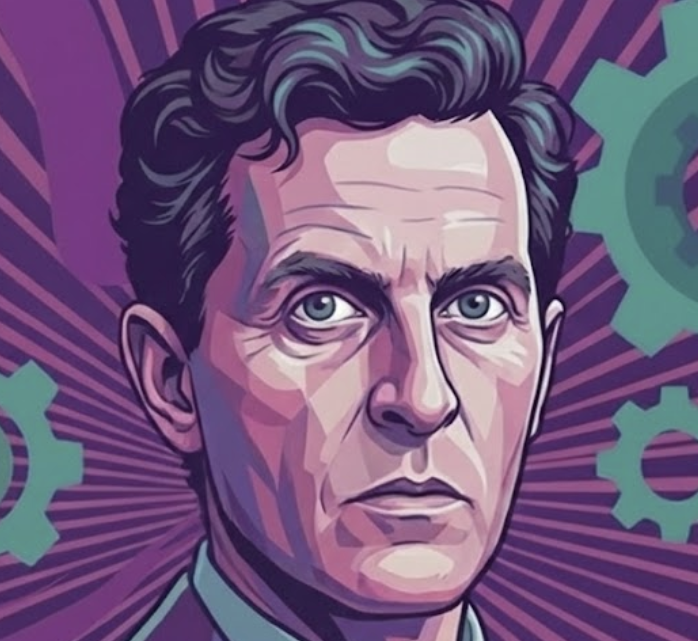
2 months 2 weeks ago
A religious symbol does not rest on any opinion. And error belongs only with opinion. One would like to say: This is what took place here; laugh, if you can.
▼
Source
source
Ch. 7 : Remarks on Frazer's Golden Bough, p. 123
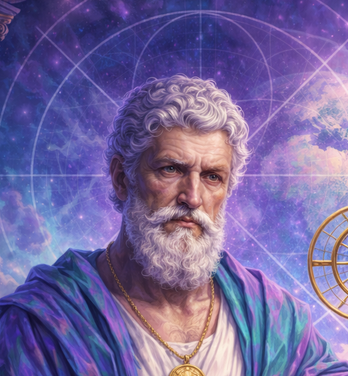
2 months 5 days ago
Time is the wisest of all things that are; for it brings everything to light.
▼
Source
source
As quoted in Diogenes Laërtius, The Lives and Opinions of Eminent Philosophers, I, 35
2 weeks 3 days ago
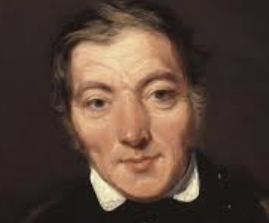
I was forced, through seeing the error of their foundation, to abandon all belief in every religion which had been taught to man. But my religious feelings were immediately replaced by the spirit of universal charity - not for a sect, or a party, or for a country or a colour - but for the human race, and with a real and ardent desire to do good.
▼
Source
source
Life of Robert Owen (1857) his autobiography, as quoted by Jim Herrick, in "Bradlaugh and Secularism: 'The Province of the Real'"

1 month 6 days ago
The strongest bulwark of authority is uniformity; the least divergence from it is the greatest crime. The wholesale mechanisation of modern life has increased uniformity a thousandfold. It is everywhere present, in habits, tastes, dress, thoughts and ideas. Its most concentrated dullness is "public opinion." Few have the courage to stand out against it. He who refuses to submit is at once labelled "queer," "different," and decried as a disturbing element in the comfortable stagnancy of modern life.
2 weeks 5 days ago
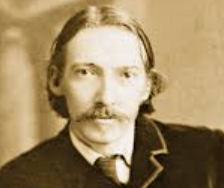
An appeal to his alarm is never a good plan to rid oneself of a spirited young man.
▼
Source
source
The Pavilion on the Links, ch. III.

1 month 2 weeks ago
Functional communication is only the outer layer of the one- dimensional universe in which man is trained to target-to translate the negative into the positive so that he can continue to function, reduced but fit and reasonably well. The institutions of free speech and freedom of thought do not hamper the mental coordination with the established reality. What is taking place is a sweeping redefinition of thought itself, of its function and content. The coordination of the individual with his society reaches into those layers of the mind where the very concepts are elaborated which are designed to comprehend the established reality. These concepts are taken from the intellectual tradition and translated into operational terms-a translation which has the effect of reducing the tension between thought and reality by weakening the negative power of thought.
▼
Source
source
p. 104

2 months ago
For nature is not merely present, but is implanted within things, distant from none; naught is distant from her except the false, and that which existed never and nowhere-nullity. And while the outer face of things changeth so greatly, there flourisheth the origin of being more intimately within all things than they themselves. The fount of all kinds, Mind, God, Being, One, Truth, Destiny, Reason, Order.
▼
Source
source
VIII 10 as translated by Dorothea Waley Singer
2 months 3 weeks ago
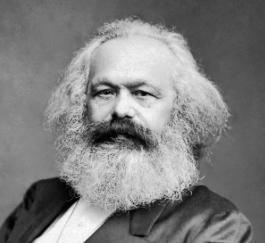
If this labourer were in possession of his own means of production, and was satisfied to live as a labourer, he need not work beyond beyond the time necessary for the reproduction of his means of subsistence, say 8 hours a day.
▼
Source
source
Vol. I, Ch. 11, pg. 336.
2 weeks 6 days ago
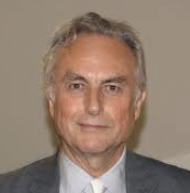
The remedy for loneliness is human fellowship, the warmth of real, live, flesh-and-blood companions and loved-ones; not prating in a vacuum to an imaginary friend for whose existence there is no vestige of serious evidence. Even an AI robot is better than that. At least ChatGPT exists, really talks back at you, will actually hold a friendly conversation. But talk to the imaginary friend which is God (Allah, Virgin Mary, Lord Krishna, Thor, Zeus, Mithras, name yours) and the only reply you'll get is conjured within your own imagination. You'll be talking to yourself, which is really rather sad, and hardly an antidote to loneliness. No Satisfying Alternative to Religion? Try Reality.
▼
Source
source
23-Apr-25
2 weeks 3 days ago
Where are these rational practices to be taught and acquired? Not within the four walls of a bare building, in which formality predominates... But in the nursery, play-ground, fields, gardens, workshops, manufactures, museums and class-rooms. ...The facts collected from all these sources will be concentrated, explained, discussed, made obvious to all, and shown in their direct application to practice in all the business of life.
▼
Source
source
3rd Part
1 month 2 weeks ago
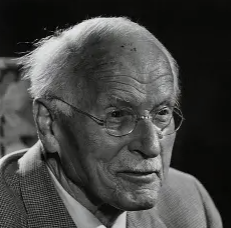
No one can flatter himself that he is immune to the spirit of his own epoch, or even that he possesses a full understanding of it. Irrespective of our conscious convictions, each one of us, without exception, being a particle of the general mass, is somewhere attached to, colored by, or even undermined by the spirit which goes through the mass. Freedom stretches only as far as the limits of our consciousness.
▼
Source
source
Paracelsus the Physician

Just now
The evidence of science and history is that humans are only ever partly and intermittently rational, but for modern humanists the solution is simple: human beings must in future be more reasonable. These enthusiasts for reason have not noticed that the idea that humans may one day be more rational requires a greater leap of faith than anything in religion. Since it requires a miraculous breach in the order of things, the idea that Jesus returned from the dead is not as contrary to reason as the notion that human beings will in future be different from how they have always been.
▼
Source
source
An Old Chaos: Humanism and Flying Saucers (p. 75)
1 month 2 weeks ago
The deep critical thinker has become the misfit of the world. This is not a coincidence. To maintain order and control you must isolate the intellectual, the sage, the philosopher, the savant before their ideas awaken people.
1 month 4 weeks ago
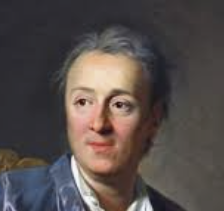
To attempt the destruction of our passions is the height of folly. What a noble aim is that of the zealot who tortures himself like a madman in order to desire nothing, love nothing, feel nothing, and who, if he succeeded, would end up a complete monster!
▼
Source
source
Ch. 5, as quoted in Selected Writings (1966) edited by Lester G. Crocker
2 weeks 6 days ago
Atheists have the intellectual courage to accept reality for what it is: wonderfully and shockingly explicable. As an atheist, you have the moral courage to live to the full the only life you're ever going to get: to fully inhabit reality, rejoice in it, and do your best finally to leave it better than you found it.
▼
Source
source
The Intellectual and Moral Courage of Atheism

2 months 2 weeks ago
I focus on popular culture because I focus on those areas where black humanity is most powerfully expressed, where black people have been able to articulate their sense of the world in a profound manner. And I see this primarily in popular culture. Why not in highbrow culture? Because the access has been so difficult. Why not in more academic forms? Because academic exclusion has been the rule for so long for large numbers of black people that black culture, for me, becomes a search for where black people have left their imprint and fundamentally made a difference in terms of how certain art forms are understood. This is currently in popular culture. And it has been primarily in music, religion, visual arts and fashion.
▼
Source
source
"Cornel West interviewed by bell hooks" in Breaking Bread: Insurgent Black Intellectual Life

1 month 3 weeks ago
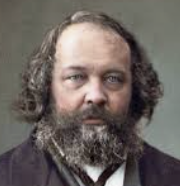
The first revolt is against the supreme tyranny of theology, of the phantom of God. As long as we have a master in heaven, we will be slaves on earth.
2 months 2 weeks ago
Even if I could by gradual degrees be transformed into a bat, nothing in my present constitution enables me to imagine what the experiences of such a future stage of myself thus metamorphosed would be like. The best evidence would come from the experience of bats, if we only knew what they were like.
▼
Source
source
p. 169.
3 days ago
If a king is energetic, his subjects will be equally energetic. If he is reckless, they will not only be reckless likewise, but also eat into his works. Besides, a reckless king will easily fall into the hands of his enemies. Hence the king shall ever be wakeful.
▼
Source
source
Book I : "Concerning Discipline" Chapter 19 "The Duties of a King"
3 months 2 weeks ago
Manhattan. Sometimes from beyond the skyscrapers, across of thousands of high walls, the cry of a tugboat finds you in your insomnia in the middle of the night, and you remember that this desert of iron and cement is an island.
1 month 3 weeks ago
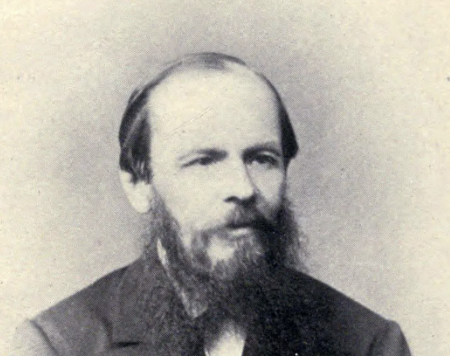
The best definition of man is: a being that goes on two legs and is ungrateful.
▼
Source
source
Part 1, Chapter 8 (tr. David Magarshack, 1950) The best definition of man is: a biped, ungrateful.
1 month 2 weeks ago
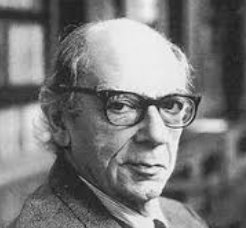
Everyone knows what made Berkeley notorious. He said that there were no material objects. He said the external world was in some sense immaterial, that nothing existed save ideas - ideas and their authors. His contemporaries thought him very ingenious and a little mad.
1 month 2 weeks ago
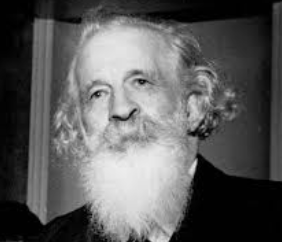
A special kind of beauty exists which is born in language, of language, and for language.
▼
Source
source
A Retrospective Glance at the Lifework of a Master of Books
2 months 1 week ago
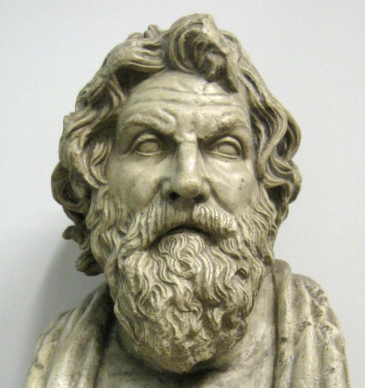
Antisthenes ... was asked on one occasion what learning was the most necessary, and he replied, "To unlearn one's bad habits."
▼
Source
source
§ 4
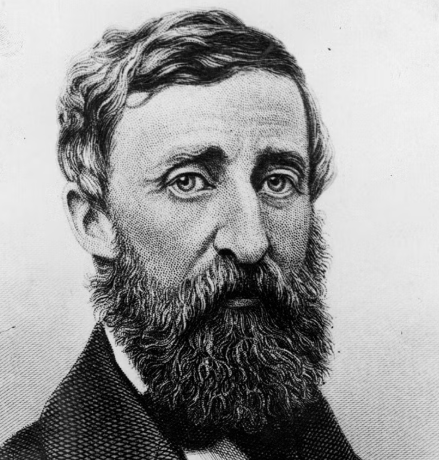
2 months 3 weeks ago
I cannot read a sentence in the book of the Hindoos without being elevated as upon the table-land of the Ghauts. It has such a rhythm as the winds of the desert, such a tide as the Ganges, and seems as superior to criticism as the Himmaleh Mounts. Even at this late hour, unworn by time with a native and inherent dignity it wears the English dress as indifferently as the Sanscrit.
▼
Source
source
August 6, 1841
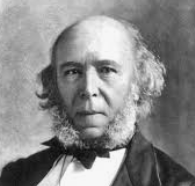
1 month 3 weeks ago
Should the believers in special creations consider it unfair thus to call upon them to describe how special creations take place, I reply that this is far less than they demand from the supporters of the Development Hypothesis. They are merely asked to point out a conceivable mode. On the other hand, they ask, not simply for a conceivable mode, but for the actual mode.
1 month 2 weeks ago
But, braggart demons, we postpone our end: how could we renounce the display of our freedom, the show of our pride?
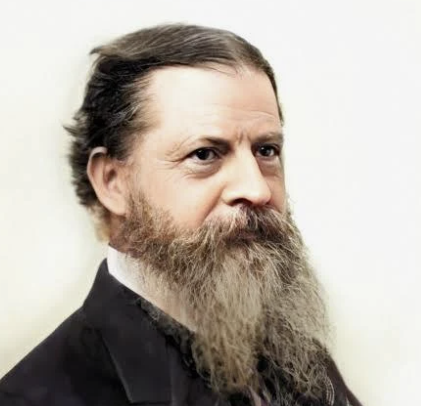
1 month 2 weeks ago
In an article published in The Monist for January, 1891, I endeavored to show what ideas ought to form the warp of a system of philosophy, and particularly emphasized that of absolute chance. In the number of April, 1892, I argued further in favor of that way of thinking, which it will be convenient to christen tychism (from τύχη, chance). A serious student of philosophy will be in no haste to accept or reject this doctrine; but he will see in it one of the chief attitudes which speculative thought may take, feeling that it is not for an individual, nor for an age, to pronounce upon a fundamental question of philosophy. That is a task for a whole era to work out. I have begun by showing that tychism must give birth to an evolutionary cosmology, in which all the regularities of nature and of mind are regarded as products of growth, and to a Schelling-fashioned idealism which holds matter to be mere specialized and partially deadened mind.
2 weeks 3 days ago
In advanced age, and in cases of disability from accident, natural infirmity or any other cause, the individual shall be supported by the colony, and receive every comfort which kindness can administer.
1 month 3 weeks ago
The Doctrine of Knowledge, apart from all special and definite knowing, proceeds immediately upon Knowledge itself, in the essential unity in which it recognises Knowledge as existing; and it raises this question in the first place - How this Knowledge can come into being, and what it is in its inward and essential Nature? The following must be apparent: - There is but One who is absolutely by and through himself, - namely, God; and God is not the mere dead conception to which we have thus given utterance, but he is in himself pure Life. He can neither change nor determine himself in aught within himself, nor become any other Being; for his Being contains within it all his Being and all possible Being, and neither within him nor out of him can any new Being arise.
2 months 2 weeks ago
Certainly it is correct to say: Conscience is the voice of God.
▼
Source
source
p. 75
2 months 3 weeks ago
Homeliness is almost as great a merit in a book as in a house, if the reader would abide there. It is next to beauty, and a very high art.
▼
Source
source
Pearls of Thought (1881) p. 32
1 week 2 days ago
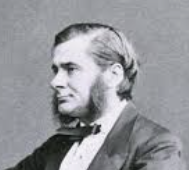
From the point of view of the moralist the animal world is on about the same level as a gladiator's show. The creatures are fairly well treated, and set to fight-whereby the strongest, the swiftest and the cunningest live to fight another day. The spectator has no need to turn his thumbs down, as no quarter is given.
▼
Source
source
(February 1888) "The Struggle for Existence: A Programme". The Nineteenth Century 23: 161-180. (quote from p. 163)
2 months 3 weeks ago
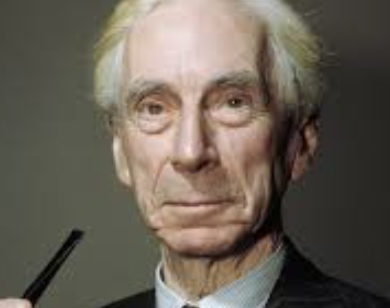
All sources of energy upon which industry depends are wasted when they are employed; and industry is expending them at a continually increasing rate. Already coal has been largely replaced by oil, and oil is being used up so fast that East and West alike conceive it necessary to their own prosperity to destroy the industry of the other. And what is true of oil is equally true of other natural resources. Every day, many square miles of forest are turned into newspaper, but there is no known process by which newspaper can be turned into forest. You will say that this need not worry us, since newspapers will be replaced by radio, but radio requires electricity, electricity requires power, and power depends upon raw materials.
▼
Source
source
Part I: Man and Nature, Ch. 4: The Limits of Human Power, p. 30
3 months 1 day ago
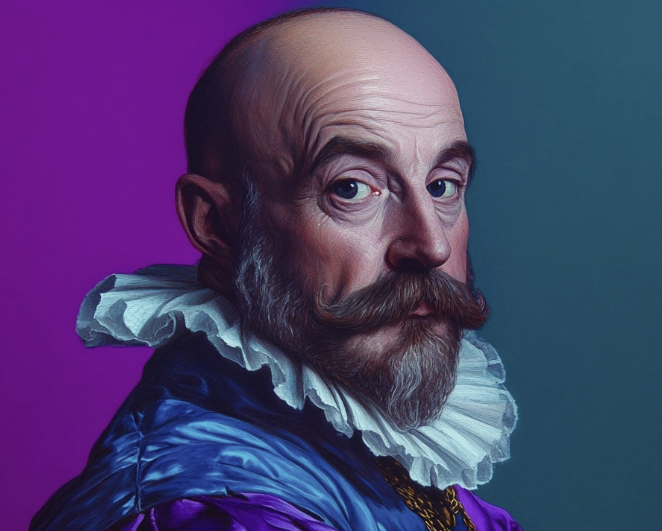
Tis the sharpness of our mind that gives the edge to our pains and pleasures.
▼
Source
source
Book I, Ch. 14
1 month 2 weeks ago
The fear of your own solitude, of its vast surface and its infinity... Remorse is the voice of solitude. And what does this whispering voice say? Everything in us that is not human anymore.
1 month 2 weeks ago
Ideas are refined and multiplied in the commerce of minds. In their splendor, images effect a very simple communion of souls.
▼
Source
source
Introduction, sect. 4
2 months 1 week ago
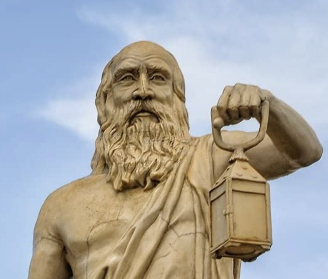
Virtue cannot dwell with wealth either in a city or in a house.
▼
Source
source
Stobaeus, iv. 31c. 88
1 week 5 days ago
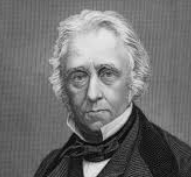
Your Constitution is all sail and no anchor.
▼
Source
source
Letter to H.S. Randall, author of a Life of Thomas Jefferson
2 months 3 weeks ago
As a philosopher, if I were speaking to a purely philosophic audience I should say that I ought to describe myself as an Agnostic, because I do not think that there is a conclusive argument by which one prove that there is not a God. On the other hand, if I am to convey the right impression to the ordinary man in the street I think that I ought to say that I am an Atheist, because, when I say that I cannot prove that there is not a God, I ought to add equally that I cannot prove that there are not the Homeric gods.
▼
Source
source
"Proof of God"
CivilSimian.com created by AxiomaticPanic, CivilSimian, Kalokagathia