

1 month 1 week ago
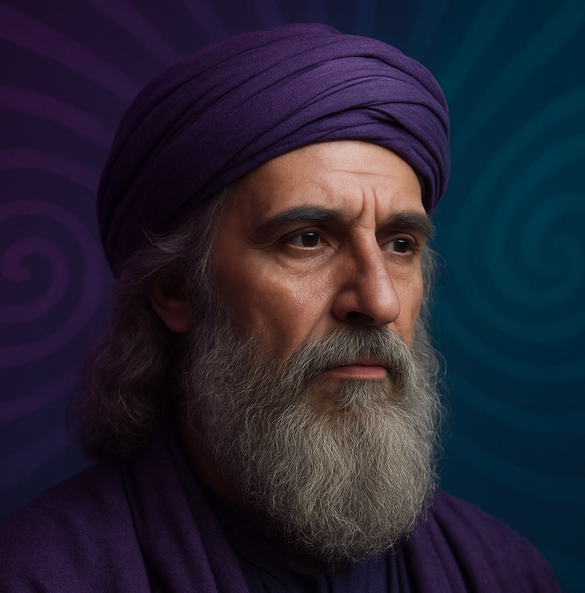
For a thinking man is where Wisdom is at home.
▼
Source
source
Ahunuvaiti Gatha; Yasna 30, 9.

2 months 3 weeks ago
Therefore create me! You, the most esteemed, cultured public, are in possession of nervus rerum gerendarum [the moving force to accomplish something]. Just a word from you, a promise to purchase what I write, or, if it is possible, so that everything can be in order immediately, a little advance payment, and I am an author; I shall remain one as long as this favor lasts.

1 month 3 weeks ago
People seem not to see that their opinion of the world is also a confession of character.
▼
Source
source
Worship
1 day ago
The true line is not between "hard" natural science and "soft" social sciences, but between precise science limited to highly abstract and simple phenomena in the laboratory and inexact science and technology dealing with complex problems in the real world.
▼
Source
source
p. 302.

1 month 3 weeks ago
It is a serious question among them whether they [Africans] are descended from monkeys or whether the monkeys come from them. Our wise men have said that man was created in the image of God. Now here is a lovely image of the Divine Maker: a flat and black nose with little or hardly any intelligence. A time will doubtless come when these animals will know how to cultivate the land well, beautify their houses and gardens, and know the paths of the stars: one needs time for everything.
▼
Source
source
Les Lettres d'Amabed (1769): Septième Lettre d'Amabed
2 months 2 weeks ago
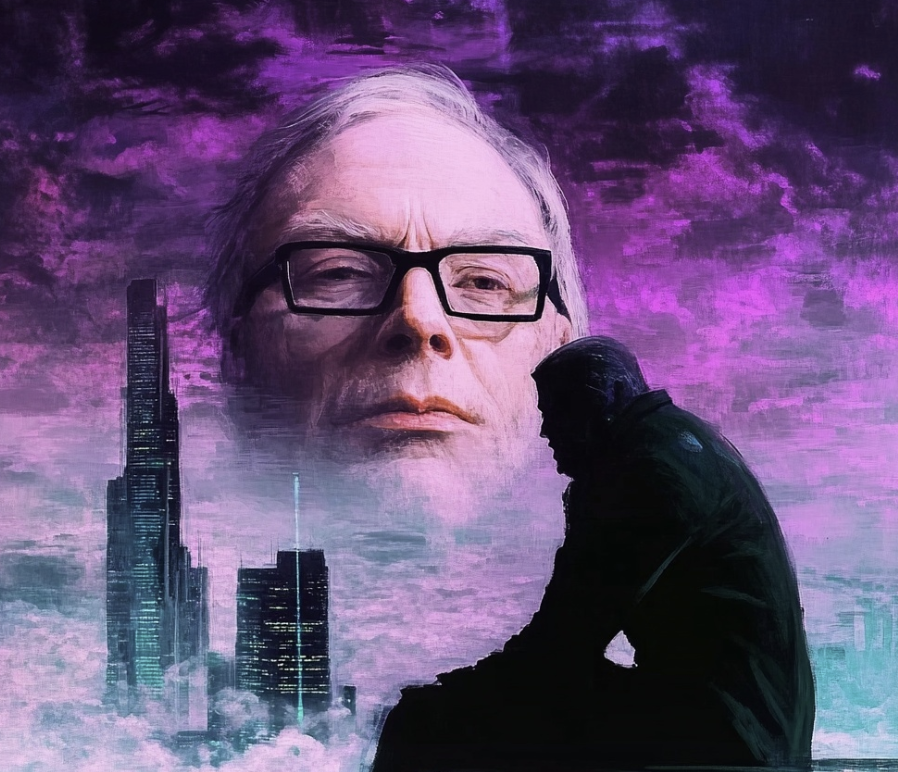
An observer studying the Solar system dispassionately, and finding himself capable of bringing the four giant planets to his notice, could reasonably say that the Solar system consisted of one star, four planets, and some traces of debris.
1 day ago
Global rationality, the rationality of neoclassical theory, assumes that the decision maker has a comprehensive, consistent utility function, knows all the alternatives that are available for choice, can compute the expected value of utility associated with each alternative, and chooses the alternative that maximizes expected utility. Bounded rationality, a rationality that is consistent with our knowledge of actual human choice behavior, assumes that the decision maker must search for alternatives, has egregiously incomplete and inaccurate knowledge about the consequences of actions, and chooses actions that are expected to be satisfactory (attain targets while satisfying constraints).
▼
Source
source
Simon (1997, p. 17); As cited in: Gustavo Barros (2010, p. 460).
1 week 1 day ago
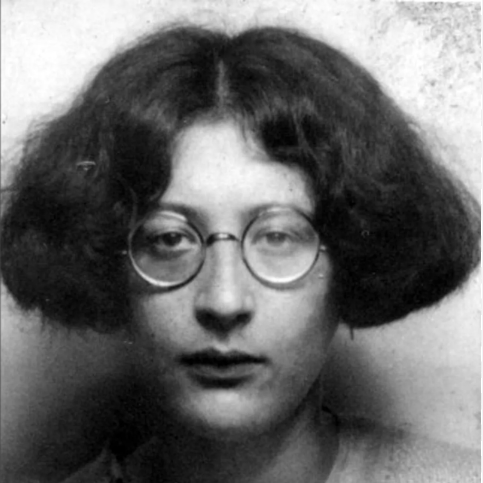
The might which kills outright is an elementary and coarse form of might. How much more varied in its devices; how much more astonishing in its effects is that other which does not kill; or which delays killing.
▼
Source
source
in The Simone Weil Reader, p. 155

2 weeks 4 days ago
What can be said, lacks reality. Only what fails to make its way into words exists and counts.
1 month 1 week ago
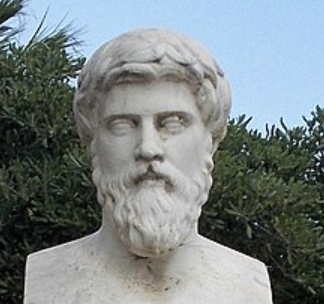
Scilurus on his death-bed, being about to leave four-score sons surviving, offered a bundle of darts to each of them, and bade them break them. When all refused, drawing out one by one, he easily broke them,-thus teaching them that if they held together, they would continue strong; but if they fell out and were divided, they would become weak.
▼
Source
source
31 Scilurus
2 weeks 4 days ago
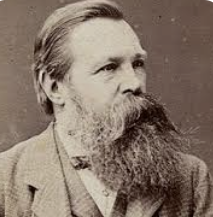
Industry controlled by society as a whole, and operated according to a plan, presupposes well-rounded human beings, their faculties developed in balanced fashion, able to see the system of production in its entirety.
1 month 3 weeks ago
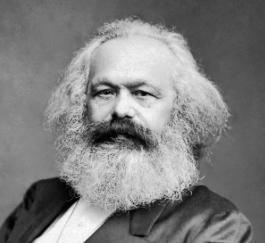
An increase in the productivity of labour means nothing more than that the same capital creates the same value with less labour, or that less labour creates the same product with more capital.
▼
Source
source
Notebook IV, The Chapter on Capital, p. 308.

1 month 3 weeks ago
The more you obey your conscience, the more your conscience will demand of you.
▼
Source
source
Book IV, Chapter 8, "Is Christianity Hard or Easy?"
1 month 3 weeks ago
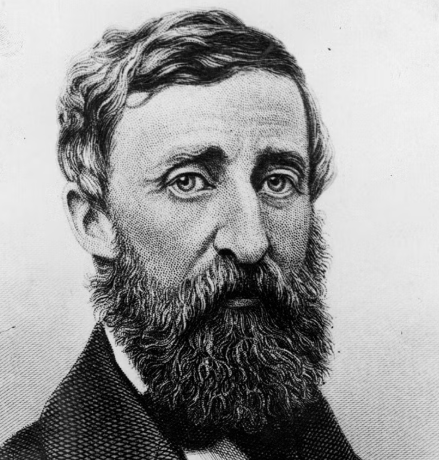
Men and boys are learning all kinds of trades but how to make men of themselves. They learn to make houses; but they are not so well housed, they are not so contented in their houses, as the woodchucks in their holes. What is the use of a house if you haven't got a tolerable planet to put it on? - If you cannot tolerate the planet that it is on? Grade the ground first. If a man believes and expects great things of himself, it makes no odds where you put him, or what you show him ... he will be surrounded by grandeur. He is in the condition of a healthy and hungry man, who says to himself, - How sweet this crust is!
▼
Source
source
Letter to Harrison Blake (20 May 1860); published in Familiar Letters, 1865
1 month 3 weeks ago
They [Christians] believe that the living, dynamic activity of love has been going on in God forever and has created everything else. And that, by the way, is perhaps the most important difference between Christianity and all other religions: that in Christianity God is not an impersonal thing nor a static thing-not even just one person-but a dynamic pulsating activity, a life, a kind of drama, almost, if you will not think me irreverent, a kind of dance ... (The) pattern of this three-personal life is ... the great fountain of energy and beauty spurting up at the very center of reality.
▼
Source
source
Book IV, Chapter 4, "Good Infection"
1 month 3 weeks ago
Change alone is eternal, perpetual, immortal.
▼
Source
source
Unverified attribution noted in Respectfully Quoted: A Dictionary of Quotations (1993), ed. Suzy Platt, Library of Congress, p. 39;
1 month 3 weeks ago
A man must always live by his work, and his wages must at least be sufficient to maintain him. They must even upon most occasions be somewhat more, otherwise it would be impossible for him to bring up a family, and the race of such workmen could not last beyond the first generation.
▼
Source
source
Chapter VIII, p. 81.
2 weeks 1 day ago
No man's error becomes his own Law; nor obliges him to persist in it.
▼
Source
source
The Second Part, Chapter 26, p. 144
2 weeks 1 day ago
Adam came from great power and great wealth, but he was not worthy of you. For had he been worthy, [he would] not [have tasted] death.
2 weeks 4 days ago
Detachment from the world as an attachment to the ego... Who can realize the detachment in which you are as far away from yourself as you are from the world?
2 weeks 4 days ago
What does the future, that half of time, matter to the man who is infatuated with eternity?
1 month 3 weeks ago
The boundaries of the species, whereby men sort them, are made by men.
▼
Source
source
Book III, Ch. 6, sec. 37
1 week 1 day ago
But if Germany, thanks to Hitler and his successors, were to enslave the European nations and destroy most of the treasures of their past, future historians would certainly pronounce that she had civilized Europe.
▼
Source
source
p. 124

1 month 3 weeks ago
A religious creed differs from a scientific theory in claiming to embody eternal and absolutely certain truth, whereas science is always tentative, expecting that modification in its present theories will sooner or later be found necessary, and aware that its method is one which is logically incapable of arriving at a complete and final demonstration.
▼
Source
source
Religion and Science (1935), Ch. I: Ground of Conflict

1 month 3 weeks ago
What good would it be to possess the whole universe if one were its only survivor?
▼
Source
source
A Lasting Peace Through the Federation of Europe, 1756
3 weeks 2 days ago
If you were to destroy in mankind the belief in immortality, not only love but every living force maintaining the life of the world would at once be dried up. Moreover, nothing then would be immoral, everything would be lawful, even cannibalism.
▼
Source
source
Book II, ch. 6 (trans. Constance Garnett) Pyotr Miusov, summarizing an argument made by Ivan at a social gathering
1 month 3 weeks ago
A thing forgotten on one day will be remembered on the next. Something we have made the most strenuous efforts to recall, but all in vain, will, soon after... saunter into the mind... The sphere of possible recollection may be wider than we think, and... apparent oblivion is no proof against possible recall under other conditions.
▼
Source
source
Ch. 16
1 month 3 weeks ago
Men remain in their present low and primitive condition; but if they should feel the influence of the spring of springs arousing them, they would of necessity rise to a higher and more ethereal life.
▼
Source
source
p. 49
3 weeks 6 days ago
All abstract sciences are nothing but the study of relations between signs.
▼
Source
source
Dr. Théophile de Bordeu, in "Conversation Between D'Alembert and Diderot"

4 weeks 1 day ago
Time is the father of truth, its mother is our mind.
▼
Source
source
Quote as translated in The Encyclopedia of Religion Vol. 11 (1987), by Mircea Eliade, p. 459
1 month 3 weeks ago
Instinct leads, intelligence does but follow.
▼
Source
source
Statement of 1902 quoted in The William James Reader (2007), Vol I, p. 264

2 months 3 weeks ago
Arrogance on the part of the meritorious is even more offensive to us than the arrogance of those without merit: for merit itself is offensive.
1 week ago
If you have had your attention directed to the novelties in thought in your own lifetime, you will have observed that almost all really new ideas have a certain aspect of foolishness when they are first produced.
▼
Source
source
Ch. 3: "The Century of Genius", pp. 67-68
2 months ago
Wars begin when you will, but they do not end when you please. Variant translation: Wars are begun at will but not ended at will.
▼
Source
source
Book III, Chapter 7.
1 month 3 weeks ago
He is dead, and my hatred has died with him.
▼
Source
source
Electra, before the dead Aegistheus, Act 2
1 week 1 day ago
We must leave on one side the beliefs which fill up voids and sweeten what is bitter. The belief in immortality. The belief in the utility of sin: etiam peccata. The belief in the providential ordering of events - in short the "consolations" which are ordinarily sought in religion.
▼
Source
source
p. 258

1 month 1 week ago
Now drown care in wine.
▼
Source
source
Book I, ode vii, line 32
1 month 3 weeks ago
One can forget everything, everything, only not oneself, one's own being.
2 months ago
Furthermore, how will you endure [the Romanists'] terrible idolatries? It was not enough that they venerated the saints and praised God in them, but they actually made them into gods. They put that noble child, the mother Mary, right into the place of Christ. They fashioned Christ into a judge and thus devised a tyrant for anguished consciences, so that all comfort and confidence was transferred from Christ to Mary, and then everyone turned from Christ to his particular saint. Can anyone deny this? Is it not true?
▼
Source
source
Luther's Works, 47:45; cf. also Anderson, Stafford & Burgess (1992), p. 29

2 months 1 day ago
This misplacing hath caused a deficience, or at least a great improficience in the sciences themselves. For the handling of final causes, mixed with the rest in physical inquiries, hath intercepted the severe and diligent inquiry of all real and physical causes, and given men the occasion to stay upon these satisfactory and specious causes, to the great arrest and prejudice of further discovery. For this I find done not only by Plato, who ever anchoreth upon that shore, but by Aristotle, Galen, and others which do usually likewise fall upon these flats of discoursing causes.
▼
Source
source
Book VII, 7
1 month 3 weeks ago
The only thing we are naturally afraid of is pain, or loss of pleasure. And because these are not annexed to any shape, colour, or size of visible objects, we are frighted of none of them, till either we have felt pain from them, or have notions put into us that they will do us harm.
▼
Source
source
Sec. 115
1 week 2 days ago
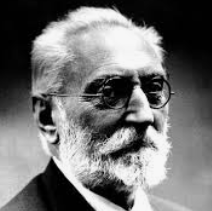
Don Quixote made himself ridiculous; but did he know the most tragic ridicule of all, the inward ridicule, the ridiculousness of a man's self to himself, in the eyes of his own soul? Imagine Don Quixote's battlefield to be his own soul; imagine him to be fighting in his soul to save the Middle Ages from the Renaissance, to preserve the treasure of his infancy; imagine him an inward Don Quixote, with a Sancho at his side, inward and heroic too - and tell me if you find anything comic in the tragedy.
1 month 3 weeks ago
No particular results then, so far, but only an attitude of orientation, is what the pragmatic method means. The attitude of looking away from first things, principles, 'categories,' supposed necessities; and of looking towards last things, fruits, consequences, facts.
▼
Source
source
Lecture II, What Pragmatism Means
2 months 3 weeks ago
Nature flies from the infinite, for the infinite is unending or imperfect, and Nature ever seeks an end.

1 month 4 days ago
Most men and women, by birth or nature, lack the means to advance in wealth and power, but all have the ability to advance in knowledge.
▼
Source
source
As quoted in The Golden Ratio (2002) by Mario Livio
1 month 3 weeks ago
That what we seek we shall find; what we flee from flees from us.
▼
Source
source
Fate
2 weeks 1 day ago
Judge not, that ye be not judged. For with what judgment ye judge, ye shall be judged: and with what measure ye mete, it shall be measured to you again.
▼
Source
source
(Matthew 7:1-2) (KJV)
1 month 3 weeks ago
Political ideals must be based upon ideals for the individual life. The aim of politics should be to make the lives of individuals as good as possible.
1 month 1 week ago
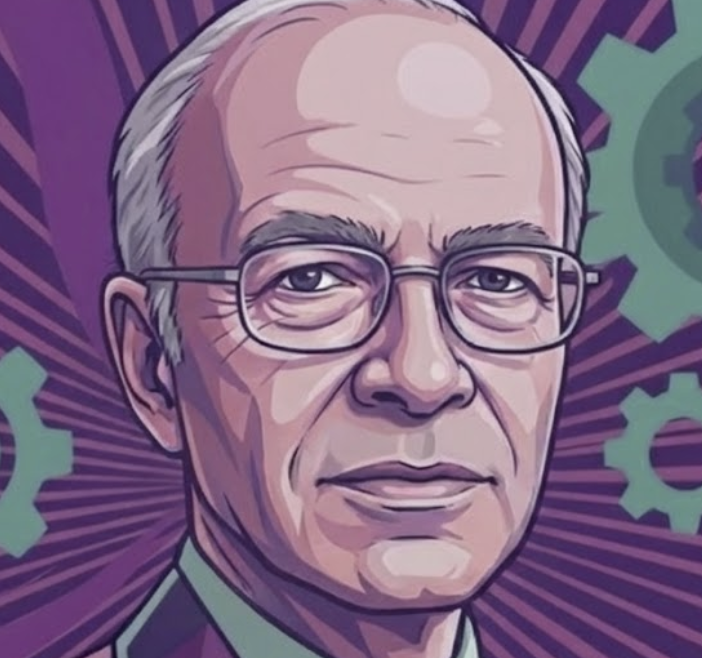
I never believed in a God. [...] There may have been times when I wondered if there might be a God, but it always seemed to me wildly implausible that a God worth worshipping could allow the Holocaust to occur.
▼
Source
source
From an interview, as cited by Dan Goldberg "Peter Singer: is he really the most dangerous man in the world?", The Jewish Chronicle
1 month 3 weeks ago
To acquire immunity to eloquence is of the utmost importance to the citizens of a democracy.
▼
Source
source
Ch. 18: The Taming of Power
CivilSimian.com created by AxiomaticPanic, CivilSimian, Kalokagathia