

6 days ago
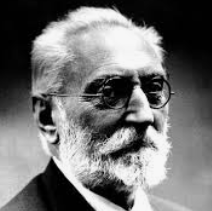
The immeasurable beauty of life is a very fine thing to write about, and there are, indeed, some who resign themselves to accept it and accept it as it is, and even some who would persuade us that there is no problem in the "trap." But it has been said by Calderón that "to seek to persuade a man that the misfortunes which he suffers are not misfortunes, does not console him for them, but it is another misfortune in addition." And furthermore, "only the heart can speak to the heart," as Fray Diego de Estella said.
▼
Source
source
(Vanidad del Mundo, cap. xxi.)
1 week 4 days ago
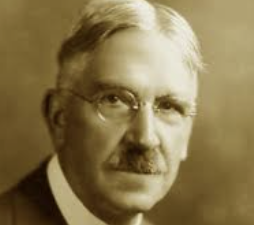
Position expresses the poised readiness of the live creature to meet the impact of surrounding forces, to meet so as to endure and persist, to extend or expand through undergoing the very forces that, apart from its response, are indifferent and hostile. Through going out into the environment, position unfolds into volume; through the pressure of environment, mass is retracted into energy of position, and space remains, when matter is contracted, as an opportunity for further action.
▼
Source
source
p. 221
2 weeks 6 days ago
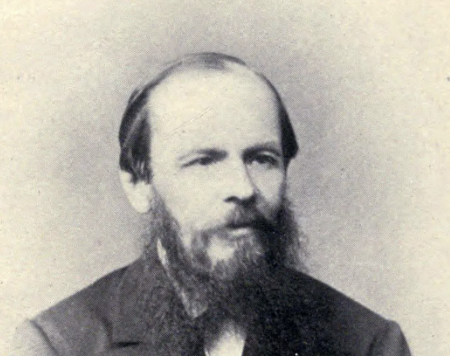
Even there, in the mines, underground, I may find a human heart in another convict and murderer by my side, and I may make friends with him, for even there one may live and love and suffer. One may thaw and revive a frozen heart in that convict, one may wait upon him for years, and at last bring up from the dark depths a lofty soul, a feeling, suffering creature; one may bring forth an angel, create a hero! There are so many of them, hundreds of them, and we are to blame for them.
2 weeks 6 days ago
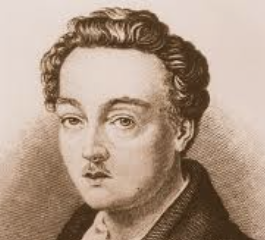
How many women does one need to sing the scale of love all the way up and down?
▼
Source
source
Act I.
4 days ago
Every intellectual revolution which has ever stirred humanity into greatness has been a passionate protest against inert ideas. Then, alas, with pathetic ignorance of human psychology, it has proceeded by some educational scheme to bind humanity afresh with inert ideas of its own fashioning.

1 month 3 weeks ago
There is no more lovely, friendly and charming relationship, communion or company than a good marriage.
▼
Source
source
292
1 week 5 days ago
The mollusk's motto would be: one must live to build one's house, and not build one's house to live in.

1 month 3 weeks ago
For my own part, I cannot without grief see so much as an innocent beast pursued and killed that has no defence, and from which we have received no offence at all.
▼
Source
source
Ch. 11, tr. Cotton, 1685
2 weeks 6 days ago
It is the love of the people; it is their attachment to their government, from the sense of the deep stake they have in such a glorious institution, which gives you both your army and your navy, and infuses into both that liberal obedience, without which your army would be a base rabble, and your navy nothing but rotten timber.

2 weeks 2 days ago
Someday the old shack we call the world will fall apart. How, we don't know, and we don't really care either. Since nothing has real substance, and life is a twirl in the void, its beginning and its end are meaningless.
1 month 3 weeks ago
Either we must have war against Russia, before she has the atom bomb, or we will have to lie down and let them govern us. ... Anything is better than submission.
▼
Source
source
Speech quoted in The Observer (21 November 1948), quoted in Robert Skildesky, Oswald Mosley (1981), p. 542 and Martin Ceadel, Thinking about Peace and War (1987), p. 52

2 months 2 weeks ago
History is a story without an end.
2 weeks 2 days ago
When we have no further desire to show ourselves, we take refuge in music, the Providence of the abulic.
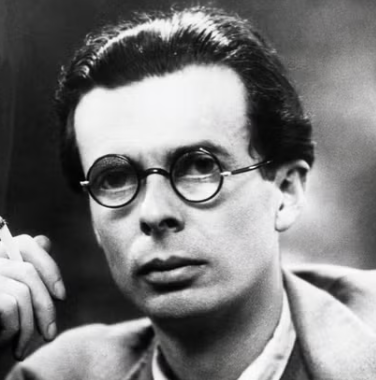
1 month 2 weeks ago
Other curious and rather ominous consequences of war are the increased anti-Semitism which one meets in all classes, particularly the common people, and the strong recrudescence of anti-negro passions in the South. The first is due to the age-old dislike of a monied, influential and pushing minority, coupled with a special grudge against the Jews as being chiefly instrumental, in public opinion, in getting America into the war.
▼
Source
source
Letter to Julian Huxley (1943), published in Letters of Aldous Huxley (1970), p. 486, also in Aldous Huxley: A Quest for Values, 2017
2 weeks 5 days ago
We have, indeed, in the part taken by many scientific men in this controversy of "Law versus Miracle," a good illustration of the tenacious vitality of superstitions. Ask one of our leading geologists or physiologists whether he believes in the Mosaic account of the creation, and he will take the question as next to an insult. Either he rejects the narrative entirely, or understands it in some vague non-natural sense. ...Whence ...this notion of "special creations"...Why, after rejecting all the rest of the story, he should strenuously defend this last remnant of it, as though he had received it on valid authority, he would be puzzled to say.
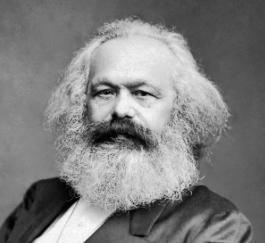
1 month 2 weeks ago
I pre-suppose, of course, a reader who is willing to learn something new and therefore to think for himself.
▼
Source
source
Author's prefaces to the First Edition.
2 weeks 6 days ago
... people only count their misfortunes; their good luck they take no account of. But if they were to take everything into account, as they should, they'd find that they had their fair share of it.
▼
Source
source
Part 2, Chapter 6 (tr. ?)
2 weeks 3 days ago
There can be no revolution without widespread and passionate destruction, a destruction salutary and fruitful precisely because out of it, and by means of it alone, new worlds are born and arise.
1 month 3 weeks ago
Every philosophical problem, when it is subjected to the necessary analysis and justification, is found either to be not really philosophical at all, or else to be, in the sense in which we are using the word, logical.
▼
Source
source
p. 33

2 months 1 week ago
Natural inclinations are present in things from God, who moves all things. So it is impossible for the natural inclinations of a species to be toward evil in itself. But there is in all perfect animals a natural inclination toward carnal union. Therefore it is impossible for carnal union to be evil in itself.
▼
Source
source
III, 126, 3

3 weeks 3 days ago
Do you see this egg? With this you can topple every theological theory, every church or temple in the world. What is it, this egg, before the seed is introduced into it? An insentient mass. And after the seed has been introduced to into it? What is it then? An insentient mass. For what is the seed itself other than a crude and inanimate fluid? How is this mass to make a transition to a different structure, to sentience, to life? Through heat. And what will produce that heat in it? Motion. "Conversation Between D'Alembert and Diderot", as quoted in Selected Writings (1966) edited by Lester G. Crocker, and The Enlightenment and the Intellectual Foundations of Modern Culture (2004) by Louis K Dupré, p. 30 Variant translation: See this egg. It is with this that all the schools of theology and all the temples of the earth are to be overturned.
▼
Source
source
As quoted in Diderot, Reason and Resonance (1982) by Élisabeth de Fontenay, p. 217
2 weeks 2 days ago
To venture upon an undertaking of any kind, even the most insignificant, is to sacrifice to envy.
2 weeks 6 days ago
Yes, I dreamed a dream, my dream of the third of November. They tease me now, telling me it was only a dream. But does it matter whether it was a dream or reality, if the dream made known to me the truth? If once one has recognized the truth and seen it, you know that it is the truth and that there is no other and there cannot be, whether you are asleep or awake. Let it be a dream, so be it, but that real life of which you make so much I had meant to extinguish by suicide, and my dream, my dream - oh, it revealed to me a different life, renewed, grand and full of power!
1 week 5 days ago
This heaven will pass away, and the one above it will pass away. The dead are not alive, and the living will not die. In the days when you consumed what is dead, you made it what is alive. When you come to dwell in the light, what will you do? On the day when you were one you became two. But when you become two, what will you do?
1 month 3 weeks ago
All the world knows me in my book, and my book in me.
▼
Source
source
Book III, Ch. 5. Upon some Verses of Virgil

1 month 2 weeks ago
The truth can be spoken only by someone who is already at home in it; not by someone who still lives in untruthfulness, and does no more than reach out towards it from within untruthfulness.
▼
Source
source
p. 41e
2 weeks 3 days ago
Government in reality, as has abundantly appeared, is a question of force, and not of consent. It is desirable that a government should be made as agreeable as possible to the ideas and inclinations of its subjects and that they should be consulted, as extensively as may be, respecting its construction and regulations. But, at last, the best constituted government that can be formed particularly for a large community, will contain many provisions that, far from having obtained the consent of all its members, encounter even in their outset a strenuous, thought ineffectual opposition.
▼
Source
source
Book III, "Of Obedience"

2 months 2 weeks ago
The gods had condemned Sisyphus to ceaselessly rolling a rock to the top of a mountain, whence the stone would fall back of its own weight. They had thought with some reason that there is no more dreadful punishment than futile and hopeless labor.

1 month 4 weeks ago
The very elements themselves, though repugnant in their nature, yet, by a happy equilibrium, preserve eternal peace; and amid the discordancy of their constituent principles, cherish, by a friendly intercourse and coalition, an uninterrupted concord.

2 months 1 week ago
I am a Roman citizen.
▼
Source
source
Against Verres [In Verrem], part 2, book 5, section 57; reported in Cicero, The Verrine Orations, trans. L. H. G. Greenwood (1935), vol. 2, p. 629

1 month 3 weeks ago
Let me have none of your Popish stuff! Get away with you, good morning.
▼
Source
source
Last words (June 1809), as quoted in The Fortnightly, vol. 25; vol. 31, p. 398
1 month 1 week ago
To protest about bullfighting in Spain, the eating of dogs in South Korea, or the slaughter of baby seals in Canada while continuing to eat eggs from hens who have spent their lives crammed into cages, or veal from calves who have been deprived of their mothers, their proper diet, and the freedom to lie down with their legs extended, is like denouncing apartheid in South Africa while asking your neighbors not to sell their houses to blacks.
▼
Source
source
Ch. 4: Becoming a Vegetarian
1 month 2 weeks ago
Speed, it seems to me, provides the one genuinely modern pleasure.
▼
Source
source
Wanted, A New Pleasure

1 month 3 weeks ago
The foundations on which several duties are built, and the foundations of right and wrong from which they spring, are not perhaps easily to be let into the minds of grown men, not us'd to abstract their thoughts from common received opinions. Much less are children capable of reasonings from remote principles. They cannot conceive the force of long deductions. The reasons that move them must be obvious, and level to their thoughts, and such as may be felt and touched. But yet, if their age, temper, and inclination be consider'd, they will never want such motives as may be sufficient to convince them.
▼
Source
source
Sec. 81

1 month 1 week ago
Force without wisdom falls of its own weight.

1 day ago
Women crave for being loved, not for loving. They scream out at you for sympathy all day long, they are incapable of giving any in return, for they cannot remember your affairs long enough to do so... They cannot state a fact accurately to another, nor can that other attend to it accurately enough for it to become information. Now is not all this the result of want of sympathy?... I am sick with indignation at what wives and mothers will do of the most egregious selfishness. And people call it all maternal or conjugal affection, and think it pretty to say so. No, no, let each person tell the truth from their own experience.
▼
Source
source
Letter to Mary Clarke Mohl (13 Dec 1861), published in Florence Nightingale on Women, Medicine, Midwifery and Prostitution: Collected Works of Florence Nightingale (2005), Volume 8, edited by Lynn McDonald, p. 84

1 month 3 weeks ago
Suicide evokes revulsion with horror, because everything in nature seeks to preserve itself: a damaged tree, a living body, an animal; and in man, then, is freedom, which is the highest degree of life, and constitutes the worth of it, to become now a principium for self-destruction? This is the most horrifying thing imaginable. For anyone who has already got so far as to be master, at any time, over his own life, is also master over the life of anyone else; for him, the door stands open to every crime, and before he can be seized he is ready to spirit himself away out of the world. So suicide evokes horror, in that a man thereby puts himself below the beasts. We regard a suicide as a carcase, whereas we feel pity for one who meets his end through fate.
▼
Source
source
Part II, p. 146

2 months 1 week ago
To worship to other than one's own ancestral spirits is brown-nosing. If you see what is right and fail to act on it, you lack courage. Variant: To see what is right, and not to do it, is want of courage or of principle.
2 months 5 days ago
Anger is a weed; hate is the tree.
▼
Source
source
58 Alternate versions: Anger is a stem, hate is a trunk. Anger is the mote, hate is the beam.

1 month 1 week ago
To a wise man, the whole earth is open; for the native land of a good soul is the whole earth.
▼
Source
source
Freeman (1948), p. 166 \
2 months 1 week ago
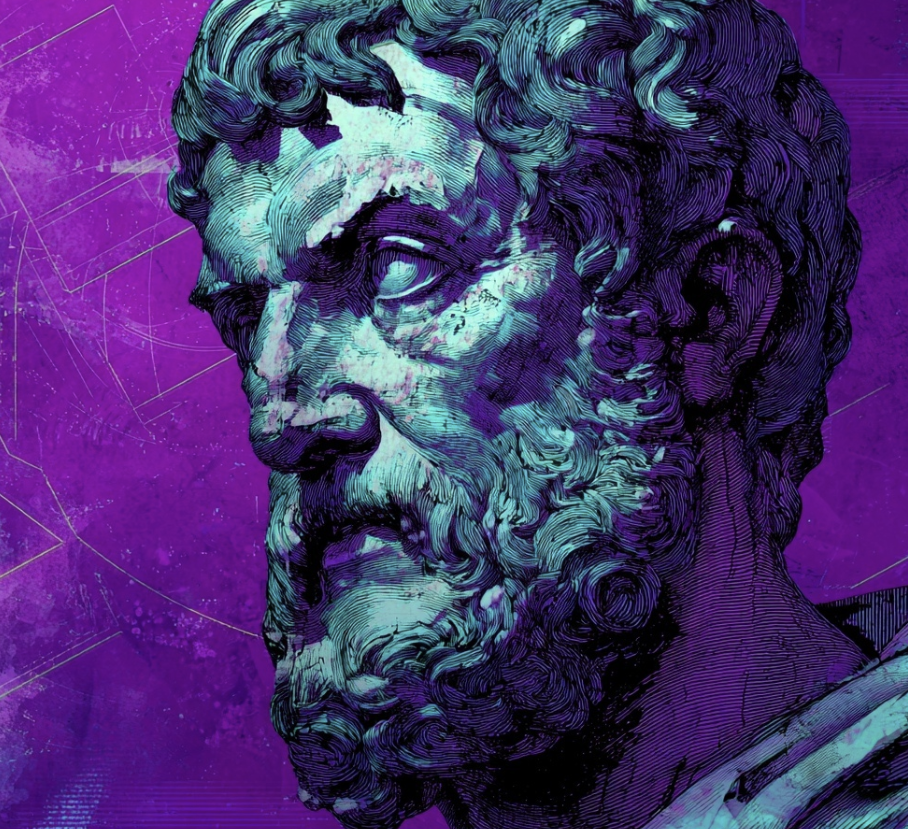
Luxurious food and drinks, in no way protect you from harm. Wealth beyond what is natural, is no more use than an overflowing container. Real value is not generated by theaters, and baths, perfumes or ointments, but by philosophy.
1 month 2 weeks ago
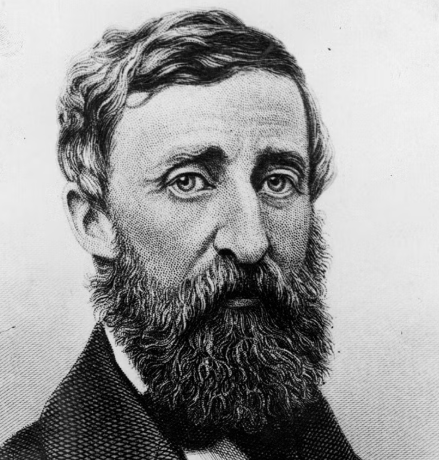
Money is not required to buy one necessity of the soul.
▼
Source
source
p. 370
2 weeks 3 days ago
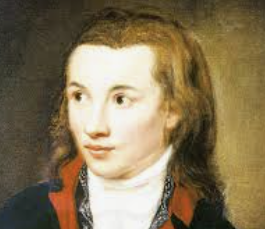
Philosophy can bake no bread; but she can procure for us God, Freedom, Immortality. Which, then, is more practical, Philosophy or Economy?
▼
Source
source
The first sentence of this was used by William Torrey Harris for the motto of the Journal of Speculative Philosophy
1 month 3 weeks ago
The only good histories are those that have been written by the persons themselves who commanded in the affairs whereof they write.
▼
Source
source
Book II, Ch. 10. Of Books
1 month 3 weeks ago
Though you give no countenance to the complaints of the querulous, yet take care to curb the insolence and ill nature of the injurious. When you observe it yourself, reprove it before the injur'd party: but if the complaint be of something really worth your notice, and prevention another time, then reprove the offender by himself alone, out of sight of him who complain'd and make him go and ask pardon, and make reparation; which ooming thus, as it were from himself, will be the more cheerfully performed, and more kindly receiv'd, the love strenghten'd between them, and a custom of civility grow familiar amongst your children.
▼
Source
source
Sec. 109

1 month 2 weeks ago
We have two bits of evidence about the Somebody. One is the universe He has made. If we used that as our only clue, I think we should have to conclude that He was a great artist (for the universe is a very beautiful place), but also that He is quite merciless and no friend to man (for the universe is a very dangerous and terrifying place.) ...The other bit of evidence is that Moral Law which He has put in our minds. And this is a better bit of evidence than the other, because it is inside information. You find out more about God from the Moral Law than from the universe in general just as you find out more about a man by listening to his conversation than by looking at a house he has built.
▼
Source
source
Book I, Chapter 5, "We Have Cause to Be Uneasy"
2 months 2 days ago
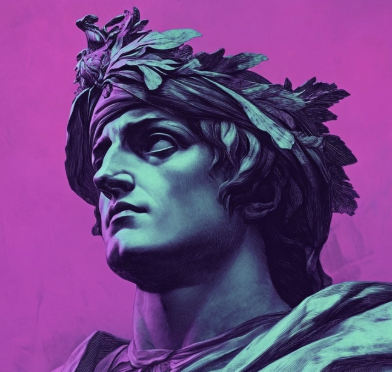
Love hath so long possessed me for his ownAnd made his lordship so familiar.
▼
Source
source
Chapter XXIV
1 month 3 weeks ago
Some modern philosophers have gone so far as to say that words should never be confronted with facts but should live in a pure, autonomous world where they are compared only with other words. When you say, 'the cat is a carnivorous animal,' you do not mean that actual cats eat actual meat, but only that in zoology books the cat is classified among carnivora. These authors tell us that the attempt to confront language with fact is 'metaphysics' and is on this ground to be condemned. This is one of those views which are so absurd that only very learned men could possibly adopt them.
▼
Source
source
p. 110

1 month 2 weeks ago
Self-reliance, the height and perfection of man, is reliance on God.
▼
Source
source
The Fugitive Slave Law, a lecture in NYC, March 7, 1854

1 month 2 weeks ago
In Mohammedanism the narrow principle of the Jews is expanded into universality and thereby overcome. Here, God is no longer, as in the Far East, regarded as existent in an immediately sensory way but is conceived as the one infinite power elevated above all the multiplicity of the world. Mohammedanism is, therefore, in the strictest sense of the word, the religion of sublimity.
▼
Source
source
Hegel, Philosophy of Mind (quoted by W. Wallace & A. V. Miller in Philosophy of Mind, Oxford 2010; also quoted in other words by Slavoj Žižek in A Glance into the Archives of Islam, Lacan dot com, 1997).
CivilSimian.com created by AxiomaticPanic, CivilSimian, Kalokagathia