

2 weeks 1 day ago
I must also have a dark side if I am to be whole.
2 weeks 2 days ago
To revolt is a natural tendency of life. Even a worm turns against the foot that crushes it. In general, the vitality and relative dignity of an animal can be measured by the intensity of its instinct to revolt.
▼
Source
source
"On the International Workingmen's Association and Karl Marx"

3 weeks 3 days ago
The created World is but a small Parenthesis in Eternity.
▼
Source
source
Part III, Section XXIX
3 weeks 2 days ago
There is not a Musselman alive who would not imagine that he was performing an action pleasing to God and his Holy Prophet by exterminating every Christian on earth, while the Christians are scarcely more tolerant on their side.
1 month 3 weeks ago
The true Gospel has it that we are justified by faith alone, without the deeds of the Law.
▼
Source
source
Chapter 2
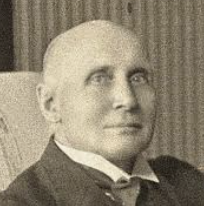
3 days ago
No period of history has ever been great or ever can be that does not act on some sort of high, idealistic motives, and idealism in our time has been shoved aside, and we are paying the penalty for it.
▼
Source
source
Ch. 32, January 13, 1944.
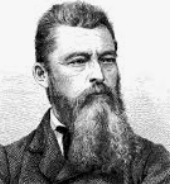
2 weeks 4 days ago
Man has many wishes that he does not really wish to fulfil, and it would be a misunderstanding to suppose the contrary. He wants them to remain wishes, they have value only in his imagination; their fulfilment would be a bitter disappointment to him. Such a desire is the desire for eternal life. If it were fulfilled, man would become thoroughly sick of living eternally, and yearn for death. In reality man wishes merely to avoid a premature, violent or gruesome death. Everything has its measure, says a pagan philosopher; in the end we weary of everything, even of life; a time comes when man desires death. Consequently there is nothing frightening about a normal, natural death, the death of a man who has fulfilled himself and lived out his life.
▼
Source
source
Lecture XXX, Atheism alone a Positive View
3 days ago
Thus the universe is to be conceived as attaining the active self-expression of its own variety of opposites of its own freedom and its own necessity, of its own multiplicity and its own unity, of its own imperfection and its own perfection. All the opposites are elements in the nature of things, and are incorrigibly there. The concept of God is the way in which we understand this incredible fact that what cannot be, yet is.
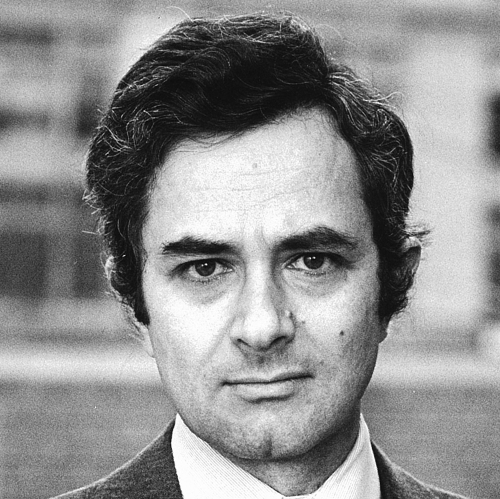
1 month 1 week ago
Usually, when we are told that X is Y we know how it is supposed to be true, but that depends on a conceptual or theoretical background and is not conveyed by the 'is' alone. ... But when the two terms of the identification are very disparate it may not be so clear how it could be true ... and a theoretical framework may have to be supplied to enable us to understand this. Without the framework, an air of mysticism surrounds the identification.This explains the magical flavor of popular presentations of fundamental scientific discoveries, given out as propositions to which one must subscribe without really understanding them. For example, people are now told at an early age that all matter is really energy. But despite the fact that they know what 'is' means, most of them never form a conception of what makes this claim true, because they lack the theoretical background.
▼
Source
source
pp. 176-177.
3 weeks 4 days ago
Before anything else the One must exist eternally; from his power derives everything that always is or will ever be. He is the Eternal and embraces all times. He knows profoundly all events and He himself is everything. He creates everything beyond any beginning of time and beyond any limit of place and space. He is not subject to any numerical law, or to any law of measure or order. He himself is law, number, measure, limit without limit, end without end, act without form.
▼
Source
source
VIII 2, as quoted in The Acentric Labyrinth (1995) by Ramon Mendoza
1 week 3 days ago
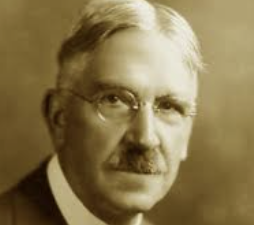
In the late eighteenth and the greater part of the nineteenth centuries appeared the first marked cultural shift in the attitude taken toward change. Under the names of indefinite perfectibility, progress, and evolution, the movement of things in the universe itself and of the universe as a whole began to take on a beneficent instead of hateful aspect.
2 weeks 5 days ago
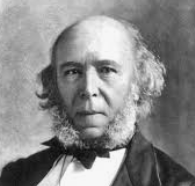
The blindness of those who think it absurd to suppose that complex organic forms may have arisen by successive modifications out of simple ones becomes astonishing when we remember that complex organic forms are daily being thus produced. A tree differs from a seed immeasurably in every respect... Yet is the one changed in the course of a few years into the other: changed so gradually, that at no moment can it be said - Now the seed ceases to be, and the tree exists.
1 month 2 weeks ago
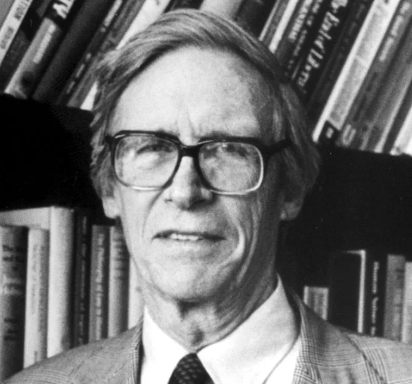
First of all, principles should be general. That is, it must be possible to formulate them without use of what would be intuitively recognized as proper names, or rigged definite descriptions.
▼
Source
source
Chapter III, Section 23, pg. 131
1 month 3 weeks ago
I will first discuss images according to the Law of Moses, and then according to the gospel. And I say at the outset that according to the Law of Moses no other images are forbidden than an image of God which one worships. A crucifix, on the other hand, or any other holy image is not forbidden. Heigh now! you breakers of images, I defy you to prove the opposite!
▼
Source
source
pp. 85-86
1 month 2 weeks ago
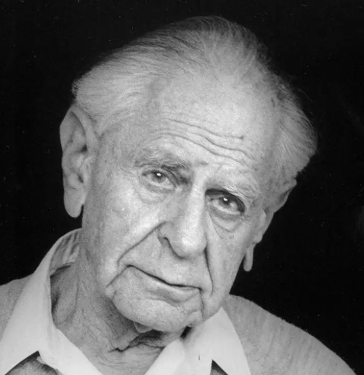
No rational argument will have a rational effect on a man who does not want to adopt a rational attitude.
▼
Source
source
Vol. 2, Ch. 24 "Oracular Philosophy and the Revolt against Reason"

1 month 2 weeks ago
Need-love cries to God from our poverty; Gift-love longs to serve, or even to suffer for, God; Appreciative love says: "We give thanks to thee for thy great glory." Need-love says of a woman "I cannot live without her"; Gift-love longs to give her happiness, comfort, protection - if possible, wealth; Appreciative love gazes and holds its breath and is silent, rejoices that such a wonder should exist even if not for him, will not be wholly dejected by losing her, would rather have it so than never to have seen her at all.
2 weeks 5 days ago
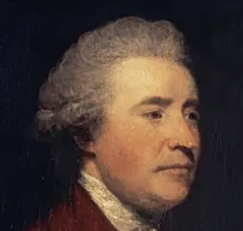
I should not be surprized at seeing a French Army conveyed by a British Navy to an attack upon this Kingdom.
▼
Source
source
Letter to French Laurence (12 May 1797) after hearing of the mutinies in the Royal Navy, quoted in R. B. McDowell (ed.)
1 month 2 weeks ago
Frantic administration of panaceas to the world is certainly discouraged by the reflection that "this present" might be "the world's last night"; sober work for the future, within the limits of ordinary morality and prudence, is not.
1 week 4 days ago
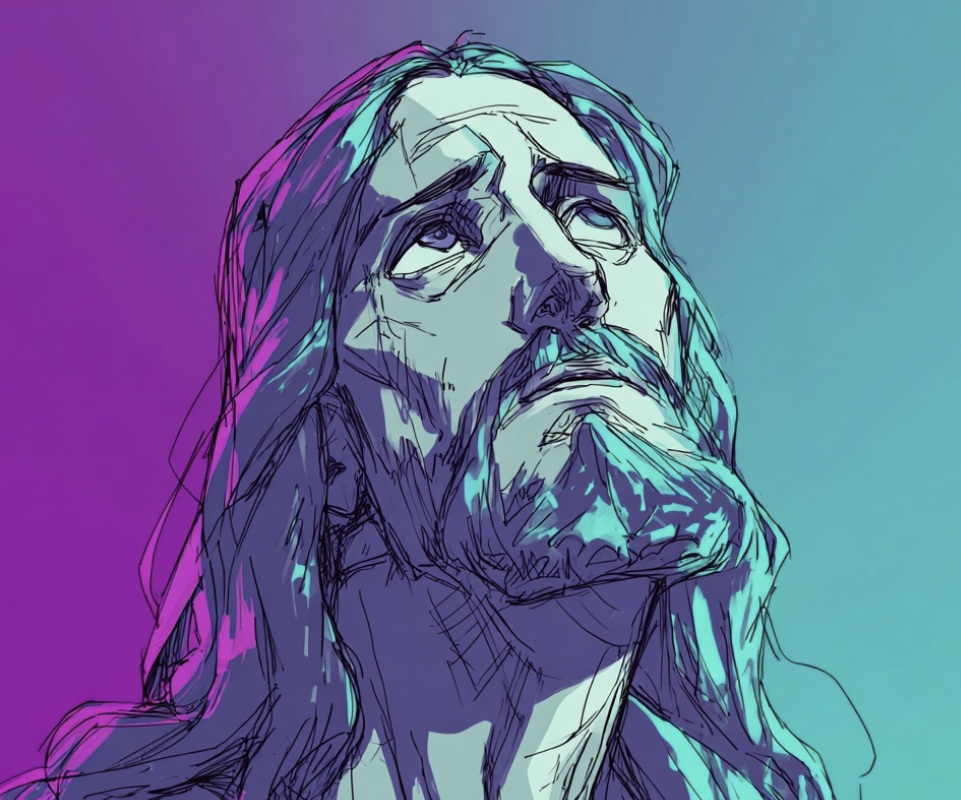
Beware of false prophets, which come to you in sheep's clothing, but inwardly they are ravening wolves.
▼
Source
source
Matthew 7:15 (KJV)

1 week 4 days ago
No, you cannot expect people to understand the higher reaches of philosophy. Culture should be taken out of the hands of the dollar chasers. We need a national subsidy for literature. It is disgraceful that artists are treated like peddlers and that art works have to be sold like soap.
2 months 1 week ago
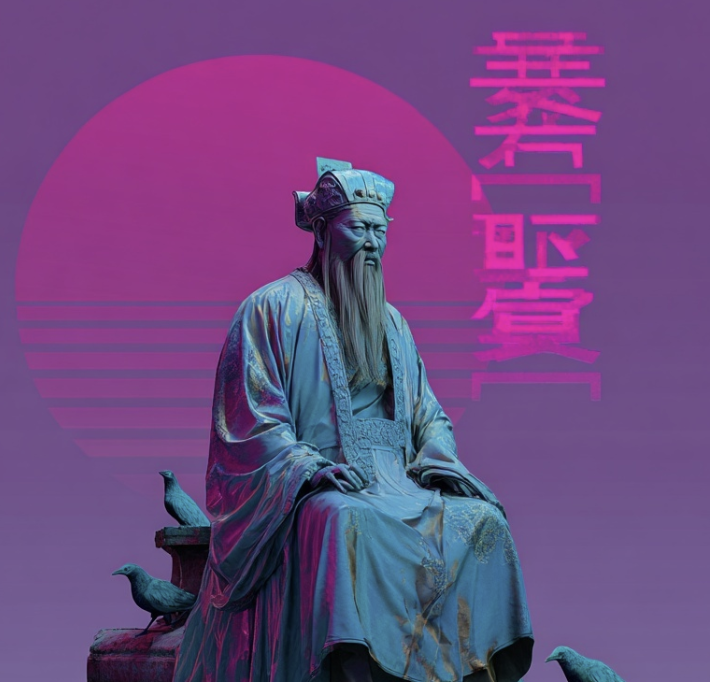
Let the superior man never fail reverentially to order his own conduct, and let him be respectful to others and observant of propriety: then all within the four seas, all men are brothers. What has the superior man to do with being distressed because he has no brothers?

1 month 2 weeks ago
Each of the parts of philosophy is a philosophical whole, a circle rounded and complete in itself. In each of these parts, however, the philosophical Idea is found in a particular specificality or medium. The single circle, because it is a real totality, bursts through the limits imposed by its special medium, and gives rise to a wider circle. The whole of philosophy in this way resembles a circle of circles. The Idea appears in each single circle, but, at the same time, the whole Idea is constituted by the system of these peculiar phases, and each is a necessary member of the organisation.
1 month 1 week ago
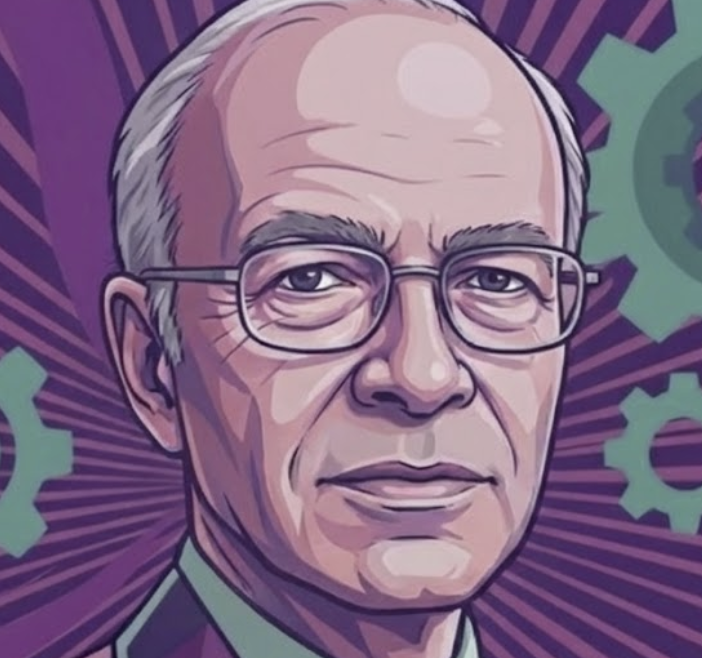
Herbert Spencer is little read now. Philosophers do not regard him as a major thinker.
▼
Source
source
Social Darwinism has long been in disrepute. Chapter 3, From Evolution To Ethics?, p. 61

1 month 3 weeks ago
The necessity of speaking, the predicament of having nothing to say, and the desire for tact are three things that can turn the greatest man into a laughingstock.
2 months 1 day ago
A few rules include all that is necessary for the perfection of the definitions, the axioms, and the demonstrations, and consequently of the entire method of the geometrical proofs of the art of persuading.
1 month 2 weeks ago
The owl of Minerva first begins her flight with the onset of dusk.

1 month 1 week ago
From whence are these "rights of individuals" derived, and why should we care? Unless we presume the existence of some greater power that determines what is good, isn't it arbitrary to posit that human survival is more important than private property rights, an equally artificially construed concept? Isn't it arbitrary to assume that some sort of equality is preferable to a system where, say, the poor are assumed to have bad karma? If these 'rights of individuals' are derived only from shared humanity, then do 'individuals' (a thoroughly meaningless term, by the way), begin to lose them when they act inhumanely? And isn't it totally arbitrary to grant rights to humans rather than other creatures anyway?
▼
Source
source
Lecture in New Haven, On Constructed Rights
4 days ago
If a captive mind is unaware of being in prison, it is living in error. If it has recognized the fact, even for the tenth of a second, and then quickly forgotten it in order to avoid suffering, it is living in falsehood. Men of the most brilliant intelligence can be born, live and die in error and falsehood. In them, intelligence is neither a good, nor even an asset. The difference between more or less intelligent men is like the difference between criminals condemned to life imprisonment in smaller or larger cells. The intelligent man who is proud of his intelligence is like a condemned man who is proud of his large cell.
▼
Source
source
p. 69
1 week 4 days ago
A special kind of beauty exists which is born in language, of language, and for language.
▼
Source
source
A Retrospective Glance at the Lifework of a Master of Books

3 weeks 2 days ago
There are at the present time two great nations in the world-allude to the Russians and the Americans- All other nations seem to have nearly reached their national limits, and have only to maintain their power; these alone are proceeding-along a path to which no limit can be perceived.
▼
Source
source
Chapter XVIII.

1 month 2 weeks ago
The domination of the public way in which things have been interpreted has already decided upon even the possibilities of being attuned, that is, about the basic way in which Da-sein lets itself be affected by the world. The they prescribes that attunement, it determines what and how one "sees."
▼
Source
source
Stambaugh translation
2 months 2 weeks ago
Creationists make it sound as though a "theory" is something you dreamt up after being drunk all night.
1 month 3 weeks ago
"...the church of England, when she baptizes any one, makes him not a Christian [...] the church of England is mistaken, and makes none but socinians Christians"
▼
Source
source
279
1 month 3 weeks ago
He who should teach men to die would at the same time teach them to live.
▼
Source
source
Ch. 18. That Men are not to judge of our Happiness till after Death, tr. Cotton, rev. W. Hazlitt, 1842
1 month 2 weeks ago
We will freedom for freedom's sake, in and through particular circumstances. And in thus willing freedom, we discover that it depends entirely upon the freedom of others and that the freedom of others depends upon our own. Obviously, freedom as the definition of a man does not depend upon others, but as soon as there is a commitment, I am obliged to will the liberty of others at the same time as my own. I cannot make liberty my aim unless I make that of others equally my aim.
▼
Source
source
p. 52
1 month 1 week ago
It is often remarked that nothing we do now will matter in a million years. But if that is true, then by the same token, nothing that will be the case in a million years matters now.
▼
Source
source
"The Absurd" (1971), p. 11.
2 months 4 days ago
Singing is of a lover.
▼
Source
source
Variant translation: To sing is characteristic of the lover. 336
1 month 2 weeks ago
You can't get a cup of tea large enough or a book long enough to suit me.
▼
Source
source
As quoted in Of This and Other Worlds (1982) by Walter Hooper, Preface, p. 9
1 month 3 weeks ago
We must remove the Decalogue out of sight and heart.
▼
Source
source
Wilhelm Martin Leberecht De Wette, 4, 188. As cited by Jonathan Ramachandran (January 1, 2019), Lake of Fire - Hope for the Wicked One Day? - Essays in First Christianity, 5 Loaf 2 Fish Publications, p. 1264.
1 month 4 weeks ago
Those who have handled sciences have been either men of experiment or men of dogmas. The men of experiment are like the ant, they only collect and use; the reasoners resemble spiders, who make cobwebs out of their own substance. But the bee takes a middle course: it gathers its material from the flowers of the garden and of the field, but transforms and digests it by a power of its own. Not unlike this is the true business of philosophy; for it neither relies solely or chiefly on the powers of the mind, nor does it take the matter which it gathers from natural history and mechanical experiments and lay it up in the memory whole, as it finds it, but lays it up in the understanding altered and digested. Therefore from a closer and purer league between these two faculties, the experimental and the rational (such as has never yet been made), much may be hoped.
▼
Source
source
Aphorism 95
1 day ago
In conclusion, I wish to say that my attitude to the whole tragic question is not dictated by my Jewish antecedents. It is motivated by my abhorrence of injustice, and man's inhumanity to man. It is because of this that I have fought all my life for anarchism which alone will do away with the horrors of the capitalist régime and place all races and peoples, including the Jews, on a free and equal basis. Until then I consider it highly inconsistent for socialists and anarchists to discriminate in any shape or form against the Jews.
3 weeks 3 days ago
To make an end of all things on Earth, and our Planetical System of the World, he (God) need but put out the Sun.
1 month 2 weeks ago
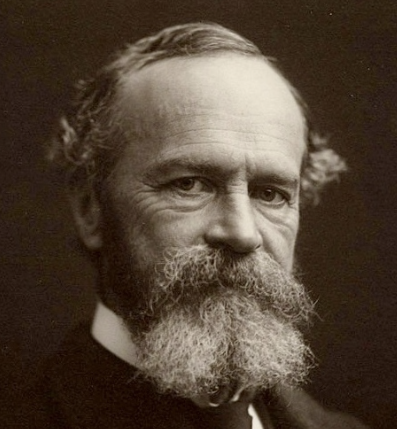
I think that yesterday was a crisis in my life. I finished the first part of Renouvier's second Essais and see no reason why his definition of free will-"the sustaining of a thought because I choose to when I might have other thoughts"-need be the definition of an illusion. At any rate, I will assume for the present-until next year-that it is no illusion. My first act of free will shall be to believe in free will.
▼
Source
source
Diary entry (April 30, 1870) as quoted in Ralph Barton Perry, The Thought and Character of William James, vol. 1, p. 323; Letters of William James, vol. I, p. 147.
1 month 2 weeks ago
Reading is merely a surrogate for thinking for yourself; it means letting someone else direct your thoughts. Many books, moreover, serve merely to show how many ways there are of being wrong, and how far astray you yourself would go if you followed their guidance. You should read only when your own thoughts dry up, which will of course happen frequently enough even to the best heads; but to banish your own thoughts so as to take up a book is a sin against the holy ghost; it is like deserting untrammeled nature to look at a herbarium or engravings of landscapes.
▼
Source
source
Vol. 2, Ch. 22, § 261
1 week 4 days ago
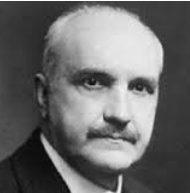
Most men's conscience, habits, and opinions are borrowed from convention and gather continual comforting assurances from the same social consensus that originally suggested them.
▼
Source
source
Ch. VIII: Ideal Society
6 days ago
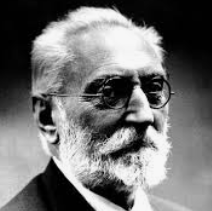
There is no tyranny in the world more hateful than that of ideas. Ideas bring ideophobia, and the consequence is that people begin to persecute their neighbors in the name of ideas. I loathe and detest all labels, and the only label that I could now tolerate would be that of ideoclast or idea breaker.
▼
Source
source
Recalled by Walter Starkie from a conversation he had with Unamuno, as related in the Epilogue of Unamuno.
2 months 1 week ago
The Path is not far from man. When men try to pursue a course, which is far from the common indications of consciousness, this course cannot be considered The Path.
1 month 3 weeks ago
It is one of the superstitions of the human mind to have imagined that virginity could be a virtue.
▼
Source
source
Notebooks (c.1735-c.1750) Note: This quotation and the three that follow directly below are from the so-called Leningrad Notebook, also known as Le Sottisier; it is one of several posthumously published notebooks of Voltaire.
1 month 3 weeks ago
How many we know who have fled the sweetness of a tranquil life in their homes, among their friends, to seek the horror of uninhabitable deserts; who have flung themselves into humiliation, degradation, and the contempt of the world, and have enjoyed these and even sought them out.
▼
Source
source
Ch. 14 (tr. Donald M. Frame)

1 month 4 weeks ago
Though I certainly deserve no ill treatment from mortals, yet if the insults and repulses I receive were attended with any advantage to them, I would content myself with lamenting in silence my own unmerited indignities and man's injustice.
CivilSimian.com created by AxiomaticPanic, CivilSimian, Kalokagathia