


2 weeks ago
What to think of other people? I ask myself this question each time I make a new acquaintance. So strange does it seem to me that we exist, and that we consent to exist.

1 month 2 weeks ago
Children are all foreigners.
▼
Source
source
September 25, 1839
1 week 4 days ago
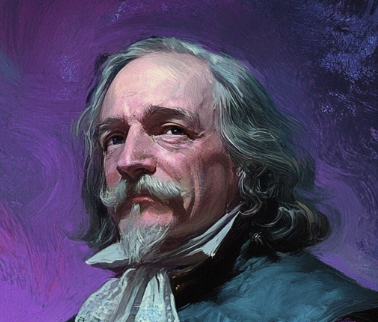
For the Lawes of Nature (as Justice, Equity, Modesty, Mercy, and (in summe)doing to others, as wee would be done to,) of themselves, without the terrour of some Power, to cause them to be observed, are contrary to our naturall Passions, that carry us to Partiality, Pride, Revenge, and the like. And Covenants, without the Sword, are but Words, and of no strength to secure a man at all.
▼
Source
source
The Second Part, Chapter 17, p. 85
2 months 1 day ago
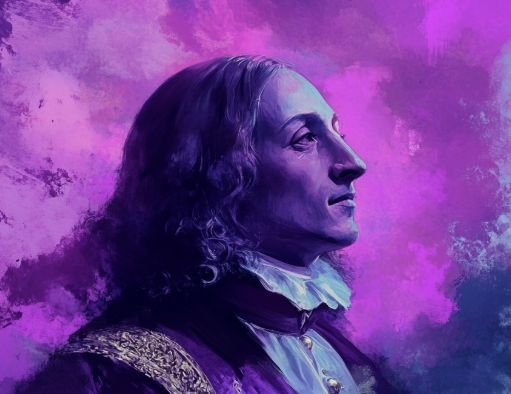
For as old age is that period of life most remote from infancy, who does not see that old age in this universal man ought not to be sought in the times nearest his birth, but in those most remote from it?
▼
Source
source
Preface to the Treatise on Vacuum, c.1651
1 month 1 week ago
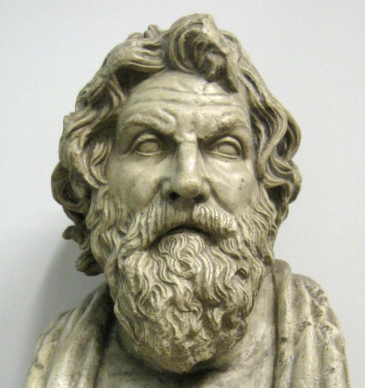
The investigation of the meaning of words is the beginning of education.
▼
Source
source
Arrian, Discourses of Epictetus, i. 17
1 month 2 weeks ago
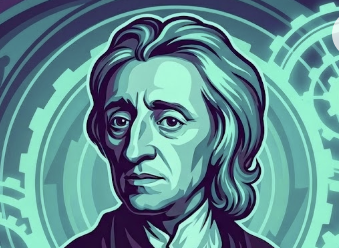
One thing I have frequently observed in children, that when they have got possession of any poor creature, they are apt to use it ill: they often torment, and treat it very roughly, young birds, butterflies, and such other poor animals which fall into their hands, and that with a seeming kind of pleasure. This I think should be watched in them, and if they incline to any such cruelty, they should be taught the contrary usage. For the custom of tormenting and killing of beasts, will, by degrees, harden their minds even towards men; and they will delight in the suffering and destruction of inferior creatures, will not be apt to be very compassionate or benign to those of their own kind. Our practice takes notice of this in the exclusion of butchers from juries of life and death.
▼
Source
source
Sec. 116

2 months 2 weeks ago
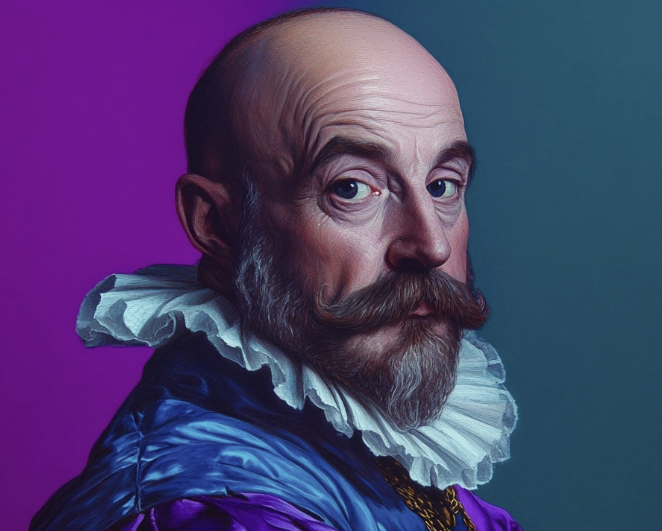
Outside of that single fatality of death, everything, joy or happiness, is liberty.
1 month 3 weeks ago
The value of life lies not in the length of days, but in the use we make of them... Whether you find satisfaction in life depends not on your tale of years, but on your will.
▼
Source
source
Book I, Ch. 20

2 months 1 week ago
The superior man, even when he is not moving, has a feeling of reverence, and while he speaks not, he has the feeling of truthfulness.
1 week 3 days ago
The difference between the artificial and the artful in the artistic lies on the surface in the former there is a split between what is overly done and what is intended. The appearance is one of cordiality; the intent is that of gaining favor. Whenever this split between what is done and its purpose exists, there is insincerity, a trick, a simulation of an act that intrinsically has another effect. When the natural and the cultivated blend into one, acts of social intercourse are works of art. The animating impulsion of genial friendship and the deed performed completely coincide without intrusion of ulterior motive. Awkwardness may prevent adequacy of expression.

1 month 2 weeks ago
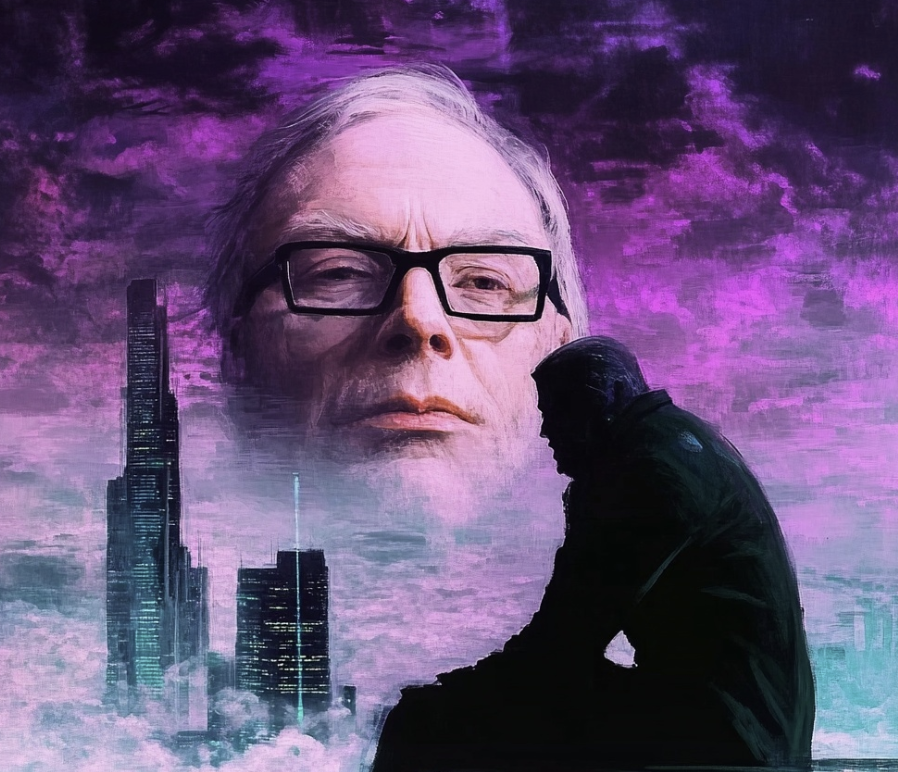
Her absence is no more emphatic in those places than anywhere else. It's not local at all. I suppose if one were forbidden all salt one wouldn't notice it much more in any one food more than another. Eating in general would be different, every day, at every meal. It is like that. The act of living is different all through. Her absence is like the sky, spread over everything.
2 months 2 weeks ago
Necessity makes a joke of civilization.
1 month 3 weeks ago
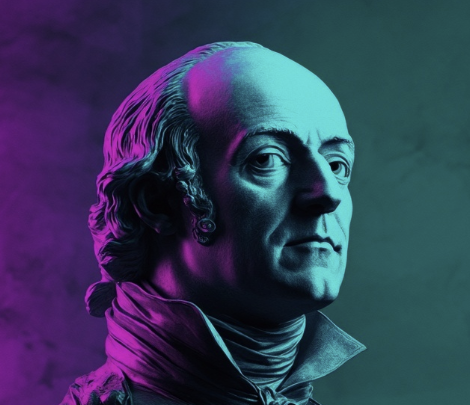
To expect, indeed, that the freedom of trade should ever be entirely restored in Great Britain, is as absurd as to expect that an Oceana or Utopia should never be established in it.
▼
Source
source
Chapter II, p. 505.

1 month 2 weeks ago
The most radical revolutionary will become a conservative the day after the revolution.
▼
Source
source
The New Yorker
1 month 2 weeks ago
Immortality. I notice that as soon as writers broach this question they begin to quote. I hate quotation. Tell me what you know.
▼
Source
source
May 1849
2 weeks ago
When I happen to be satisfied with everything, even God and myself, I immediately react like the man who, on a brilliant day, torments himself because the sun is bound to explode in a few billion years.
1 month 3 weeks ago
People of the same trade seldom meet together, even for merriment and diversion, but the conversation ends in a conspiracy against the public, or in some contrivance to raise prices. It is impossible indeed to prevent such meetings, by any law which either could be executed, or would be consistent with liberty or justice. But though the law cannot hinder people of the same trade from sometimes assembling together, it ought to do nothing to facilitate such assemblies; much less to render them necessary.
▼
Source
source
Chapter X, Part II, p. 152.
1 month 2 weeks ago
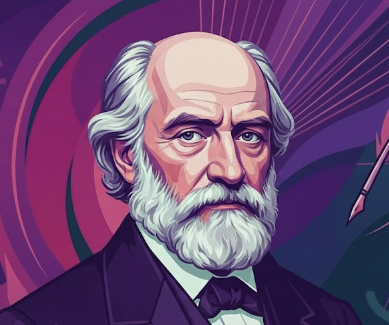
Consider the Koran... this wretched book was sufficient to start a world-religion, to satisfy the metaphysical need of countless millions for twelve hundred years, to become the basis of their morality and of a remarkable contempt for death, and also to inspire them to bloody wars and the most extensive conquests. In this book we find the saddest and poorest form of theism. Much may be lost in translation, but I have not been able to discover in it one single idea of value.
▼
Source
source
E. Payne, trans., Vol. II, Ch. XVII: On Man's Need for Metaphysics
1 month 2 weeks ago
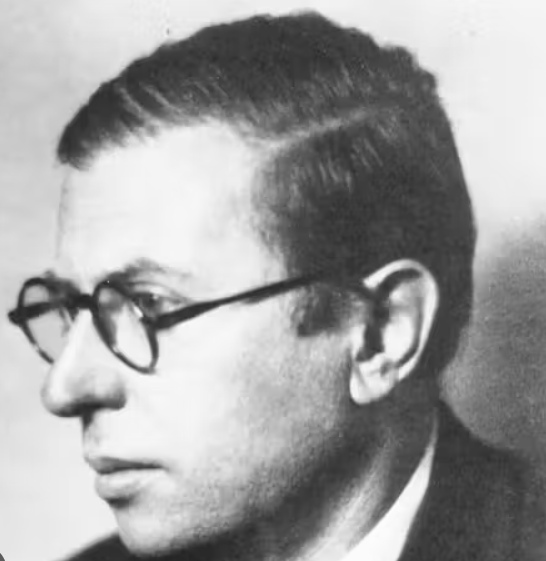
"Everything is both a trap and a display; the secret reality of the object is what the Other makes of it."
2 weeks ago
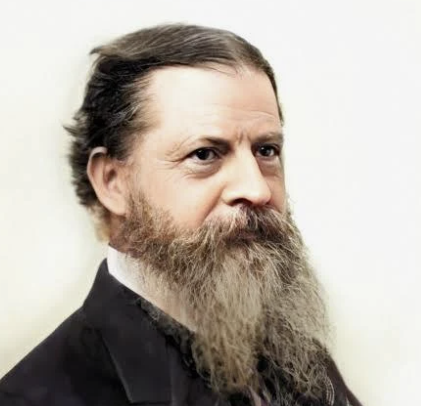
Wherever ideas come together they tend to weld into general ideas; and whenever they are generally connected, general ideas govern the connection; and these general ideas are living feelings spread out.
4 days ago
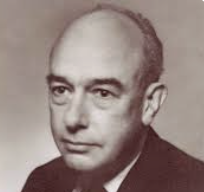
Modern empiricism has been conditioned in large part by two dogmas. One is a belief in some fundamental cleavage between truths which are analytic, or grounded in meanings independently of matters of fact, and truths which are synthetic, or grounded in fact. The other dogma is reductionism: the belief that each meaningful statement is equivalent to some logical construct upon terms which refer to immediate experience. Both dogmas, I shall argue, are ill-founded. One effect of abandoning them is, as we shall see, a blurring of the supposed boundary between speculative metaphysics and natural science. Another effect is a shift toward pragmatism.
▼
Source
source
"Two dogmas of Empiricism"
1 month 2 weeks ago
The theory of Communism may be summed up in the single sentence: Abolition of private property.
▼
Source
source
Section 2, paragraph 13.
1 month 2 weeks ago
If I could put my hand on the north star, would it be as beautiful? The sea is lovely, but when we bathe in it, the beauty forsakes all the near water. For the imagination and senses cannot be gratified at the same time.
▼
Source
source
Beauty
2 weeks 1 day ago
Since in the Middle Ages the psychic relation to woman was expressed in the collective worship of Mary, the image of woman lost a value to which human beings had a natural right. This value could find its natural expression only through individual choice, and it sank into the unconscious when the individual form of expression was replaced by a collective one. In the unconscious the image of woman received an energy charge that activated the archaic and infantile dominants. And since all unconscious contents, when activated by dissociated libido, are projected upon the external object, the devaluation of the real woman was compensated by daemonic features. She no longer appeared as an object of love, but as a persecutor or witch. The consequence of increasing Mariolatry was the witch hunt, that indelible blot on the later Middle Ages.
▼
Source
source
Psychological Types (1921), CW 6. P.344

2 weeks 5 days ago
Government is a contrivance of human wisdom to provide for human wants. Men have a right that these wants should be provided for by this wisdom.
2 weeks ago
One cannot live without motives. I have no motives left, and I am living.

1 day ago
When, in the course of human development, existing institutions prove inadequate to the needs of man, when they serve merely to enslave, rob, and oppress mankind, the people have the eternal right to rebel against, and overthrow, these institutions.
1 month 2 weeks ago
We forfeit three-fourths of ourselves in order to be like other people.
▼
Source
source
As attributed in Dictionary of Quotations from Ancient and Modern English and Foreign Sources (1899) by James Wood, p. 624
2 weeks 5 days ago
Paper, they say, does not blush, but I assure you it's not true and that it's blushing just as I am now, all over.
2 weeks ago
"Neither this world, nor the next, nor happiness are for the being abandoned to doubt." - This point in the Gita is my death sentence.

1 month 2 weeks ago
As much in vain, perhaps, will they search ancient history for examples of the modern Slave-Trade. Too many nations enslaved the prisoners they took in war. But to go to nations with whom there is no war, who have no way provoked, without farther design of conquest, purely to catch inoffensive people, like wild beasts, for slaves, is an hight of outrage against Humanity and Justice, that seems left by Heathen nations to be practised by pretended Christians. How shameful are all attempts to colour and excuse it!
1 month 2 weeks ago
Whatever bitterness and hate may be found in the movements which we are to examine, it is not bitterness or hate, but love, that is their mainspring. It is difficult not to hate those who torture the objects of our love. Though difficult, it is not impossible; but it requires a breadth of outlook and a comprehensiveness of understanding which are not easy to preserve amid a desperate contest. If ultimate wisdom has not always been preserved by Socialists and Anarchists, they have not differed in this from their opponents; and in the source of their inspiration they have shown themselves superior to those who acquiesce ignorantly or supinely in the injustices and oppressions by which the existing system is preserved.
▼
Source
source
Introduction, p. 10.

1 week 4 days ago
The judgment that human life is worth living, or rather can and ought to be made worth living, ... underlies all intellectual effort; it is the a priori of social theory, and its rejection (which is perfectly logical) rejects theory itself.
▼
Source
source
p. xliii

1 month 2 weeks ago
Aims, principles, &c., have a place in our thoughts, in our subjective design only; but not yet in the sphere of reality. That which exists for itself only, is a possibility, a potentiality; but has not yet emerged into Existence. A second element must be introduced in order to produce actuality - viz. actuation, realization; and whose motive power is the Will - the activity of man in the widest sense.
1 month 2 weeks ago
Talk of mysteries! - Think of our life in nature, - daily to be shown matter, to come in contact with it, - rocks, trees, wind on our cheeks! The solid earth! the actual world! the common sense! Contact! Contact! Who are we? where are we?
▼
Source
source
The Maine Woods (1848)

3 weeks 3 days ago
Who will not commend the wit of astrology? Venus, born out of the sea, hath her exaltation in Pisces.
▼
Source
source
Commonplace notebooks, Part I
5 days ago
I know that all this is dull reading, tiresome, perhaps tedious, but it is all necessary. And I must repeat once again that we have nothing to do with a transcendental police system or with the conversion of God into a great Judge or Policeman - that is to say, we are not concerned with heaven or hell considered as buttresses to shore up our poor earthly mortality, nor are we concerned with anything egoistic or personal. It is not I myself alone, it is the whole human race that is involved, it is the ultimate finality of all our civilization. I am but one, but all men are I's.
2 months 3 days ago
No man is free who is not master of himself.
▼
Source
source
Fragment 35 (Oldfather translation)
3 weeks 2 days ago
Gaiety - a quality of ordinary men. Genius always presupposes some disorder in the machine.
▼
Source
source
"Diseases"

2 days ago
The fear of being alone, or of being unloved, had caused women of all races to passively accept sexism and sexist oppression.
3 weeks 3 days ago
But man is a Noble Animal, splendid in ashes, and pompous in the grave, solemnizing Nativities and Deaths with equal lustre, nor omitting Ceremonies of Bravery, in the infamy of his nature. Life is a pure flame, and we live by an invisible Sun within us.
▼
Source
source
Chapter V

1 month 2 weeks ago
Never stay up on the barren heights of cleverness, but come down into the green valleys of silliness.
▼
Source
source
p. 76e
2 weeks 1 day ago
Every father is given the opportunity to corrupt his daughter's nature, and the educator, husband, or psychiatrist then has to face the music. For what has been spoiled by the father can only be made good by a father, just as what has been spoiled by the mother can only be repaired by a mother. The disastrous repetition of the family pattern could be described as the psychological original sin, or as the curse of the Atrides running through the generations.
▼
Source
source
Mysterium Coniunctionis (1955) CW 14: P. 232
1 month 2 weeks ago
I know. I know that I shall never again meet anything or anybody who will inspire me with passion. You know, it's quite a job starting to love somebody. You have to have energy, generosity, blindness. There is even a moment, in the very beginning, when you have to jump across a precipice: if you think about it you don't do it. I know I'll never jump again.

2 weeks 6 days ago
Your health is held hostage by employment. Insurance ties you to jobs you'd otherwise leave, making you tolerate abuse, accept stagnation, endure indignity. This isn't accidental - it's strategic. When survival depends on employment, workers are compliant. Healthcare hostage-taking ensures docility.
1 month 1 week ago
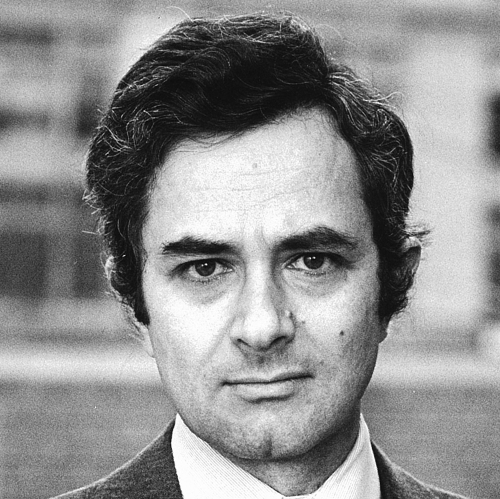
Bats ... present a range of activity and a sensory apparatus so different from ours that the problem I want to pose is exceptionally vivid (though it certainly could be raised with other species). Even without the benefit of philosophical reflection, anyone who has spent some time in an enclosed space with an excited bat knows what it is to encounter a fundamentally alien form of life.
▼
Source
source
p. 168.
3 days ago
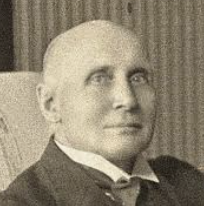
The vitality of thought is in adventure. Ideas won't keep. Something must be done about them. When the idea is new, its custodians have fervor, live for it, and, if need be, die for it.
▼
Source
source
p. 100; Ch. 12, April 28, 1938.
4 days ago
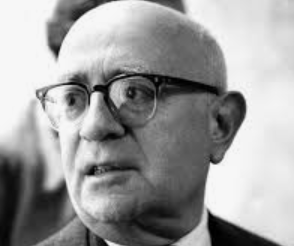
Traditional philosophy's claim to totality, culminating in the thesis that the real is rational, is indistinguishable from apologetics.
▼
Source
source
p. 7
1 month 2 weeks ago
Take the question whether other people exist. ...It is plain that it makes for happiness to believe that they exist - for even the greatest misanthropist would not wish to be deprived of the objects of his hate. Hence the belief that other people exist is, pragmatically, a true belief. But if I am troubled by solipsism, the discovery that a belief in the existence of others is 'true' in the pragmatist's sense is not enough to allay my sense of loneliness: the perception that I should profit by rejecting solipsism is not alone sufficient to make me reject it. For what I desire is not that the belief in solipsism should be false in the pragmatic sense, but that other people should in fact exist. And with the pragmatist's meaning of truth, these two do not necessarily go together. The belief in solipsism might be false even if I were the only person or thing in the universe.
▼
Source
source
"William James's Conception of Truth" , published in Philosophical Essays, London, 1910
1 month 2 weeks ago
It is obvious that "obscenity" is not a term capable of exact legal definition; in the practice of the Courts, it means "anything that shocks the magistrate."
▼
Source
source
Ch. 10: Recrudescence of Puritanism
CivilSimian.com created by AxiomaticPanic, CivilSimian, Kalokagathia