


2 months 2 weeks ago
People who want to do so can lose weight most safely and permanently if they realize that above all they must be patient. ... It is better to eat a little less at each meal than impulse would suggest and to do that constantly. Add to this a little more exercise or activity than impulse suggests and keep that up constantly too. A few less calories taken in each day and a few more used up will decrease weight, slowly, to be sure, but without undue misery. And with better long-range results too.

3 weeks 1 day ago
The French want no-one to be their superior. The English want inferiors. The Frenchman constantly raises his eyes above him with anxiety. The Englishman lowers his beneath him with satisfaction.
▼
Source
source
Journeys to England and Ireland (1835).

2 months 5 days ago
The greatest states have been overthrown by the young and sustained and restored by the old. ... Rashness is the product of the budding-time of youth, prudence of the harvest-time of age.
▼
Source
source
section 20

1 month 3 weeks ago
All seed except Mary was vitiated [by original sin].
▼
Source
source
Weimar edition of Martin Luther's Works, English translation edited by J. Pelikan [Concordia: St. Louis], Vol. 11, WA, 39, II:107
1 week 6 days ago
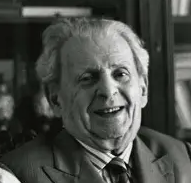
To ignore the true God is in fact only half an evil; atheism is worth more than the piety bestowed on mythical gods.
▼
Source
source
A Religion for Adults

1 month 2 weeks ago
Political independence, as the right to owe his existence and continuance in society not to the arbitrary will of another, but to his own rights and powers as a member of the commonwealth.
1 month 2 weeks ago
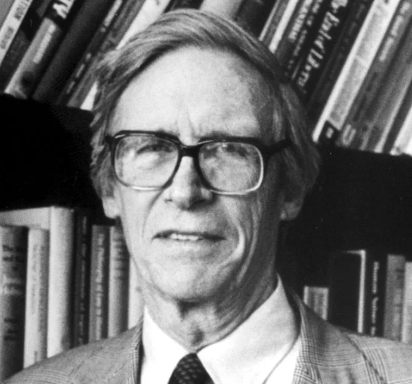
That persons have opposing interests and seek to advance their own conception of the good is not at all the same thing as their being moved by envy and jealousy.
▼
Source
source
Chapter IX, Section 81, p. 540

3 weeks 2 days ago
I intend no Monopoly, but a Community in Learning; I study not for my own sake only, but for theirs that study not for themselves.
▼
Source
source
Section 3
1 week 1 day ago
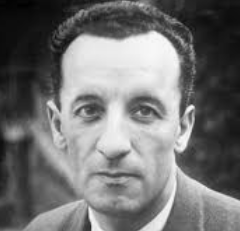
Lichtenberg ... held something of the following kind: one should neither affirm the existence of God nor deny it. ... It is not that he wished to leave certain perspectives open, nor to please everyone. It is rather that he was identifying himself, for his part, with a consciousness of self, of the world, and of others that was "strange" (the word is his) in a sense which is equally well destroyed by the rival explanations.
▼
Source
source
pp. 45-46
1 month 2 weeks ago
It is precisely in knowing its limits that philosophy consists.
▼
Source
source
A 727, B 755
1 month 2 weeks ago
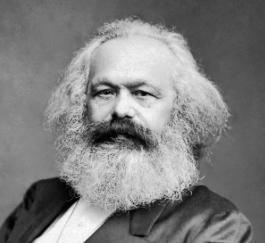
Supply and demand constantly determine the prices of commodities; never balance, or only coincidentally; but the cost of production, for its part, determines the oscillations of supply and demand.
▼
Source
source
Notebook I, The Chapter on Money, p. 58.
3 weeks 2 days ago
A little water makes a sea, a small puff of wind a Tempest.

1 month 3 weeks ago
We speak not strictly and philosophically when we talk of the combat of passion and of reason. Reason is, and ought only to be the slave of the passions, and can never pretend to any other office than to serve and obey them.
▼
Source
source
Part 3, Section 3
1 month 3 weeks ago
We are beggars: this is true.
▼
Source
source
"The Last Written Words of Luther," Table Talk No. 5468, (16 February 1546), in Dr. Martin Luthers Werke (1909) as translated by James A. Kellerman, Band 85 (TR 5) 317-318
1 month 2 weeks ago
I am against a League war in present circumstances, because the anti-League powers are strong. The analogy is not King v. Barons, but the War of the Roses. If the League were strong enough I should favour sanctions, because the effect would suffice, or the war would be short and small. The whole question is quantitative.
▼
Source
source
Letter to Kingsley Martin shortly before the Italo-Abyssinian War (7 August 1935), quoted in Kingsley Martin, Editor: A Second Volume of Autobiography, 1931-45 (1968), p. 207
1 month 1 week ago
Even if I could by gradual degrees be transformed into a bat, nothing in my present constitution enables me to imagine what the experiences of such a future stage of myself thus metamorphosed would be like. The best evidence would come from the experience of bats, if we only knew what they were like.
▼
Source
source
p. 169.

2 months 2 weeks ago
If I were to imagine a girl deeply in love and some man who wanted to use all his reasoning powers and knowledge to ridicule her passion, well, there's surely no question of the enamoured girl having to choose between keeping her wealth and being ridiculed. No, but if some extremely cool and calculating man calmly told the young girl, "I will explain to you what love is," and the girl admitted that everything he told her was quite correct, I wonder if she wouldn't choose his miserable common sense rather than her wealth?

1 month 2 weeks ago
The atheist who affects to reason, and the fanatic who rejects reason, plunge themselves alike into inextricable difficulties. The one perverts the sublime and enlightening study of natural philosophy into a deformity of absurdities by not reasoning to the end. The other loses himself in the obscurity of metaphysical theories, and dishonours the Creator, by treating the study of his works with contempt. The one is a half-rational of whom there is some hope, the other a visionary to whom we must be charitable.
▼
Source
source
A Discourse, &c. &c.
2 weeks 1 day ago
Plants are Children of the Earth; we are Children of the Æther. Our Lungs are properly our Root; we live, when we breathe; we begin our life with breathing.
2 months ago
I make no doubt... that these rules are simple, artless, and natural.
1 month 2 weeks ago
Belief in eternal hell fire was an essential item of Christian belief until pretty recent times. In this country, as you know, it ceased to be an essential item because of a decision of the Privy Council, and from that decision the Archbishop of Canterbury and the Archbishop of York dissented; but in this country our religion is settled by Act of Parliament, and therefore the Privy Council was able to override Their Graces and hell was no longer necessary to a Christian. Consequently I shall not insist that a Christian must believe in hell. What is a Christian?
▼
Source
source
1927
1 month 3 weeks ago
Nobody ever saw a dog make a fair and deliberate exchange of one bone for another with another dog.
▼
Source
source
Chapter II, p. 14.
1 month 2 weeks ago
Since property here exists in the form of stock, its movement and transfer become purely a result of gambling on the stock exchange, where the little fish are swallowed by the sharks and the lambs by the stock exchange wolves.
▼
Source
source
Vol. III, Ch. XXVII, The Role of Credit, p. 440.
1 month 3 weeks ago
If nature has been frugal in her gifts and endowments, there is the more need of art to supply her defects. If she has been generous and liberal, know that she still expects industry and application on our part, and revenges herself in proportion to our negligent ingratitude. The richest genius, like the most fertile soil, when uncultivated, shoots up into the rankest weeds; and instead of vines and olives for the pleasure and use of man, produces, to its slothful owner, the most abundant crop of poisons.
▼
Source
source
Part I, Essay 16: The Stoic
1 month 2 weeks ago
... happiness is not an ideal of reason, but of imagination, resting on merely empirical grounds…
▼
Source
source
4:418-19, p.29

2 months 1 week ago
By extensively studying all learning, and keeping himself under the restraint of the rules of propriety, one may thus likewise not err from what is right.
1 month 2 weeks ago
Few people can be happy unless they hate some other person, nation, or creed.
▼
Source
source
Attributed to Russell in Prochnow's Speakers Handbook of Epigrams and Witticisms (1955), p. 132
1 month 2 weeks ago
What is called politics is comparatively something so superficial and inhuman, that, practically, I have never fairly recognized that it concerns me at all. The newspapers, I perceive, devote some of their columns specially to politics or government without charge; and this, one would say, is all that saves it; but, as I love literature, and, to some extent, the truth also, I never read those columns at any rate. I do not wish to blunt my sense of right so much.
▼
Source
source
p. 494

1 month 2 weeks ago
He that thinks diversion may not lie in hard and painful labour, forgets the early rising, hard riding, heat, cold and hunger of huntsmen, which is yet known to be the constant recreation of men of the greatest condition.
▼
Source
source
Sec. 206

2 months 2 days ago
So potent was Religion in persuading to do wrong.
▼
Source
source
Book I, line 101 (tr. Alicia Stallings) H. A. J. Munro's translation: So great the evils to which religion could prompt! W. H. D. Rouse's translation: So potent was Superstition in persuading to evil deeds.
3 days ago
The aim of jazz is the mechanical reproduction of a regressive moment, a castration symbolism. 'Give up your masculinity, let yourself be castrated,' the eunuchlike sound of the jazz band both mocks and proclaims, 'and you will be rewarded, accepted into a fraternity which shares the mystery of impotence with you, a mystery revealed at the moment of the initiation rite.
▼
Source
source
Perennial Fashion - Jazz (1978), Prisms, p. 129, as translated by Samuel Weber and Shierry Weber

3 weeks 3 days ago
Since therefore, as well those degrees of heat that are not painful, as those that are, can exist in a thinking substance; may we not conclude that external bodies are absolutely incapable of any degree of heat whatsoever?
▼
Source
source
Philonous to Hylas. Hylas replies with, "So it seems".
2 weeks 1 day ago
Man consists in Truth. If he exposes Truth, he exposes himself. If he betrays Truth, he betrays himself. We speak not here of lies, but of acting against Conviction.
Just now
You've got the temperament of a scholar, and you live on your own and write books. You don't have anything to do with civilization. You've been in London a few days and you can't wait to get back home. But how about the people who can't write books -- people there's no outlet for in this civilization? What about your new men who don't know what to do?
▼
Source
source
p. 200
5 months 3 weeks ago
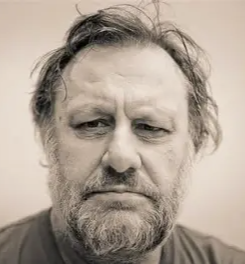
The wreck of the Titanic functions as a sublime object: a positive, material object elevated to the status of the impossible Thing. And perhaps all the effort to articulate the metaphysical meaning of the Titanic is nothing but an attempt to escape this terrifying impact of the Thing, an attempt to domesticate the Thing by reducing it to its symbolic status, by providing it with a meaning. We usually say that the fascinating presence of a Thing obscures its meaning; here, the opposite is true: the meaning obscures the terrifying impact of its presence.
1 month 2 weeks ago
The place of the father in the modern suburban family is a very small one - particularly if he plays golf, which he usually does.
▼
Source
source
Introduction to The New Generation, 1930
3 days ago
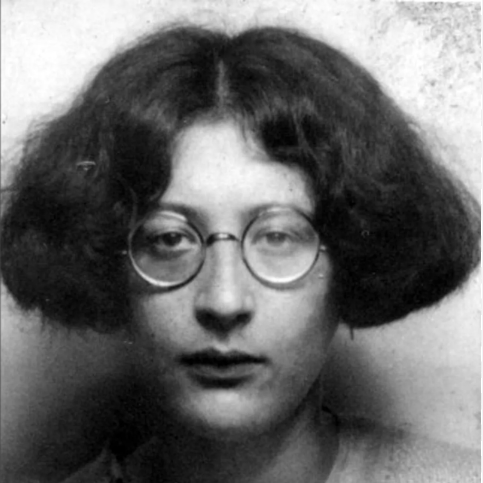
Attention is the rarest and purest form of generosity.
▼
Source
source
From an April 13, 1942 letter to poet Joë Bousquet, published in their collected correspondence
2 weeks 4 days ago
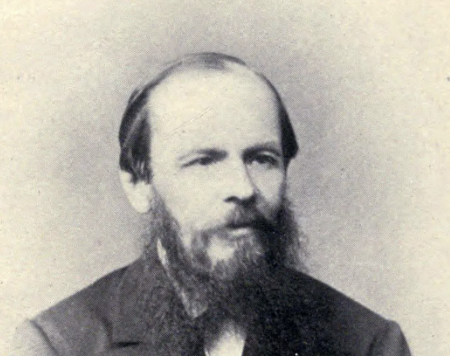
To kill someone for committing murder is a punishment incomparably worse than the crime itself. Murder by legal sentence is immeasurably more terrible than murder by brigands.
▼
Source
source
Part 1, Chapter 2
1 month 5 days ago
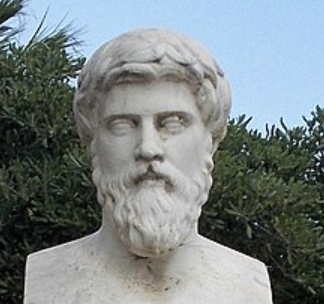
Cato requested old men not to add the disgrace of wickedness to old age, which was accompanied with many other evils.
▼
Source
source
Cato the Elder

1 week 6 days ago
At different degrees, everything is pathology, except for indifference.
1 month 2 weeks ago
Homeliness is almost as great a merit in a book as in a house, if the reader would abide there. It is next to beauty, and a very high art.
▼
Source
source
Pearls of Thought (1881) p. 32
2 months 2 weeks ago
What if the equality between us human being, in which we completely resemble one another, were that none of us really thinks about his being loved?
4 days ago
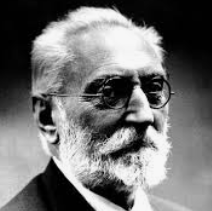
Our longing to save consciousness, to give personal and human finality to the Universe and to existence, is such that even in the midst of a supreme, an agonizing and lacerating sacrifice, we should still hear the voice that assured us that if our consciousness disappears, it is that the infinite and eternal Consciousness may be enriched thereby, that our souls may serve as a nutriment to the Universal soul.

1 month 1 week ago
Philosophical problems can be compared to locks on safes, which can be opened by dialing a certain word or number, so that no force can open the door until just this word has been hit upon, and once it is hit upon any child can open it.
▼
Source
source
Ch. 9 : Philosophy, p. 175

1 month 1 week ago
For joys fall not to the rich alone, nor has he lived ill, who from birth to death has passed unknown.
▼
Source
source
Book I, epistle xvii, line 9
1 day ago
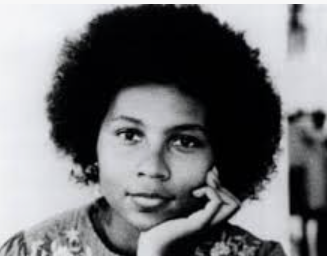
People with healthy self-esteem do not need to create pretend identities.
1 month 1 week ago
All of us, I believe, are fortunate to have been born.
▼
Source
source
"Death" (1970), p. 7.
1 month 2 weeks ago
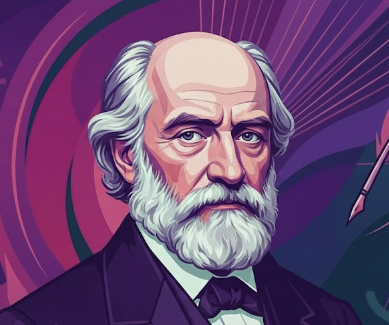
As the strata of the earth preserve in succession the living creatures of past epochs, so the shelves of libraries preserve in succession the errors of the past and their expositions, which like the former were very lively and made a great commotion in their own age but now stand petrified and stiff in a place where only the literary palaeontologist regards them.
▼
Source
source
Vol. 2 "On Books and Writing" as translated in Essays and Aphorisms (1970), as translated by R. J. Hollingdale
2 weeks 4 days ago
It's the great mystery of human life that old grief passes gradually into quiet tender joy.
2 weeks 3 days ago
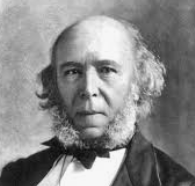
Time: That which man is always trying to kill, but which ends in killing him.
▼
Source
source
Definitions, as quoted in The Dictionary of Essential Quotations (1983) by Kevin Goldstein-Jackson, p. 154
CivilSimian.com created by AxiomaticPanic, CivilSimian, Kalokagathia