

1 month 2 weeks ago
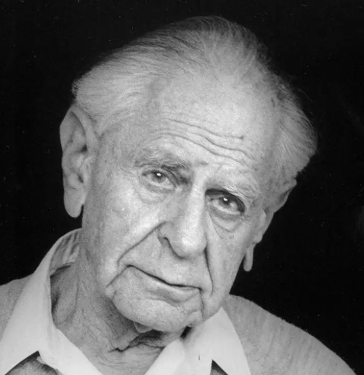
There are many difficulties impeding the rapid spread of reasonableness. One of the main difficulties is that it always takes two to make a discussion reasonable. Each of the parties must be ready to learn from the other. You cannot have a rational discussion with a man who prefers shooting you to being convinced by you.

1 week 6 days ago
Death poses a problem which replaces all the others. What is deadly to philosophy, to the naive belief in the hierarchy of perplexities.
3 days ago
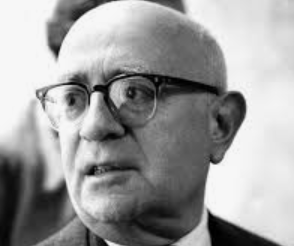
When I speak of 'negative dialectics' not the least important reason for doing so is my desire to dissociate myself from this fetishization of the positive.
▼
Source
source
p. 18

1 month 2 weeks ago
On recent and contemporary literature student's need is least and our help least. They ought to understand it better than we, and if they do not then there is something radically wrong either with them or with the literature. But I need not labour the point. There is an intrinsic absurdity in making current literature a subject of academic study, and the student who wants a tutor's assistance in reading the works of his own contemporaries might as well ask for a nurse's assistance in blowing his own nose.
▼
Source
source
"Our English syllabus", Rehabilitations and Other Essays (1939). Reprinted in Image and Imagination: Essays and Reviews by C. S. Lewis (2013), Cambridge University Press
1 week 6 days ago
What I know at sixty, I knew as well at twenty. Forty years of a long, a superfluous, labor of verification.
1 month 2 weeks ago
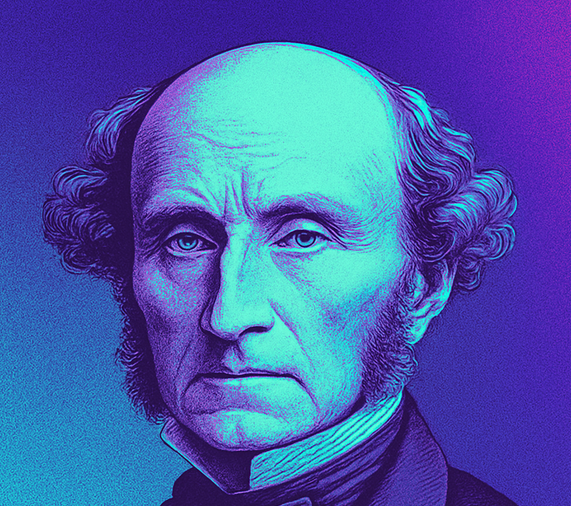
Nothing contributes more to nourish elevation of sentiments in a people, than the large and free character of their habitations.
▼
Source
source
(p. 55)

1 month 3 weeks ago
An armed insurrection ... would hinder and bring into disrepute this spiritual insurrection.
▼
Source
source
p. 68

1 month 1 week ago
Your questions refer to words; so I have to talk about words. You say: The point isn't the word, but its meaning, and you think of the meaning as a thing of the same kind as the word, though also different from the word. Here the word, there the meaning.
▼
Source
source
§ 120
1 month 2 weeks ago
My argument against God was that the universe seemed so cruel and unjust. But how had I got this idea of just and unjust? A man does not call a line crooked unless he has some idea of a straight line. What was I comparing this universe with when I called it unjust?
▼
Source
source
Book II, Chapter 1, "The Rival Conceptions of God"
1 week 6 days ago
I anticipated witnessing in my lifetime the disappearance of our species. But the Gods have been against me.

1 month 2 weeks ago
Apart from autograph hunters, I get... many letters from Hindus, beseeching me to adopt some form of mysticism, from young Americans, asking me where I think the line should be drawn in petting, and from Poles, urging me to admit that while all other nationalism may be bad that of Poland is wholly noble. I get letters from engineers who cannot understand Einstein, and from parsons who think that I cannot understand Genesis, from husbands whose wives have deserted them - not (they say) that that would matter, but the wives have taken the furniture with them, and what in these circumstances should an enlightened male do? ...I get letters (concerning whose genuineness I am suspicious) trying to get me to advocate abortion, and I get letters from young mothers asking my opinion of bottle-feeding.
▼
Source
source
Letter to Mr C. L. Aiken, March 19, 1930

2 months 2 weeks ago
The truth is a trap: you can not get it without it getting you; you cannot get the truth by capturing it, only by its capturing you.

2 months 3 days ago
Even then [at the time of Peter's speech in Acts 2] it was the last days; how much more so now, when there must still be as much time till the end of the world as has passed since the ascension of the Lord! We do not know the end of the world, because it is not for us to know the times or the seasons that the Father has set in his power; but we know that, like the apostles, we live in the last times, in the last days, in the last hour. Those who lived after the apostles and before us were more in what we call the last times, and we ourselves are in them even more than they; those who will come after us will be so much more, till one gets to those who will be, if one may say so, the last of the last, and finally till that day, the very last, of which the Lord means to speak when he said, "And I will raise him up on the last day". How far are we from that day? That is an impenetrable secret.
1 week 6 days ago
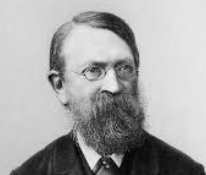
Some Machians were sufficiently impressed by Einstein's interpretations of Brownian movement to accept atomism. Mach himself brushed such objections aside, and also emphatically rejected Einstein's relativity theory.
▼
Source
source
W. W. Bartley III, "Philosophy of biology versus philosphy of physics" (2004) p. 412, Karl Popper: Critical Assessments of Leading Philosophers, Vol. III: Philosophy of Science 2.

2 months 2 weeks ago
First, there must be an end to war and national rivalry and only then could one turn to the internal miseries that, after all, had external conflict as their chief cause.
1 week 6 days ago
Music is everything. God himself is nothing more than an acoustic hallucination.

1 month 2 weeks ago
New opinions are always suspected, and usually opposed, without any other reason but because they are not already common.
▼
Source
source
Dedicatory epistle, as quoted in Fred R Shapiro (2006). The Yale Book of Quotations. Yale University Press. p. 468. ISBN 0-300-10798-6.
1 month 3 weeks ago
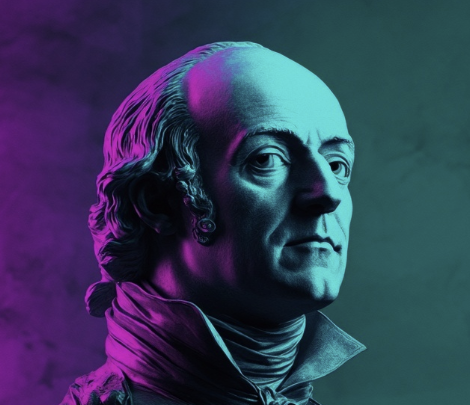
We rarely hear, it has been said, of the combinations of masters, though frequently of those of the workman. But whoever imagines, upon this account, that masters rarely combine, is as ignorant of the world as of the subject.
▼
Source
source
Chapter VIII, p. 80.

2 weeks 4 days ago
It is reconciled in policy; and politics ought to be adjusted, not to human reasonings, but to human nature; of which the reason is but a part; and by no means the greatest part.
▼
Source
source
Observations on a Late Publication on the Present State of the Nation (1769), page 78
1 month 2 weeks ago
The good life, as I conceive it, is a happy life. I do not mean that if you are good you will be happy; I mean that if you are happy you will be good.
▼
Source
source
Part I: Man and Nature, Ch. 1: Current Perplexities, p. 10
1 month 1 week ago
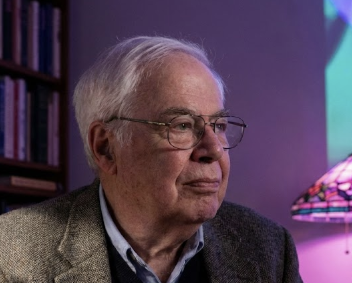
Truthfulness under oath is, by now, a matter of our civic religion, our relation to our fellow citizens rather than our relation to a nonhuman power.
▼
Source
source
"John Searle on Realism and Relativism." Truth and Progress: Philosophical Papers, Volume 3 (1998).
1 month 3 weeks ago
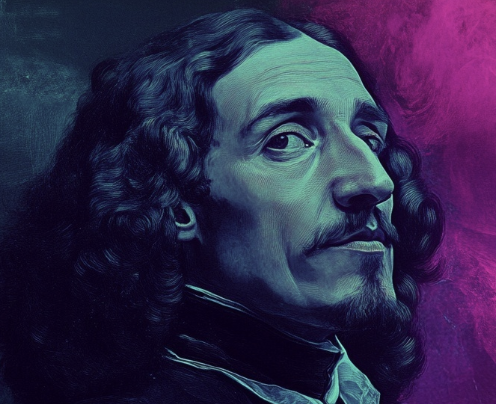
The perfection of a thing does not annul its existence, but, on the contrary, asserts it. Imperfection, on the other hand, does annul it ; therefore we cannot be more certain of the existence of anything, than of the existence of a being absolutely infinite or perfect-that is, of God. For inasmuch as his essence excludes all imperfection, and involves absolute perfection, all cause for doubt concerning his existence is done away, and the utmost certainty on the question is given. This, I think, will be evident to every moderately attentive reader.
▼
Source
source
Part I, Prop. XI
1 month 1 week ago
As long as we try to project from the relative and conditioned to the absolute and unconditioned, we shall keep the pendulum swinging between dogmatism and skepticism. The only way to stop this increasingly tiresome pendulum swing is to change our conception of what philosophy is good for. But that is not something which will be accomplished by a few neat arguments. It will be accomplished, if it ever is, by a long, slow process of cultural change - that is to say, of change in common sense, changes in the intuitions available for being pumped up by philosophical arguments.
▼
Source
source
Introduction to Truth and Progress: Philosophical Papers, Volume 3 (1998).
2 months 3 days ago
He who created you without you will not justify you without you.
▼
Source
source
169
1 month 1 week ago
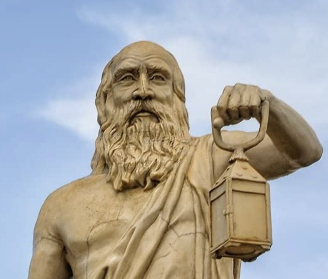
He used to reason as follows: 'Everything belongs to the gods; the wise are friends of the gods; friends hold all things in common; ergo, everything belongs to the wise.'
▼
Source
source
Diogenes Laërtius, vi. 37, as reported in Diogenes the Cynic: Sayings and Anecdotes as translated by Robin Hard (Oxford: 2012), p. 13
1 week 6 days ago
Imaginary pains are by far the most real we suffer, since we feel a constant need for them and invent them because there is no way of doing without them.

1 month 2 weeks ago
The guardians who have kindly undertaken the supervision will see to it that by far the largest part of mankind, including the entire "beautiful sex," should consider the step into maturity, not only as difficult but as very dangerous. After having made their domestic animals dumb and having carefully prevented these quiet creatures from daring to take any step beyond the lead-strings to which they have fastened them, these guardians then show them the danger which threatens them, should they attempt to walk alone.
1 month 2 weeks ago
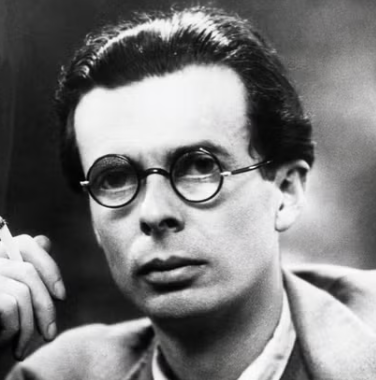
Music is an ocean, but the repertory is hardly even a lake; it is a pond.
▼
Source
source
Interview, Time magazine, December 1957
1 month 2 weeks ago
How can great minds be produced in a country where the test of a great mind is agreeing in the opinions of small minds?
▼
Source
source
As quoted in Egoists: A Book of Supermen (1909) by James Huneker, p. 367
2 weeks 4 days ago
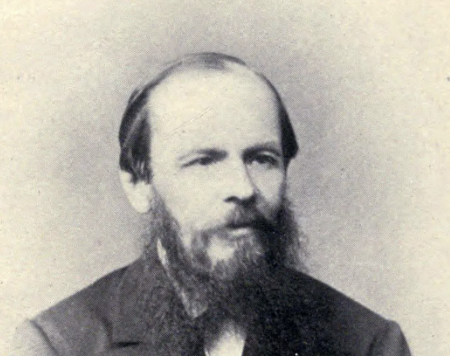
The more cunning a man is, the less he suspects that he will be caught in a simple thing. The more cunning a man is, the simpler the trap he must be caught in.

1 month 2 weeks ago
Conversation is an art in which a man has all mankind for his competitors, for it is that which all are practising every day while they live.
▼
Source
source
Considerations by the Way
2 months 2 weeks ago
Science fiction writers foresee the inevitable, and although problems and catastrophes may be inevitable, solutions are not.
1 week 6 days ago
If to describe a misery were as easy to live through it!

1 month 3 weeks ago
A little of all things, but nothing of everything, after the French manner.
▼
Source
source
Chapter 26. Of the Education of Children

1 week 3 days ago
The higher culture of the West-whose moral, aesthetic, and intellectual values industrial society still professes-was a pre-technological culture in a functional as well as chronological sense. Its validity was derived from the experience of a world which no longer exists and which cannot be recaptured because it is in a strict sense invalidated by technological society. Moreover, it remained to a large degree a feudal culture, even when the bourgeois period gave it some of its most lasting formulations. It was feudal not only because of its confinement to privileged minorities, not only because of its inherent romantic element (which will be discussed presently), but also because its authentic works expressed a conscious, methodical alienation from the entire sphere of business and industry, and from its calculable and profitable order.
▼
Source
source
p. 58

2 weeks 5 days ago
Only in America do people choose between health and financial ruin. Medical bankruptcy is policy choice, not inevitable outcome. We could have universal healthcare but choose a system that destroys families financially while claiming to provide care. The cruelty is the point.
1 week 6 days ago
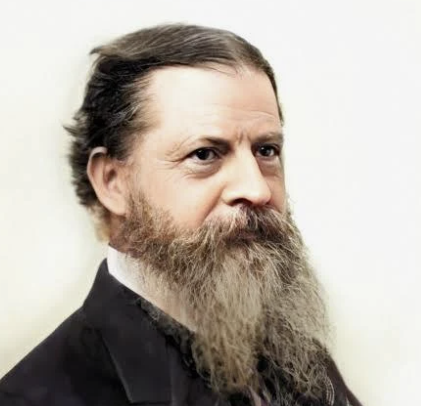
Three conceptions are perpetually turning up at every point in every theory of logic, and in the most rounded systems they occur in connection with one another. They are conceptions so very broad and consequently indefinite that they are hard to seize and may be easily overlooked. I call them the conceptions of First, Second, Third. First is the conception of being or existing independent of anything else. Second is the conception of being relative to, the conception of reaction with, something else. Third is the conception of mediation, whereby a first and second are brought into relation.
1 week 3 days ago
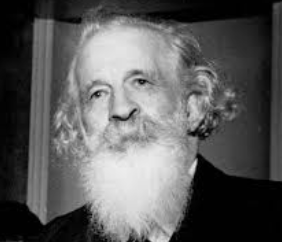
To live life well is to express life poorly; if one expresses life too well, one is living it no longer.
▼
Source
source
A Retrospective Glance at the Lifework of a Master of Books
1 month 2 weeks ago
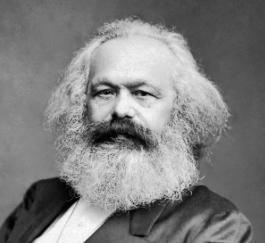
The economic concept of value does not occur in antiquity.
▼
Source
source
Notebook VII, The Chapter on Capital, p. 696.
1 month 2 weeks ago
God cannot give us a happiness and peace apart from Himself, because it is not there. There is no such thing.
▼
Source
source
Book II, Chapter 3, "The Shocking Alternative"
1 month 2 weeks ago
Man has his own inclinations and a natural will which, in his actions, by means of his free choice, he follows and directs. There can be nothing more dreadful than that the actions of one man should be subject to the will of another; hence no abhorrence can be more natural than that which a man has for slavery. And it is for this reason that a child cries and becomes embittered when he must do what others wish, when no one has taken the trouble to make it agreeable to him. He wants to be a man soon, so that he can do as he himself likes.
▼
Source
source
Part III : Selection on Education from Kant's other Writings, Ch. I Pedagogical Fragments, # 62
2 months 3 days ago
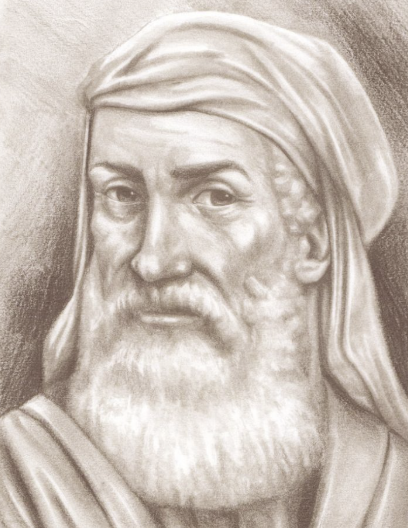
The dominion of bad men is hurtful chiefly to themselves who rule, for they destroy their own souls by greater license in wickedness; while those who are put under them in service are not hurt except by their own iniquity. For to the just all the evils imposed on them by unjust rulers are not the punishment of crime, but the test of virtue. Therefore the good man, although he is a slave, is free; but the bad man, even if he reigns, is a slave, and that not of one man, but, what is far more grievous, of as many masters as he has vices; of which vices when the divine Scripture treats, it says, For of whom any man is overcome, to the same he is also the bond-slave.
▼
Source
source
IV, 3 Variant translation: The good man, though a slave, is free; the wicked, though he reigns, is a slave, and not the slave of a single man, but — what is worse — the slave of as many masters as he has vices.
1 month 2 weeks ago
In all affairs - love, religion, politics, or business - it's a healthy idea, now and then, to hang a question mark on the things you have long taken for granted.
▼
Source
source
As quoted in The Reader's Digest, Vol. 37 (1940), p. 90; no specific source given.
1 month 2 weeks ago
I went to Salt Lake City and the Mormons tried to convert me, but when I found they forbade tea and tobacco I thought it was no religion for me.
▼
Source
source
Letter to C. P. Sanger, 23 December, 1929
2 months 2 weeks ago
Science fiction may be defined as that branch of literature which deals with the response of human beings to advances in science and technology. Actual change in science and technology, occurring quickly enough and striking deeply enough to affect a human being in the course of his normal lifetime, is a phenomenon peculiar to the world only since the Industrial Revolution ... The first well-known writer who responded to this new factor in human affairs by dealing regularly with science fiction, by studying the effect of additional scientific advance upon mankind ... was Jules Verne. In the English language, the early master was H. G. Wells. Between them, they laid the foundation for every theme upon which science fiction writers have been ringing variations ever since.

2 months 1 week ago
The man of perfect virtue is cautious and slow in his speech. When a man feels the difficulty of doing, can he be other than cautious and slow in speaking?
1 month 2 weeks ago
You don't have a soul. You are a soul. You have a body.
▼
Source
source
Commonly attributed to Mere Christianity, where it is not found. Earliest reference seems to be an unsourced attribution to George MacDonald in an 1892 issue of the Quaker periodical The British Friend.
1 month 3 weeks ago
We are delighted to find a person who values us as we value ourselves, and distinguishes us from the rest of mankind, with an attention not unlike that with which we distinguish ourselves.
▼
Source
source
Section III, Chap. I.

CivilSimian.com created by AxiomaticPanic, CivilSimian, Kalokagathia