
2 months 1 week ago
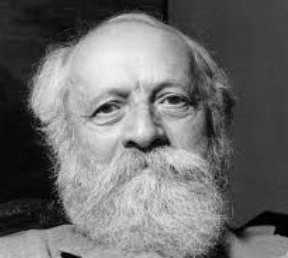
To be old is a glorious thing when one has not unlearned what it means to begin, this old man had perhaps first learned it thoroughly in old age.
▼
Source
p. 6
2 months 1 week ago
God ... desires His creature to be able to oppose Him. He has given that creature freedom. ... When man turns away from evil with that whole measure of power with which he is able to rebel against God, then he has truly turned to God.
▼
Source
p. 44
2 months 1 week ago
You do not attain to knowledge by remaining on the shore and watching the foaming waves, you must make the venture and cast yourself in, you must swim, alert and with all your force, even if a moment comes when you think you are losing consciousness; in this way, and in no other, do you reach anthropological insight.
▼
Source
p. 148
2 months 1 week ago
The realer religion is, so much the more it means its own overcoming. It wills to cease to be the special domain "Religion" and wills to become life. It is concerned in the end not with specific religious acts, but with redemption from all that is specific.
▼
Source
p. 34
2 months 1 week ago
The real struggle is not between East and West, or capitalism and communism, but between education and propaganda.
▼
Source
As quoted in Encounter with Martin Buber (1972) by Aubrey Hodes, p. 135
2 months 1 week ago
In the ice of solitude man becomes most inexorably a question to himself, and just because the question pitilessly summons and draws into play his most secret life he becomes an experience to himself.
▼
Source
p. 150
2 months 1 week ago
Life, in that it is life, necessarily entails justice.
▼
Source
"Politics and Morality" in Be'ayot (April 1945), as published in A Land of Two Peoples : Martin Buber on Jews and Arabs (1983) edited by Paul Mendes-Flohr, p. 169
2 months 1 week ago
Whoever abhors the name and fancies that he is godless - when he addresses with his whole devoted being the Thou of his life that cannot be restricted by any other, he addresses God.
2 months 1 week ago
When we rise out of [the night] into the new life and there begin to receive the signs, what can we know of that which - of him who gives them to us? Only what we experience from time to time from the signs themselves. If we name the speaker of this speech God, then it is always the God of a moment, a moment God.
▼
Source
Between Man and Man (1965), p. 15
2 months 1 week ago
Man must be free of it all, of his bad conscience and of the bad salvation from this conscience in order to become in truth the way. Now, he no longer promises others the fulfillment of his duties, but promises himself the fulfillment of man.
▼
Source
p. 178
2 months 1 week ago
Before his death, Rabbi Zusya said, "In the coming world, they will not ask me: 'Why were you not Moses?' They will ask me: 'Why were you not Zusya?'"
▼
Source
Tales of the Hasidim (1947), 1991 Ebook edition, p.251, as quoted in Jewish Currents.
2 months 1 week ago
The world is not divine sport, it is divine destiny. There is divine meaning in the life of the world, of man, of human persons, of you and of me. Creation happens to us, burns itself into us, recasts us in burning - we tremble and are faint, we submit. We take part in creation, meet the Creator, reach out to Him, helpers and companions.
2 months 1 week ago
The Thou encounters me by grace - it cannot be found by seeking. But that I speak the basic word to it is a deed of my whole being, is my essential deed.
2 months 1 week ago
The concept of guilt is found most powerfully developed even in the most primitive communal forms which we know: ... the man is guilty who violates one of the original laws which dominate the society and which are mostly derived from a divine founder; the boy who is accepted into the tribal community and learns its laws, which bind him thenceforth, learns to promise; this promise is often given under the sign of death, which is symbolically carried out on the boy, with a symbolical rebirth.
▼
Source
p. 178
2 months 1 week ago
To win a truly great life for the people of Israel, a great peace is necessary, not a fictitious peace, the dwarfish peace that is no more than a feeble intermission, but a true peace with the neighboring peoples, which alone can render possible a common development of this portion of the earth as the vanguard of the awakening Near East.
▼
Source
"Our Reply" (September 1945), as published in A Land of Two Peoples : Martin Buber on Jews and Arabs (1983) edited by Paul Mendes-Flohr, p. 178
2 months 1 week ago
In philosophical anthropology, ... where the subject is man in his wholeness, the investigator cannot content himself, as in anthropology as an individual science, with considering man as another part of nature and with ignoring the fact that he, the investigator, is himself a man and experiences this humanity in his inner experience in a way that he simply cannot experience any part of nature.
▼
Source
p. 147
2 months 1 week ago
The basic word I-Thou can be spoken only with one's whole being. The concentration and fusion into a whole being can never be accomplished by me, can never be accomplished without me. I require a Thou to become; becoming I, I say Thou.
2 months 1 week ago
When we see a great man desiring power instead of his real goal we soon recognize that he is sick, or more precisely that his attitude to his work is sick. He overreaches himself, the work denies itself to him, the incarnation of the spirit no longer takes place, and to avoid the threat of senselessness he snatches after empty power. This sickness casts the genius on to the same level as those hysterical figures who, being by nature without power, slave for power, in order that they may enjoy the illusion that they are inwardly powerful, and who in this striving for power cannot let a pause intervene, since a pause would bring with it the possibility of self-reflection and self-reflection would bring collapse.
▼
Source
p. 180
2 months 1 week ago
All journeys have secret destinations of which the traveler is unaware.
▼
Source
The Legend of the Baal-Shem (1955),1995 edition, p. 36
2 months 1 week ago
The philosophical anthropologist ... can know the wholeness of the person and through it the wholeness of man only when he does not leave his subjectivity out and does not remain an untouched observer.
▼
Source
p. 148
2 months 1 week ago
Egos appear by setting themselves apart from other egos.
2 months 1 week ago
The prophet is appointed to oppose the king, and even more: history.
▼
Source
BBC radio broadcast (1962), as quoted in The Great Thoughts (1984) by George Seldes
2 months 1 week ago
You do not attain to knowledge by remaining on the shore and watching the foaming waves, you must make the venture and cast yourself in, you must swim, alert and with all your force, even if a moment comes when you think you are losing consciousness; in this way, and in no other, do you reach anthropological insight.
▼
Source
p. 148
2 months 1 week ago
All names of God remain hallowed because they have been used not only to speak of God but also to speak to him.
2 months 1 week ago
I do not accept any absolute formulas for living. No preconceived code can see ahead to everything that can happen in a man's life. As we live, we grow and our beliefs change. They must change. So I think we should live with this constant discovery. We should be open to this adventure in heightened awareness of living. We should stake our whole existence on our willingness to explore and experience.
▼
Source
As quoted in Martin Buber : An Intimate Portrait (1971), p. 56
2 months 1 week ago
So long as you "have" yourself, have yourself as an object, your experience of man is only as of a thing among things.
▼
Source
p. 148
2 months 1 week ago
Every morning I shall concern myself anew about the boundary Between the love-deed-Yes and the power-deed-No And pressing forward honor reality. We cannot avoid Using power, Cannot escape the compulsion To afflict the world, So let us, cautious in diction And mighty in contradiction, Love powerfully.
▼
Source
"Power and Love"
2 months 1 week ago
Some would deny any legitimate use of the word God because it has been misused so much. Certainly it is the most burdened of all human words. Precisely for that reason it is the most imperishable and unavoidable. And how much weight has all erroneous talk about God's nature and works (although there never has been nor can be any such talk that is not erroneous) compared with the one truth that all men who have addressed God really meant him? For whoever pronounces the word God and really means Thou, addresses, no matter what his delusion, the true Thou of his life that cannot be restricted by any other and to whom he stands in a relationship that includes all others.
2 months 1 week ago
With the disintegration of all that Nietzsche had revered, existence, to him, had become a desert in which only one thing remained, namely that which had relentlessly forced him into this path: truthfulness that knows no limits and is not subject to any condition.
▼
Source
p. 45
2 months 1 week ago
The general fellowship of our human situation has been rendered even more dubious than before, inasmuch as, though the old ties of caste have been loosened, a new restriction of the individual to some prescribed status in society is manifest. Less than ever, perhaps, is it possible for a man to transcend the limitations imposed by his social origins.
2 months 1 week ago
Man, if he is to remain man, must advance by way of consciousness. There is no road leading backward. ... We can no longer veil reality from ourselves by renouncing self-consciousness without simultaneously excluding ourselves from the historical course of human existence.
2 months 1 week ago
Reason is like an open secret that can become known to anyone at any time; it is the quiet space into which everyone can enter through his own thought.
▼
Source
As quoted in Philosophy for a Time of Crisis : An Interpretation, with Key Writings by Fifteen Great Modern Thinkers (1959) by Adrienne Koch, Ch. 18, "Karl Jaspers : A New Humanism"
2 months 1 week ago
If the result of a war is to change nothing, but only to destroy, with the mere result that a group of human beings who do not differ notably from the conquered acquires preponderant advantages for the future, there is lacking the affective strength of an existence that has inspired faith, of an existence whose destiny would have been decided by the war.
2 months 1 week ago
Nietzsche, driven by the absolute demand of his existential truthfulness, could not abide the bourgeois world, even when its representative had human nobility.
2 months 1 week ago
The 'public' is a phantom, the phantom of an opinion supposed to exist in a vast number of persons who have no effective interrelation and though the opinion is not effectively present in the units. Such an opinion is spoken of as 'public opinion,' a fiction which is appealed to by individuals and by groups as supporting their special views. It is impalpable, illusory, transient; "'tis here, 'tis there, 'tis gone"; a nullity which can nevertheless for a moment endow the multitude with power to uplift or destroy.
2 months 1 week ago
"There is no God," cry the masses more and more vociferously; and with the loss of God man loses his sense of values - is, as it were, massacred because he feels himself of no account.
2 months 1 week ago
I approach the presentation of Kierkegaard with some trepidation. Next to Nietzsche, or rather, prior to Nietzsche, I consider him to be the most important thinker of our post-Kantian age. With Goethe and Hegel, an epoch had reached its conclusion, and our prevalent way of thinking - that is, the positivistic, natural-scientific one - cannot really be considered as philosophy.
▼
Source
The Great Philosophers
2 months 1 week ago
The possibility of peace, on whose behalf many are working, might perhaps become actual because the technical advances in offensive weapons make the prospect of a European war so disastrous, and because, if the nations were at grips again, even the victorious aggressor would be ruined. But there still remains open the possibility of a new war which, more dreadful than any that have preceded it would make an end of contemporary Europeans.
2 months 1 week ago
... Nietzsche's ideas and plans: for example, the idea of giving up the whole wretched academic world to form a secular monastic community.
2 months 1 week ago
The masses are our masters; and for every one who looks facts in the face his existence has become dependent on them, so that the thought of them must control his doings, his cares, and his duties. Even an articulated mass always tends to become unspiritual and inhuman. It is life without existence, superstitions without faith. It may stamp all flat; it is disinclined to tolerate independence and greatness, but prone to constrain people to become as automatic as ants.
2 months 1 week ago
Man is always something more than what he knows of himself. He is not what he is simply once and for all, but is a process...
2 months 1 week ago
The Greek word for philosopher (philosophos) connotes a distinction from sophos. It signifies the lover of wisdom (knowledge) as distinguished from him who considers himself wise in the possession of knowledge. This meaning of the word still endures: the essence of philosophy is not the possession of the truth but the search for truth. ... Philosophy means to be on the way. Its questions are more essential than its answers, and every answer becomes a new question.
▼
Source
Way to Wisdom: An Introduction to Philosophy (1951) as translated by Ralph Mannheim, Ch. 1, What is Philosophy?, p. 12
2 months 1 week ago
It is questionable whether there does not exist in man an obscure and blind will to make war; an impulse towards change, towards emergence from the familiarities of everyday life and from the stabilities of well-known conditions - something like a will to death as a will to annihilation and self-sacrifice, a vague enthusiasm for the upbuilding of a new world.
2 months 1 week ago
Rohde became more and more firmly bound to the bourgeois world, its institutions and accepted opinions. ... The contrast between the two natures makes Rohde and Nietzsche exemplary representatives of two distinctive worlds. In their youth they both live in the realm of boundless possibilities and feel an affinity through the exuberance of their noble aspirations. Subsequently they go in opposite directions. Nietzsche remains young, leaving concrete reality as his task assumes existential import. Rohde grows old, bourgeois, stable, and skeptical. Hence courage is a fundamental trait in Nietzsche, plaintive self-irony in Rohde. ... Rohde retained the interests but not the attitudes of his youth; he looked to the world of the Greeks for the object of his contemplation rather than the norm of obligation.
▼
Source
pp. 61-62
2 months 1 week ago
The would-be climber must be able to make himself liked ... please his superiors - avoid showing independence except in those matters wherein independence is expected of him by his chiefs... the winners in the race have qualities which disincline them to allow others to be their true selves. Hence the winners snub all those who aim at adequate self-expression, speaking of them as pretentious, eccentric, biased, unpractical, and measuring their achievements by insincere standards.
2 months 1 week ago
In the life of the mass-order, the culture of the generality tends to conform to the demands of the average human being. Spirituality decays through being diffused among the masses when knowledge is impoverished in every possible way by rationalisation until it becomes accessible to the crude understanding of all.
2 months 1 week ago
We cannot avoid conflict, conflict with society, other individuals and with oneself. Conflicts may be the sources of defeat, lost life and a limitation of our potentiality but they may also lead to greater depth of living and the birth of more far-reaching unities, which flourish in the tensions that engender them.
▼
Source
As quoted in Turning Conflict Into Profit : A Roadmap for Resolving Personal and Organizational Disputes (2005) by Larry Axelrod and Rowland Johnson
2 months 1 week ago
The vicious circle of dread of war which leads the nations to arm themselves for self-protection, with the result that bloated armaments ultimately lead to the war which they were intended to avert, can be broken in either of two conceivable ways. There might arise a unique world power, brought into being by the unification of all those now in possession of weapons, and equipped with the capacity to forbid the lesser and unarmed nations to make war. On the other hand, it may arise by the working of a fate to us still inscrutable which, out of ruin, will disclose a way towards the development of a new human being. To will the discovery of this way would be blind impotence, but those who do not wish to deceive themselves will be prepared for the possibility.
2 months 1 week ago
No one is guiltless...But no one is beyond the pale of human existence, provided he pays for his guilt.
2 months 1 week ago
At the parting of ways in the life-order, where the question is between the new creation or decay, that man will be decisive for new creation who is able on his own initiative to seize the helm and steer a course of his own choosing - even if that course be opposed to the will of the masses. Should the emergence of such persons become impossible a lamentable shipwreck will be inevitable.
CivilSimian.com created by AxiomaticPanic, CivilSimian, Kalokagathia