
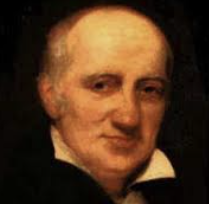
3 months ago
Duty is that mode of action which constitutes the best application of the capacity of the individual to the general advantage. Right is the claim of the individual to his share of the benefit arising from his neighbors' discharge of their several duties.
▼
Source
"Summary of Principles". 1.5
3 months ago
The benefit of the governed is made to lie on one side and the benefit of the governors on the other.
▼
Source
Book III, Chapter 9
3 months ago
It is comparatively easy for the philosopher in his closet to invent imaginary schemes of policy, and to shew how mankind, if they were without passions and without prejudices, might best be united in the form of a political community. But, unfortunately, men in all ages are the creatures of passions, perpetually prompting them to defy the rein, and break loose from the dictates of sobriety and speculation.
▼
Source
History of the Commonwealth of England. From its Commencement, to the Restoration of Charles the Second. Volume the Fourth. Oliver, Lord Protector (1828), p. 579
3 months ago
Simplify the social system, in the manner which every motive, but those of usurpation and ambition, powerfully recommends; render the plain dictates of justice level to every capacity; remove the necessity of implicit faith; and we may expect the whole species to become reasonable and virtuous.
▼
Source
Portable Enlightenment Reader, p. 477
3 months ago
Whenever government assumes to deliver us from the trouble of thinking for ourselves, the only consequences it produces are those of torpor and imbecility.
▼
Source
Vol. 2, bk. 6, ch. 1
3 months ago
Privilege is a regulation rendering a few men, and those only, by the accident of their birth, eligible to certain situations. It kills all liberal ambition in the rest of mankind, by opposing to it an apparently insurmountable bar. It diminishes it in the favored class itself, by showing them the principal qualification as indefeasibly theirs. Privilege entitles a favored few to engross to themselves gratifications which the system of the universe left at large to all her sons; it puts into the hands of those few the means of oppression against the rest of their species; it fill them witth vain-glory, and affords them every incitement to insolence and a lofty disregard to the feeling and interests of others.
▼
Source
Book V, Chapter 11, "Moral Effects of Aristocracy"
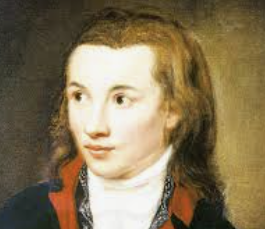
3 months ago
Self-alienation is the source of all degradation as well as, on the contrary, the basis of all true elevation. The first step will be a look inward, an isolating contemplation of our self. Whoever remains standing here proceeds only halfway. The second step must be an active look outward, an autonomous, determined observation of the outer world. Fragment No. 24 Variant translation: The first step is to look within, the discriminating contemplation of the self. He who remains at this point only half develops. The second step must be a telling look without, independent, sustained contemplation of the external world.
3 months ago
Life is a disease of the spirit; a working incited by Passion. Rest is peculiar to the spirit.
3 months ago
There are ideal series of events which run parallel with the real ones. They rarely coincide. Men and circumstances generally modify the ideal train of events, so that it seems imperfect, and its consequences are equally imperfect. Thus with the Reformation; instead of Protestantism came Lutheranism.
▼
Source
Epigraph, "The Mystery Of Marie Rogêt" (1842) by Edgar Allan Poe, adapted from Fragments from German Prose Writers (1841) by Sarah Austin
3 months ago
The normal present connects the past and the future through limitation. Contiguity results, crystallization by means of solidification. There also exists, however, a spiritual present that identifies past and future through dissolution, and this mixture is the element, the atmosphere of the poet.
▼
Source
Fragment No. 109
3 months ago
There is, properly speaking, no Misfortune in the world. Happiness and Misfortune stand in continual balance. Every Misfortune is, as it were, the obstruction of a stream, which, after overcoming this obstruction, but bursts through with the greater force.
3 months ago
Philosophy ... bears witness to the deepest love of reflection, to absolute delight in wisdom.
▼
Source
"Logological Fragments," Philosophical Writings, M. Stolijar, trans. (Albany: 1997) #12
3 months ago
Someone arrived there - who lifted the veil of the goddess, at Sais. - But what did he see? He saw - wonder of wonders - himself. Novalis here alludes to Plutarch's account of the shrine of the goddess Minerva, identified with Isis, at Sais, which he reports had the inscription "I am all that hath been, and is, and shall be; and my veil no mortal has hitherto raised."
3 months ago
Building worlds is not enough for the deeper urging mind; but a loving heart sates the striving spirit.
▼
Source
Fragment No. 91
3 months ago
Plants are Children of the Earth; we are Children of the Æther. Our Lungs are properly our Root; we live, when we breathe; we begin our life with breathing.
3 months ago
The world must be romanticized. In this way the originary meaning may be found again.
▼
Source
As quoted in The Experience of the Foreign : Culture and Translation in Romantic Germany (1992) by Antoine Berman Variant translation: Romanticize the world.
3 months ago
Surely this voice meant our Teacher; for it is he that can collect the indications which lie scattered on all sides. A singular light kindles in his looks, when at length the high Rune lies before us, and he watches in our eyes whether the star has yet risen upon us, which is to make the Figure visible and intelligible.
3 months ago
We are on a mission: we are called to the cultivation of the earth.
▼
Source
Fragment No. 32
3 months ago
What is Nature? An encyclopedical, systematic Index or Plan of our Spirit. Why will we content us with the mere catalogue of our Treasures? Let us contemplate them ourselves, and in all ways elaborate and use them.
3 months ago
Fate and temperament are the names of a concept.
▼
Source
As quoted in Demian (1972) by Hermann Hesse, trans. W.J. Strachan
3 months ago
The art of writing books is not yet invented. But it is at the point of being invented. Fragments of this nature are literary seeds. There may be many an infertile grain among them: nevertheless, if only some come up!
▼
Source
Fragment No. 114
3 months ago
The ideal of Morality has no more dangerous rival than the ideal of highest Strength, of most powerful life; which also has been named (very falsely as it was there meant) the ideal of poetic greatness. It is the maximum of the savage; and has, in these times, gained, precisely among the greatest weaklings, very many proselytes. By this ideal, man becomes a Beast-Spirit, a Mixture; whose brutal wit has, for weaklings, a brutal power of attraction.
3 months ago
The poem of the understanding is philosophy.
▼
Source
"Logological Fragments," Philosophical Writings, M. Stolijar, trans. (Albany: 1997) #24
3 months ago
Philosophy can bake no bread; but she can procure for us God, Freedom, Immortality. Which, then, is more practical, Philosophy or Economy?
▼
Source
The first sentence of this was used by William Torrey Harris for the motto of the Journal of Speculative Philosophy
3 months ago
Before abstraction everything is one, but one like chaos; after abstraction everything is united again, but this union is a free binding of autonomous, self-determined beings. Out of a mob a society has developed, chaos has been transformed into a manifold world.
▼
Source
Fragment No. 95
3 months ago
Nature is an Æolian Harp, a musical instrument; whose tones again are keys to higher strings in us.
3 months ago
To romanticize the world is to make us aware of the magic, mystery and wonder of the world; it is to educate the senses to see the ordinary as extraordinary, the familiar as strange, the mundane as sacred, the finite as infinite.
▼
Source
As quoted in "Bildung in Early German Romanticism" by Frederick C. Beiser, in Philosophers on Education : Historical Perspectives (1998) by Amélie Rorty, p. 294
3 months ago
I shall in no time forget that moment. We felt as if we had had in our souls a clear passing glimpse into this wondrous World.
3 months ago
Every beloved object is the center point of a paradise.
▼
Source
Fragment No. 51; Jeder geliebte Gegenstand ist der Mittelpunkt eines Paradieses. Variant translations:
3 months ago
If our Bodily Life is a burning, our Spiritual Life is a being burnt, a Combustion (or, is precisely the inverse the case?); Death, therefore, perhaps a Change of Capacity.
3 months ago
Fate and temperament are two words for one and the same concept.
▼
Source
As quoted in Demian (1965) by Hermann Hesse, trans. Michael Roloff and Michael Lebeck
3 months ago
Love works magic. It is the final purpose Of the world story, The Amen of the universe.
3 months ago
The spirit of Poesy is the morning light, which makes the Statue of Memnon sound.
3 months ago
Friends, the soil is poor, we must sow seeds in plenty for us to garner even modest harvests.
▼
Source
Motto
3 months ago
We are near awakening when we dream that we dream.
3 months ago
If the world is a precipitation of human nature, so to speak, then the divine world is a sublimation of the same. Both occur in one act. No precipitation without sublimation. What goes lost there in agility, is won here.
▼
Source
Fragment No. 96
3 months ago
The first Man is the first Spirit-seer; all appears to him as Spirit. What are children, but first men? The fresh gaze of the Child is richer in significance than the forecasting of the most indubitable Seer.
3 months ago
To get to know a truth properly, one must polemicize it.
▼
Source
Quoted in The Viking Book of Aphorisms by Wystan Hugh Auden (1962) p. 323
3 months ago
No one, of a surety, wanders farther from the mark than he who fancies to himself that he already understands this marvellous Kingdom, and can, in few words, fathom its constitution, and everywhere find the right path. To no one, who has broken off, and made himself an Island, will insight rise of itself, nor even without toilsome effort. Only to children, or childlike men, who know not what they do, can this happen. Long, unwearied intercourse, free and wise Contemplation, attention to faint tokens and indications; an inward poet-life, practised senses, a simple and devout spirit: these are the essential requisites of a true Friend of Nature; without these no one can attain his wish.
3 months ago
The best thing about the sciences is their philosophical ingredient, like life for an organic body. If one dephilosophizes the sciences, what remains left? Earth, air, and water.
▼
Source
Fragment No. 62
3 months ago
Sleep is for the inhabitants of Planets only. In another time, Man will sleep and wake continually at once. The greater part of our Body, of our Humanity itself, yet sleeps a deep sleep.
3 months ago
I was still blind, but twinkling stars did dance Throughout my being's limitless expanse, Nothing had yet drawn close, only at distant stages I found myself, a mere suggestion sensed in past and future ages.
▼
Source
As quoted in Romantic Vision, Ethical Context: Novalis and Artistic Autonomy (1987) by Géza von Molnár, p. 2
3 months ago
Pure mathematics is religion.
3 months ago
The division of Philosopher and Poet is only apparent, and to the disadvantage of both. It is a sign of disease, and of a sickly constitution.
3 months ago
Everywhere we seek the Absolute, and always we find only things.
▼
Source
Fragment No. 1; Variant: We seek the absolute everywhere and only ever find things.
3 months ago
The true philosophical Act is annihilation of self (Selbsttodtung); this is the real beginning of all Philosophy; all requisites for being a Disciple of Philosophy point hither. This Act alone corresponds to all the conditions and characteristics of transcendental conduct.
3 months ago
Where children are, there is a golden age.
▼
Source
Fragment No. 97
3 months ago
It depends only on the weakness of our organs and of our self-excitement (Selbstberuhrung), that we do not see ourselves in a Fairy-world. All Fabulous Tales (Mahrchen) are merely dreams of that home world, which is everywhere and nowhere. The higher powers in us, which one day as Genies, shall fulfil our will, are, for the present, Muses, which refresh us on our toilsome course with sweet remembrances.
3 months ago
Morality must be the heart of our existence, if it is to be what it wants to be for us. ... The highest form of philosophy is ethics. Thus all philosophy begins with "I am." The highest statement of cognition must be an expression of that fact which is the means and ground for all cognition, namely, the goal of the I.
▼
Source
Fichte Studies § 556
3 months ago
Not wise does it seem to attempt comprehending and understanding a Human World without full perfected Humanity. No talent must sleep; and if all are not alike active, all must be alert, and not oppressed and enervated. As we see a future Painter in the boy who fills every wall with sketches and variedly adds colour to figure; so we see a future Philosopher in him who restlessly traces and questions all natural things, pays heed to all, brings together whatever is remarkable, and rejoices when he has become master and possessor of a new phenomenon, of a new power and piece of knowledge.
CivilSimian.com created by AxiomaticPanic, CivilSimian, Kalokagathia