
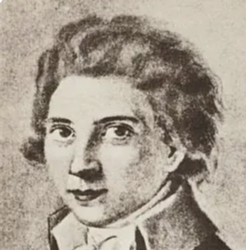
2 months 3 weeks ago
Irony is the form of paradox. Paradox is what is good and great at the same time.
▼
Source
Aphorism 48, as translated in Dialogue on Poetry and Literary Aphorisms (1968), p. 151
2 months 3 weeks ago
All those countless battles-those endless, and... for the greater part, useless wars, of which... fills up for so many thousand years... are but little atoms compared with the great whole of human destiny.
2 months 3 weeks ago
One has only as much morality as one has philosophy and poetry.
▼
Source
"Selected Ideas (1799-1800)", Dialogue on Poetry and Literary Aphorisms, Ernst Behler and Roman Struc, trans. (Pennsylvania University Press:1968) #62
2 months 3 weeks ago
One can only become a philosopher, but not be one. As one believes he is a philosopher, he stops being one.
▼
Source
"Selected Aphorisms from the Athenaeum (1798)", Dialogue on Poetry and Literary Aphorisms, Ernst Behler and Roman Struc, trans. (Pennsylvania University Press:1968) #54
2 months 3 weeks ago
Romantic poetry ... recognizes as its first commandment that the will of the poet can tolerate no law above itself.
▼
Source
Philosophical Fragments, P. Firchow, trans. (1991) § 116
2 months 3 weeks ago
When one considers the sublime disposition underlying the tmly universal educatiOn (of traditional India) ... then what IS or has been called religion in Europe seems to us to be scarcely deserving of that name. And one feels compelled to advise those who Wish to witness religion to travel to India for that purpose ....
▼
Source
quoted in Londhe, S. (2008). A tribute to Hinduism: Thoughts and wisdom spanning continents and time about India and her culture. New Delhi: Pragun Publication.
2 months 3 weeks ago
Wit is the appearance, the external flash of imagination. Thus its divinity, and the witty character of mysticism.
▼
Source
Aphorism 26, as translated in Dialogue on Poetry and Literary Aphorisms (1968)
2 months 3 weeks ago
Think of something finite molded into the infinite, and you think of man.
▼
Source
"Selected Ideas (1799-1800)", Dialogue on Poetry and Literary Aphorisms, Ernst Behler and Roman Struc, trans. (1968) #98
2 months 3 weeks ago
Every uneducated person is a caricature of himself.
▼
Source
"Selected Aphorisms from the Athenaeum (1798)", Dialogue on Poetry and Literary Aphorisms, Ernst Behler and Roman Struc, trans. (Pennsylvania University Press:1968) #63
2 months 3 weeks ago
To live classically and to realize antiquity practically within oneself is the summit and goal of philology.
▼
Source
Philosophical Fragments, P. Firchow, trans. (1991) § 147
2 months 3 weeks ago
The divine origin of man, as taught by Vedanta, IS continually inculcated, to stimulate his efforts to return, to animate him in the struggle, and incite him to consider a reunion and reincorporation with Divinity as the one primary object of every action and reaction. Even the loftiest philosophy of the European, the idealism of reason as it is set forth by the Greek philosophers, appears in comparison with the abundant light and vigor of Oriental idealism like a feeble Promethean spark in the full flood of heavenly glory of the noonday sun, faltering and feeble and ever ready to be extinguished.
▼
Source
quoted in Londhe, S. (2008). A tribute to Hinduism: Thoughts and wisdom spanning continents and time about India and her culture. New Delhi: Pragun Publication.
2 months 3 weeks ago
Honour is the mysticism of legality.
▼
Source
Aphorism 77, of Ideas as translated in The Early Political Writings of the German Romantics (1996) edited by Frederick C. Beiser, p. 131
2 months 3 weeks ago
Where there is politics or economics, there is no morality.
▼
Source
"Selected Ideas (1799-1800)", Dialogue on Poetry and Literary Aphorisms, Ernst Behler and Roman Struc, trans. (1968) #101
2 months 3 weeks ago
Moderation is the spirit of castrated narrow-mindedness.
▼
Source
"Selected Aphorisms from the Athenaeum (1798)", Dialogue on Poetry and Literary Aphorisms, Ernst Behler and Roman Struc, trans. (Pennsylvania University Press:1968) #64
2 months 3 weeks ago
To disrespect the masses is moral; to honor them, lawful.
▼
Source
Lucinde and the Fragments, P. Firchow, trans. (1991), "Athenaeum Fragments" § 211
2 months 3 weeks ago
India is pre-eminently distinguished for the many traits of original grandeur of thought and of the wonderful remains of immediate knowledge.
▼
Source
quoted in Londhe, S. (2008). A tribute to Hinduism: Thoughts and wisdom spanning continents and time about India and her culture. New Delhi: Pragun Publication.
2 months 3 weeks ago
In the same way as philosophy loses sight of its true object and appropriate matter, when either it passes into and merges in theology, or meddles with external politics, so also does it mar its proper form when it attempts to mimic the rigorous method of mathematics.
▼
Source
Philosophy of Life, Lecture 1
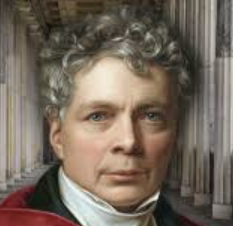
2 months 3 weeks ago
Yes! We believe in a higher principle than your virtue and the kind of morality you speak of so paltrily and without much conviction. We believe that there is no imperative or reward for virtue for the soul because it simply acts according to the necessity of its inherent nature. The moral imperative expresses itself in an ought and presupposes the concept of an evil next to that of good.
▼
Source
P. 43
2 months 3 weeks ago
It is easy to see that this problem can be solved neither in theoretical nor in practical philosophy, but only in a higher discipline, which is the link that combines them, and neither theoretical nor practical, but both at once.
2 months 3 weeks ago
If the State, modeled after the universe, is split into two spheres or classes of beings - wherein the free represent the ideas and the unfree the concrete and sensate things - then the ultimate and uppermost order remains unrealized by both. By using sensate things as tools or organs, the ideas obtain a direct relationship to the apparitions and enter into them as souls. God, however, as identity of the highest order, remains above all reality and eternally has merely an indirect relationship. If then in the higher moral order the State represents a second nature, then the divine can never have anything other than an indirect relationship to it, never can it bear any real relationship to it, and religion, if it seeks to preserve itself in unscathed pure ideality, can therefore never exist - even in the most perfect State - other than esoterically in the form of mystery cults.
▼
Source
P. 51
2 months 3 weeks ago
The end of the philosophical dialogue lies in itself; it can never serve a purpose outside of itself. Just as a sculptor does not cease to be a work of art even if it lies at the bottom of the sea, so indeed every work of philosophy endures, even if uncomprehended in its own time. One would be grateful if it were merely a matter of incomprehension. Instead, the work is usually refitted and appropriated by various entities-some playing the part of the opponent; others, that of the proponent.
▼
Source
P.3-4
2 months 3 weeks ago
There was a time when religion was kept secret from popular belief within the mystery cults like a holy fire, sharing a common sanctuary with philosophy. The legends of antiquity name the earliest philosophers as the originators of these mystery cults, from which the most enlightened among the later philosophers, notably Plato, liked to educe their divine teachings. At that time philosophers still had the courage and the right to discuss the singly great themes, the only ones worthy of philosophizing and rising above common knowledge.
▼
Source
P. 7
2 months 3 weeks ago
They think of the philosopher as holding the ideal or subjective in one hand and the real or objective in the other and then have him strike the palms of his hands together so that one abrades the other. The product of this abrasion is the Absolute.
▼
Source
P. 12
2 months 3 weeks ago
Countless attempts have been made to no avail to construct a continuity from the supreme principle of the intellectual world to the finite world. The oldest and most frequent of these attempts is well known: the principle of emanation, according to which the outflowings from the godhead, in gradual increments and detachment from the ordinary source, losing their divine perfection until, in the end, they pass into the opposite (matter, privation), just as light is finally confined by darkness.
▼
Source
P. 24
2 months 3 weeks ago
What is Europe really but a sterile trunk which owes everything to oriental grafts?
▼
Source
Letter of 18 December 1806 to Windischmann, quoted by Rene Gerard, L'Orient et la pensée romantique allemande, Paris 1963,, p. 213. quoted in Poliakov, L. (1974).
2 months 3 weeks ago
On its pass through finitude, the being-for-itself of the counter-image expresses itself most potently as ""I-ness", as self-identical individuality. Just as a planet in its orbit no sooner reaches its farthest distance from the center than it returns to its closest proximity, so the point of the farthest distance from God, the I-ness, is also the moment of its return to the Absolute, of the re-absorption into the ideal.
▼
Source
P. 30
2 months 3 weeks ago
If there is to be any philosophy at all, this contradiction must be resolved - and the solution of this problem, or answer to the question: how can we think both of Presentations as conforming to objects, and objects as conforming to presentations? is, not the first, but the highest task of transcendental philosophy.
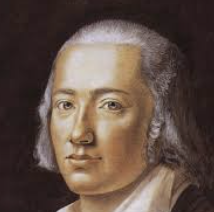
2 months 3 weeks ago
What is all that men have done and thought over thousands of years, compared with one moment of love. But in all Nature, too, it is what is nearest to perfection, what is most divinely beautiful! There all stairs lead from the threshold of life. From there we come, to there we go.
2 months 3 weeks ago
Being at one is god-like and good, but human, too human, the mania Which insists there is only the One, one country, one truth, and one way.
▼
Source
"The Root of All Evil" as translated by Michael Hamburger
2 months 3 weeks ago
What is the wisdom of a book compared with the wisdom of an angel?
2 months 3 weeks ago
You seek life, and a godly fire Gushes and gleams for you out of the earth, As, with shuddering long, you Hurl yourself down to the flames of the Etna. So by a queen's wanton whim Pearls were dissolved in wine- heed her not! What folly, poet, to cast your riches Into that bright and bubbling cup! Yet still are you holy to me, as the might of the earth That bore you away, audaciously perishing! And I would follow the hero into the depths Did love not hold me.
▼
Source
"Empedokles"
2 months 3 weeks ago
I call on Fate to give me back my soul.
2 months 3 weeks ago
The earth with yellow pears And overgrown with roses wild Upon the pond is bent, And swans divine, With kisses drunk You drop your heads In the sublimely sobering water. But where, with winter come, am I To find, alas, the floweres, and where The sunshine And the shadow of the world? Cold the walls stand And the wordless, in the wind The weathercocks are rattling.
▼
Source
"Halves of Life"
2 months 3 weeks ago
It was not delight, not wonder that arose among us, it was the peace of heaven. A thousand times have I said it to her and to myself: the most beautiful is also the most sacred. And such was everything in her. Like her singing, even so was her life.
2 months 3 weeks ago
He who has thought most deeply loves what is most alive.
2 months 3 weeks ago
Before either of us knew it, we belonged to each other.
2 months 3 weeks ago
What has always made the state a hell on earth has been precisely that man has tried to make it heaven.
2 months 3 weeks ago
Now we were standing close to the summit's rim, gazing out into the endless East.
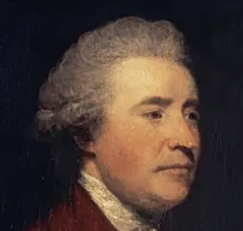
2 months 3 weeks ago
The Whigs of this day have before them, in this Appeal, their constitutional ancestors: They have the doctors of the modern school. They will choose for themselves. The author of the Reflections has chosen for himself. If a new order is coming on, and all the political opinions must pass away as dreams, which our ancestors have worshipped as revelations, I say for him, that he would rather be the last (as certainly he is the least) of that race of men, than the first and greatest of those who have coined to themselves Whig principles from a French die, unknown to the impress of our fathers in the constitution.
▼
Source
p. 476
2 months 3 weeks ago
You can never plan the future by the past.
▼
Source
Letter to a Member of the National Assembly (1791), Volume IV, p. 55.
2 months 3 weeks ago
...they who would make peace without a previous knowledge of the terms, make a surrender. They are conquered. They do not treat; they receive the law. Is this the disposition of the people of England? Then the people of England are contented to seek in the kindness of a foreign systematick enemy combined with a dangerous faction at home, a security which they cannot find in their own patriotism and their own courage. They are willing to trust to the sympathy of Regicides the guarantee of the British Monarchy. They are content to rest their religion on the piety of atheists by establishment. They are satisfied to seek in the clemency of practised murderers the security of their lives. They are pleased to confide their property to the safeguard of those who are robbers by inclination, interest, habit, and system. If this be our deliberate mind, truly we deserve to lose, what it is impossible we should long retain, the name of a nation.
▼
Source
p. 48
2 months 3 weeks ago
If we owe to it [civil society] any duty, it is not subject to our will. Duties are not voluntary. Duty and will are even contradictory terms. Now though civil society might be at first a voluntary act (which in many cases it undoubtedly was) its continuance is under a permanent standing covenant, coexisting with the society; and it attaches upon every individual of that society, without any formal act of his own. This is warranted by the general practice, arising out of the general sense of mankind.
▼
Source
p. 442
2 months 3 weeks ago
Economy is a distributive virtue, and consists not in saving but selection. Parsimony requires no providence, no sagacity, no powers of combination, no comparison, no judgment.
2 months 3 weeks ago
When he entered into the Whig party, he did not conceive that they pretended to any discoveries. They did not affect to be better Whigs, than those were who lived in the days in which principle was put to the test. Some of the Whigs of those days were then living. They were what the Whigs had been at the Revolution; what they had been during the reign of queen Anne; what they had been at the accession of the present royal family.
▼
Source
p. 409
2 months 3 weeks ago
Manners are of more importance than laws. The law can touch us here and there, now and then. Manners are what vex or soothe, corrupt or purify, exalt or debase, barbarize or refine us, by a constant, steady, uniform, insensible operation like that of the air we breathe in.
▼
Source
No. 1, p. 172 in The Works of the Right Honourable Edmund Burke: A New Edition, v. VIII. London: F. C. and J. Rivington, 1815
2 months 3 weeks ago
Free trade is not based on utility but on justice.
2 months 3 weeks ago
Tyrants seldom want pretexts.
2 months 3 weeks ago
All men that are ruined, are ruined on the side of their natural propensities.
▼
Source
No. 1, volume v, p. 286
2 months 3 weeks ago
Men without their choice derive benefits from that association; without their choice they are subjected to duties in consequence of these benefits; and without their choice they enter into a virtual obligation as binding as any that is actual. Look through the whole of life and the whole system of duties. Much the strongest moral obligations are such as were never the results of our option. I allow, that if no supreme ruler exists, wise to form, and potent to enforce, the moral law, there is no sanction to any contract, virtual or even actual, against the will of prevalent power. On that hypothesis, let any set of men be strong enough to set their duties at defiance, and they cease to be duties any longer.
▼
Source
p. 442
2 months 3 weeks ago
A great revolution is on the point of being accomplished. It is a revolution not in human affairs, but in man himself.
▼
Source
p. 2
CivilSimian.com created by AxiomaticPanic, CivilSimian, Kalokagathia