
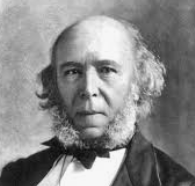
2 months 3 weeks ago
Architecture, sculpture, painting, music, and poetry, may truly be called the efflorescence of civilised life.
▼
Source
Education: What Knowledge Is of Most Worth?
2 months 3 weeks ago
He who carries self-regard far enough to keep himself in good health and high spirits, in the first place thereby becomes an immediate source of happiness to those around, and in the second place maintains the ability to increase their happiness by altruistic actions. But one whose bodily vigour and mental health are undermined by self-sacrifice carried too far, in the first place becomes to those around a cause of depression, and in the second place renders himself incapable, or less capable, of actively furthering their welfare. In estimating conduct we must remember that there are those who by their joyousness beget joy in others, and that there are those who by their melancholy cast a gloom on every circle they enter.
▼
Source
Ethics (New York:1915), § 72, pp. 193-194
2 months 3 weeks ago
"No human laws are of any validity if contrary to the law of nature; and such of them as are valid derive all their force and all their authority mediately or immediately from this original." Thus writes Blackstone, to whom let all honour be given for having so far outseen the ideas of his time; and, indeed, we may say of our time. A good antidote, this, for those political superstitions which so widely prevail. A good check upon that sentiment of power-worship which still misleads us by magnifying the prerogatives of constitutional governments as it once did those of monarchs. Let men learn that a legislature is not "our God upon earth," though, by the authority they ascribe to it, and the things they expect from it, they would seem to think it is. Let them learn rather that it is an institution serving a purely temporary purpose, whose power, when not stolen, is at the best borrowed.
▼
Source
Pt. III, Ch. 19 : The Right to Ignore the State, § 2
2 months 3 weeks ago
We have repeatedly observed that while any whole is evolving, there is always going on an evolution of the parts into which it divides itself; but we have not observed that this equally holds of the totality of things, which is made up of parts within parts from the greatest down to the smallest.
▼
Source
Pt. II, The Knowable; Ch. XV, The Law of Evolution (continued)
2 months 3 weeks ago
Surely if a single cell may, when subjected to certain influences, become a man in the space of twenty years; there is nothing absurd in the hypothesis that under certain other influences, a cell may, in the course of millions of years, give origin to the human race.
2 months 3 weeks ago
Every pleasure raises the tide of life; every pain lowers the tide of life.
▼
Source
Ch. 6, The Biological View
2 months 3 weeks ago
Evil perpetually tends to disappear.
▼
Source
Part I, Ch. 2 : The Evanescence of Evil, § 2
2 months 3 weeks ago
It is provable both that the historical sequence was, in its main outlines, a necessary one; and that the causes which determined it apply to the child as to the race. ...as the mind of humanity placed in the midst of phenomena and striving to comprehend them has, after endless comparisons, speculations, experiments, and theories, reached its present knowledge of each subject by a specific route; it may rationally be inferred that the relationship between mind and phenomena is such as to prevent this knowledge from being reached by any other route; and that as each child's mind stands in this same relationship to phenomena, they can be accessible to it only through the same route. Hence in deciding upon the right method of education, an inquiry into the method of civilization will help to guide us.
2 months 3 weeks ago
Should the believers in special creations consider it unfair thus to call upon them to describe how special creations take place, I reply that this is far less than they demand from the supporters of the Development Hypothesis. They are merely asked to point out a conceivable mode. On the other hand, they ask, not simply for a conceivable mode, but for the actual mode.
2 months 3 weeks ago
Under the natural course of things each citizen tends towards his fittest function. Those who are competent to the kind of work they undertake, succeed, and, in the average of cases, are advanced in proportion to their efficiency; while the incompetent, society soon finds out, ceases to employ, forces to try something easier, and eventually turns to use.
▼
Source
Vol. 3, Ch. VII, Over-Legislation
2 months 3 weeks ago
Every cause produces more than one effect.
▼
Source
On Progress: Its Law and Cause
2 months 3 weeks ago
Originally, ethics has no existence apart from religion, which holds it in solution.
▼
Source
Ch. 1, The Confusion of Ethical Thought
2 months 3 weeks ago
The poverty of the incapable, the distresses that come upon the imprudent, the starvation of the idle, and those shoulderings aside of the weak by the strong, which leave so many "in shallows and in miseries," are the decrees of a large, far-seeing benevolence.
▼
Source
Pt. III, Ch. 25 : Poor-Laws
2 months 3 weeks ago
If a single cell, under appropriate conditions, becomes a man in the space of a few years, there can surely be no difficulty in understanding how, under appropriate conditions, a cell may, in the course of untold millions of years, give origin to the human race.
▼
Source
Vol. I, Part III: The Evolution of Life, Ch. 3 : General Aspects of the Evolution
2 months 3 weeks ago
We have, indeed, in the part taken by many scientific men in this controversy of "Law versus Miracle," a good illustration of the tenacious vitality of superstitions. Ask one of our leading geologists or physiologists whether he believes in the Mosaic account of the creation, and he will take the question as next to an insult. Either he rejects the narrative entirely, or understands it in some vague non-natural sense. ...Whence ...this notion of "special creations"...Why, after rejecting all the rest of the story, he should strenuously defend this last remnant of it, as though he had received it on valid authority, he would be puzzled to say.
2 months 3 weeks ago
The essential trait in the moral consciousness, is the control of some feeling or feelings by some other feeling or feelings.
▼
Source
Ch. 7, The Psychological View
2 months 3 weeks ago
Man needed one moral constitution to fit him for his original state; he needs another to fit him for his present state; and he has been, is, and will long continue to be, in process of adaptation. And the belief in human perfectibility merely amounts to the belief that, in virtue of this process, man will eventually become completely suited to his mode of life. Progress, therefore, is not an accident, but a necessity. Instead of civilization being artificial, it is part of nature; all of a piece with the development of the embryo or the unfolding of a flower. The modifications mankind have undergone, and are still undergoing, result from a law underlying the whole organic creation; and provided the human race continues, and the constitution of things remains the same, those modifications must end in completeness.
▼
Source
Pt. I, Ch. 2 : The Evanescence of Evil, concluding paragraph
2 months 3 weeks ago
We too often forget that not only is there "a soul of goodness in things evil," but very generally also, a soul of truth in things erroneous.
▼
Source
Pt. I, The Unknowable; Ch. I, Religion and Science; quoting from "There is some soul of goodness in things evil / Would men observingly distil it out", William Shakespeare, Henry V, act iv. sc. i
2 months 3 weeks ago
The supporters of the Development Hypothesis... can show that any existing species-animal or vegetable-when placed under conditions different from its previous ones, immediately begins to undergo certain changes fitting it for the new conditions. They can show that in successive generations these changes continue; until, ultimately, the new conditions become the natural ones. They can show that in cultivated plants, in domesticated animals, and in the several races of men, such alterations have taken place. They can show that the degrees of difference so produced are often, as in dogs, greater than those on which distinctions of species are in other cases founded.
2 months 3 weeks ago
Unlike private enterprise which quickly modifies its actions to meet emergencies - unlike the shopkeeper who promptly finds the wherewith to satisfy a sudden demand - unlike the railway company which doubles its trains to carry a special influx of passengers; the law-made instrumentality lumbers on under all varieties of circumstances at its habitual rate. By its very nature it is fitted only for average requirements, and inevitably fails under unusual requirements.
▼
Source
Vol. 3, Ch. VII, Over-Legislation
2 months 3 weeks ago
The tyranny of Mrs. Grundy is worse than any other tyranny we suffer under.
▼
Source
On Manners and Fashion
2 months 3 weeks ago
How often misused words generate misleading thoughts!
▼
Source
Ch. 8, Humanity
2 months 3 weeks ago
Opinion is ultimately determined by the feelings, and not by the intellect.
▼
Source
Pt. IV, Ch. 30 : General Considerations
2 months 3 weeks ago
It cannot but happen that those individuals whose functions are most out of equilibrium with the modified aggregate of external forces, will be those to die; and that those will survive whose functions happen to be most nearly in equilibrium with the modified aggregate of external forces. But this survival of the fittest, implies multiplication of the fittest. Out of the fittest thus multiplied, there will, as before, be an overthrowing of the moving equilibrium wherever it presents the least opposing force to the new incident force.
▼
Source
The Principles of Biology, Vol. I (1864), Part III: The Evolution of Life, Ch. 7: Indirect Equilibration
2 months 3 weeks ago
There can be little question that good composition is far less dependent upon acquaintance with its laws, than upon practice and natural aptitude. A clear head, a quick imagination, and a sensitive ear, will go far towards making all rhetorical precepts needless.
▼
Source
Pt. I, sec. 1, "The Principle of Economy"
2 months 3 weeks ago
The universal basis of co-operation is the proportioning of benefits received to services rendered.
▼
Source
Ch. 8, The Sociological View
2 months 3 weeks ago
Every man may claim the fullest liberty to exercise his faculties compatible with the possession of like liberties by every other man.
▼
Source
Pt. II, Ch. 4 : Derivation of a First Principle, § 3
2 months 3 weeks ago
The fact disclosed by a survey of the past that majorities have usually been wrong, must not blind us to the complementary fact that majorities have usually not been entirely wrong.
▼
Source
Pt. I, The Unknowable; Ch. I, Religion and Science
2 months 3 weeks ago
Throughout all organic nature there is at work a modifying influence of the kind... as the cause, these specific differences: an influence which, though slow in its action, does, in time, if the circumstances demand it, produce marked changes-an influence, which to all appearance, would produce in the millions of years, and under the great varieties of condition which geological records imply, any amount of change.
2 months 3 weeks ago
Strong as it looks at the outset, State-agency perpetually disappoints every one. Puny as are its first stages, private efforts daily achieve results that astound the world.
▼
Source
Vol. 3, Ch. VII, Over-Legislation
2 months 3 weeks ago
Old forms of government finally grow so oppressive, that they must be thrown off even at the risk of reigns of terror.
▼
Source
On Manners and Fashion
2 months 3 weeks ago
Ethical ideas and sentiments have to be considered as parts of the phenomena of life at large. We have to deal with man as a product of evolution, with society as a product of evolution, and with moral phenomena as products of evolution.
▼
Source
Ch. 1, Introductory
2 months 3 weeks ago
Morality knows nothing of geographical boundaries, or distinctions of race.
▼
Source
Pt. IV, Ch. 30 : General Considerations
2 months 3 weeks ago
With a higher moral nature will come a restriction on the multiplication of the inferior.
▼
Source
The Principles of Biology, Vol. II (1867), Part VI: Laws of Multiplication, ch. 8: Human Population in the Future
2 months 3 weeks ago
We have a priori reasons for believing that in every sentence there is some one order of words more effective than any other; and that this order is the one which presents the elements of the proposition in the succession in which they may be most readily put together.
▼
Source
Pt. I, sec. 3, "The Principle of Economy Applied to Sentences"
2 months 3 weeks ago
People ... become so preoccupied with the means by which an end is achieved, as eventually to mistake it for the end. Just as money, which is a means of satisfying wants, comes to be regarded by a miser as the sole thing to be worked for, leaving the wants unsatisfied; so the conduct men have found preferable because most conducive to happiness, has come to be thought of as intrinsically preferable: not only to be made a proximate end (which it should be), but to be made an ultimate end, to the exclusion of the true ultimate end.
▼
Source
Ethics (New York:1915), § 14, pp. 38-39
2 months 3 weeks ago
Limiting the liberty of each by the like liberty of all, excludes a wide range of improper actions, but does not exclude certain other improper ones.
▼
Source
Pt. II, Ch. 4 : Derivation of a First Principle, § 4
2 months 3 weeks ago
Each new ontological theory, propounded in lieu of previous ones shown to be untenable, has been followed by a new criticism leading to a new scepticism. All possible conceptions have been one by one tried and found wanting; and so the entire field of speculation has been gradually exhausted without positive result: the only result reached being the negative one above stated, that the reality existing behind all appearances is, and must ever be, unknown.
▼
Source
Pt. I, The Unknowable; Ch. IV, The Relativity of All Knowledge
2 months 3 weeks ago
That by any series of changes a protozoon should ever become a mammal, seems to those who are not familiar with zoology, and who have not seen how clear becomes the relationship between the simplest and the most complex forms when intermediate forms are examined, a very grotesque notion. Habitually, looking at things rather in their statical aspect than in their dynamical aspect, they never realize the fact that, by small increments of modification, any amount of modification may in time be generated.
2 months 3 weeks ago
The ultimate result of shielding men from the effects of folly, is to fill the world with fools.
▼
Source
Vol. 3, Ch. IX, State-Tamperings with Money and Banks
2 months 3 weeks ago
Music must take rank as the highest of the fine arts - as the one which, more than any other, ministers to human welfare.
▼
Source
On the Origin and Function of Music
2 months 3 weeks ago
As there must be moderation in other things, so there must be moderation in self-criticism. Perpetual contemplation of our own actions produces a morbid consciousness, quite unlike that normal consciousness accompanying right actions spontaneously done; and from a state of unstable equilibrium long maintained by effort, there is apt to be a fall towards stable equilibrium, in which the primitive nature reasserts itself. Retrogression rather than progression may hence result.
▼
Source
Ch. 10, General Conclusions
2 months 3 weeks ago
No one can be perfectly free till all are free; no one can be perfectly moral till all are moral; no one can be perfectly happy till all are happy.
▼
Source
Pt. IV, Ch. 30 : General Considerations
2 months 3 weeks ago
We have unmistakable proof that throughout all past time, there has been a ceaseless devouring of the weak by the strong.
▼
Source
Vol. I, Part III, Ch. 2 General Aspects of the Special-Creation-Hypothesis
2 months 3 weeks ago
Thus poetry, regarded as a vehicle of thought, is especially impressive partly because it obeys all the laws of effective speech, and partly because in so doing it imitates the natural utterances of excitement.
▼
Source
Pt. I, sec. 6, "The Effect of Poetry Explained"
2 months 3 weeks ago
If insistence on them tends to unsettle established systems ... self-evident truths are by most people silently passed over; or else there is a tacit refusal to draw from them the most obvious inferences.
▼
Source
Ethics (New York:1915), § 14, pp. 38-39
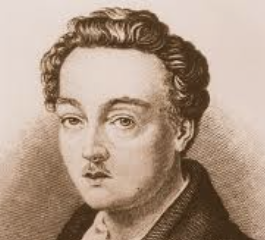
2 months 3 weeks ago
The breath of an aristocrat is the death rattle of freedom.
▼
Source
Act I.
2 months 3 weeks ago
I'll know how to die with courage; that is easier than living.
▼
Source
Act II.
2 months 3 weeks ago
Germany is now a field of cadavers, soon she will be a paradise.
2 months 3 weeks ago
Murder begins where self-defense ends.
▼
Source
Act I.
CivilSimian.com created by AxiomaticPanic, CivilSimian, Kalokagathia