


7 months 2 weeks ago
The system of technological production that we have today has been justified in terms of creating more goods to feed more people and to meet more needs. But it actually destroys more of the resources that we need in order to meet those multiple needs. If we shift to an ecological perception, a diversity perception, we realize that some of the instruments of which we are very proud are actually extremely primitive for dealing with nature. To me that is the great lesson of ecological awareness at the turn of the millennium.
▼
Source
source
1998
9 months 1 day ago
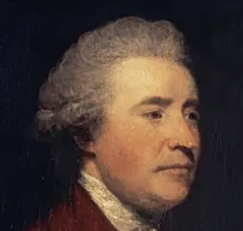
I have no idea of a liberty unconnected with honesty and justice. Nor do I believe, that any good constitutions of government, or of freedom, can find it necessary for their security to doom any part of the people to a permanent slavery. Such a constitution of freedom, if such can be, is in effect no more than another name for the tyranny of the strongest faction; and factions in republics have been, and are, full as capable as monarchs, of the most cruel oppression and injustice.
▼
Source
source
Speech at Bristol Previous to the Election (6 September 1780), quoted in The Works of the Right Honourable Edmund Burke, Vol. II (1855), p. 163


6 months 3 weeks ago
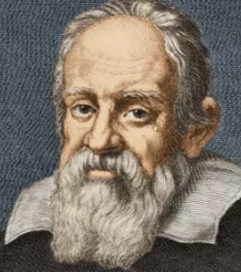
Whence do you have it that the terrestrial globe is so heavy? For my part, either I do not know what heaviness is, or the terrestrial globe is neither heavy nor light, as likewise all other globes of the universe. Heaviness to me (and I believe to Nature) is that innate tendency by which a body resists being moved from its natural place and by which, when forcibly removed therefrom, it spontaneously returns there. Thus a bucketful of water raised on high and set free, returns to the sea; but who will say that the same water remains heavy in the sea, when being set free there, does not move?
10 months 1 day ago
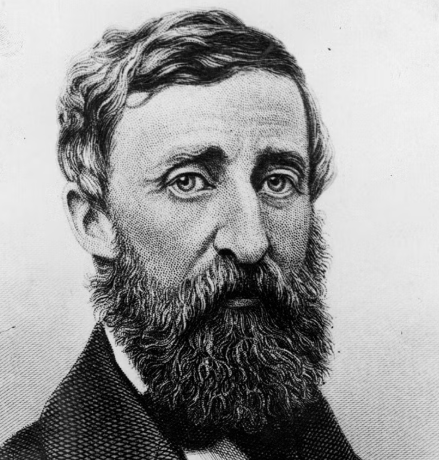
While we are reading these sentences, this fair modern world seems only a reprint of the Laws of Menu with the gloss of Culluca. Tried by a New England eye, or the mere practical wisdom of modern times, they are the oracles of a race already in its dotage, but held up to the sky, which is the only impartial and incorruptible ordeal, they are of a piece with its depth and serenity, and I am assured that they will have a place and significance as long as there is a sky to test them by.


6 months 1 week ago
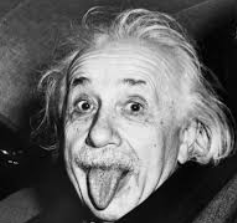
Human life can be lived like a poem.
▼
Source
source
p. 32
5 months 2 weeks ago
The most beautiful fate of a physical theory is to point the way to the establishment of a more inclusive theory, in which it lives on as a limiting case.
6 months ago
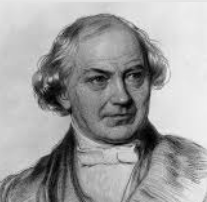
'When two equal weights are supported on the middle point between them, the pressure on the fulcrum is equal to the sum of the weights.'

6 months ago
Tried myself in the school of affliction, by the loss of every form of connection which can rive the human heart, I know well, and feel what you have lost, what you have suffered, are suffering, and have yet to endure. The same trials have taught me that for ills so immeasurable, time and silence are the only medicines. I will not, therefore, by useless condolences, open afresh the sluices of your grief, nor, although mingling sincerely my tears with yours, will I say a word more where words are vain.
▼
Source
source
Letter to John Adams (13 November 1818) regarding the death of Abigail Adams
9 months 3 weeks ago
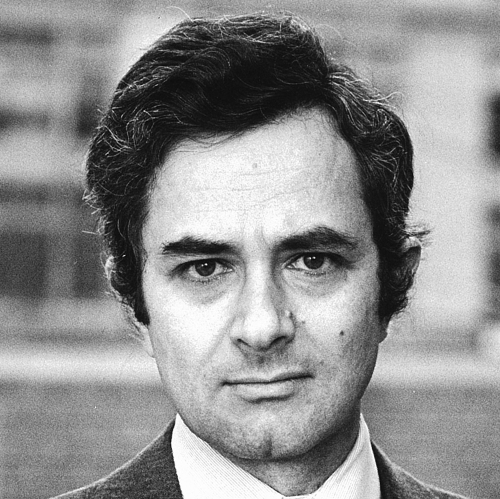
The essence of the belief that bats have experience is that there is something that it is like to be a bat. Now we know that most bats (the microchiroptera, to be precise) perceive the external world primarily by sonar, or echolocation. ... But bat sonar, though clearly a form of perception, is not similar in its operation to any sense that we possess, and there is no reason to suppose that it is subjectively like anything we can experience or imagine. This appears to create difficulties for the notion of what it is like to be a bat.
▼
Source
source
p. 168.
9 months 1 day ago
Nor is prescription of government formed upon blind unmeaning prejudices-for man is a most unwise, and a most wise, being. The individual is foolish. The multitude, for the moment, is foolish, when they act without deliberation; but the species is wise, and when time is given to it, as a species it almost always acts right.
▼
Source
source
Speech in the House of Commons against William Pitt's motion for parliamentary reform (7 May 1782)
7 months 3 weeks ago
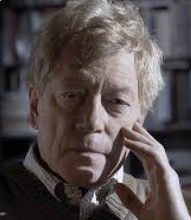
Conservatism is a philosophy of inheritance and stewardship; it does not squander resources but strives to enhance them and pass them on.
▼
Source
source
Stand up for the real meaning of freedom, The Spectator

10 months 1 day ago
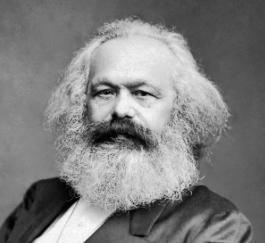
In order to abolish the idea of private property, the idea of communism is completely sufficient. It takes actual communist action to abolish actual private property. History will com to it; and this movement, which in theory we already know to be a self-transcending movement, will constitute in actual fact a very severe and protracted process. But we must regard it as a real advance to have gained beforehand a consciousness of the limited character a well as of the goal of this historical movement - and a consciousness which reaches out beyond it.
▼
Source
source
p. 99, The Marx-Engels Reader
7 months 4 weeks ago
A man's reach must exceed his grasp or what's a metaphor?
▼
Source
source
(p.7) A play on the lines in Robert Browning's poem "Andrea del Sarto":Ah, but a man's reach should exceed his grasp, Or what's a heaven for?

8 months 2 weeks ago
School children and students who love God should never say: "For my part I like mathematics"; "I like French"; "I like Greek." They should learn to like all these subjects, because all of them develop that faculty of attention which, directed toward God, is the very substance of prayer.
9 months 3 weeks ago
It is often remarked that nothing we do now will matter in a million years. But if that is true, then by the same token, nothing that will be the case in a million years matters now.
▼
Source
source
"The Absurd" (1971), p. 11.
10 months 1 day ago
Mystery is delightful, but unscientific, since it depends upon ignorance.
▼
Source
source
The Analysis of Mind (1921), Lecture I: Recent Criticisms of "Consciousness"

5 months 3 weeks ago
The leadership has failed. Even so, the leadership can and must be recreated from the masses and out of the masses. The masses are the decisive element, they are the rock on which the final victory of the revolution will be built. The masses were on the heights; they have developed this 'defeat' into one of the historical defeats which are the pride and strength of international socialism. And that is why the future victory will bloom from this 'defeat'. 'Order reigns in Berlin!' You stupid henchmen! Your 'order' is built on sand. Tomorrow the revolution will already 'raise itself with a rattle' and announce with fanfare, to your terror: I was, I am, I will be!
▼
Source
source
"Order reigns in Berlin", Last written words. Collected Works 4
6 months 1 day ago
Thus did the Holy Harlots unhinge the brains of man,and when they met and clashed with the pure Mountain Maidens,they raised their white arms high, their armpits smelled of musk,and, as the rites decreed, both fought their verbal war:"God swoops from mountain peeks to eat and play on earth;we are his food and drink and even his sacred toys -and learn, O sterile maids, we are his soft, sweet mates.Let her now leave who fears to merge with her dread God!"The scornful savage mouth of Krino flashed reply:"We will not leave! We guard the innocent soul of man!God is a spirit with pure white wings, a soul that sails,light, disembodied, deep in our thoughts, without embrace.It's we who keep the world in bloom with virgin souls!"
▼
Source
source
From the Bull Ritual, Book VI, line 197

8 months 3 weeks ago
He felt neither guilt nor distress at the pleasure with which he was now filled by the proximity of this young creature, and when he discovered in himself even physical symptoms of his inclination he did not take fright, but continued cheerfully and serenely to see Nick whenever the ordinary run of his duties suggested it, congratulating himself upon the newly achieved solidity and rational calm of his spiritual life.
▼
Source
source
The Bell (1958) p. 91

6 months 3 weeks ago
No effective blueprint [of a political alternative to Empire] will ever arise from a theoretical articulation such as ours.
▼
Source
source
206
7 months 4 weeks ago
New technological environments are commonly cast in the molds of the preceding technology out of the sheer unawareness of their designers.
▼
Source
source
(p. 47)

7 months 4 weeks ago
Amid a multitude of projects, no plan is devised.
▼
Source
source
Maxim 319
9 months 1 day ago
It cannot be denied that the early Indians possessed knowledge of God. All their writings are replete with sentiments and expressions, noble, clear, severely grand, as deeply conceived in any human language in which men have spoken of their God.
▼
Source
source
quoted in Knapp, Stephen Proof of Vedic Culture s Global Existence. Published byThe World Relief Network Detroit 2000. p. vii as quoted in Londhe, S. (2008)

6 months 3 weeks ago
By awakening the Heroic that slumbers in every heart, can any Religion gain followers.
9 months 1 day ago
Through a wise and salutary neglect [of the colonies], a generous nature has been suffered to take her own way to perfection; when I reflect upon these effects, when I see how profitable they have been to us, I feel all the pride of power sink and all presumption in the wisdom of human contrivances melt and die away within me. My vigour relents. I pardon something to the spirit of liberty.

5 months 3 weeks ago
Nature which governs the whole will soon change all things which thou seest, and out of there substance will make other things, and again other things from the substance of them, in order that the world may ever be new.
▼
Source
source
VII, 25 (See also Charles Darwin)

6 months 3 weeks ago
Bukharin, like Lenin, regarded the system of basing economic life on mass terror not as a transient necessity but as a permanent principle of socialist organization. He did not shrink from justifying all means of coercion and held, like Trotsky at the same period, that the new system called essentially for the militarization of labour - i.e. the use of police and military force to compel the whole population to work in such places and conditions as the state might arbitrarily decree. Indeed, once the market is abolished there is no longer any free sale of labour or competition between workers, and police coercion is therefore the only means of allocating "human resources". If hired labour is eliminated, only compulsory labour remains. In other words, socialism - as conceived by both Trotsky and Bukharin at this time - is a permanent, nation-wide labour camp.
▼
Source
source
(pg. 28-9)
10 months 4 weeks ago
Without the interplay of human against human, the chief interest in life is gone; most of the intellectual values are gone; most of the reason for living is gone.

9 months 2 weeks ago
Force without wisdom falls of its own weight.


10 months 1 week ago
Behold a God more powerful than I who comes to rule over me.
▼
Source
source
Chapter I (tr. Barbara Reynolds); of love.
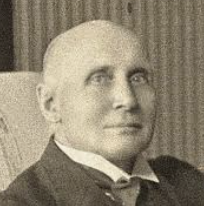
8 months 2 weeks ago
With the sense of sight, the idea communicates the emotion, whereas, with sound, the emotion communicates the idea, which is more direct and therefore more powerful.
▼
Source
source
Ch. 29, June 10, 1943.
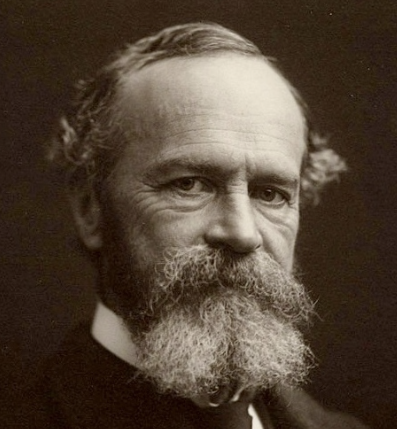
10 months ago
If you say that this is absurd, that we cannot be in love with everyone at once, I merely point out to you that, as a matter of fact, certain persons do exist with an enormous capacity for friendship and for taking delight in other people's lives; and that such person know more of truth than if their hearts were not so big. The vice of ordinary Jack and Jill affection is not its intensity, but its exclusions and its jealousies. Leave those out, and you see that the ideal I am holding up before you, however impracticable to-day, yet contains nothing intrinsically absurd.
▼
Source
source
"What Makes a Life Significant?"

10 months ago
Keep the faculty of effort alive in you by a little gratuitous exercise every day. That is, be systematically ascetic or heroic in little unnecessary points, do every day or two something for no other reason than that you would rather not do it, so that when the hour of dire need draws nigh, it may find you not unnerved and untrained to stand the test. So with the man who has daily inured himself to habits of concentrated attention, energetic volition, and self-denial in unnecessary things. He will stand like a tower when everything rocks around him, and when his softer fellow-mortals are winnowed like chaff in the blast.
▼
Source
source
Ch. 4
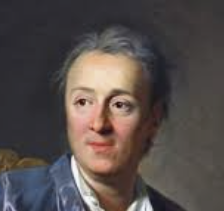
9 months 5 days ago
We are constantly railing against the passions; we ascribe to them all of man's afflictions, and we forget that they are also the source of all his pleasures ... But what provokes me is that only their adverse side is considered ... and yet only passions, and great passions, can raise the soul to great things. Without them there is no sublimity, either in morals or in creativity. Art returns to infancy, and virtue becomes small-minded.
▼
Source
source
As translated in Diderot (1977) by Otis Fellows, p. 39


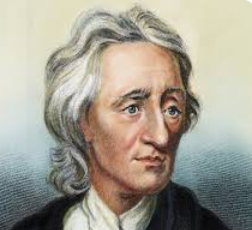
10 months 2 days ago
The law of faith, being a covenant of free grace, God alone can appoint what shall be necessarily believed by everyone whom He will justify. What is the faith which He will accept and account for righteousness, depends wholly on his good pleasure. For it is of grace, and not of right, that this faith is accepted. And therefore He alone can set the measures of it: and what he has so appointed and declared is alone necessary. No-body can add to these fundamental articles of faith; nor make any other necessary, but what God himself hath made, and declared to be so. And what these are which God requires of those who will enter into, and receive the benefits of the new covenant, has already been shown. An explicit belief of these is absolutely required of all those to whom the gospel of Jesus Christ is preached, and salvation through his name proposed.
▼
Source
source
§ 156
9 months 2 weeks ago
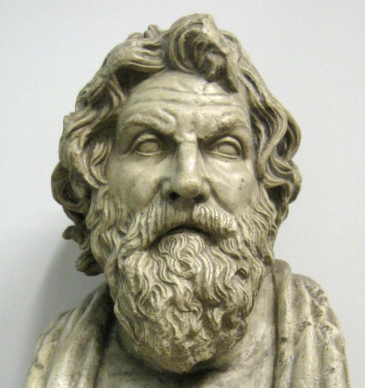
There is no work so mean, but it would amply serve me to furnish me with sustenance.
▼
Source
source
iv. 35
9 months 3 weeks ago
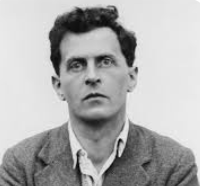
Philosophy may in no way interfere with the actual use of language; it can in the end only describe it.
▼
Source
source
§ 124
10 months 1 day ago
Every one knows that there are no real forests in England. The deer in the parks of the great are demurely domestic cattle, fat as London alderman.
▼
Source
source
Vol. I, Ch. 27, pg. 803.
8 months 1 week ago
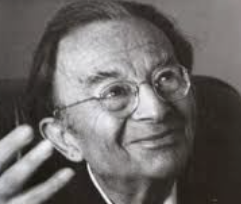
By necrophilia is meant love for all that is violence and destruction; the desire to kill; the worship of force; attraction to death, to suicide, to sadism; the desire to transform the organic into the inorganic by means of "order." The necrophile, lacking the necessary qualities to create, in his impotence finds it easy to destroy because for him it serves only one quality: force.

CivilSimian.com created by AxiomaticPanic, CivilSimian, Kalokagathia