


9 months 3 weeks ago
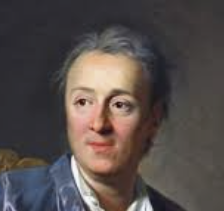
The following general definition of an animal: a system of different organic molecules that have combined with one another, under the impulsion of a sensation similar to an obtuse and muffled sense of touch given to them by the creator of matter as a whole, until each one of them has found the most suitable position for it shape and comfort.
▼
Source
source
No. 51

8 months 2 weeks ago
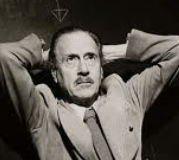
The hot radio medium used in cool or nonliterate cultures has a violent effect, quite unlike its effect, say in England or America, where radio is felt as entertainment.
▼
Source
source
(p. 30)
9 months 2 days ago
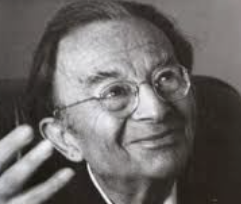
Envy, jealousy, ambition, any kind of greed are passions; love is an action, the practice of human power, which can be practiced only in freedom and never as a result of compulsion. Love is an activity, not a passive affect; it is a "standing in," not a "falling for." In the most general way, the active character of love can be described by stating that love is primarily giving, not receiving.
7 months 1 week ago
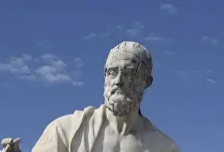
All things are subject to decay and change.
▼
Source
source
The General History of Polybius as translated by James Hampton' (1762), Vol. II, pp. 177-178
10 months 3 weeks ago
The heart is everywhere, and each part of the organism is only the specialized force of the heart itself.
7 months 1 week ago
The way of learning is none other than finding the lost mind.
▼
Source
source
6A:11, as translated by Wing-tsit Chan in A Source Book in Chinese Philosophy (1963), p. 58
10 months 2 weeks ago
Capital is dead labor, that vampire-like, only lives by sucking living labor, and lives the more, the more labor it sucks.
▼
Source
source
Vol. I, Ch. 10, Section 1, p. 257.
6 months 2 weeks ago
Soon you'll be ashes or bones. A mere name at most-and even that is just a sound, an echo. The things we want in life are empty, stale, trivial.
▼
Source
source
V. 33, trans. Gregory Hays

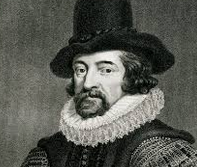
10 months 4 weeks ago
Human knowledge and human power meet in one; for where the cause is not known the effect cannot be produced. Nature to be commanded must be obeyed; and that which in contemplation is as the cause is in operation as the rule.
▼
Source
source
Aphorism 3
9 months 3 days ago
Yet it must be acknowledged that there is a fundamental difference between the sexual impulse in men and women. Her need is for a lover, a protector, a father for her children. His desire is for mastery, conquest, to be allowed to use her body for his own satisfaction. He feels like a bee, burying itself in a flower, apparently doing nothing for the flower but taking its sweetness. If he loves her, then his desire is mixed with a kind of pity.

7 months 1 week ago
The rudest heathen that worshipped Canopus, or the Caabah Black-Stone, he, as we saw, was superior to the horse that worshipped nothing at all! Nay there was a kind of lasting merit in that poor act of his; analogous to what is still meritorious in Poets: recognition of a certain endless divine beauty and significance in stars and all natural objects whatsoever.
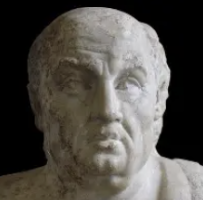
7 months 5 days ago
It is disgraceful, instead of proceeding ahead, to be carried along, and then suddenly, amid the whirlpool of events, to ask in a dazed way: "How did I get into this condition?"
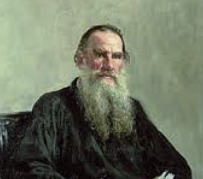
8 months 2 weeks ago
The assertion that art may be good art and at the same time incomprehensible to a great number of people is extremely unjust, and its consequences are ruinous to art itself...it is the same as saying some kind of food is good but most people can't eat it.

11 months 2 weeks ago
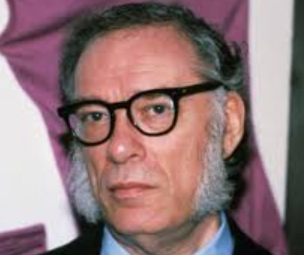
Titles are an important part of a story and I take considerable care in choosing one. In fact, I cannot start a story until I have chosen a title.
10 months 2 weeks ago
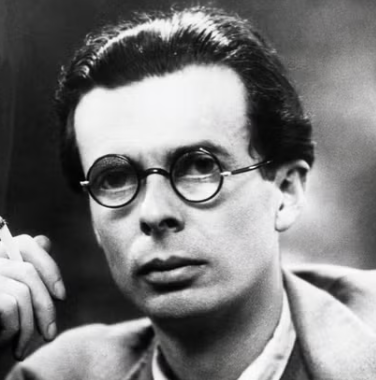
I don't think that there are any sinister persons deliberately trying to rob people of their freedom but I do think, first of all, that there are a number of impersonal forces which are pushing in the direction of less and less freedom. And I also thing there are a number of technological devices which anybody who wishes to use, can use, to accelerate this process of going away from freedom, of imposing control.
9 months 1 week ago
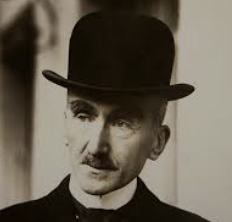
All the living hold together, and all yield to the same tremendous push. The animal takes its stand on the plant, man bestrides animality, and the whole of humanity, in space and in time, is one immense army galloping beside and before and behind each of us in an overwhelming charge able to beat down every resistance and clear the most formidable obstacles, perhaps even death.
▼
Source
source
Creative Evolution (1907), Chapter III. New York: Henry Holt and Company, 1911, p. 271

8 months 3 weeks ago
There are two kinds of people, killers, and everybody else.

9 months 2 weeks ago
"What's wrong - what's the matter with you?" Nothing, nothing's the matter, I've merely taken a leap outside my fate, and now I don't know where to turn, what to run for...
7 months 1 day ago
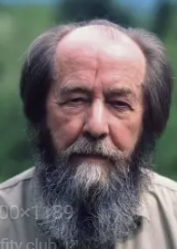
And the simple step of a simple courageous man is not to partake in falsehood, not to support false actions! Let THAT enter the world, let it even reign in the world - but not with my help. But writers and artists can achieve more: they can CONQUER FALSEHOOD! In the struggle with falsehood art always did win and it always does win! Openly, irrefutably for everyone! Falsehood can hold out against much in this world, but not against art. And no sooner will falsehood be dispersed than the nakedness of violence will be revealed in all its ugliness - and violence, decrepit, will fall.
8 months 3 weeks ago
There is one ethical principle, either you are preserving life generally, or you aren't. Preserving life in your ends and your means determines whether you are good or evil.
6 months 2 weeks ago
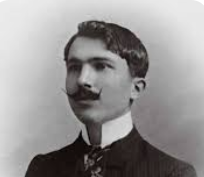
I strive to discover how to signal my companions before I die, how to give them a hand, how to spell out for them in time one complete word at least, to tell them what I think this procession is, and toward what we go. And how necessary it is for all of us together to put our steps and hearts in harmony. To say in time a simple word to my companions, a password, like conspirators. Yes, the purpose of Earth is not life, it is not man. Earth has existed without these, and it will live on without them. They are but the ephemeral sparks of its violent whirling. Let us unite, let us hold each other tightly, let us merge our hearts, let us create - so long as the warmth of this earth endures, so long as no earthquakes, cataclysms, icebergs or comets come to destroy us - let us create for Earth a brain and a heart, let us give a human meaning to the superhuman struggle. This anguish is our second duty.
9 months 2 weeks ago
The reaction against your own thought in itself lends life to thought. How this reaction is born is hard to describe, because it identifies with the very rare intellectual tragedies. - The tension, the degree and level of intensity of a thought proceeds from its internal antinomies, which in turn are derived from the unsolvable contradictions of a soul. Thought cannot solve the contradictions of the soul. As far as linear thinking is concerned, thoughts mirror themselves in other thoughts, instead of mirroring a destiny.
7 months 3 weeks ago
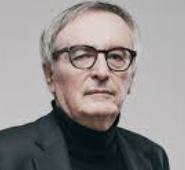
In Kleist's essay humans are caught between the graceful automatism of the puppet and the conscious freedom of a god. The jerky, stuttering quality of their actions comes from their feeling that they must determine the course of their lives. Other animals live without having to choose their path through life. Whatever uncertainty they may feel sniffing their way through the world is not a permanent condition; once they reach a place of safety, they are at rest. In contrast, human life is spent anxiously deciding how to live.
▼
Source
source
The Faith of Puppets: Leopardi and the Souls of Machines (p.25-6)
10 months 3 weeks ago
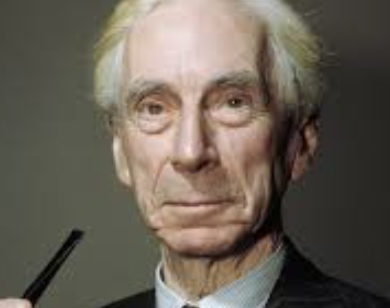
Men fear thought as they fear nothing else on earth - more than ruin, more even than death. Thought is subversive and revolutionary, destructive and terrible; thought is merciless to privilege, established institutions, and comfortable habits; thought is anarchic and lawless, indifferent to authority, careless of the well-tried wisdom of the ages. Thought looks into the pit of hell and is not afraid. It sees man, a feeble speck, surrounded by unfathomable depths of silence; yet it bears itself proudly, as unmoved as if it were lord of the universe. Thought is great and swift and free, the light of the world, and the chief glory of man.
▼
Source
source
pp. 178-179


10 months 2 weeks ago
No man can have society upon his own terms. If he seeks it, he must serve it too.
▼
Source
source
1833

7 months 1 week ago
The infinite, absolute character of Virtue has passed into a finite, conditional one; it is no longer a worship of the Beautiful and Good; but a calculation of the Profitable.
7 months 5 days ago
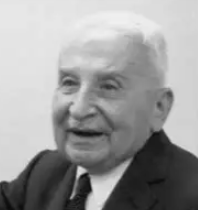
Value is not intrinsic, it is not in things. It is within us; it is the way in which man reacts to the conditions of his environment. Neither is value in words and doctrines, it is reflected in human conduct. It is not what a man or groups of men say about value that counts, but how they act.


10 months 1 day ago
Use examples; that such as thou teachest may understand thee the better!
10 months 1 week ago
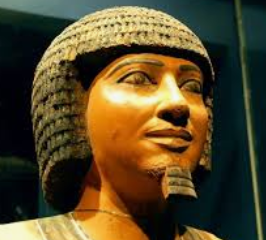
Do not be arrogant because of your knowledge, but confer with the ignorant man as with the learned. For knowledge has no limits, and none has yet achieved perfection in it. Good speech is more hidden than malachite, yet it is found in the possession of women slaves at the millstones.
▼
Source
source
Maxim no. 1.
9 months 2 weeks ago
That history just unfolds, independently of a specified direction, of a goal, no one is willing to admit.

10 months 2 weeks ago
It is said that "being" is the most universal and the emptiest concept. As such it resists every attempt at definition. Nor does this most universal and thus indefinable concept need any definition. Everybody uses it constantly and also already understands what is meant by it.
▼
Source
source
Introduction: The Exposition of the Question of the Meaning of Being (Stambaugh translation)
10 months 3 weeks ago
Freedom of opinion can only exist when the government thinks itself secure...
▼
Source
source
A Fresh Look at Empiricism: 1927-42 (1996), p. 443
9 months 3 weeks ago
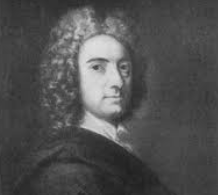
We indeed, who are beings of finite powers, are forced to make use of instruments. And the use of an instrument sheweth the agent to be limited by rules of another's prescription, and that he cannot obtain his end but in such a way, and by such conditions. Whence it seems a clear consequence, that the supreme unlimited agent useth no tool or instrument at all. The will of an Omnipotent Spirit is no sooner exerted than executed, without the application of means; which, if they are employed by inferior agents, it is not upon account of any real efficacy that is in them, or necessary aptitude to produce any effect, but merely in compliance with the laws of nature, or those conditions prescribed to them by the First Cause, who is Himself above all limitation or prescription whatsoever.
▼
Source
source
Philonous to Hylas. The Second Dialogue
7 months 1 week ago
But the thing a man does practically believe (and this is often enough without asserting it even to himself, much less to others); the thing a man does practically lay to heart, and know for certain, concerning his vital relations to this mysterious Universe, and his duty and destiny there, that is in all cases the primary thing for him, and creatively determines all the rest. That is his religion; or, it may be, his mere scepticism and no-religion: the manner it is in which he feels himself to be spiritually related to the Unseen World or No-World; and I say, if you tell me what that is, you tell me to a very great extent what the man is, what the kind of things he will do is.
9 months 2 weeks ago
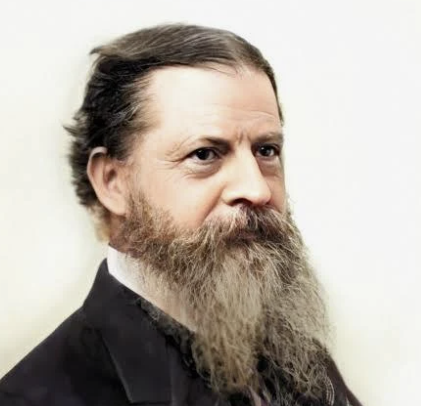
A difficulty which confronts the synechistic philosophy is this. In considering personality, that philosophy is forced to accept the doctrine of a personal God; but in considering communication, it cannot but admit that if there is a personal God, we must have a direct perception of that person and indeed be in personal communication with him. Now, if that be the case, the question arises how it is possible that the existence of this being should ever have been doubted by anybody. The only answer that I can at present make is that facts that stand before our face and eyes and stare us in the face are far from being, in all cases, the ones most easily discerned. That has been remarked since time immemorial.
10 months 2 weeks ago
The hand that rounded Peter's dome, And groined the aisles of Christian Rome, Wrought in a sad sincerity, Himself from God he could not free; He builded better than he knew, The conscious stone to beauty grew.
▼
Source
source
The Problem, st. 2
10 months 4 weeks ago
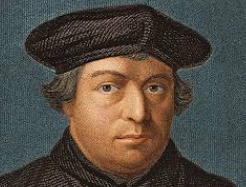
I am entirely of the opinion that the papacy is the Antichrist. But if anyone wants to add the Turk, then the Pope is the spirit of the Antichrist, and the Turk is the flesh of the Antichrist. They help each other in their murderous work. The latter slaughters bodily and by the sword, the former spiritually and by doctrine.
▼
Source
source
330

10 months 3 weeks ago
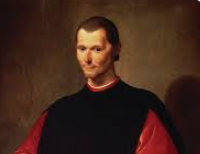
That which is good for the enemy harms you, and that which is good for you harms the enemy.
▼
Source
source
Rule 1 from Machiavelli's Lord Fabrizio Colonna: libro settimo (Book 7) (Modern Italian uses nemico instead of nimico.)
7 months 5 days ago
Why does God afflict the best of men with ill-health, or sorrow, or other troubles? Because in the army the most hazardous services are assigned to the bravest soldiers: a general sends his choicest troops to attack the enemy in a midnight ambuscade, to reconnoitre his line of march, or to drive the hostile garrisons from their strong places. No one of these men says as he begins his march, " The general has dealt hardly with me," but "He has judged well of me."
▼
Source
source
De Providentia (On Providence), 4.8, translated by Aubrey Stewart
9 months 2 weeks ago
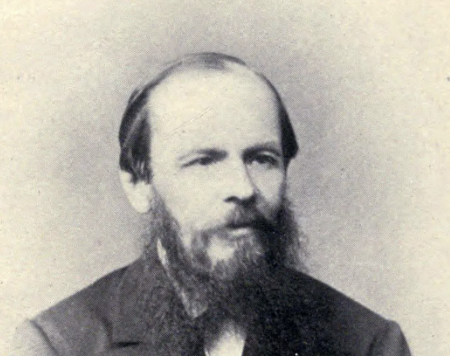
It seemed clear to me that life and the world somehow depended upon me now. I may almost say that the world now seemed created for me alone: if I shot myself the world would cease to be at least for me. I say nothing of its being likely that nothing will exist for anyone when I am gone, and that as soon as my consciousness is extinguished the whole world will vanish too and become void like a phantom, as a mere appurtenance of my consciousness, for possibly all this world and all these people are only me myself.

7 months 5 days ago
It is to this law that our souls must adjust themselves, this they should follow, this they should obey. Whatever happens, assume that it was bound to happen, and do not be willing to rail at Nature. That which you cannot reform, it is best to endure, and to attend uncomplainingly upon the God under whose guidance everything progresses; for it is a bad soldier who grumbles when following his commander.
CivilSimian.com created by AxiomaticPanic, CivilSimian, Kalokagathia